Key Takeaways
-
Aligners may cause less pain than braces in the first few days (around days three and four), but the difference is small and not consistent at every stage of treatment.
-
Pain usually peaks within the first one to two days after placement or adjustment and typically fades by the end of the first week.
-
Braces tend to cause general tooth soreness and cheek or lip rubbing, while aligners cause pressure or tightness, especially when switching to a new tray.
-
Aligners must be worn about 22 hours a day to work, so removing them when they feel snug can slow progress; fixed braces work continuously without patient effort.
-
Orthodontic wax, saltwater rinses, soft foods, and cold relief can ease soreness with either option, and sharp tray edges should be reported to your orthodontist.
-
Comfort matters but should not be the only factor; your bite needs, oral health, lifestyle, and orthodontist's evaluation should guide the choice between braces and aligners.
Let’s be real: nobody gets excited about the idea of a sore mouth. If you’re thinking about straightening your smile, one question probably keeps popping up. Which one feels better, braces or aligners?
The honest answer is a little bit of both. Both options can cause some temporary soreness. Teeth have to move, and moving teeth can feel tender at first. But the type of discomfort, when it shows up, and how long it sticks around can look quite different.
In this guide, we’re comparing comfort with braces and aligners in six practical ways. We’ll lean on what recent research says, share what we see in our own practice, and help you feel ready for whatever path you choose. Whether you’re a parent helping your child, a teen with a big event coming up, or an adult juggling a busy career, you’ll find something useful here.
One quick note before we dive in. Comfort matters, but it shouldn’t be the only thing that drives your decision. We’ll talk about that too.

1. The First Few Days: Who Feels Less Soreness?
The first week is when most people feel the biggest change. Your teeth are getting used to gentle pressure, and your mouth is learning something new.
A systematic review found moderate-certainty evidence that clear aligner patients reported less pain than fixed-brace patients during the first few days. A later 2023 review and meta-analysis looked at 12 studies and found lower aligner pain scores on days three and four. At other time points, the difference wasn’t clear.
So what does that mean for you? Aligners may feel a little gentler in the early days. But the gap is small, and every mouth is different. Some people sail through braces. Others feel tender with either option.
What the research tells us
- Pain often peaks within the first day or two after placement.
- Most discomfort eases over several days.
- A 2025 scoping review found that daily-life impact was usually greatest in the first two days, with pain often fading by the end of week one.
- Differences between braces and aligners were generally not evident later, through about three months.
The American Association of Orthodontists notes that mild discomfort with new aligners is common for the first few days, with an adjustment period of about a week. That’s general guidance, not a promise for your own timeline.
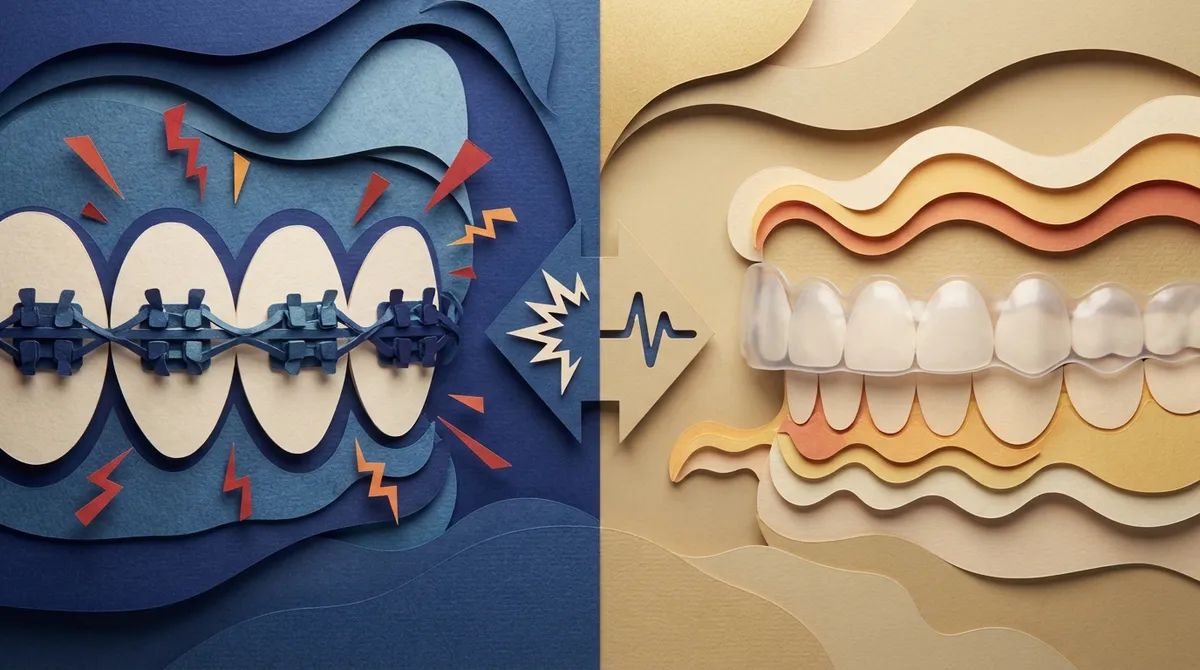
2. The Type of Discomfort Feels Different
Here’s something people don’t always hear. It’s not just about how much it hurts. It’s about how it feels.
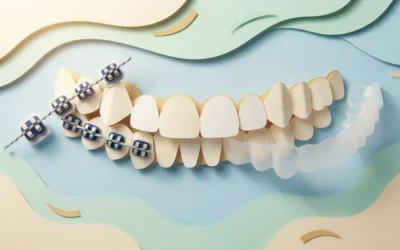
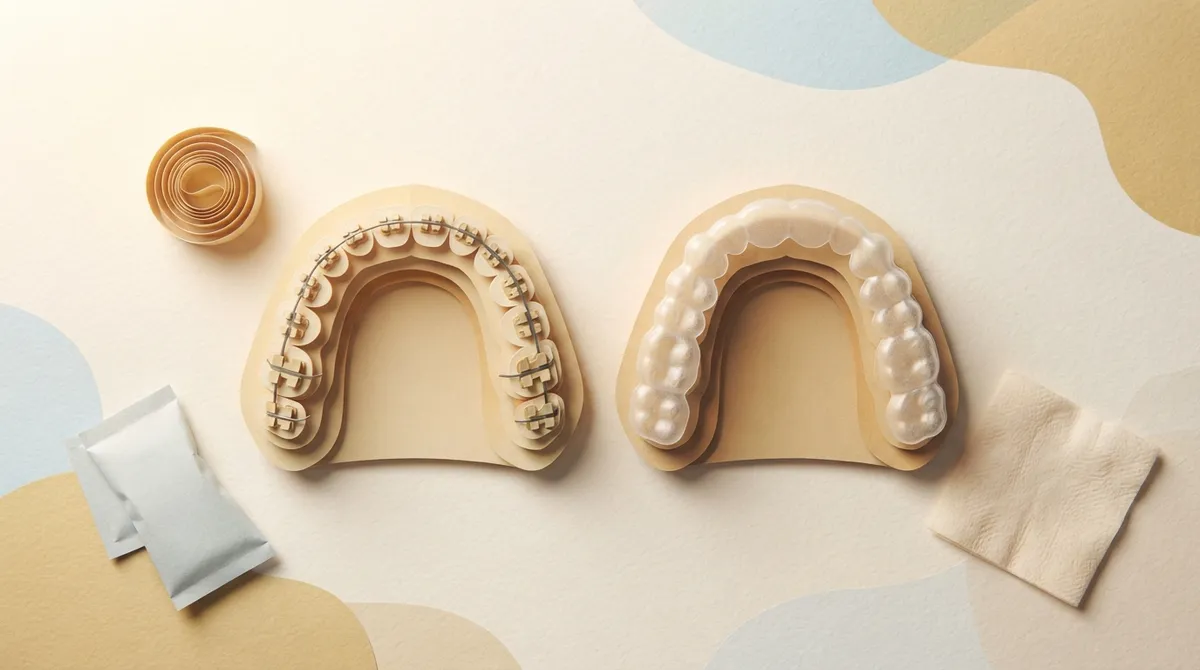
Aligners tend to create a feeling of pressure or tightness, especially when you pop in a new tray. Braces often cause general tooth soreness, plus some rubbing where brackets or wires touch your cheeks and lips. These are common patterns, not guarantees.
| Comfort Factor | Braces | Clear Aligners |
|---|---|---|
| Typical early feeling | Tooth soreness, especially when chewing | Pressure or tightness from the tray |
| Soft tissue irritation | Possible from brackets and wires | Possible from tray edges, usually less common |
| When soreness returns | After adjustments | When switching to a new tray |
| Fixed or removable | Fixed in place | Removable |
If you’d like to see how our metal and ceramic options work, check out our guide to all about braces. And if you’re curious about the clear option we offer, take a look at Spark™ Clear Aligners.
3. Soft Tissue Comfort: Cheeks, Lips, and Tongue
This is where braces can feel a bit more noticeable at first. Brackets and wires sit on the front of your teeth, so your cheeks and lips have to get used to them. Many patients get little sore spots in the first couple of weeks.
Aligners are smooth plastic. They don’t have brackets or wires poking around. That said, the edges of a tray can occasionally rub your gums or tongue, and some people notice a slight lisp for a day or two.
The good news? Your mouth adapts quickly. A few simple tricks can make a big difference:
- Orthodontic wax: Press a small piece over any bracket or wire that rubs.
- Saltwater rinses: A warm rinse can soothe small irritated spots.
- Smooth tray edges: If an aligner edge feels sharp, let us know so we can check it.
If a wire ever pokes you and wax doesn’t help, don’t wait it out. Our guide on whether a broken bracket or poking wire is a real emergency can help you decide what to do next.
4. Comfort With Eating and Daily Life
Comfort isn’t only about pain. It’s also about how easily you can live your life. Think pizza night, a work lunch, or a game-day snack.
Aligners come out for meals, so you can eat what you like. You’ll just need to brush before putting them back in. Braces stay put, which means some foods may feel tender or need to be avoided, especially in the first few days after an adjustment.
Braces: what to keep in mind
- Soft foods are your friend right after a tightening.
- Sticky, hard, or crunchy foods can irritate sore teeth or damage brackets.
- Cleaning takes a little more time around brackets and wires.
Aligners: what to keep in mind
- You need to wear them as prescribed, usually around 22 hours a day.
- You’ll remove them to eat and drink anything other than water.
- Cleaning trays and brushing teeth becomes part of your daily rhythm.
For some easy ideas, our friendly food guide for braces is a great place to start.
5. The Catch: Removable Doesn’t Mean Optional
Here’s where comfort and results can collide. Because aligners are removable, it’s tempting to take them out when they feel snug. We get it! But pulling them out too often can slow your progress and may interfere with treatment.
Think of it like a gym routine. The soreness after a tough workout is a sign your body is adapting, but skipping sessions keeps you from reaching your goal. Aligners work best when you wear them consistently.
Braces, on the other hand, work around the clock without any effort from you. That can feel like a relief for busy teens or parents who don’t want to keep track of trays. If a child might forget or lose aligners, fixed braces can be the more comfortable choice for the whole family.
If you’re weighing these differences, you may enjoy our deeper look at braces vs. clear aligners.
6. Comfort Shouldn’t Be the Only Deciding Factor
It’s natural to want the most comfortable option. But the best treatment is the one that fits your bite, your teeth, and your lifestyle.
Suitability depends on the tooth movements needed, your oral health, your preferences, and your orthodontist’s evaluation. In some cases, fixed braces offer better control and may be recommended. In others, aligners are a great fit.
Here are the questions we ask patients to help find the right match:
- What does your bite need? Some movements are easier with braces.
- How consistent can you be with wearing aligners?
- How important is a discreet look to you?
- What does your daily schedule look like?
- Do you have any gum or oral health concerns we should factor in?
At Brockway Orthodontics, Dr. Brockway takes time to listen before recommending anything. She’ll walk you through your options in plain language so you feel confident. You can meet Dr. Brockway and learn more about her approach.
How to Manage Orthodontic Discomfort Safely
No matter which path you choose, a few simple habits can make the early days easier. Always check with your orthodontist about what’s right for you.
- Eat soft foods: Yogurt, soup, mashed potatoes, and smoothies are gentle on tender teeth.
- Use cold relief: A cool drink or cold compress can calm soreness.
- Try over-the-counter pain relief: Follow the label and your healthcare provider’s guidance.
- Keep wax handy: It’s a lifesaver for braces and sometimes for aligner edges.
- Stay consistent: With aligners, wearing your trays as directed helps your mouth adjust.
- Time new trays smartly: Many patients switch trays in the evening so the tightest feeling happens overnight.
Which Option Fits Which Person?
Every patient is different, but here are a few common patterns we see across the families we welcome.
For parents of kids and teens
Fixed braces can be a smart pick for younger patients who might misplace trays. Teens with big events coming up may love the look of clear options. Learn more about our adolescent treatment options.
For adult professionals
Aligners often appeal to adults who want a discreet look and flexible eating. Others prefer the hands-off nature of fixed appliances. Explore our adult treatment page to see what’s possible.
For retreatment patients
If your smile has shifted since your last round of treatment, you’re not alone. A fresh evaluation can show which option offers the right control with the right comfort.
You can also read our guide to choosing between clear aligners and braces for more help.
What the Research Can and Can’t Tell Us
It’s worth being honest about the limits of the science. The reviews we mentioned show that aligners may be less painful on some early days. They also point out limitations, including differences between studies and incomplete reporting of bite types.
The same 2023 review found better oral-health-related quality of life for aligner patients at one week, one month, and six months. By the end of treatment, scores looked similar between groups.
The takeaway? Aligners may offer a slight comfort edge early on, but both options lead to comfortable, healthy results when guided by a skilled orthodontist. Your own experience may land anywhere on the spectrum.
For trusted general information on oral health, the American Dental Association is a helpful resource.
Ready to Find Your Most Comfortable Path?
Choosing between braces and aligners doesn’t have to feel overwhelming. When you compare comfort with braces and aligners, remember that both can cause temporary soreness, both ease with time, and both can give you a smile you love.
The best way to know what’s right for you is to talk with an orthodontist who listens. Dr. Brockway and our team in Clearwater, Florida would love to help. We offer metal braces, ceramic braces, and Spark™ Clear Aligners, so we can match you with the option that fits your bite and your life. You can also see what families say when you visit us on Google — Brockway Orthodontics.
Curious about your first visit? Take a peek at what to expect at your first visit, and keep up with our smiling community on Facebook.
Ready to take the next step? Book your appointment online today, or contact us with any questions. We can’t wait to meet you!
FAQs
Q: Are clear aligners more comfortable than braces?
A: Research suggests aligners may cause less pain on some early days, like days three and four, but the difference is small and not seen at every stage. Comfort really depends on you, so it’s best to chat with your orthodontist about your own needs.
Q: How long does soreness last after getting braces or aligners?
A: Most people feel the most tenderness in the first one to two days, and it usually eases over the next several days. Mild soreness can return after braces adjustments or when you start a new aligner tray, but it tends to fade quickly.
Q: Why do braces hurt after an adjustment?
A: An adjustment puts fresh, gentle pressure on your teeth so they keep moving. That pressure can make teeth feel tender for a day or two, especially when you chew. Soft foods and a little patience usually do the trick.
Q: Can braces or aligners cause mouth sores or irritation?
A: Yes, both can occasionally cause small sore spots. Braces may rub your cheeks and lips, while aligner edges can sometimes bother your gums or tongue. Orthodontic wax and saltwater rinses help, and we’re always happy to check anything that doesn’t feel right.
Q: Does comfort determine whether braces or aligners are right for me?
A: Comfort is a big piece, but it’s not the whole picture. Your bite, the tooth movements needed, your oral health, and your lifestyle all matter. Dr. Brockway will help you pick the option that’s both comfortable and effective.
Our Service Area