Key Takeaways
-
Attachments are tooth-colored composite bumps that give aligners grip, helping them transfer force for movements like rotation, extrusion, and root torque that smooth trays handle poorly.
-
Attachments do not move teeth on their own; the aligner supplies the force, so skipping daily wear time stops progress and can let teeth drift back.
-
Not every patient or tooth needs attachments; the number and placement depend on your specific movements, so don't compare your count to a friend's.
-
Attachments don't guarantee perfect tracking; a 2025 meta-analysis found no significant overall difference between optimized and conventional designs, so expect occasional refinements.
-
Trays with attachments often feel snugger and harder to remove at first; remove them from the back teeth, avoid biting the tray, and never yank the front teeth.
-
Never remove or rebond attachments yourself; if one pops off, keep wearing aligners if comfortable and call your orthodontist promptly for repair.
Have you ever looked at a friend’s clear aligners and spotted tiny bumps on their teeth? Maybe you saw them in your own treatment plan and wondered, “Wait, what are those for?” You are not alone. Many patients feel a little surprised when they first hear about attachments. After all, clear aligners are supposed to be nearly invisible, right?
Here is the good news. Those little bumps have a real job. Understanding why some aligner treatments use attachments can help you feel calm, informed, and ready to get the most from your smile journey.
But there is a catch. Many people make avoidable mistakes when it comes to attachments. They skip steps, believe myths, or expect the wrong things. In this friendly guide, we will walk through seven common mistakes and show you how to dodge each one. Whether you are a parent helping a teen, a busy professional, or someone returning for a second round of treatment, you will find helpful, plain-English answers here.
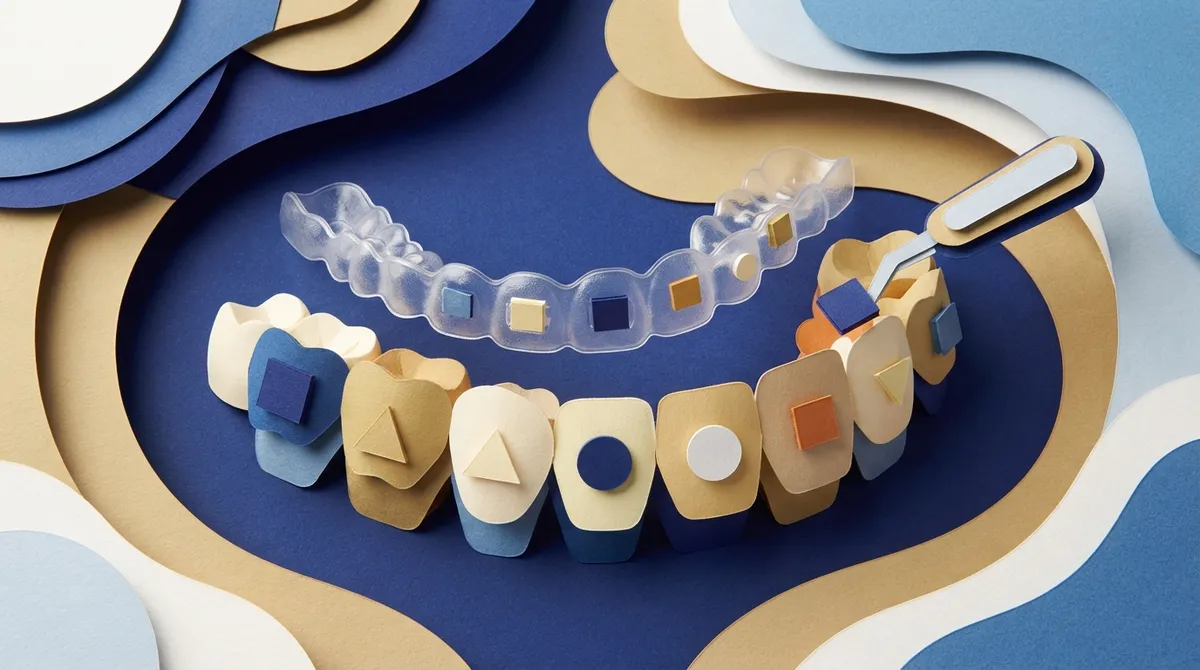
What Are Aligner Attachments, Anyway?
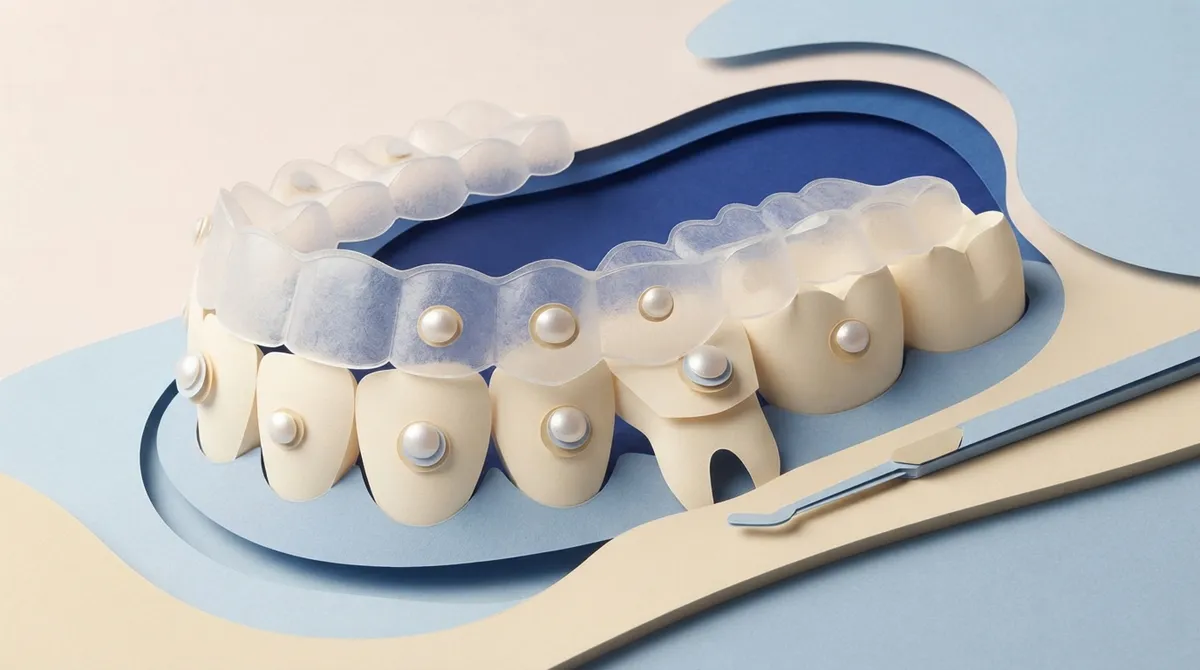
Let’s start with the basics. Aligner attachments are small, tooth-colored shapes made of composite resin. Your orthodontist bonds them to selected teeth. The aligner then fits over them, almost like a glove fitting over a hand.
Think of an attachment like a tiny handle. Without a handle, a smooth jar lid can slip in your fingers. With a handle, you can grip and turn it with ease. Attachments give your aligner something to “grab” so it can guide your teeth more effectively.
Here is what attachments do in simple terms:
- Create contact points so the aligner can transfer force to the tooth.
- Help trays stay seated, especially when a tooth is short, round, or hard to grip.
- Improve control over certain movements that aligners may otherwise handle less predictably.
One important point: attachments do not move teeth by themselves. The programmed aligner applies the force. The tooth then moves through the natural response of the bone and tissue that support it. The attachment simply helps the aligner do its work.
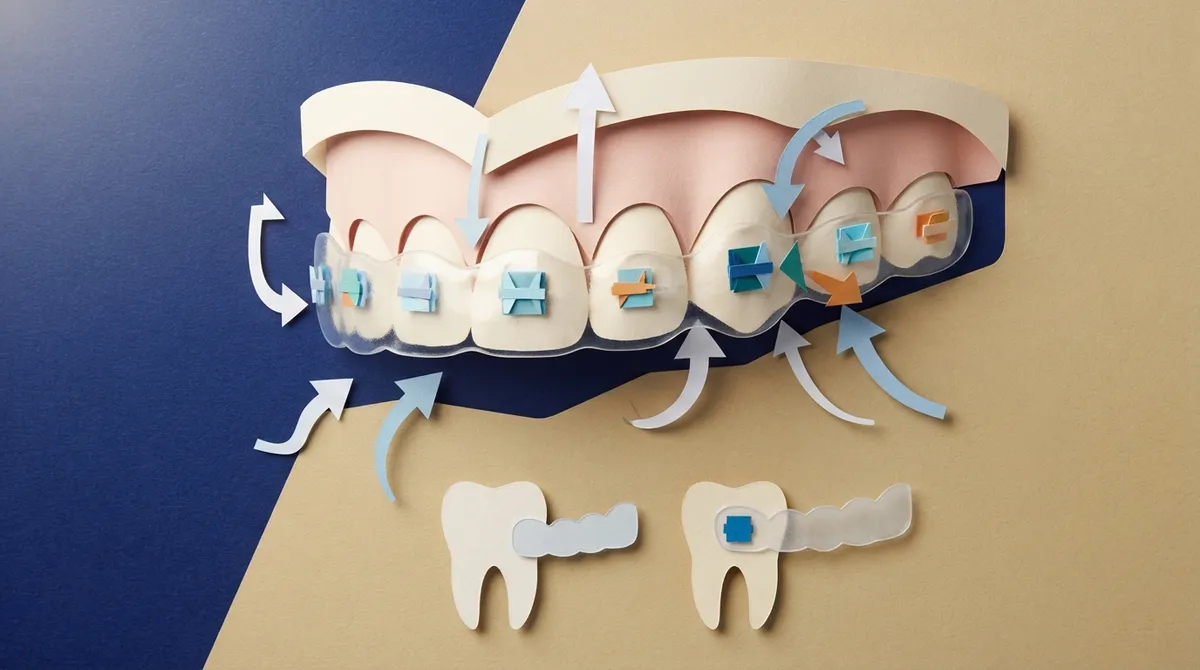
Why Some Aligner Treatments Use Attachments
So, why some aligner treatments use attachments while others do not? It all comes down to what your teeth need to do.
Some tooth movements are easy for a smooth plastic tray. Others are harder. A tooth that needs to turn, lift, or tip its root into a new position often needs extra help. That is where attachments come in.
Movements That Often Benefit From Attachments
- Rotation: Turning a tooth that sits twisted, like a canine or premolar.
- Extrusion: Gently lifting a tooth further out of the gum line.
- Root torque: Tilting the root of a tooth, which is hard to do with a smooth surface.
- Bodily movement: Shifting the whole tooth, crown and root, instead of just tipping it.
- Retention: Keeping the aligner snug when tooth shape makes gripping tricky.
Your orthodontist picks the shape, size, direction, and spot of each attachment to match the movement planned. It is a bit like choosing the right tool for each job in a toolbox.
The research backs this up, with a few honest caveats. A 2022 systematic review reported benefits for rotation, anterior root torque, mesiodistal movement, and posterior anchorage. Evidence for extrusion and intrusion was less conclusive. In other words, attachments help in many cases, but they are not magic.
Mistake #1: Assuming Every Patient Needs Attachments
Some people hear “clear aligners” and picture a smooth, bump-free treatment for everyone. Others assume everyone gets a full set of attachments. Both ideas miss the mark.
Not every patient, and not every tooth, needs an attachment. Your orthodontist decides based on your treatment plan, tooth shape, the movement needed, and the aligner system used. A mild spacing case may need very few. A case with rotated teeth and a deep bite may need quite a few more.
The takeaway? Do not compare your attachment count to a friend’s. Your smile plan is personal. At Brockway Orthodontics, Dr. Brockway takes time to explain exactly why each attachment is placed, so you never feel left in the dark. You can read more about Spark™ Clear Aligners to see how personalized planning works.
Mistake #2: Believing Attachments Guarantee Perfect Results
This one surprises people. It is tempting to think that more attachments or fancier shapes mean perfect tracking. Science says things are a bit more nuanced.
A 2025 systematic review and meta-analysis looked at seven studies. It compared conventional attachments with optimized attachments. Here is what it found:
| Movement Assessed | Conventional Attachments | Optimized Attachments | Significant Difference? |
|---|---|---|---|
| Canine derotation accuracy | 61.2% | 71.5% | No (overall) |
| Anterior extrusion accuracy | 57.5% | 62.4% | No (overall) |
The review noted high variation among studies (I² = 75%). That means results differed quite a bit from study to study. Attachments improve the mechanics, but they do not promise that every tooth will track exactly as planned.
So what should you do? Stay realistic. Wear your aligners as directed, attend your checkups, and trust that your orthodontist can adjust the plan if teeth lag behind. Refinements are a normal part of aligner care.
Mistake #3: Skipping Aligner Wear Time Because “The Attachments Will Do the Work”
This is a big one. Some patients think attachments act like tiny engines pushing teeth around, even when aligners are out. That is a myth.
Remember, attachments do not move teeth on their own. The aligner provides the force, and the attachment helps transfer it. If the trays sit in a case instead of on your teeth, nothing happens. Your teeth may even start drifting back.
Here is a simple routine that keeps you on track:
- Wear your aligners for the full number of hours your orthodontist recommends each day.
- Take them out only to eat, drink anything other than water, and clean your teeth.
- Brush before putting them back in, so food does not get trapped.
- Seat each tray fully, pressing gently until it clicks over the attachments.
- Switch to the next set only when your orthodontist says it is time.
Teens and young adults often have busy schedules, so setting phone reminders can help. Parents can gently check in without nagging. A little consistency goes a long way.
Mistake #4: Ignoring Attachment Care and Hygiene
Attachments add tiny ridges and bumps to your teeth. Plaque and stains like to hide in those spots. If you skip careful brushing, you may notice cloudy trays or extra buildup.
Healthy habits protect both your smile and your wallet. Here are some simple tips:
- Brush around each attachment with a soft brush, angling the bristles gently.
- Floss daily to clear the spaces between teeth.
- Rinse and clean your aligners every day with a gentle cleaner. Skip hot water, which can warp plastic.
- Limit sugary drinks while aligners are in, since liquids can get trapped.
This is especially important for health-conscious patients and anyone with gum concerns. Clean teeth and healthy gums help your treatment run smoothly. You can also check our guide on clear aligner food mistakes that harm your smile for more everyday tips.
Mistake #5: Panicking When Aligners Feel Tighter or Harder to Remove
Here is something many people do not expect. With attachments, trays often feel snugger. They may also be harder to pop in and out, particularly in the first few days of a new set. You might also notice the bumps with your tongue, and the texture can feel a little odd at first.
This is normal. That snug fit is a sign the aligner is gripping as designed. Most patients get used to the feeling within a week or so.
Here are a few helpful tips for easier removal:
- Start at the back teeth, using a fingertip to lift the edge gently.
- Work your way forward, one side at a time.
- Avoid biting down on the tray to push it into place. Use your fingertips instead.
- Never yank on the front teeth, since that can stress the attachments.
If an aligner feels painful, cracked, or just wrong, call your orthodontist. Do not guess or wait. A quick visit can save you weeks of lost progress.
Mistake #6: Trying to Remove or Fix Attachments Yourself
It can be tempting to pick at a bump that feels annoying. Please do not. Attachments are bonded with dental composite, and removing them the wrong way can scratch or damage tooth enamel.
If an attachment pops off, here is what to do:
- Keep wearing your aligners if they still fit comfortably.
- Save the attachment if you can, but do not try to glue it back.
- Contact your orthodontist’s office right away so they can rebond it.
Attachments are also temporary. Your orthodontist removes them when treatment ends, or earlier if they are no longer needed. The process is generally quick, and your tooth surface is polished afterward. If you ever have a question or a mid-treatment hiccup, contact us and our friendly team will guide you.
Mistake #7: Skipping the Questions at Your Consultation
The last mistake is staying quiet. Many patients feel shy about asking, “Why do I need these bumps?” But great orthodontic care starts with open conversation.
At your first visit, you can ask things like:
- Which of my teeth need attachments, and why?
- What movement is each attachment helping with?
- How long will I have them?
- Are there alternatives if I want fewer attachments?
- What happens if one comes off?
Good orthodontists welcome these questions. You can learn what to expect on your first visit, and you can see how a personalized plan comes together. It is also helpful to review the difference between options in our guide to clear aligners vs. braces.
Attachments vs. No Attachments: A Quick Comparison
Sometimes a side-by-side view makes things clearer. Here is a simple look at what to expect.
| Feature | With Attachments | Without Attachments |
|---|---|---|
| Appearance | Small tooth-colored bumps on select teeth | Smooth teeth surfaces |
| Aligner grip | Stronger, more secure fit | Lighter grip, relies on tooth shape |
| Best for | Rotations, extrusion, root torque, tricky tooth shapes | Mild crowding or spacing |
| Feel | Snugger trays, slightly harder removal | Easier insertion and removal |
| Removal | Removed by the orthodontist at the end | Nothing to remove |
Neither column is better for everyone. The right choice depends on your teeth and your goals.
What Does the Latest Research Say?
Science keeps learning about aligner attachments. A 2026 scoping review included 115 studies. It found that most research focused on biomechanics and bonding materials. Questions about everyday clinical results, patient-reported outcomes, and safety are still being explored.
What does that mean for you? Attachments are a useful, well-established tool. Yet no single design has been proven to guarantee a particular result. That is why a skilled, hands-on orthodontist matters so much. They watch your progress, adjust the plan, and keep you moving toward your goal.
Whether you are a parent exploring options for a teen, an adult professional wanting discreet treatment, or someone seeking retreatment after relapse, this personalized approach is key. Our adult treatment and adolescent treatment pages share more about how we tailor care to each stage of life.
Why Families Trust Brockway Orthodontics
If you are searching for a caring orthodontist in Clearwater, Florida, Brockway Orthodontics is happy to help. Dr. Brockway listens to your goals and explains every step in simple, friendly language. We offer Spark™ Clear Aligners, a more affordable option for many patients, along with metal and ceramic braces for all ages.
Our office uses modern tools like digital impressions and 3D imaging, so planning is precise and comfortable. In certain cases, same-day treatment is even possible. You can visit us on Google — Brockway Orthodontics to see what our patients say about their experience.
Looking for more guidance as you plan? The Florida Association of Orthodontists and the American Dental Association both offer trusted public information about oral health and orthodontic care.
Final Thoughts: Little Bumps, Big Purpose
So, why some aligner treatments use attachments? Because certain tooth movements need a little extra grip and control. Attachments are small, temporary, and tooth-colored, and they help your aligners do their best work.
To get the most from them, avoid these seven mistakes: assuming everyone needs them, expecting perfection, skipping wear time, neglecting hygiene, panicking over tight trays, removing them yourself, and staying quiet at your consultation.
Ready to see what a personalized plan looks like for you or your family? We would love to meet you. Book your appointment online and let’s talk about the smile you have always wanted.
FAQs
Q: What are clear aligner attachments made of?
A: Attachments are made of tooth-colored composite resin, the same kind of material used for many dental fillings. Your orthodontist bonds small shapes onto selected teeth so they blend right in. Pretty neat, right?
Q: Can clear aligners work without attachments?
A: Yes, they can! Not every patient or tooth needs one. Mild cases with simple movements may do just fine with smooth teeth, while trickier movements like rotations often benefit from a little extra grip.
Q: Do aligner attachments hurt or damage teeth?
A: Attachments are bonded to the tooth surface and are generally not painful to place. You may feel some pressure from snugger trays at first, which usually settles within a few days. Your orthodontist removes them gently and polishes the tooth when treatment is done.
Q: Are optimized attachments more effective than regular attachments?
A: Not always. A 2025 meta-analysis found no statistically significant difference between optimized and conventional designs for several movements, though results varied between studies. The best choice depends on your own treatment plan, and your orthodontist will guide you.
Q: How are clear aligner attachments removed?
A: Your orthodontist removes them in the office when they are no longer needed or at the end of treatment. It is a quick process, and the tooth surface is smoothed afterward. Please do not try to remove them at home, since that can scratch your enamel.
Our Service Area