Key Takeaways
-
Professional orthodontists perform full clinical exams, X-rays, and diagnostic records before treatment, while at-home aligners rely only on home impressions, missing underlying issues like bone loss or impacted teeth that can worsen without proper supervision.
-
At-home aligners can only treat mild front-tooth crowding, but professional orthodontics addresses overbites, underbites, crossbites, significant crowding, and bite issues that at-home systems cannot safely handle.
-
Professional orthodontic care includes regular in-person monitoring throughout treatment to catch complications early, while at-home aligners follow a preset plan with minimal supervision, risking gum recession, bite problems, and ineffective tooth movement.
-
At-home aligners cost $1,800–$2,500 upfront but exclude X-rays, diagnostics, follow-up appointments, and insurance coverage; professional care often qualifies for dental insurance and flexible payment plans that reduce overall cost.
-
Professional orthodontists provide comprehensive retention plans and follow-up care to prevent relapse, while at-home programs offer minimal retention planning, increasing the risk that teeth will drift back to their original positions.
-
Without professional oversight, complications from at-home aligner treatment can cause permanent damage requiring emergency orthodontic care, whereas supervised professional treatment includes a safety net and expert guidance throughout the entire process.
You’ve probably seen the ads. A bright smile, a small box delivered to your door, and a promise of straighter teeth — all without leaving your couch. At-home aligner kits have become a popular option in recent years. And honestly, we get why they seem appealing!
But before you grab a kit and start pressing putty into a tray at home, it’s worth knowing what you’re actually signing up for. The difference between at-home aligners vs professional orthodontics is bigger than most people realize — and it can affect your smile, your bite, and even your overall oral health.
This friendly guide breaks down 7 key differences so you can make a smart, informed decision. Whether you’re a parent exploring options for your teen, an adult looking for a discreet solution, or someone who’s been down the orthodontic road before, this one’s for you. Let’s dive in!
1. How Treatment Gets Started
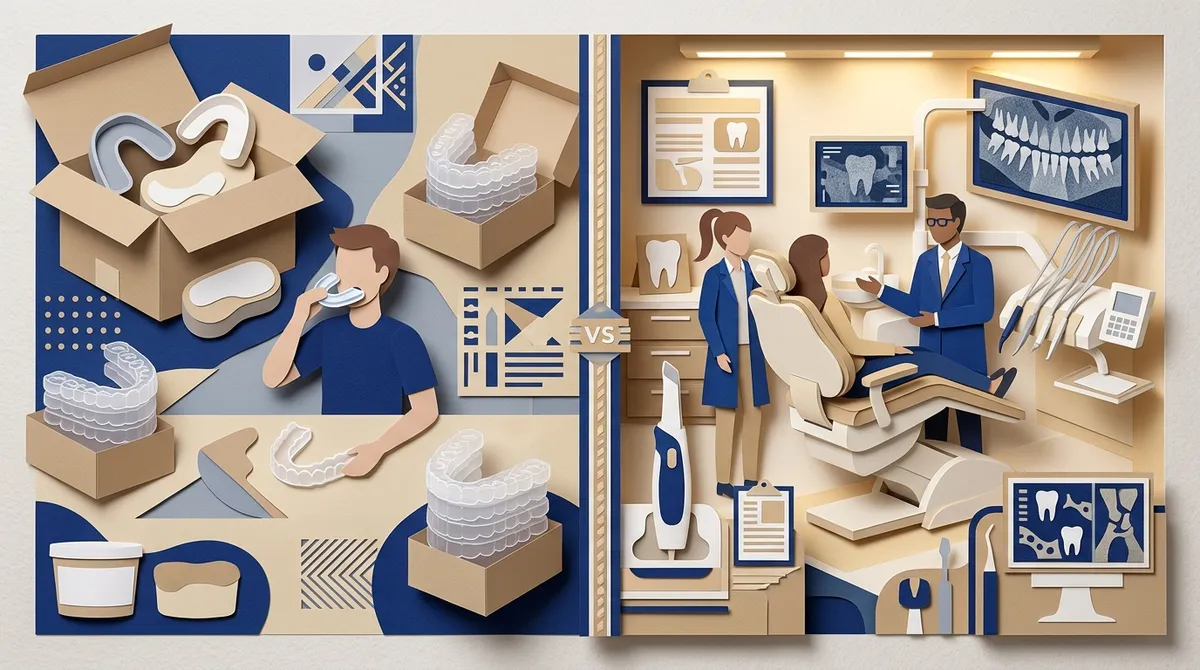
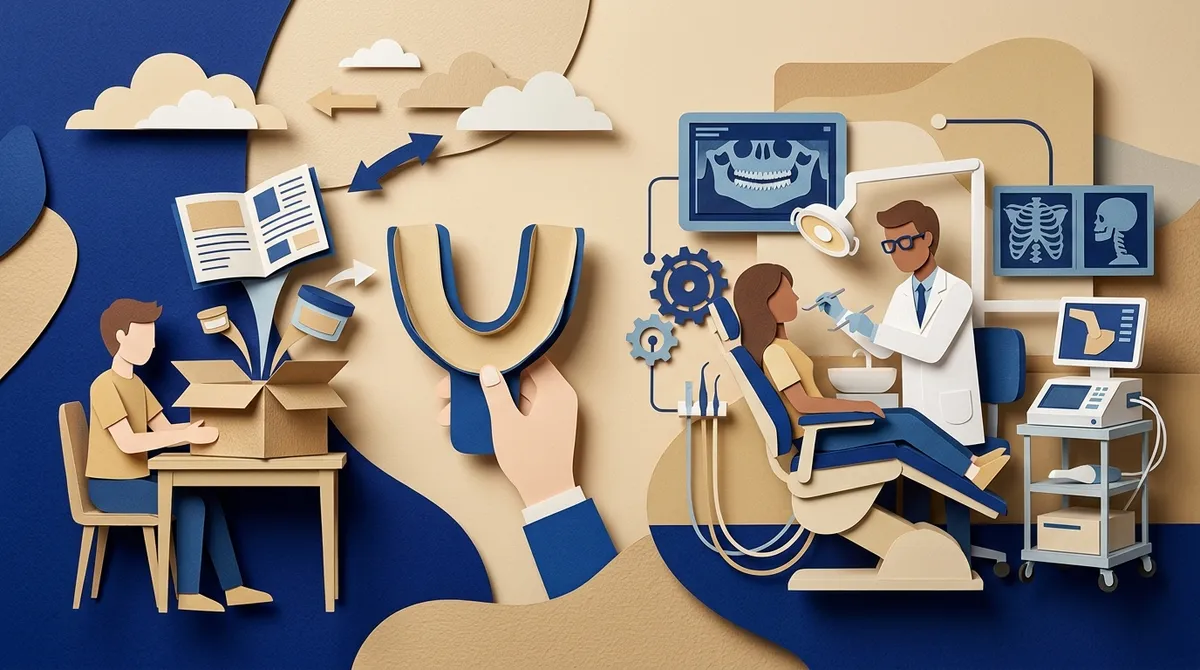
One of the biggest differences between at-home aligners vs professional orthodontics is how your treatment begins. With mail-order kits, you typically receive a home impression kit in the mail. You bite into putty, send it back, and someone reviews it remotely. That’s often the full extent of your initial assessment.
Professional orthodontic care is a very different experience. When you visit an orthodontist in person, you get a full clinical exam, photos, and digital scans. The orthodontist physically examines your teeth, gums, and jaw. This matters a lot — especially for catching problems that a home impression simply cannot detect.
When you schedule your first visit with a licensed orthodontist, you’re getting a thorough look at your full oral health picture — not just a snapshot of your teeth alignment.

2. The Role of X-Rays and Diagnostic Records
This one is a big deal. Professional orthodontists use X-rays and full diagnostic records before creating any treatment plan. These records reveal what’s happening beneath the surface — things like bone levels, root positions, and signs of gum disease.
At-home aligner systems typically skip this step entirely. There are no X-rays, no clinical records, and no way to know what’s happening below your gum line. If you have underlying issues — like bone loss or an impacted tooth — those can actually get worse during unsupervised aligner treatment.
- X-rays reveal root length and bone support
- Clinical exams catch gum disease before it worsens
- Diagnostic records help plan safe, effective tooth movement
- At-home kits rely only on surface impressions or scans
The American Dental Association consistently emphasizes that comprehensive diagnostic records are a foundation of safe orthodontic care. Skipping this step isn’t just cutting corners — it can lead to real complications.
3. Supervision and Monitoring Throughout Treatment
Here’s where professional orthodontics truly shines. When you work with an orthodontist, you have regular check-in appointments throughout your entire treatment. Your doctor monitors how your teeth are moving, makes adjustments when needed, and catches any red flags early.
With mail-order aligners, there is little to no in-person monitoring. You follow a pre-set plan, swap trays on a schedule, and hope everything goes as expected. If something goes wrong — and it can — there’s no one physically checking your progress.
Lack of supervision raises the risk of complications including:
- Gum recession
- Bite problems that develop or worsen
- Loose or shifting teeth
- Ineffective tooth movement
If you’re curious about what professional orthodontic treatment looks like from start to finish, you’ll find that regular supervision is one of the most valuable parts of the process.
4. What Conditions Each Option Can Treat
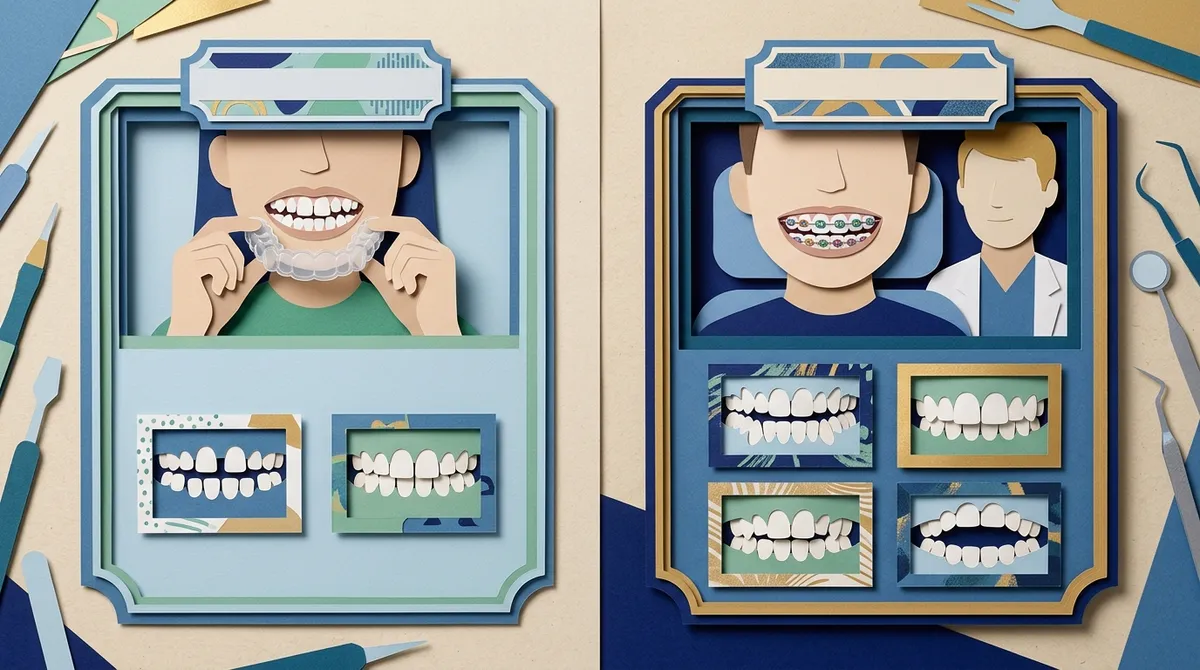
Not all smiles need the same solution. At-home aligners are generally marketed for mild cosmetic cases — think minor crowding of the front teeth. They are not designed to treat bite issues, complex crowding, or underlying jaw problems.
Professional orthodontic care — whether that’s braces or supervised clear aligners — can address a much wider range of conditions. This includes overbites, underbites, crossbites, significant crowding, spacing issues, and more.
| Condition | At-Home Aligners | Professional Orthodontics |
|---|---|---|
| Mild front tooth crowding | Sometimes suitable | Yes |
| Overbite or underbite | Not suitable | Yes |
| Crossbite | Not suitable | Yes |
| Significant crowding | Not suitable | Yes |
| Gum or bone concerns | Not detected or treated | Screened and managed |
| Bite correction | Not suitable | Yes |
If you’re wondering whether braces or aligners are right for your specific situation, reading about clear aligners vs braces and which option fits your needs is a great place to start.
5. Cost: What You Pay Upfront vs What You Get
Let’s talk money — because it’s often the first thing people think about. At-home aligners are typically priced around $1,800 to $2,500. That lower number can look very attractive at first glance.
Professional aligner systems and braces often cost more upfront. But here’s the important part: you’re paying for clinical expertise, X-rays, diagnostics, regular monitoring, and the peace of mind that comes from knowing a licensed professional is overseeing your care every step of the way.
| Cost Factor | At-Home Aligners | Professional Orthodontics |
|---|---|---|
| Upfront price range | ~$1,800–$2,500 | Varies by case and treatment |
| X-rays and diagnostics included | No | Yes |
| Follow-up appointments | Rarely included | Yes, throughout treatment |
| Insurance coverage possible | Usually not | Often yes |
| Payment plans available | Sometimes | Yes, often flexible |
Professional care also often qualifies for dental insurance coverage and flexible payment plans. If you’d like to explore your options, take a look at financing and insurance options that can make professional orthodontics more affordable than you’d expect.
6. Safety: What Happens When Things Go Wrong
This is arguably the most important difference. Teeth move in response to pressure. Without proper planning and supervision, that movement can cause damage — sometimes permanent damage. Orthodontists train for years to understand how to move teeth safely.
With at-home aligners, there is no safety net. If your teeth start shifting in an unexpected direction, if your gums start receding, or if you experience pain, you’re largely on your own. You may need to seek emergency orthodontic care to fix problems that developed during unsupervised treatment.
Orthodontic experts consistently recommend professional supervision for safer, more predictable results. The Florida Association of Orthodontists supports in-person evaluation and supervised care as the standard for safe treatment outcomes.
If something does go wrong during any stage of orthodontic care, knowing where to turn matters. Learn more about emergency orthodontic care in Clearwater and what to do if you ever need urgent help.
7. Long-Term Results and Retention
Straight teeth don’t stay straight on their own. After any orthodontic treatment — braces or aligners — you need retainers to hold your results. Professional orthodontic care always includes a retention plan. Your orthodontist will guide you on what type of retainer you need and how often to wear it.
At-home aligner programs may offer retainers for an additional cost, but follow-up care and retention planning are often minimal. This increases the chance of orthodontic relapse — where teeth slowly drift back toward their old positions.
Here’s a simple numbered breakdown of what a good long-term retention plan looks like after professional treatment:
- Get fitted for retainers at the end of active treatment
- Wear retainers full-time for the first few months as directed
- Transition to nighttime wear as your orthodontist recommends
- Attend follow-up appointments to check your retention progress
- Replace retainers as needed to keep your smile in place
For a deeper look at why retainers matter so much, check out this helpful overview of retainers and how they protect your smile long after treatment ends.
Professional Aligners: The Best of Both Worlds
Here’s something worth knowing: you don’t have to choose between convenience and safety. Professional clear aligners — like those offered at Brockway Orthodontics — give you the discreet, removable experience you’re looking for, with the expert supervision your smile deserves.
Clear aligners supervised by an orthodontist work for a much broader range of cases than at-home systems. They’re comfortable, nearly invisible, and backed by a treatment plan that’s customized to your unique teeth and bite. If you’re curious about what professionally supervised clear aligners look like, explore Spark™ Clear Aligners — a top-tier option available right here in Clearwater.
For teens, adults, and everyone in between, there’s a professional solution that fits your life. You can explore the full range of orthodontic services at Brockway Orthodontics to see what might work best for you.
Who Is a Good Candidate for At-Home Aligners?
To be fair, let’s give credit where it’s due. At-home aligners may be appropriate for a very small group of people — specifically adults with very mild, cosmetic-only crowding of the front teeth, no bite issues, no gum or bone concerns, and no history of complex dental work.
But here’s the honest truth: most people don’t know which category they fall into without a proper clinical exam. Even a smile that looks mild on the surface can have underlying issues that make at-home treatment risky.
Before choosing any aligner system, it’s always worth getting a professional opinion. Here’s a quick checklist to ask yourself:
- Have I had a full orthodontic exam with X-rays recently?
- Do I have any bite issues or jaw discomfort?
- Have I been told I have gum disease or bone loss?
- Do I have complex dental work like implants or bridges?
- Have I had orthodontic treatment before that relapsed?
If you answered yes to any of those, please see an orthodontist before pursuing at-home aligners. Your smile — and your long-term oral health — will thank you.
A Side-by-Side Summary
| Feature | At-Home Aligners | Professional Orthodontics |
|---|---|---|
| In-person exam | No | Yes |
| X-rays and diagnostic records | No | Yes |
| Supervised treatment | Minimal/None | Throughout treatment |
| Treats bite issues | No | Yes |
| Retention planning | Limited | Comprehensive |
| Safety oversight | Low | High |
| Insurance coverage | Rarely | Often available |
Why Clearwater Families Choose Professional Orthodontic Care
Families across Clearwater and the surrounding Pinellas County area have discovered that professional orthodontic care offers something a mail-order kit simply can’t — a real relationship with a doctor who knows your smile, your history, and your goals.
At Brockway Orthodontics, Dr. Brockway and the team take time to understand every patient’s unique needs. Whether you’re a parent bringing in your child for an early orthodontic evaluation, a teenager ready for treatment, or an adult finally going for that smile you’ve always wanted, personalized care makes all the difference.
You can visit us on Google — Brockway Orthodontics to read real reviews from patients who’ve experienced professional care firsthand and see why so many Clearwater-area smiles trust our team.
If you’d like to learn more before your first appointment, explore what to expect at your orthodontic consultation — it’s a relaxed, no-pressure visit designed to help you feel confident about your options.
The Bottom Line on At-Home Aligners vs Professional Orthodontics
When it comes to at-home aligners vs professional orthodontics, the differences are clear. At-home systems offer convenience and a lower upfront price. But they skip the clinical exam, the X-rays, the supervision, and the safety net that professional care provides.
For most people — especially those with any complexity in their bite, gum health, or alignment — professional orthodontic care is the safer, smarter choice. And with flexible payment options and clear aligners that are just as discreet as mail-order kits, there’s really no reason to take unnecessary risks with your smile.
Your teeth are with you for life. They deserve expert care. Schedule your free consultation at Brockway Orthodontics today and take the first step toward a healthier, happier smile — with a real doctor in your corner every step of the way.
FAQs
Q: Are at-home aligners safe compared with professional orthodontics?
A: At-home aligners can be risky for many patients because they skip the in-person exam, X-rays, and ongoing supervision that professional orthodontics provides. Without these safeguards, issues like gum recession, bite problems, or ineffective tooth movement can go undetected. For the safest results, most orthodontic experts recommend care supervised by a licensed orthodontist.
Q: Can at-home aligners fix bite problems or just straighten front teeth?
A: At-home aligners are generally only suited for very mild, cosmetic alignment of the front teeth — they are not designed to treat bite issues like overbites, underbites, or crossbites. Professional orthodontics can address a much wider range of problems, including complex bite corrections. If you have any bite concerns, an in-person evaluation is the best place to start!
Q: How much cheaper are at-home aligners than professional orthodontic treatment?
A: At-home aligner systems are often priced around $1,800 to $2,500, which can seem lower than professional treatment upfront. However, professional orthodontics may be covered by insurance and often includes X-rays, diagnostics, monitoring appointments, and a retention plan — giving you far more value for your investment. Flexible payment plans can also make professional care very affordable.
Q: Do professional orthodontists use X-rays before starting aligner treatment?
A: Yes! Professional orthodontists take X-rays and full diagnostic records before starting any treatment. These records reveal what’s happening below the gum line — including root positions, bone levels, and signs of gum disease — so your treatment plan is safe and tailored to your unique smile. At-home kits skip this step entirely, which is one of the biggest safety differences.
Q: Who is a good candidate for at-home aligners?
A: At-home aligners may be suitable for adults with very mild front-tooth cosmetic crowding, no bite issues, and no underlying gum or bone concerns. The tricky part is that most people don’t know what category they fall into without a professional exam — so even if your alignment looks simple, it’s always worth checking with an orthodontist first to make sure at-home treatment is truly safe for you.