Key Takeaways
-
Teeth naturally drift back toward their original positions after braces or aligners, making metal retainers essential for long-term results; retention is often a lifelong commitment as teeth continue moving with age.
-
Fixed bonded retainers only protect front teeth where the wire is bonded, so orthodontists often recommend combining them with removable retainers for complete arch protection, especially at night.
-
Proper hygiene around bonded wires requires daily flossing with a threader or water flosser to prevent plaque buildup that can cause cavities and gum irritation at bonding points.
-
Research shows no significant long-term difference between fixed and removable retainers for arch width or crowding, so the best choice depends on individual bite, lifestyle, hygiene habits, and compliance ability.
-
Loose, bent, or broken retainers should be repaired immediately by your orthodontist, as delays allow teeth to shift unnoticed and can waste previous treatment investment.
-
Removable Hawley retainers require gentle care including cool-water rinsing, soft brushing, protective case storage, and strict adherence to your orthodontist's prescribed wear schedule to prevent tooth relapse.
So your braces just came off, or maybe your Spark™ clear aligner treatment is finally complete. First of all, congratulations! Your new smile deserves a happy dance. But here’s the thing nobody tells you enough: the real work of keeping that smile straight is just beginning. That’s where a metal retainer steps in, and honestly, it’s one of the most important tools in your orthodontic journey. Let’s talk about why this simple little appliance matters so much, and how to make the most of it.
Teeth are sneaky. Even after months or years of careful movement with braces or aligners, they still want to drift back toward their old positions. A metal retainer holds everything in place while your bone and gum tissue settle into their new normal. Whether you’re a parent helping your teen remember to wear theirs, or an adult getting used to a fixed wire behind your teeth, this guide breaks down everything you need to know in plain, friendly language.
What Exactly Is a Metal Retainer?
A metal retainer is an orthodontic appliance you wear after finishing braces or clear aligner treatment. Its job is simple: stop your teeth from shifting back toward where they started. Retention is usually a long-term commitment, and for many people, it becomes a lifelong habit because teeth can keep moving as we age.
When people say “metal retainer,” they usually mean one of two things. Understanding the difference helps you know what to expect from your own treatment plan.
The Two Main Types
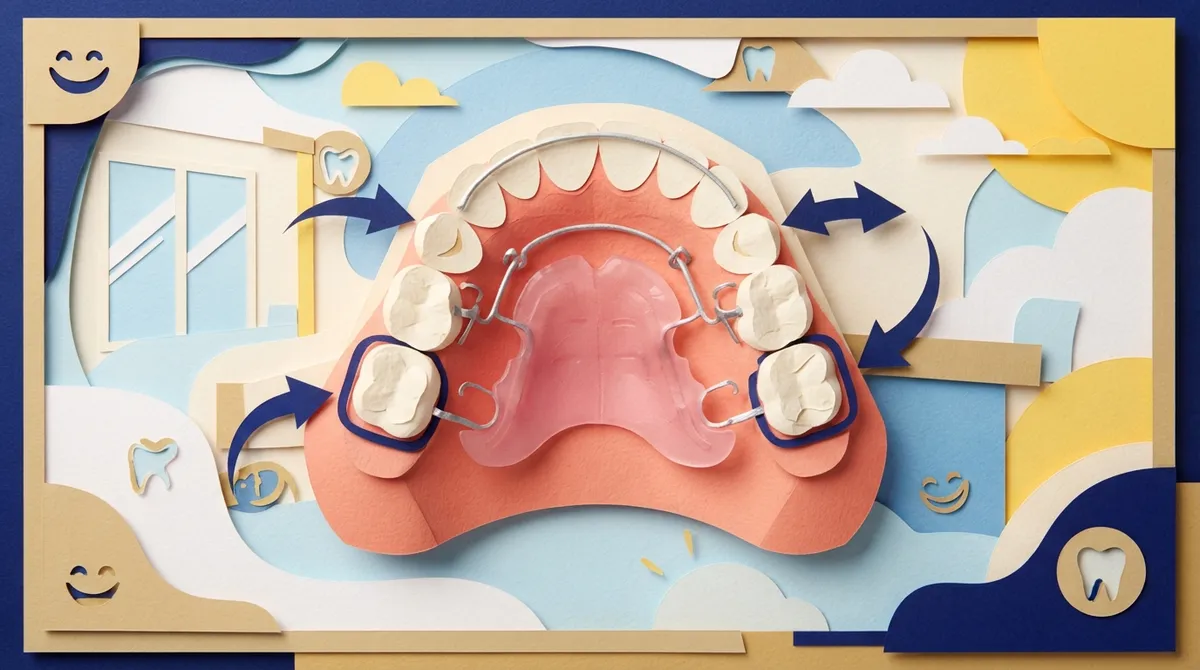
- Hawley retainer: This removable retainer combines a molded acrylic base that sits against the roof of your mouth or behind your lower teeth, with a stainless-steel wire that wraps across the front of your teeth.
- Fixed bonded retainer: This is a thin wire bonded directly to the back (tongue-side) surfaces of your teeth, usually the front six. It stays in place permanently unless your orthodontist removes it.
Both types have been trusted in orthodontics for decades, and both do a great job when they’re cared for properly. The right choice depends on your bite, your lifestyle, and what Dr. Brockway recommends after reviewing your specific case during your first visit.
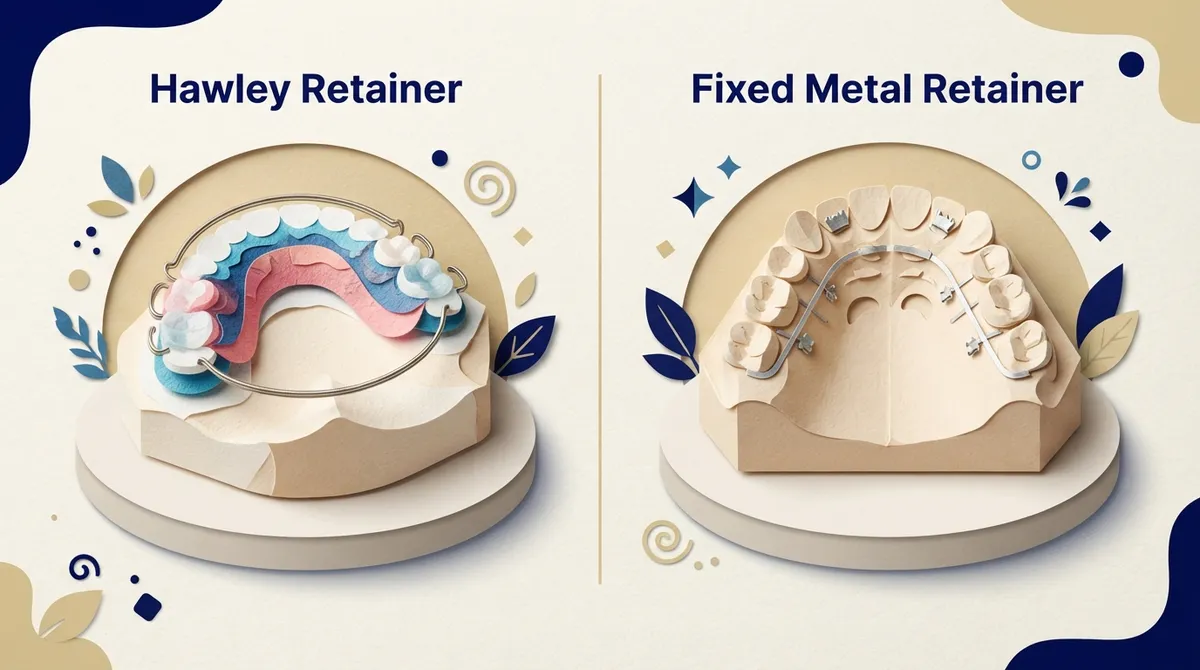
Hawley Retainer vs. Fixed Metal Retainer: A Side-by-Side Look
Choosing between a removable Hawley retainer and a fixed bonded wire can feel confusing at first. Here’s a simple comparison to help you understand the tradeoffs.
| Feature | Hawley Retainer | Fixed Bonded Retainer |
|---|---|---|
| Visibility | Visible wire across front teeth | Hidden behind teeth |
| Removable? | Yes, for eating and cleaning | No, stays in place daily |
| Compliance needed | High, must remember to wear it | Low, works automatically |
| Repairable | Yes, easy to adjust or fix | Possible, but needs an office visit |
| Typical lifespan | About 5 to 10 years with good care | About 5 to 10 years with good care |
| Estimated cost per arch | $150 to $350 | $100 to $500 |
Every mouth is different, so these numbers can vary. Your orthodontist will give you a personalized estimate during your consultation. If you’re curious about payment options, our financing and insurance page walks through what’s available.
4 Things You Absolutely Need to Know About Metal Retainers
Ready for the good stuff? Here are four essential facts that will help you get the most out of your retainer, whether it’s removable or fixed.
1. Fixed Retainers Only Protect the Teeth They’re Bonded To
A fixed metal retainer usually stabilizes only your front incisors, since that’s where the wire is bonded. It doesn’t control your whole bite or the shape of your dental arch. Because of this, your orthodontist might also recommend wearing a removable retainer alongside it, especially at night. This combination gives your whole smile the protection it deserves.
2. Hygiene Habits Need to Level Up
Cleaning around a bonded wire takes a bit more effort than brushing normally. Plaque and tartar love to hide around the bonding points, which can lead to cavities or gum irritation if ignored. Here’s what dental professionals typically recommend:
- Use a floss threader or interdental brush to clean under the wire daily
- Consider a water flosser for an easier, faster clean
- Brush gently around the wire with a soft-bristled toothbrush
- Schedule regular checkups so your orthodontist can catch buildup early
- Avoid skipping flossing, even when you’re tired or in a rush
The American Dental Association emphasizes that consistent oral hygiene habits are just as important with orthodontic appliances as they are with natural teeth. A few extra minutes each day goes a long way toward protecting your investment.
3. Removable Retainers Need a Little TLC Too
If you have a Hawley retainer, treat it like a delicate piece of jewelry. Follow these simple care steps to keep it working well for years:
- Rinse it with cool water after removing it, never hot water
- Brush it gently with a soft toothbrush and mild soap
- Store it in its protective case whenever it’s not in your mouth
- Avoid chewing gum, eating, or talking excessively while wearing it
- Keep it away from pets, since dogs love chewing on retainers
- Bring it to every checkup so your orthodontist can inspect the fit
Following your orthodontist’s wear schedule matters too. Most patients wear their retainer full-time at first, then gradually shift to nights only. Skipping this schedule is one of the fastest ways teeth can start shifting again.
4. A Loose or Broken Retainer Is Not Something to Ignore
If your fixed wire feels loose, bent, or has come unstuck from a tooth, call your orthodontic office right away. An unnoticed break can allow teeth to shift without you realizing it, and it can also irritate your tongue or cheek. The same goes for a cracked or ill-fitting Hawley retainer. Waiting too long to get it repaired could mean starting treatment over, which nobody wants after all that hard work. If you’re ever unsure, our page on what to do if your retainer breaks offers a helpful quick guide.
What Does Research Say About Metal Retainers?
A 2023 critical review of orthodontic retainers looked closely at how fixed and removable retainers perform over time. The findings were interesting. Fixed retainers seemed to offer a slight early advantage in keeping lower front teeth aligned. However, researchers found no significant long-term difference between fixed and removable retainers for several measures, including arch width, tooth crowding, and overall arch length.
What does this mean for you? It means there’s no single “best” retainer for everyone. The right choice really does depend on your bite, your risk of relapse, your hygiene habits, and how reliably you can follow instructions. This is exactly why personalized care matters so much, and why Dr. Brockway takes time to review each patient’s case individually rather than offering a one-size-fits-all recommendation.
Who Benefits Most From a Metal Retainer?
Metal retainers work well for a wide range of patients, but certain groups tend to get the most value from them.
- Parents of teens: A durable, adjustable Hawley retainer is easy for growing mouths and can be modified as needed.
- Busy professionals: A discreet fixed bonded wire works quietly behind the scenes without disrupting meetings or social events.
- Orthodontic relapse patients: If your teeth have shifted since a previous treatment, a new retainer plan (sometimes alongside Spark™ Clear Aligners) can help correct and then protect your progress.
- Health-conscious patients: Those with periodontal concerns often appreciate the customizable, removable nature of a Hawley retainer for easier cleaning.
No matter which category fits you best, the goal is the same: protecting the results you worked hard to achieve. If your teeth have shifted and you’re wondering whether a metal retainer alone can fix it, the honest answer is usually no. Retainers maintain a position, they don’t move teeth significantly. If you’ve noticed relapse, it’s worth scheduling a visit to discuss options like braces or clear aligners again.
How Brockway Orthodontics Supports Your Retention Journey
At Brockway Orthodontics in Clearwater, Florida, we believe your smile deserves attention long after your braces come off. Dr. Brockway and her team walk you through every step of retainer care, from fitting to cleaning tips to what happens if something feels off. We use modern technology like digital impressions and 3D imaging to make sure your retainer fits comfortably from day one.
We also know families juggle busy schedules, which is why we offer flexible appointment options and, in certain cases, same-day service. Whether you’re a teen finishing up treatment, an adult returning for a touch-up, or a parent scheduling your child’s first retainer fitting, our friendly team is here to help. You can even learn more about orthodontic best practices from the Florida Association of Orthodontists, an organization Dr. Brockway values as a resource for staying current on care standards.
Curious what other Clearwater families think? Feel free to visit us on Google — Brockway Orthodontics and read real patient experiences. You can also follow along on Facebook for smile transformations and helpful tips.
Simple Do’s and Don’ts for Retainer Success
Let’s wrap up the practical advice with a quick reference list you can keep in mind every day.
- Do wear your retainer exactly as prescribed, even if your teeth feel “fine”
- Do bring your retainer to every follow-up appointment
- Do reach out quickly if something feels loose or uncomfortable
- Don’t chew gum or eat while wearing a removable retainer
- Don’t skip flossing around a fixed wire, even on busy days
- Don’t leave your retainer somewhere hot, like a car dashboard, since heat can warp the plastic
Small habits like these make a big difference over the years. Retention truly is a marathon, not a sprint, but the payoff, a smile that stays straight for life, is absolutely worth it.
Ready to Protect Your Smile?
Whether you’re finishing treatment soon or your current retainer needs a checkup, our team at Brockway Orthodontics is ready to help. We treat patients of every age, from first-time teen patients to adults returning for retreatment, and we always explain your options in a way that actually makes sense. Book your appointment online today and let’s make sure your beautiful smile stays exactly where it belongs.
FAQs
Q: What is a metal retainer and how does it work?
A: A metal retainer is an appliance you wear after braces or clear aligners to keep your teeth from shifting back. It works by holding your teeth steady while the surrounding bone and gum tissue settle into their new positions, kind of like a cast that keeps a healed bone from moving.
Q: What is the difference between a Hawley retainer and a permanent bonded retainer?
A: A Hawley retainer is removable and made of acrylic with a metal wire, so you take it out to eat and clean it. A bonded retainer is a thin wire glued behind your teeth permanently, so it works quietly without you needing to remember to wear it.
Q: How long do metal retainers last?
A: With good care, both Hawley and fixed bonded retainers typically last around 5 to 10 years. How long yours lasts really depends on how well you clean it, store it, and whether you follow your orthodontist’s wear instructions.
Q: How many hours a day should I wear a removable metal retainer?
A: Most orthodontists start patients on full-time wear, meaning all day and night except while eating, then shift to nighttime-only wear after a few months. Always follow the specific schedule Dr. Brockway gives you, since every smile is a little different.
Q: What should I do if my metal retainer is loose, bent, broken, or uncomfortable?
A: Don’t wait it out, give your orthodontist a call as soon as you notice a problem. A loose wire or cracked retainer can let your teeth shift without you realizing it, so a quick fix now can save you a lot of hassle later.
Our Service Area