Key Takeaways
-
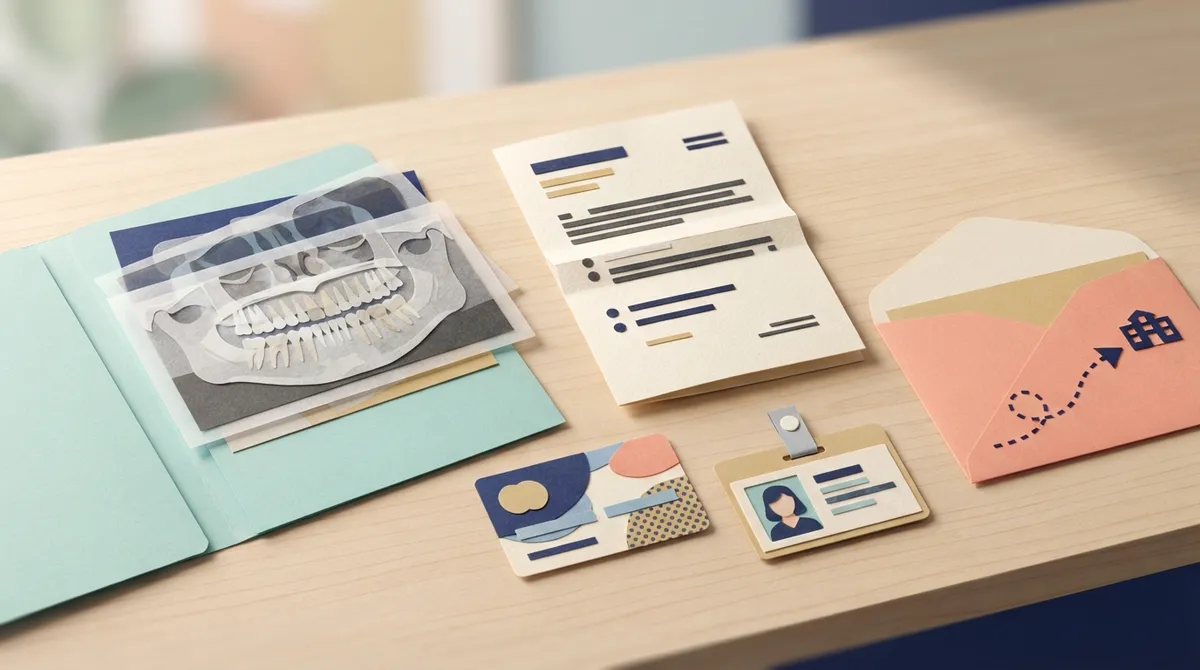
Bring recent dental X-rays if you have them, especially a panoramic X-ray, but do not delay booking if you cannot find any; the orthodontist will decide what new images are needed.
-
Ask your general dentist to send X-rays and notes directly to the orthodontic office a few days before your visit, then confirm they arrived.
-
Write a one-page summary of your dental history (past braces, fillings, extractions, injuries, habits like thumb sucking or grinding) plus your medication, supplement, and allergy list.
-
Do not arrange your own photos, molds, digital scans, or new X-rays before the visit; the orthodontist will examine you first and order only what is clinically necessary.
-
Bring your insurance card and photo ID, and check whether your plan includes orthodontic benefits, since some plans cover braces and aligners and others do not.
-
Referrals are not always required, so call the orthodontic office to confirm whether your plan or the practice needs one before your visit.
Getting ready for your first orthodontic visit is exciting! You might be picturing a straighter smile already. But then a little question pops up: what dental records should I bring to an orthodontist? If you have ever stood in front of a drawer of old paperwork wondering what counts, you are not alone.
Here is some good news. You do not need a giant folder or a perfect paper trail. Orthodontists see new patients every day, and the team will guide you. Still, a little preparation helps your visit run smoothly and helps the orthodontist understand your smile faster.
In this friendly guide, we will walk through exactly what to gather, what to skip, and how to get records from your general dentist. Whether you are a parent planning for your child, a teen eager for braces, or an adult thinking about a fresh start, you will find simple steps below.
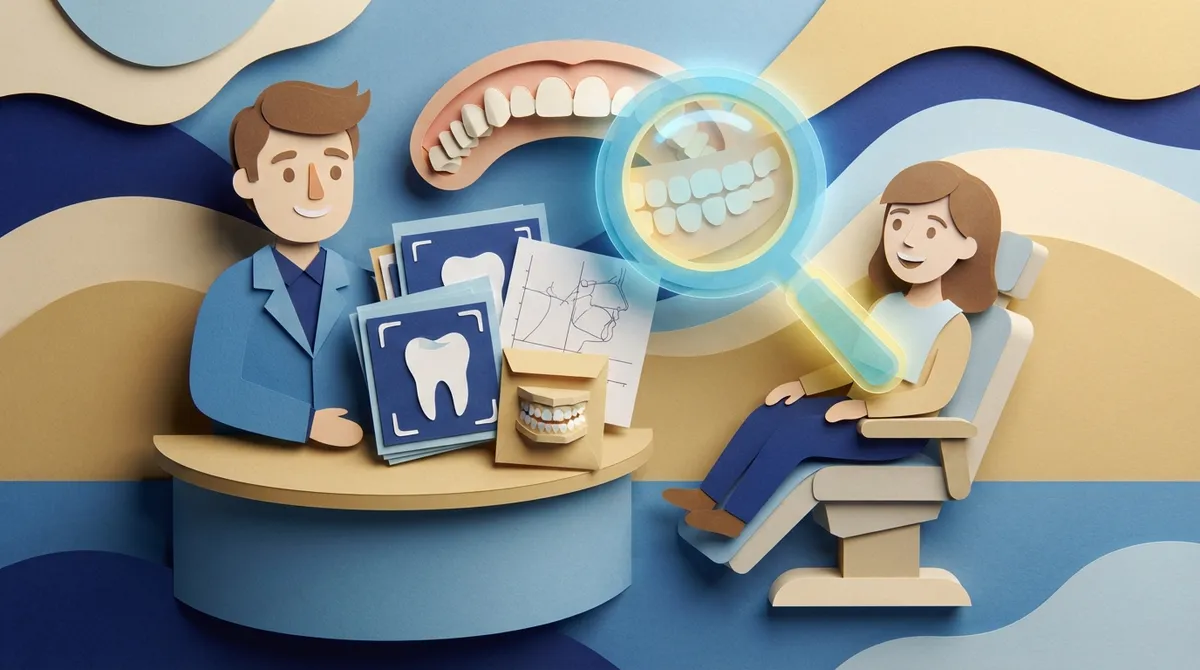
Why Dental Records Matter at Your First Orthodontic Visit
Your orthodontist wants the full picture of your oral health. Past dental records give helpful clues about how your teeth, gums, and jaws have changed over time.
Records can help your orthodontist:
- See how your teeth and jaw have developed
- Spot any dental work that could affect your treatment
- Avoid repeating X-rays you already have
- Plan safe, personalized care that fits your health history
Think of records like a map. The orthodontist will still examine you in person, but a map makes the trip easier. And if you cannot find a single record, please do not delay booking. The orthodontist can decide what new records are needed after your exam.
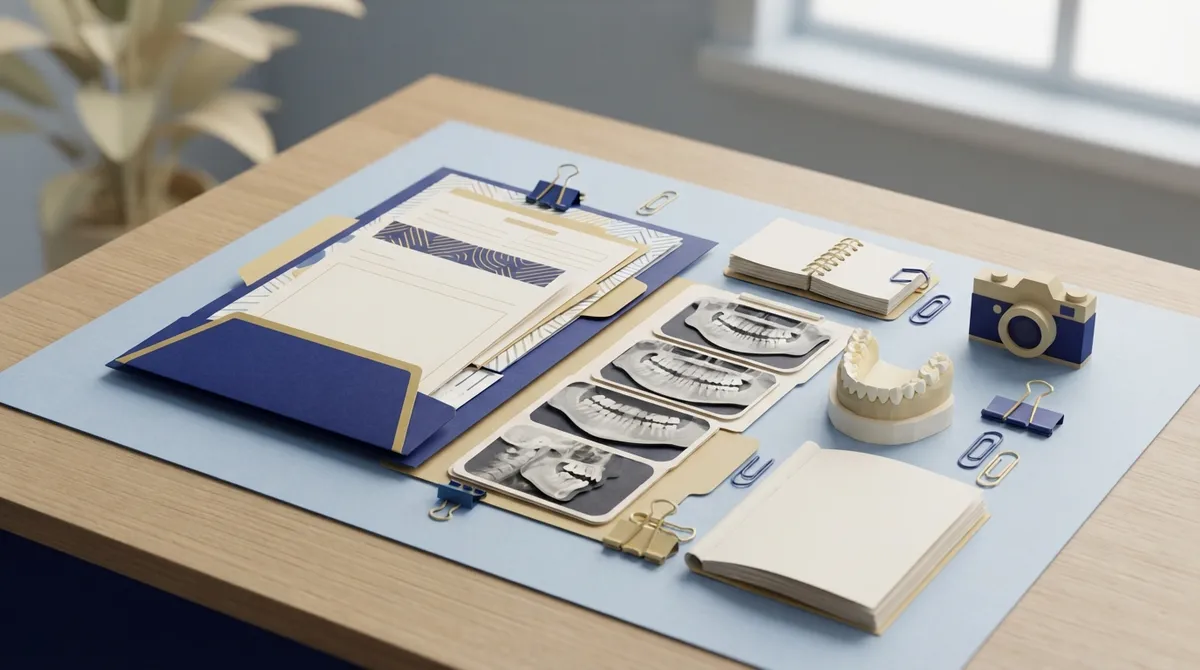
The Dental Records Checklist
So, what dental records should I bring to an orthodontist? Start with the items below. Bring what you have, and do not worry about the rest.
Recent Dental X-Rays
If you have recent X-rays from your general dentist, bring them or ask your dentist to send them over. A panoramic X-ray, which shows all your teeth and jaws in one image, is especially useful. Other dental X-rays can help too.
Your orthodontist decides whether new images are needed. X-rays should be taken for a good reason, not automatically, so sharing recent ones can save you time and extra exposure.
A Referral Letter or Notes From Your Dentist
If your dentist gave you a referral letter, bring it along. It can include notes about your teeth, concerns they have noticed, and any treatment you have had. Some offices and insurance plans ask for referrals and others do not, so it is smart to check ahead. Many families are surprised to learn that you often can see an orthodontist without a referral.
Your Dental History
A short summary of your dental history is very helpful. You can jot it down on a single page. Include things like:
- Past braces, aligners, or retainers
- Fillings, crowns, bridges, or implants
- Tooth extractions or missing teeth
- Injuries to the mouth, teeth, or jaw
- Jaw surgery or jaw pain
- Habits such as thumb sucking, grinding, or clenching
Your Medical History and Medications
Your overall health matters for your smile. Be ready to share:
- A list of current medications and supplements
- Allergies, including latex or medication allergies
- Major health conditions or past surgeries
These details help your orthodontist plan treatment safely. Writing them down ahead of time means nothing gets forgotten once you are in the chair.
Your Dentist’s Contact Information
Bring the name, office address, and phone number of your general dentist. If you see other health professionals about related issues, such as an oral surgeon or a sleep specialist, bring their details too. Good teamwork leads to better care.
Do You Need Orthodontic Photos, Molds, or Scans?
No! This is one of the most common worries, so let’s clear it up. You do not need to get photographs, impressions, digital scans, or new X-rays on your own before your visit.
Your orthodontist will examine you first and then decide which diagnostic records make sense. At Brockway Orthodontics, modern tools like digital impressions and 3D imaging help us plan treatment precisely, so there is no need for you to arrange any of it ahead of time.
Quick Reference Table: What to Bring
Here is an easy way to see what is helpful and what is optional.
| Item | Why It Helps | Required? |
|---|---|---|
| Recent dental X-rays | Shows teeth and jaw development; may prevent repeat images | Helpful, not required |
| Referral letter or dentist notes | Shares your dentist’s concerns and treatment history | Depends on the office and plan |
| Dental history summary | Explains past work, injuries, and habits | Very helpful |
| Medical history and medication list | Keeps your treatment safe | Very helpful |
| Dentist contact details | Lets the teams coordinate care | Helpful |
| Insurance card and photo ID | Supports eligibility and cost conversations | Yes, for admin |
| New photos, molds, or scans | Taken by the orthodontist after your exam | No, do not arrange these |
How to Gather Your Dental Records Step by Step
Ready to get organized? Follow these simple steps.
- Call your general dentist. Let the office know you are seeing an orthodontist and ask what records they can share.
- Ask for X-rays and notes. Request recent X-rays and any treatment notes or referral letters.
- Have them send records directly. Ask your dentist to send images and records straight to the orthodontic office before your visit when possible. This is often faster and keeps image quality high.
- Write your history on one page. List dental and medical history, medications, allergies, and past injuries.
- Gather your admin items. Grab your insurance card, photo ID, and any referral paperwork.
- Confirm with the orthodontic office. Call or check in to make sure everything arrived. You can always contact our team if you have questions.
Give your dentist a few days to a week to process the request. Planning ahead keeps things stress free.
How Recent Do Your X-Rays Need to Be?
There is no single magic date. In general, newer images are more useful because teeth and jaws can change, especially in growing kids and teens. The orthodontist will look at what you bring and tell you whether it is current enough or whether updated images are needed.
If your X-rays are old, bring them anyway. They can still show how your teeth have changed over time. And if you have none at all, that is okay. Your orthodontist can take new images only if they are clinically justified.
Insurance and ID: The Non-Clinical Essentials
These are not dental records, but they make your visit easier. Bring your dental insurance card and a photo ID. Check whether your plan includes orthodontic benefits, since some plans cover braces and aligners and others do not.
Not sure how coverage works? Our guide on how to use dental insurance to help pay for braces can help. You can also explore financing and insurance options at our practice. We love helping families find a plan that fits their budget.
Tips for Different Patients
Every patient is different, so here are a few tips tailored to you.
For Parents Bringing a Child or Teen
Bring your child’s records, plus a parent or legal guardian who can take part in consent and treatment talks. Jot down any questions about growth, habits like thumb sucking, or early signs your child may need care. If you are wondering about timing, read when your child should first see an orthodontist. Learn more about early treatment and adolescent treatment too.
For Teens and Young Adults
Planning for a big event like graduation? Let the team know your goals and timeline. If you want something discreet, ask about clear options such as Spark™ Clear Aligners, which are a more affordable alternative to Invisalign.
For Busy Adult Professionals
Short on time? Ask your dentist to send records ahead so your visit is quick and focused. We know schedules are tight, and in certain cases same-day treatments may be possible. Explore our adult treatment options to see what fits your lifestyle.
For Patients Returning After Past Braces
If you had braces before and your teeth have shifted, bring any old retainers, photos of your original smile, and notes about when you stopped wearing your retainer. These clues help your orthodontist understand what changed. Relapse is common, and it can be corrected. See our guide on retainers to learn why they matter.
For Patients With Gum or Complex Dental Concerns
If you have gum disease, past periodontal treatment, implants, or jaw concerns, bring notes from your dentist or specialist. Your orthodontist may coordinate with them to create a customized plan that supports both function and appearance.
What Happens at Your First Orthodontic Visit?
Once you arrive, the team will review your records, talk with you about your goals, and examine your teeth, bite, and jaw. Then the orthodontist will explain your options in plain language and decide whether any new records are needed.
Want to know more about the day? Check out our first visit page or this helpful guide on what to expect at the orthodontist. You can also read more about your orthodontic consultation.
Choosing the right office matters too. At Brockway Orthodontics, Dr. Brockway takes time to listen to your concerns and dreams for your smile, so you feel comfortable and informed from start to finish. You can meet Dr. Brockway to see why so many Clearwater families trust her. To help you decide, read how to find the right orthodontist in Clearwater, FL.
Common Mistakes to Avoid
A few small slips can slow things down. Watch out for these:
- Waiting for perfect records. Do not postpone your visit just because you cannot find X-rays.
- Forgetting medications. Always bring a current list, including supplements.
- Skipping the dentist call. Asking your dentist to send records directly saves time.
- Not checking insurance. Confirm orthodontic benefits before your visit.
- Arranging your own scans or impressions. Let the orthodontist decide what is needed.
Want to avoid more pitfalls? Our post on mistakes to avoid when choosing an orthodontist is a great read.
A Simple Pre-Visit Checklist
Print this list or save it on your phone:
- Recent dental X-rays (or ask your dentist to send them)
- Referral letter or dentist notes, if you have them
- One-page dental and medical history
- Medication, supplement, and allergy list
- Dentist and health professional contact details
- Insurance card and photo ID
- Your questions and goals for your smile
Ready to Start Your Smile Journey?
So, what dental records should I bring to an orthodontist? Bring recent X-rays if you have them, a short dental and medical history, your medication list, your dentist’s contact details, and your insurance and ID. Then relax, because the orthodontist will take care of the rest.
If you are in the Clearwater area, we would love to meet you. Brockway Orthodontics offers metal braces, ceramic braces, and Spark™ Clear Aligners for kids, teens, and adults. Book your appointment online and take the first step toward a smile you love. You can also visit us on Google — Brockway Orthodontics to read what our patients are saying. For general oral health guidance, the American Dental Association is a trusted resource, and you can learn more about orthodontic care in Florida through the Florida Association of Orthodontists. Follow our team on Facebook for smile tips and community news.
FAQs
Q: What should I bring to my first orthodontist appointment?
A: Bring any recent dental X-rays, a short summary of your dental and medical history, and a list of your medications and allergies. Add your dentist’s contact details, your insurance card, and a photo ID. If you are missing something, do not worry, because the orthodontist can work with what you have.
Q: Should I bring dental X-rays to an orthodontist?
A: Yes, if you have recent ones, they are very helpful. They can show how your teeth and jaws are developing and may help you avoid repeat images. If you do not have any, the orthodontist will decide whether new X-rays are truly needed after your exam.
Q: Can my dentist send my records directly to the orthodontist?
A: Absolutely! Most dental offices are happy to send X-rays and notes straight to the orthodontic office before your visit. Call your dentist a few days ahead and ask them to send records to your orthodontist, then confirm they arrived.
Q: Do I need a referral to see an orthodontist?
A: It depends on the practice and your insurance plan. Many offices welcome patients without a referral, but some plans ask for one. A quick call to the orthodontic office will tell you for sure.
Q: Will the orthodontist take new X-rays, photos, or scans at the first visit?
A: Maybe, but only if they are needed. The orthodontist will examine you first and then choose which records make sense for your case. You never have to arrange photos, molds, or scans on your own beforehand.
Our Service Area