Key Takeaways
-
The AAO recommends a child's first orthodontic check-up by age 7, or sooner if you notice a concern such as crowding, a crossbite, or a persistent habit like thumb sucking.
-
An age-7 evaluation is an information visit, not an automatic start to braces; many children simply receive a monitoring plan with follow-up check-ups every 6 to 12 months.
-
At age 7, most children are in the mixed dentition stage, so the visit reveals how adult teeth are coming in and whether issues like crossbites, crowding, or jaw growth differences need attention.
-
Parents can prepare by listing concerns, bringing dental records or x-rays, noting family history of braces or jaw issues, and framing the visit to their child as a simple smile check-up.
Picture this: your seven-year-old grins at you over breakfast, and you spot a tooth coming in at a funny angle. Or maybe your child just lost a front tooth, and the new one looks a little crowded. Many parents ask, “Is this normal, or should someone take a look?” That is a great question, and you are not alone in asking it.
A Clearwater orthodontic evaluation at age seven is a simple check-up. It is not a signal that braces are right around the corner. The American Association of Orthodontists (AAO) recommends a child’s first orthodontic check-up by age 7, or sooner if you notice a concern. Think of it as a friendly look at how your child’s teeth, bite, and jaws are growing.
In this guide, we will walk you through why age seven matters, what happens at the visit, what we look for, and how to get ready. We will also cover when treatment starts early and when we simply watch and wait. Let’s make this feel easy for you and your child.
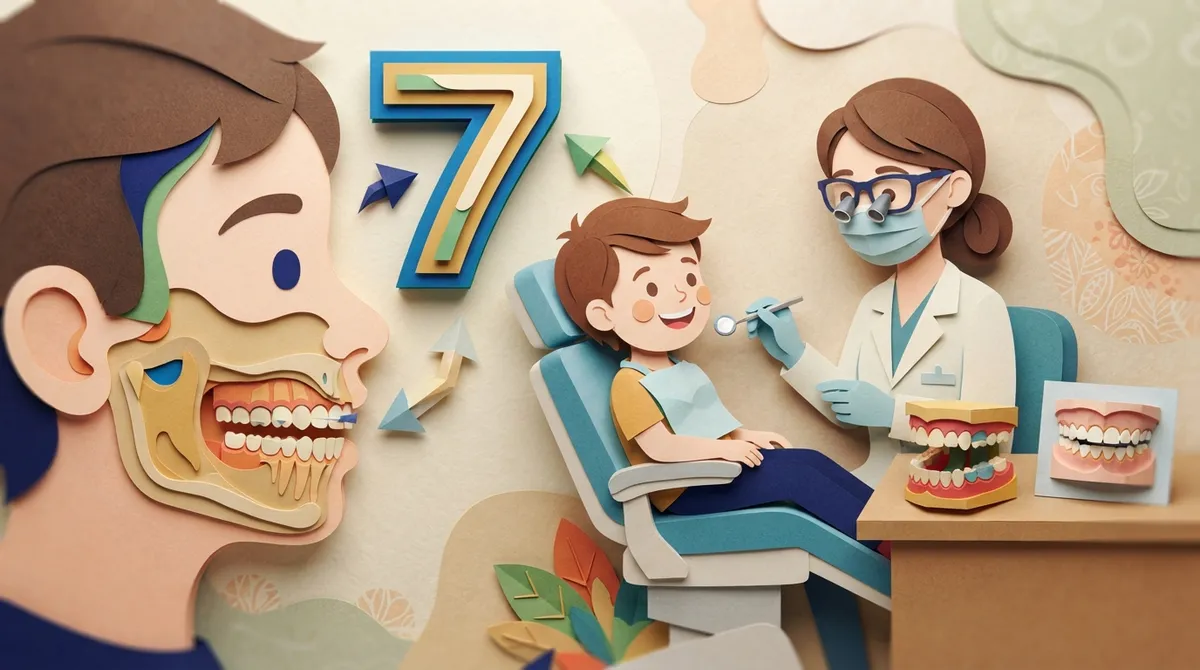
Why Does Age Seven Matter for an Orthodontic Check-Up?
Around age seven, many children are in what dentists call the mixed dentition stage. That means they have both baby teeth and new adult teeth in their mouths. The American Academy of Pediatric Dentistry (AAPD) describes this stage as running from roughly ages 6 to 11.
This mix is helpful for us. We can see how the adult teeth are coming in, how much room they have, and how the upper and lower jaws line up. Some patterns show up early, even before all the adult teeth arrive.
Here is the key point: an evaluation at age seven is about information. It is not an automatic start to treatment. The AAO treats this as a screening milestone, not a treatment-start age.
Early Look, Better Plan
When we see a child early, we can build a plan that fits their growth. Some children benefit from guiding jaw growth while they are still growing. Others do best with a simple “let’s keep an eye on it” plan. Both are good outcomes, because you leave with clear answers.
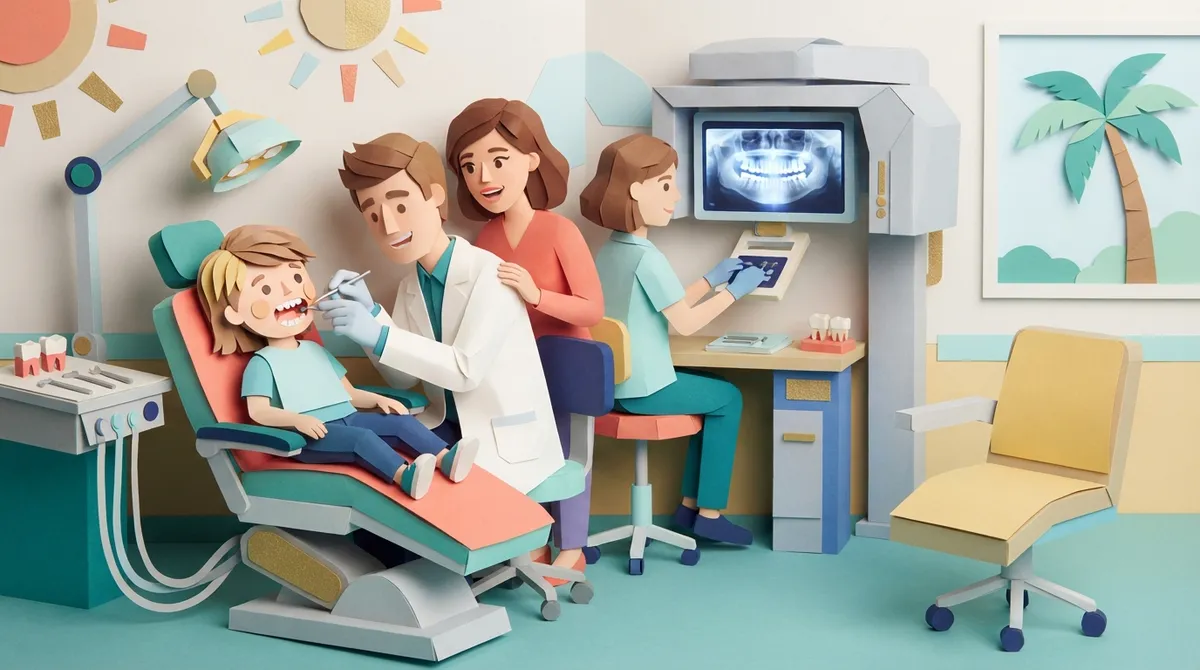
What Happens During a Clearwater Orthodontic Evaluation at Age Seven?
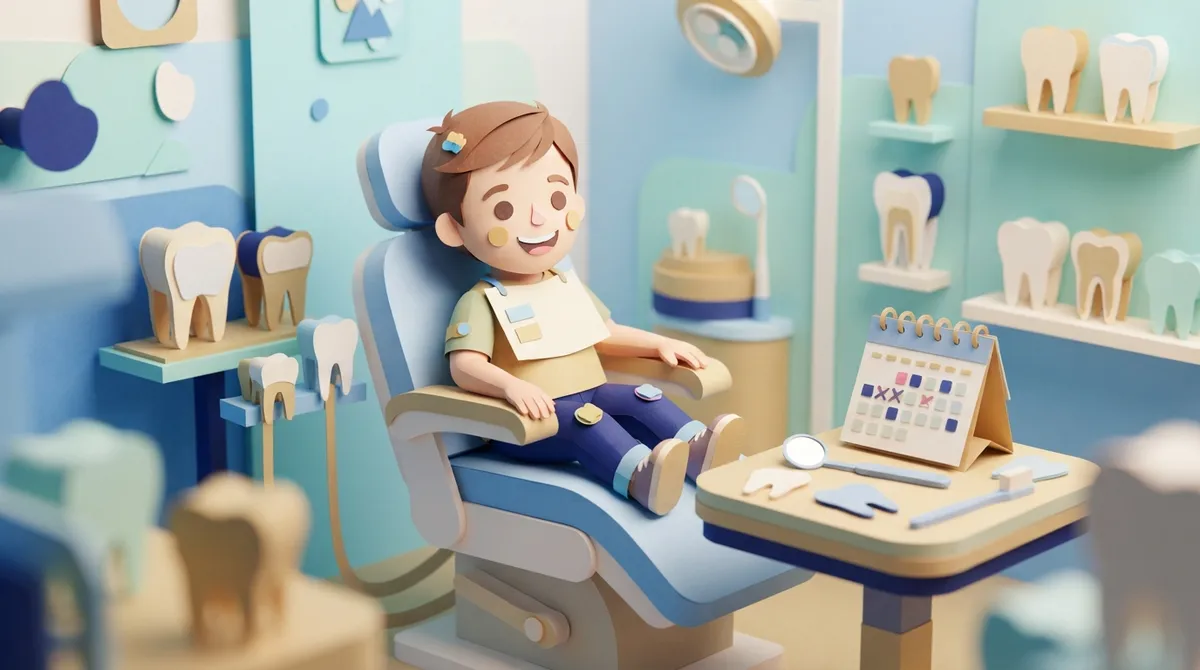
We know a new appointment can feel a little nerve-wracking for kids and parents alike. The good news is that this visit is gentle and easy. At Brockway Orthodontics, Dr. Brockway takes the time to listen to your questions and explain everything in plain language.
Here is what usually happens:
- A friendly welcome. We say hello, get your child comfortable, and look over your questions and concerns.
- Health and dental history review. We ask about your child’s medical and dental history, including any habits like thumb sucking or pacifier use.
- A gentle exam. We look at the teeth, bite, and jaw relationships and see how the adult teeth are coming in.
- Diagnostic images, if needed. When it is clinically helpful, we may take images or digital scans. Our practice uses modern tools like digital impressions instead of messy molds.
- A clear explanation. We talk through what we found and recommend one of three paths: start treatment, monitor, or reassess later.
You can read more about the process on our Your First Visit page. If you want a deeper look at the experience, our guide on what happens at Clearwater orthodontic consultations covers it step by step.
What Can We Spot at Age Seven?
Early checks can reveal several developing concerns. Spotting one does not always mean treatment is needed right away. It means we know what to watch.
- Crossbites: when some upper teeth sit inside the lower teeth instead of outside.
- Crowding or not enough space: adult teeth may not have room to come in straight.
- Ectopic eruption: a tooth coming in at the wrong spot or angle.
- Missing or extra teeth: sometimes a tooth is absent or an additional one is present.
- Persistent oral habits: thumb sucking or pacifier use that may affect the teeth and bite.
- Jaw growth differences: the upper and lower jaws growing at different rates.
If you are curious about specific bite concerns, our articles on how crossbite correction works and signs your child needs braces are good places to start.
Does an Evaluation at Age Seven Mean My Child Needs Braces?
No, and this is the most common worry we hear. A check-up at age seven does not mean your child will get braces that year. In fact, many children leave with a simple recommendation: come back for a quick check in six months or a year.
Every child grows at their own pace. Some problems are best treated while a child is still growing. Others are best monitored until more adult teeth come in. A good recommendation should explain the diagnosis, the timing, the options, and the follow-up plan. We never want you to feel rushed.
Treat Now, Monitor, or Wait?
The AAPD notes that timing depends on the specific problem, your child’s growth, and the risks and benefits of treating now versus monitoring. The table below shows how these paths often compare.
| Path | When It Often Fits | What Happens Next |
|---|---|---|
| Early (Phase 1) treatment | A concern that may benefit from guiding growth, such as a crossbite or limited space | A short, focused treatment plan with a defined goal |
| Monitor and observe | Teeth are developing within a normal range, or a concern may resolve on its own | Periodic check-ups as more adult teeth come in |
| Wait for later treatment | Issues best handled once most adult teeth have arrived | Reassessment in the preteen or early teen years |
Want to learn more about early options? Take a look at our Early Treatment page and our post on why timing matters in early intervention orthodontics.
Early Treatment vs. Waiting: A Quick Comparison
Parents often ask us how an early visit compares to waiting until the teen years. Both have a place. Here is a simple way to think about it.
| Factor | Evaluation at Age 7 | Waiting Until Age 12 or Later |
|---|---|---|
| Goal | Understand growth and spot concerns early | Address alignment once most adult teeth are in |
| Stage of teeth | Mixed baby and adult teeth | Mostly adult teeth |
| Possible outcome | Monitor, or begin focused early treatment | Comprehensive braces or aligners |
| Peace of mind | You know where your child stands | You may learn about concerns later |
For more on this topic, our guide on age 7 vs. age 12 goes into more detail.
How Can You Help Your Child Feel Ready?
A little preparation goes a long way. A relaxed child makes for a smooth visit, and a prepared parent gets better answers.
Tips for Parents
- Tell your child it is a “smile check-up” and that there is nothing to worry about.
- Write down any concerns, like thumb sucking, jaw clicking, or teeth that look crowded.
- Bring your child’s dental records or recent x-rays if you have them.
- Note any family history of braces, jaw issues, or missing teeth.
- Have your insurance card and any questions about costs ready.
Our post on how to prepare for your first visit to the orthodontist has an even longer checklist, and our orthodontics for kids guide answers many common parent questions.
Why Choose Brockway Orthodontics for Your Child’s First Visit?
We love working with families, and we know that first visits set the tone. Dr. Brockway is a caring orthodontist who truly listens to your concerns and explains each step in a friendly, easy way. You will never feel rushed or confused.
Our Clearwater office offers modern technology that keeps things comfortable, including digital impressions and 3D imaging for precise planning. We also care deeply about our community, and we treat every child like a part of our extended family. When your child is ready for treatment later, we offer metal braces, ceramic (clear) braces, and Spark™ Clear Aligners, so there is a good fit for each smile.
You can also see what families say about us by visiting us on Google — Brockway Orthodontics, or read more about our approach in why Clearwater families trust Brockway.
What About Costs, Insurance, and Scheduling?
Costs and insurance can vary from practice to practice, and every child’s plan is different. Fees, coverage, and appointment times should always be confirmed directly with the office you choose. We are happy to walk you through your options so there are no surprises.
Our Financing and Insurance page explains how we can help families plan, and our article on how to use dental insurance to help pay for braces offers helpful tips. For general dental guidance, the American Dental Association is a trusted resource, and the Florida Association of Orthodontists shares helpful information for Florida families.
Ready to Take the First Step?
A Clearwater orthodontic evaluation at age seven gives you clear answers and peace of mind. You learn how your child’s smile is growing, and you get a plan that fits. Whether that plan is early treatment, regular monitoring, or simply waiting, you will know what to expect.
Remember, the AAO recommends a first check-up by age 7 as an evaluation, not an automatic start to braces. The earlier you look, the more time you have to plan well. We would love to meet your family and help your child feel confident about their smile.
Ready to get started? Book your child’s evaluation online today, or contact us with any questions. We cannot wait to meet you!
FAQs
Q: When should my child have their first orthodontic evaluation in Clearwater?
A: The American Association of Orthodontists recommends a first check-up by age 7, or earlier if you notice a concern like crowding, a bite that looks off, or a lingering thumb-sucking habit. It is a simple visit that gives you a clear picture of your child’s growth. We would be happy to see your little one!
Q: Does an orthodontic evaluation at age 7 mean my child will need braces?
A: Not at all! The evaluation is a screening milestone, not a treatment-start age. Many children simply get a monitoring plan, and some begin short, focused early treatment only if it will truly help.
Q: What should I bring to my child’s orthodontic appointment?
A: Bring your insurance card, any recent dental records or x-rays, and a list of questions or concerns. It also helps to note any family history of braces or jaw issues. A calm, happy child is the best thing to bring along!
Q: How often should my child be monitored if treatment is not needed yet?
A: It depends on your child’s growth and how their adult teeth are coming in. Many children return every six to twelve months so we can watch their progress. We will give you a personalized follow-up plan at the visit.
Q: How can I check consultation costs and insurance coverage in Clearwater?
A: Fees and insurance details can differ from office to office, so it is best to confirm them directly with the practice. Our team is glad to explain your options and help you understand coverage before your visit.
Our Service Area