Key Takeaways
-
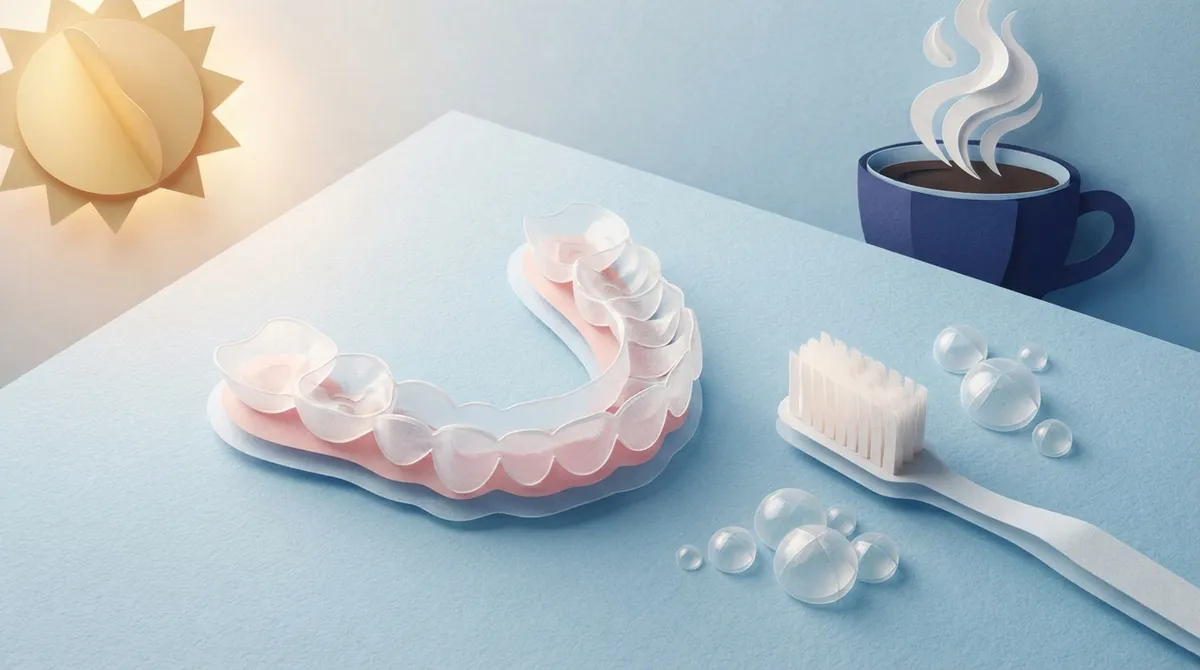
Daily rinsing right after removing your retainer and gentle brushing with a soft brush and mild unscented dish soap prevents most cloudiness.
-
Avoid toothpaste, which contains abrasives that leave fine scratches on clear plastic, making the retainer look dull and giving residue more places to cling.
-
Never use hot or boiling water, dishwashers, or sunny spots; heat can warp the plastic, change its fit, and stop it from holding your teeth in place.
-
Remove your retainer before eating or drinking anything besides water, and rinse your mouth after coffee or tea to reduce staining and trapped food residue.
-
Since appearance alone cannot reveal whether cloudiness is plaque, mineral buildup, staining, or scratches, see your orthodontist if haze persists after gentle cleaning.
-
Replace the retainer if cloudiness comes with cracks, warping, persistent odor, rough spots, or a loose or tight fit, since a poor-fitting retainer cannot protect your results.
You pull your clear retainer out of its case, hold it up to the light, and wait, why does it look foggy? If that sounds familiar, take a deep breath. You are far from alone, and this is one of the most common questions we hear from patients who have finished braces or clear aligners.
The good news? A cloudy retainer is usually a sign of everyday buildup, not a sign that you did something terrible. Still, it is smart to understand why clear retainers can become cloudy, because the cause decides the fix. Some cloudiness washes away with a gentle routine. Other types point to scratches, mineral deposits, or an aging appliance that may need a quick check-up.
In this friendly guide, we walk through 13 common reasons your retainer loses its clarity, plus safe ways to clean it and keep it looking fresh. Whether you are a parent helping a teen, a busy professional, or someone returning to retainer wear after a smile shift, you will find simple, practical tips below.
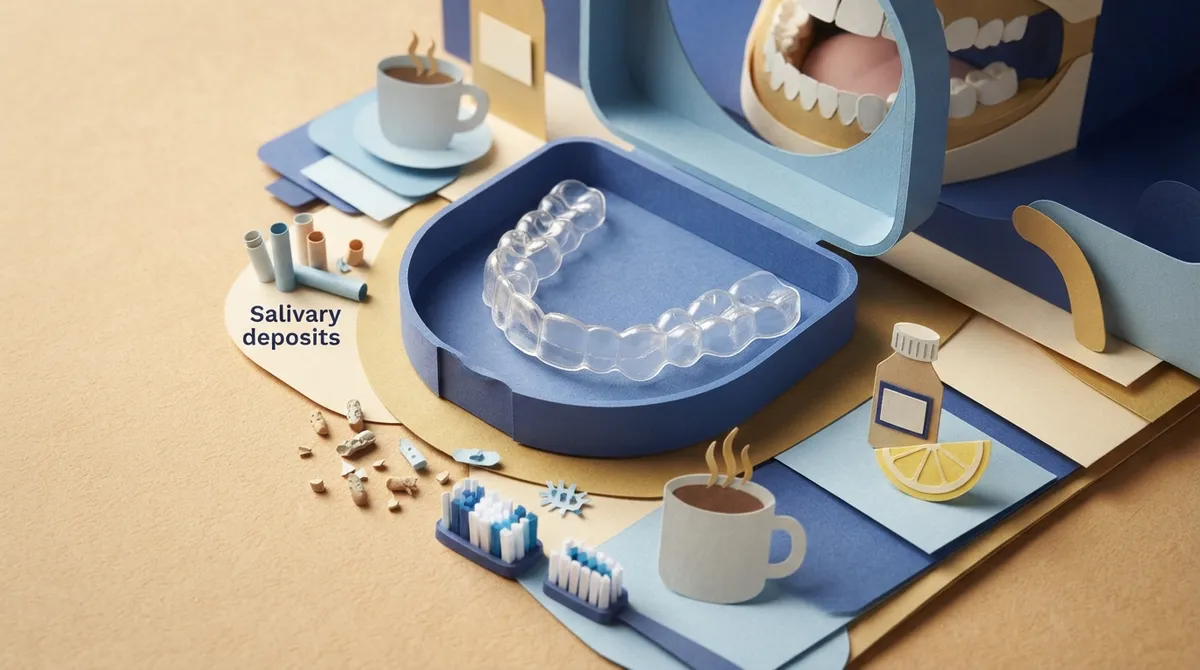
Quick Answer: Why Clear Retainers Can Become Cloudy
Clear retainers, often called Essix retainers, usually turn cloudy for a few main reasons: saliva and plaque film building up on the plastic, mineral deposits from saliva or water, tiny scratches from rough cleaning, heat exposure, and normal material aging. Daily gentle cleaning with cool or lukewarm water and a soft brush helps prevent most of it. Appearance alone cannot tell you exactly which cause you are dealing with, so persistent cloudiness is worth showing your orthodontist.
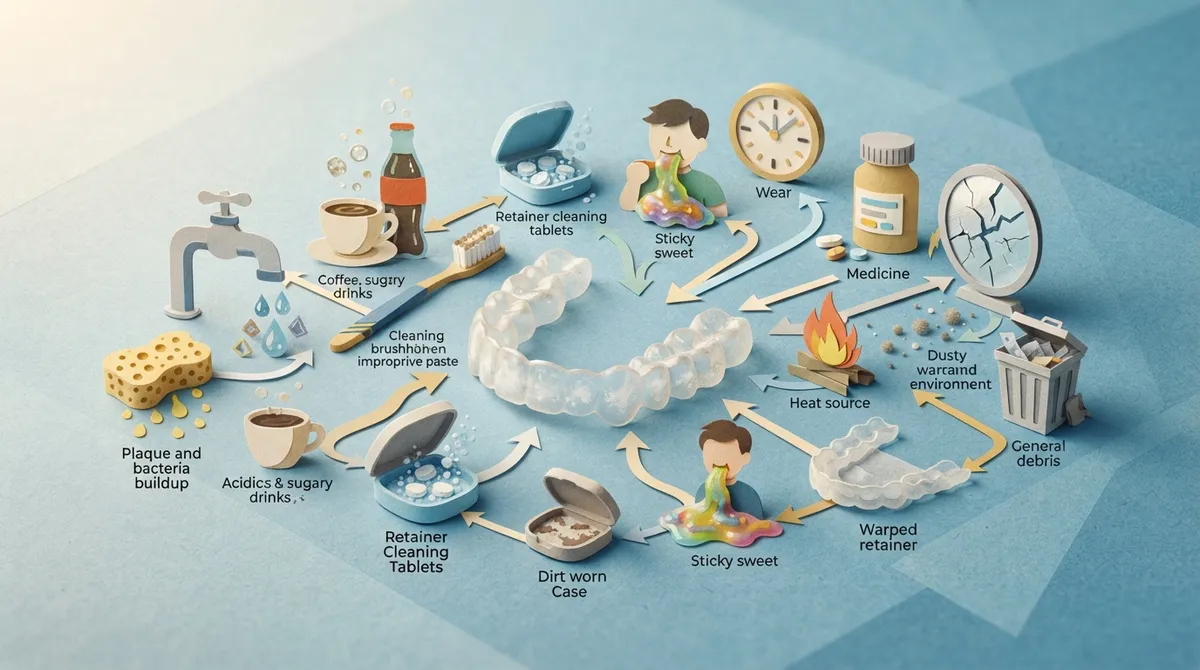
The 13 Reasons Your Clear Retainer Looks Cloudy
1. Plaque and Biofilm Build Up on the Plastic
Your mouth is home to bacteria, and they love to settle on any surface they can find, including your retainer. When plaque and saliva film collect on the plastic, it can create a hazy, dull look. This is especially common if the retainer is not rinsed and cleaned regularly.
Think of it like a drinking glass you never wash. A thin film forms first, and over time it gets harder to see through. The earlier you clean it, the easier it comes off.
2. Saliva Film Dries on the Surface
Even if you brush your teeth well, saliva leaves a thin coating on your retainer. When you take the retainer out and let it dry without rinsing, that film hardens. The result is a cloudy or slightly sticky look.
A quick rinse the moment you remove your retainer makes a big difference. It takes just a few seconds.
3. Mineral Deposits Form Over Time
Have you ever noticed white, chalky spots on a faucet or shower door? Something similar can happen on a retainer. Minerals from saliva or water can leave white or chalky deposits on the plastic.
Here is an important point: looks alone cannot confirm whether cloudiness is biofilm, mineral buildup, staining, or scratches. That is one reason your orthodontist is a helpful partner when the haze will not go away.
4. Abrasive Toothpaste Creates Tiny Scratches
This one surprises many people. Regular toothpaste is made to polish enamel, and that same gritty texture can scratch clear plastic. Those fine scratches scatter light, which makes your retainer look dull and cloudy.
Scratches can also give residue more places to cling. The American Association of Orthodontists now recommends a dedicated soft brush and mild dish soap for clear retainers rather than toothpaste.
5. Rough Brushing Dulls the Finish
Even with the right cleaner, scrubbing hard with a stiff brush can wear down the smooth surface. Gentle pressure is all you need. Let the soap and a soft bristle do the work.
If you are the type who likes to scrub until everything feels spotless, try to dial it back. Your retainer will thank you.
6. Hot Water Affects the Plastic
Hot water might seem like a great way to sanitize your retainer, but heat can distort plastic and change how it fits. Warping can also affect how the surface looks. Always use cool or lukewarm water instead.
Skip the dishwasher, boiling water, hot cars, and sunny windowsills too. Heat is one of the fastest ways to damage a clear retainer.
7. Food Residue Gets Trapped
Small bits of food and drink can cling to the plastic, especially if you sip anything other than water while wearing your retainer. Over time, that residue adds to a cloudy or stained look.
Remove your retainer before eating and drinking anything besides water. It protects both the plastic and your teeth.
8. Staining From Drinks and Foods
Coffee, tea, red wine, and dark sodas can leave a film or tint on clear plastic. Sometimes what looks like cloudiness is really light staining that builds up slowly.
If you love your morning coffee, take the retainer out first and rinse your mouth before putting it back in.
9. Skipping Daily Cleaning
Consistency matters more than fancy products. A retainer that misses a few days of cleaning can develop buildup quickly, and buildup is much harder to remove once it hardens.
Many of our busy patients, from parents juggling school drop-offs to professionals with packed calendars, tell us this is the habit that slips first. A two-minute routine is all it takes.
10. Harsh Chemicals Damage the Surface
Bleach, strong mouthwashes, and household cleaners can damage clear plastic and leave it looking foggy. They may also be unsafe to put back in your mouth.
Stick to gentle options. If you want to use a soaking product, check with your orthodontist first to make sure it works with your specific retainer.
11. Using Sharp Tools on Hardened Deposits
It is tempting to scrape off stubborn white spots with a fingernail, toothpick, or knife. Please resist! Scraping can gouge the plastic and make the cloudiness worse.
If deposits will not come off with gentle cleaning, let your orthodontist take a look instead.
12. Poor Storage Habits
Leaving your retainer out on the counter, wrapped in a napkin, or tossed in a pocket invites dust, bacteria, and damage. A retainer left to dry with saliva on it will pick up film faster too.
Always store it in its case when you are not wearing it. Clean the case regularly as well, since a dirty case can transfer buildup right back onto a clean retainer.
13. Normal Material Aging
Plastic retainers do not last forever. With nightly wear, chewing pressure, and clenching or grinding, the material slowly wears and can look cloudier with age. This is a natural part of the retainer life cycle.
Cloudiness alone does not always mean you need a replacement. But if it comes with cracks, warping, or a loose fit, it may be time for a new one. You can learn more about the types of appliances we offer on our retainers page.
Cloudy Retainer Causes at a Glance
| Cause | What It Looks Like | Can Gentle Cleaning Help? |
|---|---|---|
| Plaque or biofilm | Hazy, dull film | Usually yes |
| Mineral deposits | White, chalky spots | Sometimes; ask your orthodontist |
| Scratches from toothpaste | Overall dull, frosted look | No; scratches are permanent |
| Staining | Yellow or brown tint | Often partly |
| Heat damage | Warped shape, odd fit | No; needs evaluation |
| Material aging | General cloudiness over months | Limited; may need replacement |
How to Clean a Cloudy Clear Retainer Safely
Ready for a simple routine? Here is a gentle, orthodontist-friendly method you can use every day. Always follow any specific instructions your orthodontist gave you, since materials and appliances vary.
- Rinse right away. As soon as you take your retainer out, rinse it under cool or lukewarm water.
- Use a dedicated soft brush. Keep a soft toothbrush just for your retainer. Do not share it with your regular brushing.
- Add mild soap. A drop of mild, unscented dish soap works well. Skip toothpaste, which can scratch.
- Brush gently. Clean every surface, inside and out, with light pressure.
- Rinse thoroughly. Make sure all soap is gone before the retainer goes back in.
- Store it properly. Place it in its clean, ventilated case when you are not wearing it.
Using a soaking product? Only use one that is compatible with your retainer and approved by your orthodontist. When in doubt, ask first.
What NOT to Do
- Do not use hot or boiling water.
- Do not use bleach or harsh chemicals.
- Do not scrub with abrasive toothpaste.
- Do not scrape hardened deposits with sharp objects.
- Do not leave your retainer in a hot car or sunny spot.
- Do not wrap it in a napkin, where it can be thrown away by accident.
Simple Habits That Help Prevent Cloudiness
- Rinse every time you remove your retainer.
- Clean daily with a soft brush and mild soap.
- Drink only water while wearing it.
- Brush and floss your teeth before putting your retainer back in, so you are not trapping plaque against your teeth.
- Keep the case clean and let it air out.
- Bring your retainer to checkups so we can look it over.
Teens, this one is especially for you: a clean retainer is a more comfortable, fresher-smelling retainer. A tiny bit of daily effort keeps it looking nearly invisible, just the way you like it.
When to Call Your Orthodontist
Cloudiness by itself is not always an emergency. But it is smart to reach out if you notice any of the following:
- Cloudiness that stays after careful, gentle cleaning
- A persistent bad odor
- Cracks, rough spots, or sharp edges
- Warping or a change in shape
- A retainer that feels tight, loose, or no longer fits correctly
A retainer that does not fit properly cannot hold your smile in place, and teeth can shift faster than most people expect. If your retainer ever cracks or snaps, our guide on what to do if your retainer breaks walks you through the next steps.
Why Wearing a Clean Retainer Matters So Much
Your retainer is the quiet hero of your orthodontic journey. After braces or clear aligners, your teeth want to drift back toward where they started, and a well-fitting retainer helps hold your results. That is true whether you finished treatment last month or years ago.
For patients who had treatment before and noticed their smile shifting, a cloudy, worn retainer is sometimes a clue that it is no longer doing its job. If that sounds like you, we would love to help you figure out the best path forward, whether that is a fresh retainer or a closer look at Spark™ Clear Aligners for retreatment.
How Brockway Orthodontics Can Help
At Brockway Orthodontics, we believe every patient should feel confident and informed. Dr. Brockway takes the time to listen, explain, and give friendly guidance for kids, teens, and adults alike. If your retainer looks cloudy, feels different, or just does not seem right, we are happy to take a look and tell you honestly whether it needs cleaning, repair, or replacement.
Curious what other families think? You can visit us on Google — Brockway Orthodontics to read patient feedback. For general oral health information, the American Dental Association is another trusted resource, and you can also explore our FAQs for more answers.
Final Thoughts: Keep Your Retainer Clear and Your Smile Protected
Now you know why clear retainers can become cloudy: plaque, saliva film, mineral deposits, scratches, heat, staining, and plain old aging all play a part. The best defense is a short daily routine of rinsing, gentle brushing with mild soap, and smart storage. And if the haze will not budge, there is no shame in asking for help. A quick check can save you from replacing a retainer too soon, or wearing one that no longer fits.
Ready for a professional opinion? Reach out to our friendly team and we will gladly check your retainer and your smile. Book your appointment online or contact us with any questions. We cannot wait to help you keep your smile bright and your retainer crystal clear!
FAQs
Q: Why is my clear retainer cloudy?
A: Most often, it is a thin layer of plaque, saliva film, or mineral deposits sitting on the plastic. Tiny scratches from abrasive toothpaste or rough brushing can also make it look dull. Since the look alone cannot tell the cause, ask your orthodontist if gentle cleaning does not help.
Q: How do I clean a cloudy clear retainer safely?
A: Rinse it in cool or lukewarm water, then gently brush it with a dedicated soft toothbrush and a little mild dish soap. Rinse well and store it in its case. Skip hot water, bleach, and gritty toothpaste, and only use a soaking product your orthodontist has approved.
Q: Can hot water warp a clear retainer?
A: Yes, it can! Heat can distort the plastic and change how your retainer fits, which means it may stop holding your teeth in place. Stick with cool or lukewarm water, and keep your retainer away from hot cars, dishwashers, and sunny windowsills.
Q: When should I replace a cloudy retainer?
A: Cloudiness alone does not always mean you need a new one. But if it stays after careful cleaning and comes with cracks, warping, odor, rough spots, or a poor fit, it is time to call your orthodontist. We can tell you whether it can be saved or should be replaced.
Q: Can toothpaste scratch or cloud a clear retainer?
A: It sure can. Toothpaste is made to polish enamel, and its gritty texture can leave fine scratches on clear plastic that make it look dull. A soft brush with mild dish soap is a gentler choice for daily cleaning.
Our Service Area