Key Takeaways
-
Tooth-colored fillings, crowns, veneers, and implants do not automatically rule out clear aligners, but each restoration can change how teeth move and how attachments bond.
-
Attachments bond well to natural enamel but may be harder to bond to ceramic or porcelain crowns and veneers, so orthodontists may adjust attachment placement or mechanics.
-
Bridges join teeth so they cannot move independently, meaning treatment must be planned around the bridge and may require coordination with a restorative dentist.
-
Straightening teeth before placing new crowns, veneers, bridges, or implants can help restorative dentists achieve a better final position and avoid redoing work later.
-
Aligners themselves are smooth and gentle; the real risk to crowns and veneers comes from improper attachment bonding and removal, so ask your provider how they will protect your restorations.
-
Active decay, gum disease, loose or failing restorations, and complex bite problems should be addressed first, and in some cases traditional braces may be a better option.
You have a crown on one tooth, a veneer on another, and maybe a bridge or implant in the back. Now you want a straighter smile. So you wonder: can you use clear aligners with dental restorations? It is a smart question, and you are far from alone in asking it.
The short answer is this: in many cases, yes. Crowns, veneers, fillings, bridges, and implants do not automatically rule out clear aligners. But restorations can change how teeth move, how aligner attachments stick, and what results are realistic. That is why a careful exam matters so much.
In this friendly guide, we will walk through each type of restoration, explain what to expect, and share tips for planning treatment the smart way. Whether you are a busy professional, a parent helping a teen, or someone returning for a second round of orthodontic care, you will find clear, simple answers here.
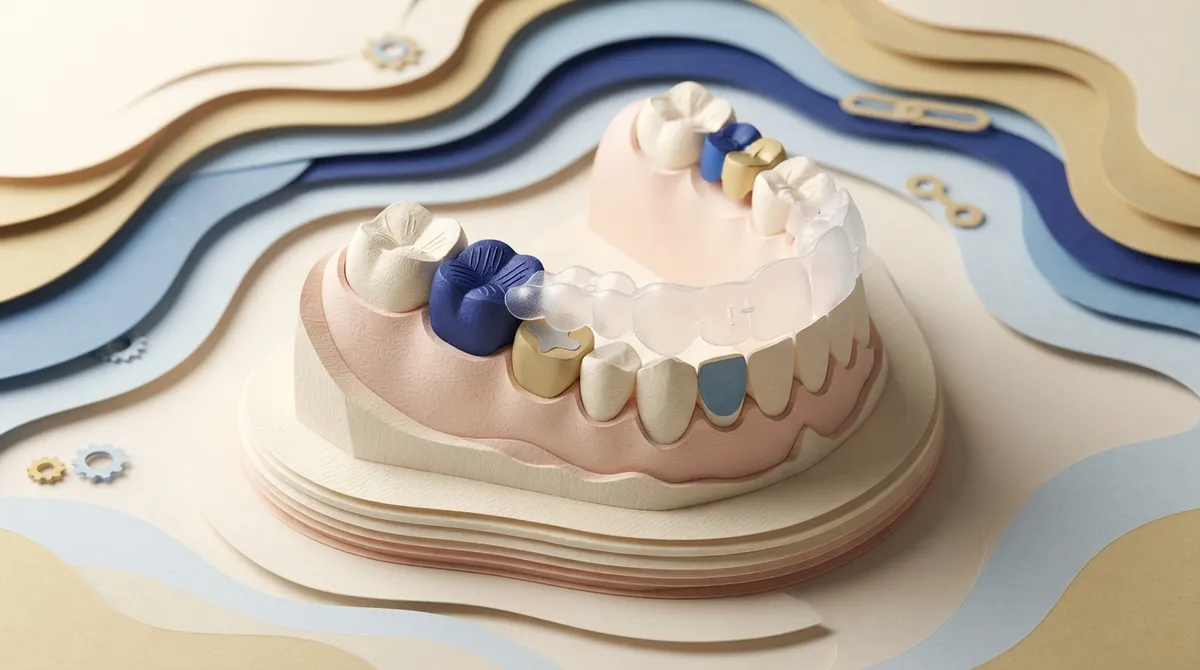
The Short Answer: Often Yes, But It Depends
Clear aligners can work for many people who have dental work. Suitability depends on four things:
- The type of restoration you have
- The condition of that restoration
- Which teeth need to move
- Your overall treatment plan and oral health
An orthodontist or dentist should look at your case one-on-one. No two mouths are alike, and the same restoration can behave differently from patient to patient.
Think of it like remodeling a house. You can move furniture around just fine, but you need to know where the load-bearing walls are first. Restorations are a bit like those walls. They are fixed in place, so the plan has to work around them.
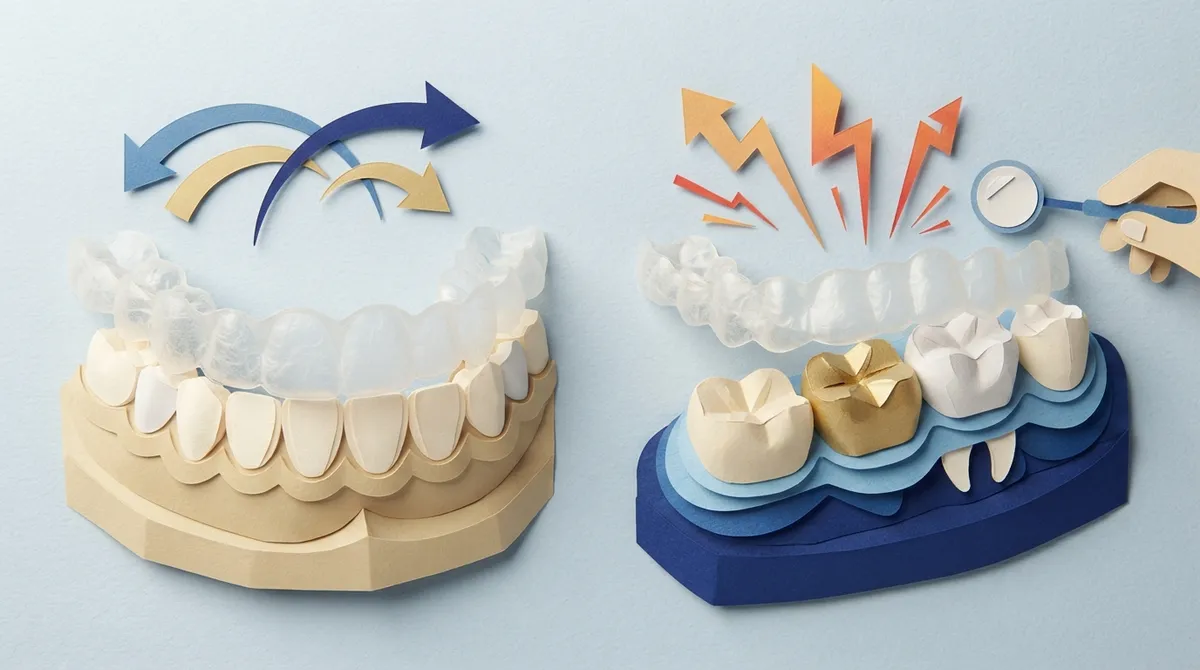
How Restorations Affect Clear Aligner Treatment
Clear aligners move teeth with gentle, steady pressure. Small tooth-colored bumps called attachments often help the aligners grip the teeth and make specific movements, such as rotating or shifting a tooth.
Research supports this approach. A 2023 systematic review of aligner attachments looked at 26 studies, including finite-element analyses, lab studies, randomized clinical trials, and cross-sectional studies. It concluded that attachments generally improve aligner retention and help teeth move as planned.
Here is where restorations come in. Attachments are usually bonded to natural enamel. Bonding to ceramic, porcelain, or other restorative materials can be less straightforward. A 2025 systematic review of attachment bonding on aesthetic crown materials found that surface treatments can raise bond strength. It also noted big differences among studies and called for more clinical confirmation.
In plain words: it can be done, but your orthodontist may need to adjust where attachments go or how the treatment is planned.
Clear Aligners With Different Types of Restorations
Let us look at each common restoration and what it means for your treatment.
| Restoration | Can You Use Clear Aligners? | Main Things to Consider |
|---|---|---|
| Tooth-colored fillings | Usually yes | Fillings should be stable, and teeth and gums should be healthy |
| Crowns | Often yes | Attachment bonding may be harder; removal needs care |
| Veneers | Often yes | Attachments must be placed and removed gently |
| Bridges | Sometimes, with planning | Joined teeth move together, not on their own |
| Dental implants | Often yes, for nearby teeth | The implant itself does not move |
Fillings
Good news here. Tooth-colored fillings and similar small restorations do not automatically rule out aligners. Your orthodontist will check that each filling is stable and that your teeth and gums are healthy before you begin. Any active decay or gum trouble should be handled first.
Crowns
A crown covers a tooth, but the root underneath can still respond to orthodontic movement. So a crowned tooth can often be moved. The main challenge is the surface. Aligner attachments may not bond to a crown the way they do to enamel. Your orthodontist may adjust attachment placement or use different mechanics to get the movement you need. Bonding and removing attachments also take extra care so the crown is not damaged.
Veneers
Veneers are thin shells bonded to the front of teeth. Like crowns, the tooth underneath can still move. The same bonding rules apply. Careful placement and gentle removal protect your veneers and your investment.
Bridges
A bridge connects several teeth into one unit. That means the teeth it joins cannot move independently. Your orthodontist must plan around the bridge. In some cases, a different approach works better, or the orthodontist and your restorative dentist need to team up to find the best path.
Dental Implants
An implant is anchored in your jawbone, so it does not shift like a natural tooth. Aligners can still move the natural teeth around it. However, the implant’s position can limit the plan, especially when it comes to closing spaces or reaching certain bite goals. Your orthodontist will map this out ahead of time.
Will Clear Aligners Damage Crowns or Veneers?
This is one of the most common worries, and it is a fair one. Aligners themselves are gentle and made of smooth plastic. The risk is not so much the trays as the attachments and how they are bonded and removed.
With an experienced orthodontist, careful technique keeps risk low. Your provider will choose bonding methods that suit your restoration material. Afterward, attachments are removed slowly to protect the surface underneath.
If you are worried, say so at your visit. A good team will walk you through exactly how they will protect your dental work.
The Timing Question: Aligners Before or After Restorative Work?
Here is a tip many people miss: the order of treatment matters.
If you are planning new crowns, veneers, bridges, or implants, it often helps to straighten your teeth first. Better tooth position can help your restorative dentist place new restorations in a more ideal spot. One company survey of 251 U.S. dental practitioners, conducted in 2017, found that 45% of prosthodontic procedures could benefit from pre-restorative tooth alignment. That is survey data, not a clinical estimate for the whole population, but it shows how often these two fields overlap.
The best plan usually looks like this:
- Get a full exam from your orthodontist and restorative dentist.
- Decide together whether alignment should come first.
- Complete any needed dental health work, like treating cavities or gum issues.
- Move teeth with clear aligners.
- Finish with definitive restorations once teeth are in a better position.
- Use retainers to hold your new smile in place.
Teamwork between your orthodontist and restorative dentist makes everything smoother. Nobody likes redoing a brand-new crown because a tooth moved afterward.
What Can Limit or Prevent Clear Aligner Treatment?
Restorations rarely say a flat no. But a few situations may call for a different approach:
- Large bridges that lock many teeth together
- Restorations that are loose, cracked, or failing
- Active decay or gum disease that has not been treated
- Complex bite problems that need more control than aligners can offer
In these cases, traditional braces may be a better fit. If you are curious about the differences, our guide on clear aligners vs. braces breaks it down in a friendly way.
Tips for Success With Aligners and Dental Work
Want the best results? Keep these simple tips in mind:
- Share your full dental history. Bring records of crowns, veneers, bridges, and implants.
- Ask about attachments. Find out where they will go and how they will be removed.
- Keep up with hygiene. Brush and floss well, especially around restorations.
- Wear your aligners as directed. Consistent wear keeps treatment on track.
- Plan for retainers. Teeth can shift after treatment, restorations or not. Learn more about our retainers.
Who Benefits Most From This Approach?
Different people come to us with different goals, and restorations show up in all kinds of stories.
Adult professionals often have crowns or fillings from years past and want a discreet way to improve their smile. Aligners fit busy schedules well. Our adult treatment options are built for exactly this.
Relapse patients had braces before, but teeth moved back. They may also have new restorations since then. A fresh evaluation helps sort out what is possible.
Teens and young adults may have fillings or other small restorations. Most can still enjoy the freedom of aligners. See our adolescent treatment page for more.
Health-conscious patients with gum concerns or complex needs benefit from a customized plan that protects both function and appearance.
Why Choose Brockway Orthodontics in Clearwater
If you have dental work and want clear aligners, you deserve a team that listens. At Brockway Orthodontics, Dr. Brockway takes time to understand your goals and explain every option in simple terms. You can learn more about her on our Meet Dr. Brockway page.
We offer Spark™ Clear Aligners, a more affordable alternative to Invisalign, along with metal braces and ceramic (clear) braces. Our modern tools, including digital impressions and 3D imaging, help us plan precisely around your existing restorations. No messy molds, just a comfortable experience.
Curious what our patients think? See what people say about Brockway Orthodontics on Google: Visit us on Google — Brockway Orthodontics.
You can also read advice from the American Dental Association on caring for your teeth and restorations, and find trusted orthodontic information through the Florida Association of Orthodontists.
What to Expect at Your First Visit
Not sure what happens at a consultation? Here is a quick preview:
- We review your health and dental history.
- We examine your teeth, gums, and any restorations.
- We take digital scans and 3D images.
- We talk through your goals and treatment options.
- We explain timing, costs, and next steps.
For a full walkthrough, visit Your First Visit. Questions about cost? Our financing and insurance page explains your options.
Ready to Find Out If Aligners Are Right for You?
So, can you use clear aligners with dental restorations? Very often, yes. The key is a personalized plan that respects your existing dental work and protects your smile for the long haul.
Do not let a crown, veneer, bridge, or implant stop you from asking. The right team will help you find the best path forward. Book your free consultation online and let us take a look at your smile. Prefer to chat first? You can contact us anytime. We would love to help you smile with confidence.
FAQs
Q: Can I wear clear aligners if I have crowns?
A: In many cases, yes! A crowned tooth can often still move. The main challenge is that attachments may not bond to crowns as easily as to natural enamel, so your orthodontist may adjust the plan to make it work.
Q: Can clear aligners damage veneers or crowns?
A: The aligners themselves are smooth and gentle. The bigger concern is bonding and removing attachments, which takes careful technique. An experienced orthodontist will use methods that protect your restorations.
Q: Can I use clear aligners with a dental bridge or implant?
A: Often you can, with some planning. A bridge joins teeth together, so they move as one unit, and an implant stays fixed in the jawbone. Your orthodontist will work around them and may coordinate with your restorative dentist.
Q: Should I get clear aligners before or after crowns and veneers?
A: Many times it helps to straighten teeth first, so your restorative dentist can place new work in a better position. Your orthodontist and restorative dentist should talk it through and agree on the best order for you.
Q: Do tooth-colored fillings stop me from getting clear aligners?
A: Not at all! Fillings do not automatically rule out aligners. Your orthodontist will simply check that they are stable and that your teeth and gums are healthy before treatment starts.
Our Service Area