Key Takeaways
-
Teeth shift after braces or aligners because bone and gums need time to adapt, so consistent retainer wear is essential long-term, and retention is needed again after any retreatment.
-
Never force an old retainer that no longer fits or hurts; have an orthodontist assess it first, since squeezing it in can put uneven pressure on your teeth.
-
Mild shifting may be handled with monitoring or a professionally fitted replacement retainer, while mild crowding or gaps may suit limited clear aligners.
-
Limited or partial treatment can target only the teeth that moved, so a full redo of braces is not always necessary; the bite and cause of shifting decide this.
-
Active gum disease generally needs treatment before teeth are moved, and your orthodontist will check bone support and gum recession during the evaluation.
-
Retreatment timelines and the best appliance depend on an in-person exam; be wary of anyone promising a precise timeline or single best option without examining you.
So your teeth have started to move, and you’re wondering what in the world happened. Maybe you wore braces as a teen and your retainer ended up in a drawer. Maybe you wore it faithfully and things still crept out of place. Either way, you’re in good company, and there are real solutions.
Adult orthodontic retreatment options range from simple retainer-based fixes to full braces or aligners. The right path depends on how far your teeth have moved, how your bite feels now, and the health of your gums and bone. No two smiles shift the same way.
In this guide, we walk through nine options, from the lightest touch to the most involved. You’ll also learn how orthodontists evaluate relapse, what to do with an old retainer, and how to keep your results this time. We’ll keep it friendly and jargon-free. Think of it as a chat over coffee with someone who wants you to feel confident about your next step.
Why Teeth Shift After Braces or Aligners
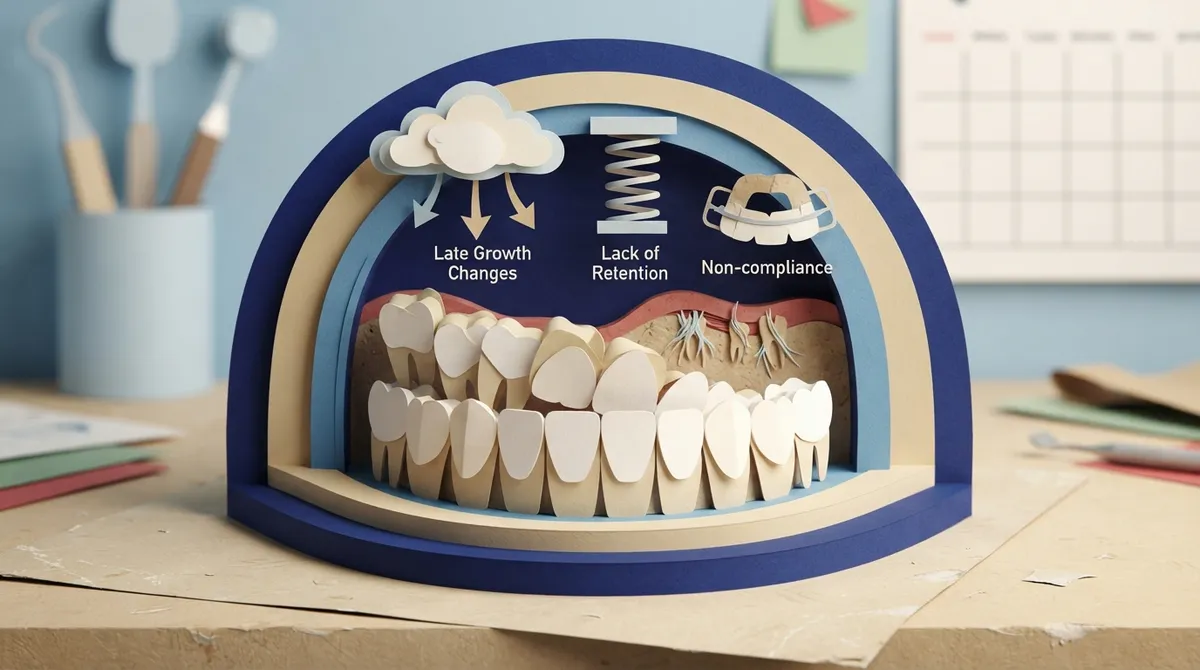
Before choosing among adult orthodontic retreatment options, it helps to understand why teeth move. Teeth sit in soft tissue and bone, and they are never fully locked in place. After treatment, the bone and gums need time to adapt to new positions. That is why retainers matter so much.
The British Orthodontic Society notes that the risk of relapse is especially relevant in the early months after treatment, and it recommends long-term retention. Common reasons for shifting include:
- Retainers that were worn less often than prescribed, or stopped altogether
- Natural, age-related tooth movement over the years
- Tooth positions that were hard to stabilize after the first round of treatment
- Changes from lost teeth, dental work, or gum health issues
Here is the good news. Shifting is common, it is not your fault, and it is very often fixable. Dr. Brockway sees relapse patients regularly and approaches every case with zero judgment. You can read more about our approach on the adult treatment page.
9 Adult Orthodontic Retreatment Options
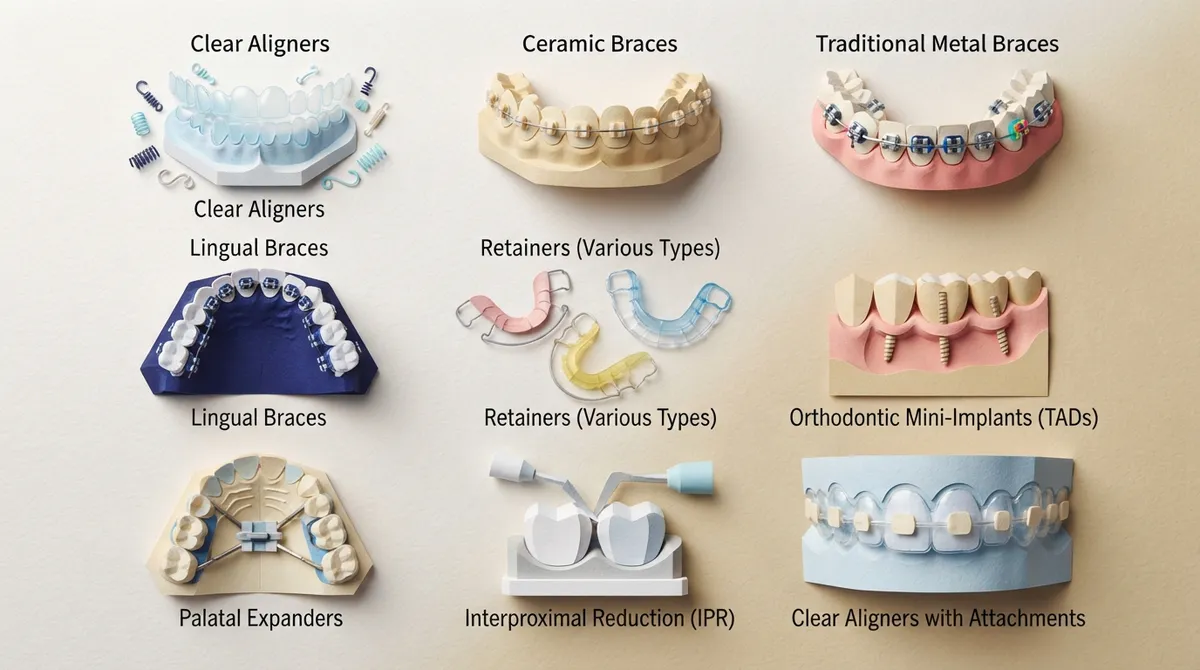
Here are the options an orthodontist may discuss, roughly from least to most involved. Not every option fits every person, and an exam is the only way to know which one fits you.
1. Monitoring the Change
If your teeth have moved only a tiny bit and your bite feels the same, your orthodontist may suggest simply watching. They can compare photos or scans over time and step in if anything changes. It sounds almost too easy, but for very minor movement, careful observation is a legitimate and low-cost choice.
2. A Professionally Assessed Replacement Retainer
Sometimes the fix is a brand-new retainer. A small amount of shifting may be addressed with a fresh, properly fitted retainer after an orthodontist checks your teeth. One important safety note: never force an old retainer onto teeth if it no longer fits or it hurts. Squeezing it in can put uneven pressure on your teeth. Have it assessed first. If your retainer is cracked or lost, our guide on what to do if your retainer breaks can help.
3. Limited Clear Aligner Treatment
For mild crowding, small gaps, or a few rotated teeth, a short course of clear aligners may do the job. Aligners are removable, nearly invisible, and a favorite among busy professionals. Brockway Orthodontics offers Spark™ Clear Aligners, a more affordable alternative to Invisalign. Results depend on wearing them as prescribed, so you’ll need to be consistent.
4. Comprehensive Clear Aligner Treatment
If your whole smile has moved, a full aligner plan may be the answer. Aligners are often considered for mild-to-moderate crowding, spacing, and selected bite changes. They may not suit every movement or complex bite correction, so your orthodontist will tell you honestly whether they fit your case. Curious how they compare? See clear aligners vs. braces.
5. Limited (Partial) Braces
Sometimes only a few teeth need attention, often the front six or eight. Limited braces focus on those teeth and can mean a shorter treatment than a full course. The orthodontist decides whether a partial approach will protect your bite or whether the whole arch needs to be involved. Good news for anyone dreading a full redo: you may not need one.
6. Comprehensive Metal Braces
Traditional metal braces give your orthodontist excellent control. They are a strong choice for bigger relapse, complicated rotations, or bite problems that aligners handle less predictably. Modern metal braces are smaller and more comfortable than the ones many of us remember. Our page on all about braces explains what to expect.
7. Ceramic (Clear) Braces
Want fixed-brace control with a lower profile? Ceramic braces use tooth-colored brackets that blend in with your smile. They work much like metal braces, and many adults in client-facing jobs prefer them. If you’re torn, metal vs. clear braces for adults breaks down the pros and cons.
8. A Combination of Appliances
In selected cases, your orthodontist may blend tools. For example, a few teeth might get braces while the rest of the plan uses aligners, or elastics might be added to refine your bite. Combination plans are customized, which is exactly what retreatment is all about.
9. Bite-Focused Retreatment
Sometimes the real issue isn’t how your teeth look, it’s how they meet. If your bite has changed substantially, you may need comprehensive treatment aimed at the bite itself. This can take more time but protects how you chew and how your teeth wear over the years. For related bite concerns, see how braces fix a deep overbite.
Quick Comparison of Retreatment Paths
| Option | Best For | Key Considerations |
|---|---|---|
| Monitoring | Very minor movement | Needs regular check-ins |
| Replacement retainer | Slight shifting | Must be assessed first; never force a tight retainer |
| Limited aligners | Mild crowding or gaps | Requires consistent wear |
| Comprehensive aligners | Moderate relapse | Not ideal for every complex bite issue |
| Limited braces | A few teeth out of place | May shorten treatment |
| Metal braces | Complex movement or bite issues | Strong control, more visible |
| Ceramic braces | Complex cases, discreet look | Tooth-colored brackets |
| Combination plans | Mixed needs | Customized by your orthodontist |
What Happens at a Retreatment Evaluation
A retreatment visit is really a detective session. Your orthodontist needs to understand why your teeth moved before recommending anything. Expect a friendly conversation about your history, plus a close look at your smile and bite.
Many offices use photographs, digital scans or impressions, and X-rays. At Brockway Orthodontics, we use modern tools like digital impressions and 3D imaging instead of messy molds, which keeps things comfortable and precise. If you want to know what the first appointment looks like, check out your first visit.
Adult planning also looks beyond the teeth. Your orthodontist considers:
- Your gum health and any signs of gum disease
- The amount of bone supporting your teeth
- Any gum recession
- Existing crowns, fillings, or other dental work
- The health of your tooth roots
Active gum problems generally need attention before teeth are moved. That is a safety step, not a roadblock. Treating gum health first gives your results a stronger foundation. If you have periodontal concerns, tell us early so we can coordinate care.
How Long Will Retreatment Take?
This is the question everyone asks, and the honest answer is that it depends. Limited corrections often take less time than comprehensive treatment, but a reliable estimate only comes after an individual exam. Be a little wary of anyone who promises a precise timeline before examining you.
Factors that shape the timeline include how far your teeth moved, the type of appliance, how well you follow instructions, and whether your bite needs work. For general timing context, see how long braces take to work.
Do the Numbers Back Up Long-Term Retention?
Research on retention is a bit humbling. A 2024 systematic review on orthodontic renewal and retention reported that, among the outcomes it summarized, 53% showed a decrease in retention, 28% showed improvement, and 19% showed stability. That finding is specific to the studies in that review, so it should not be read as a general relapse rate for all adults.
A Cochrane review of orthodontic retention also found limited, generally low-certainty evidence when comparing retainer types and wear schedules. In plain terms, no single retainer approach has been proven best for everyone. That is why your orthodontist tailors a plan to you instead of handing over a one-size-fits-all rule.
Retention After Retreatment
Here is the part we say with a smile and a little firmness: you will need retention again. Teeth can move after any round of treatment, so retention is important after retreatment just as it was after your first. The goal is to protect the work you invested in.
Your orthodontist may recommend one of these approaches:
- Removable retainers, worn as directed
- A bonded (fixed) retainer cemented behind your teeth
- Both, for extra stability in tougher cases
Bonded wires need careful cleaning, and removable ones need consistent wear. Learn the basics on our retainers page, and see how to wear a retainer after braces for habits that stick.
Choosing Braces or Aligners for Your Retreatment
Both can work well, and the choice often comes down to your teeth and your lifestyle. Use these questions as a starting point:
- How complex is the movement your teeth need?
- Are you confident wearing aligners nearly all day?
- Does your job make a discreet appliance important?
- Does your bite need strong, precise control?
- What fits your budget and monthly plan?
Remember, an exam beats a guess every time. If you’re also weighing costs, financing and insurance options may make treatment more comfortable to plan for.
Why Choose Brockway Orthodontics in Clearwater
Brockway Orthodontics is proud to be a trusted orthodontic practice in Clearwater, Florida for adults, teens, and kids. Dr. Brockway takes time to listen to your concerns and explains your options in simple, friendly language. Relapse patients often tell us they felt nervous about coming back, and they leave feeling relieved and heard. Learn more about her on the Meet Dr. Brockway page.
We offer Spark™ Clear Aligners, metal braces, and ceramic braces, so your plan can match your goals. In certain cases we can even provide same-day treatments, which is a blessing for busy schedules. Want a peek at what other patients think? See what our Brockway Orthodontics patients say on Google.
For additional trusted information, the American Dental Association offers helpful oral health resources, and the Florida Association of Orthodontists shares guidance on finding qualified care. The British Orthodontic Society also publishes patient FAQs about retention and relapse.
Ready to Fix a Shifted Smile?
Teeth that have moved are not a failure, and you don’t have to live with a smile that no longer feels like yours. The best first step is simple: get a professional look at what changed and why. From there, you can pick the option that fits your teeth, your schedule, and your life.
If you’re in the Clearwater area, book your appointment online and let’s talk about your retreatment options. Prefer to ask a question first? Just contact us. We can’t wait to help you smile with confidence again.
FAQs
Q: Can a retainer fix teeth that have moved, or do I need orthodontic retreatment?
A: It depends on how far your teeth have moved. A small shift may be handled with a professionally assessed replacement retainer, but bigger changes usually need aligners or braces. Please don’t force an old retainer onto teeth if it no longer fits or it hurts. Have an orthodontist take a look first.
Q: Are clear aligners or braces better for adult orthodontic retreatment?
A: Neither one wins every time. Aligners are often a great fit for mild-to-moderate crowding and spacing, while braces give more control for complex tooth movements or bite problems. Your orthodontist can tell you which one suits your teeth after an exam.
Q: Can I have retreatment if I have gum recession or gum disease?
A: Often yes, but your gum health needs to be looked after first. Active gum disease generally needs treatment before any teeth are moved. Your orthodontist will also check your bone support and recession so your plan stays safe and gentle.
Q: Will I need to wear a retainer again after retreatment?
A: Yes, and it’s one of the most important parts of the whole process. Teeth can move again after any treatment, so retention protects your results. Your orthodontist may suggest removable retainers, a bonded retainer, or both.
Q: Can only a few teeth be treated instead of repeating full braces?
A: Sometimes, yes! Limited aligners or partial braces can focus on just the teeth that moved. Whether that works depends on your bite and the cause of the shift, so your orthodontist will decide after an exam.
Our Service Area