

Key Takeaways
-
Switching orthodontists involves two separate financial conversations: your current office must settle your account (potentially with a refund based on their cost allocation formula), while your new provider charges a fee for evaluating and completing remaining treatment.
-
There is no universal price for switching; your total cost depends on remaining treatment time, case complexity, appliance compatibility, whether new diagnostic records are needed, and your insurance's remaining lifetime maximum.
-
Before switching, request your complete records from your current office, get a written account breakdown, verify remaining insurance benefits with your carrier, and obtain itemized estimates from both orthodontists to compare true out-of-pocket costs.
-
Orthodontists can refuse transfer patients, and switching may extend your treatment timeline as your new provider adjusts appliances or treatment approach—this thoroughness actually prevents costlier problems long-term.
-
Insurance benefits typically transfer with you to a new provider, but your lifetime maximum remains unchanged regardless of who provides care, so confirm your remaining balance before making the switch.
-
Collect all diagnostic records including X-rays, photos, digital scans, treatment plans, and appliance details before switching, as missing or outdated records force your new orthodontist to redo expensive diagnostic work.
Life happens. Maybe you moved to Clearwater. Maybe your old orthodontist retired. Maybe you just weren’t feeling the connection anymore. Whatever the reason, if you’re mid-treatment with braces or clear aligners and thinking about switching providers, you’re probably wondering one big thing: how much is this going to cost me? We get this question a lot, and we want to walk you through it with the same warmth and honesty we’d want if we were in your shoes.
Here’s the truth right up front: there’s no flat, one-size-fits-all price for switching orthodontists. Your total cost depends on how much treatment you have left, how complex your case is, and what each office charges for their part of the process. But don’t worry! We’re going to break this down step by step so you feel confident and prepared, whether you’re a parent managing your teen’s braces or an adult ready for a fresh start on your smile journey.

Why There’s No Set Price Tag for Switching Orthodontists
Unlike buying a coffee maker or a pair of shoes, orthodontic treatment doesn’t come with a universal price list for transfers. Every practice sets its own fees, and every patient’s case looks different. A teenager six months from finishing braces has very different needs than an adult professional just starting clear aligner treatment.
According to the American Dental Association, orthodontic treatment plans are highly individualized, which is exactly why transfer costs vary so much from person to person. Your final bill depends on a mix of factors working together, not just one flat rate.
Factors That Shape Your Total Cost
- How much treatment remains: Someone close to finishing pays less than someone just starting out.
- Case complexity: Simple spacing issues cost less to manage than complex bite corrections.
- Appliance compatibility: Sometimes a new orthodontist can use your existing braces or aligners. Sometimes they can’t.
- New diagnostic records: X-rays, scans, or molds may need to be redone if the originals aren’t usable.
- Insurance benefits remaining: Your plan’s lifetime maximum affects your out-of-pocket costs.
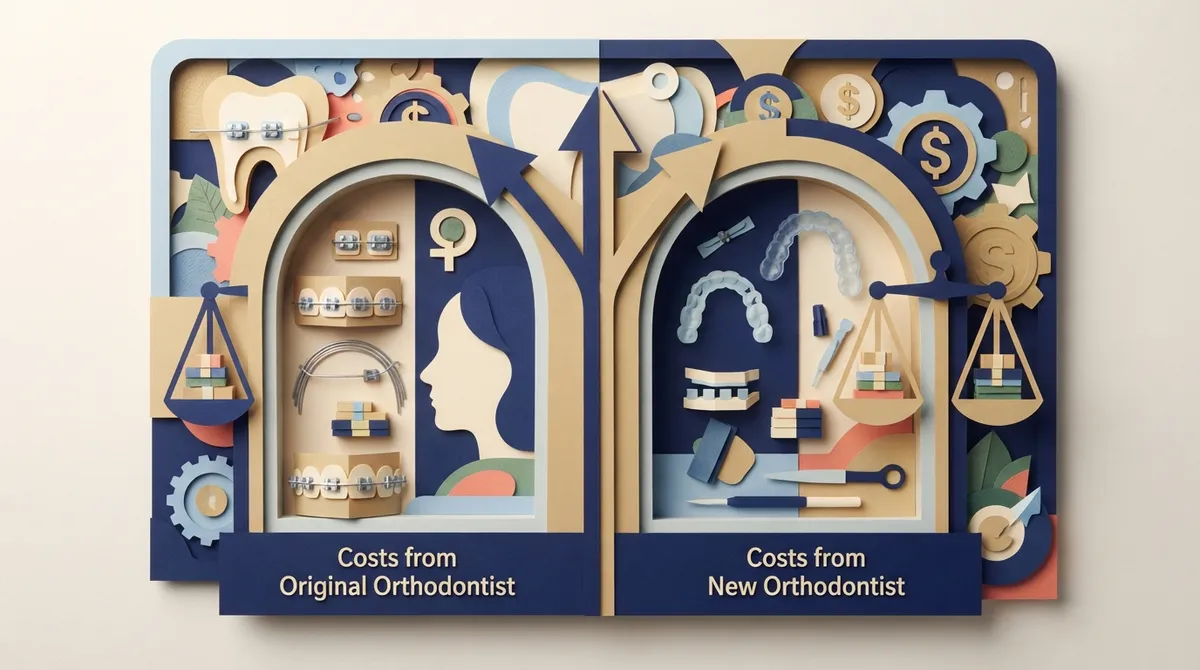
Understanding the Two-Sided Cost Structure
Switching orthodontists usually involves two separate financial conversations: one with your old office and one with your new one. Neither automatically talks to the other about money, so you’ll want to get clear answers from both.
What Your Former Orthodontist Handles
Your original office is responsible for settling your account under your existing contract. This might mean a refund for unused treatment, or it could mean you still owe a balance. Here’s the tricky part: refunds aren’t always calculated by simply dividing your remaining treatment time by the total fee.
A widely referenced practice-management guideline from 2016 suggests offices often allocate costs this way:
| Treatment Phase | Typical Fee Allocation |
|---|---|
| Bonding and initial records | 25–35% |
| Ongoing treatment visits | 45–55% |
| Appliance removal, final records, retainers | 15–25% |
This is just one example of how offices might break down costs, not a universal rule. Always ask your current office for their specific refund policy in writing before you make any decisions.
What Your New Orthodontist Will Charge
Your new provider will likely charge a fee to take over your remaining treatment. This covers their evaluation of your case, any updated diagnostic work, and completing your treatment plan. Think of it like hiring a new contractor partway through a home renovation. They need to assess what’s been done and what’s left before they can quote you a fair price.
The Florida Association of Orthodontists notes that orthodontic transfers require careful evaluation because every mouth tells a different story. What worked with your last provider’s approach may need adjustment with a new treatment philosophy.
Step-by-Step: How to Get an Accurate Cost Estimate
Feeling overwhelmed? Let’s simplify this into clear, actionable steps. Follow this process, and you’ll walk into your new orthodontist’s office with confidence instead of confusion.
- Request your full records from your current office. Ask for your treatment plan, progress notes, X-rays, photos, and any digital scans or models.
- Get a written breakdown of your account. Ask specifically whether you’re owed a refund or if you have an outstanding balance.
- Call your insurance company. Find out how much of your orthodontic benefit remains and whether it has a lifetime maximum.
- Schedule a consultation with your new orthodontist. Bring your records and ask for a written, itemized estimate for completing your treatment.
- Ask about appliance removal and retainers. Confirm these aren’t hidden extra costs tacked on later.
- Compare both estimates side by side. This gives you your true out-of-pocket cost for the switch.
If you’re considering Brockway Orthodontics as your new provider, we’re happy to walk through this process with you during your first visit. We want you to feel informed, not blindsided by surprise fees.
Records You Need Before You Switch
Think of your orthodontic records like a recipe your new provider needs to keep cooking your smile the right way. Missing ingredients mean starting over, which costs more time and money. Here’s what to request:
- Complete treatment plan and progress notes
- Diagnostic images (X-rays and photos)
- Digital scans or physical models of your teeth
- Details about your current appliances (brand, type, wire size)
- Financial account summary and insurance information
Sometimes your new orthodontist will need updated records anyway, especially if your old ones are incomplete or outdated. That’s not a red flag. It’s just good, careful care.
Can an Orthodontist Refuse to Take Your Case?
Yes, and this surprises a lot of people. The American Association of Orthodontists confirms that orthodontists in the U.S. aren’t required to accept transfer patients. Every practice gets to decide what cases fit their expertise and schedule.
This is actually good news for you. It means when an orthodontist does accept your case, they’re genuinely equipped and willing to help you succeed. At Brockway Orthodontics, we evaluate each transfer case carefully so we can give you an honest picture of your timeline and treatment plan from day one.
How Switching Might Affect Your Treatment Timeline
Here’s something worth preparing for emotionally: switching orthodontists can sometimes extend your treatment time. Your new provider might need to adjust your appliances, retighten wires differently, or even switch you between traditional braces and Spark™ Clear Aligners depending on what makes sense for your smile.
This isn’t a bad thing. It just means your new orthodontist is being thorough. A rushed transition that ignores necessary adjustments could actually cost you more time in the long run.
Common Questions About Insurance and Transfers
Insurance can feel like its own puzzle during a transfer. Here are quick answers to help you navigate it:
- Does insurance follow you to a new provider? Usually yes, but your lifetime maximum benefit stays the same regardless of who provides your care.
- Will my new orthodontist accept my insurance? Always confirm network status before your first appointment to avoid surprises.
- Do payments to my old orthodontist count toward my maximum? Yes, typically. Call your insurer to verify your remaining balance.
Our team can help you understand your financing and insurance options so you’re not left guessing about what’s covered.
Why Choosing the Right Orthodontist the First Time Matters
We won’t sugarcoat it: switching orthodontists takes effort. That’s why we believe so strongly in helping families in Clearwater find the right fit from the start. Whether you need treatment for your teenager, adult orthodontic care, or early treatment for a younger child, Dr. Brockway takes time to understand your goals before treatment even begins.
Our practice uses modern technology like digital impressions and 3D imaging, so you get a precise, comfortable experience without guesswork. And if life throws you a curveball that requires switching providers down the road, having complete, well-organized records makes that transition so much smoother.
What to Expect During a Transfer Consultation at Brockway Orthodontics
When new patients come to us mid-treatment, we start with a thorough review of their existing records and a conversation about their goals. We’ll never rush this process because we want your new plan to actually work for your life and your smile.
We’ll give you a clear, written estimate for completing your treatment, explain any changes to your timeline, and answer every question you have. No pressure, no confusion. Just honest care from a team that genuinely wants to see you smile confidently.
Curious what other families in our community think? You can visit us on Google — Brockway Orthodontics to read real reviews from patients who’ve trusted us with their smiles. You can also connect with us on Facebook or follow along on Instagram for smile tips and updates from our Clearwater office.
A Simple Checklist Before You Commit to Switching
Before you sign anything or pay any new fees, run through this quick checklist:
- Get written estimates from both your current and new orthodontist
- Confirm your insurance benefits and lifetime maximum
- Collect all your dental records and diagnostic images
- Ask about retainer and appliance removal costs upfront
- Clarify your expected treatment completion timeline
- Confirm your new orthodontist is in-network, if that matters to you
Doing this homework upfront saves you from unpleasant financial surprises later. It also helps you walk into your new orthodontist relationship feeling empowered instead of anxious.
Ready for a Fresh Start with Your Smile?
Switching orthodontists doesn’t have to feel scary or complicated. With the right questions and a little preparation, you can make this transition smoothly and affordably. Our team at Brockway Orthodontics is here to make that process as easy as possible, whether you’re picking up mid-treatment or starting fresh.
If you’re ready to talk through your options, book appointment online and let’s chat about your smile goals together. Or if you have questions first, feel free to contact us and our friendly Clearwater team will help however we can. We can’t wait to be part of your smile journey!
FAQs
Q: How much does it cost to transfer braces to a new orthodontist?
A: There’s no set price since it depends on how much treatment you have left and each office’s fee policy. Your best bet is getting written estimates from both your old and new orthodontist so you know exactly what to expect.
Q: Will I have to pay the full treatment cost again if I switch orthodontists?
A: Not usually! Your new orthodontist typically charges only for completing your remaining treatment, not starting from scratch. That said, get everything in writing so there are no surprises.
Q: Can I get a refund from my current orthodontist when I move?
A: Often yes, but it depends on your original contract and how much treatment you’ve already received. Ask your current office for a written breakdown of what you’re owed or what you still owe.
Q: Does dental insurance cover orthodontic treatment after changing providers?
A: In most cases, your insurance benefits carry over, but your lifetime maximum stays the same no matter who treats you. Call your insurance company to confirm exactly how much benefit you have left.
Q: Can an orthodontist refuse to take over my treatment?
A: Yes, orthodontists aren’t required to accept transfer patients. This actually works in your favor because it means the orthodontist who does accept your case is truly ready to help you succeed.
Our Service Area