Key Takeaways
-
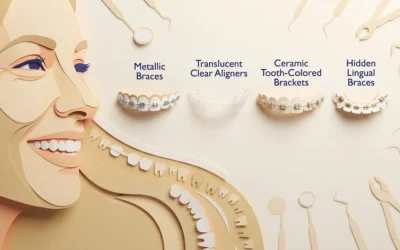
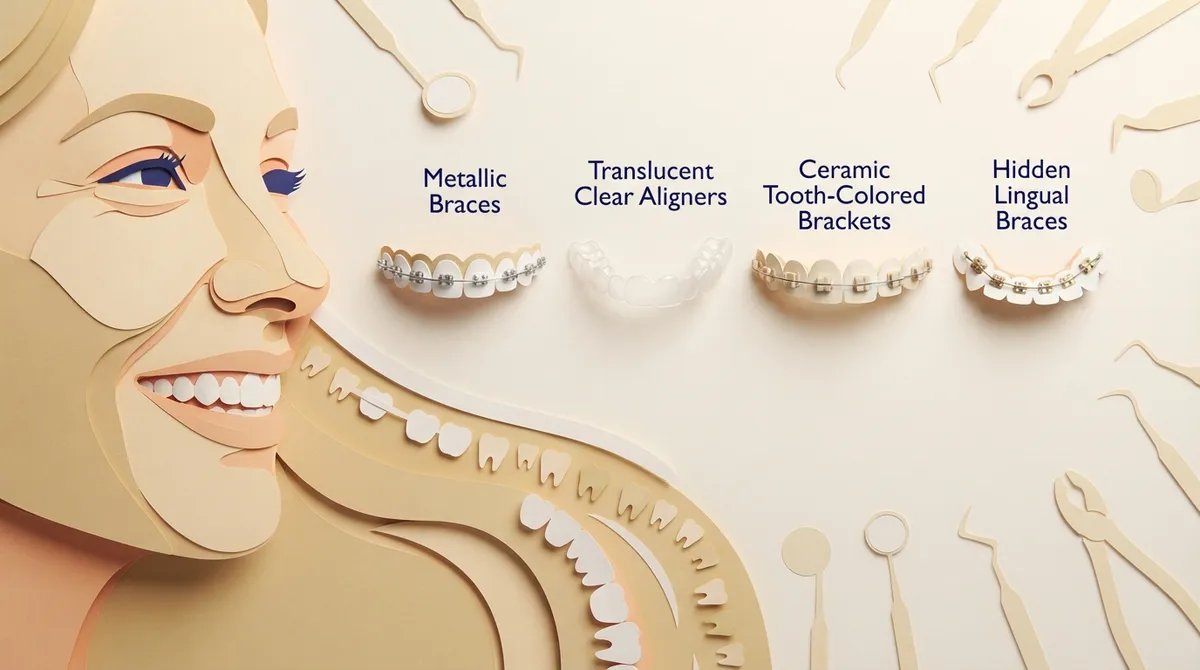
Clear aligners require 20-22 hours daily wear to be effective, while traditional braces or ceramic options work regardless of patient compliance, making them better for those with inconsistent routines.
-
Ceramic and lingual braces offer discretion for professionals, but ceramic is more fragile and costly while lingual braces affect speech initially and cost significantly more than metal alternatives.
-
Adults must have healthy gums, bone levels, and resolved cavities before starting treatment; skipping thorough pre-treatment exams can lead to complications like root shortening or gum recession.
-
Long-term retainer wear is essential after treatment ends since teeth naturally shift throughout life, and many adults experience relapse without consistent retainer use.
Thinking about braces as an adult? You are far from alone. More grown-ups than ever are walking into orthodontic offices, ready to fix crooked teeth, close gaps, or finally correct a bite that has bothered them for years. The good news is that today’s options go way beyond the metal-mouth image you might remember from middle school. Whether you are a busy professional in Clearwater, a parent finally making time for your own smile, or someone returning for a tune-up after old braces relapsed, there is a treatment built for your life.
Choosing between the different types of braces for adults can feel overwhelming at first. Metal, ceramic, self-ligating, lingual, clear aligners… where do you even start? This guide breaks it all down in plain language, so you can walk into your consultation feeling confident and prepared. Let’s find the right fit for your smile, your schedule, and your budget.

Why More Adults Are Choosing Braces Today
Adult orthodontic treatment can fix crooked or crowded teeth, close spacing, and correct overbites, underbites, and crossbites. Many adults assume it’s “too late” for them, but that’s rarely true. What matters most is a full assessment of your gum health, bone levels, and any past dental work like crowns or fillings.
Here’s why adults are saying yes to treatment now more than ever:
- Discreet options like ceramic braces and clear aligners fit into professional settings
- Advances in technology mean more comfortable, faster-working appliances
- Many adults finally have the time and budget to invest in themselves
- Fixing bite problems can ease jaw pain, headaches, and uneven wear on teeth
- A straighter smile boosts confidence in both work and social settings
If you have wondered whether treatment could work for you, our Adult Treatment page is a great place to start learning more.
The Main Types of Braces for Adults
Let’s walk through each option so you know exactly what sets them apart.
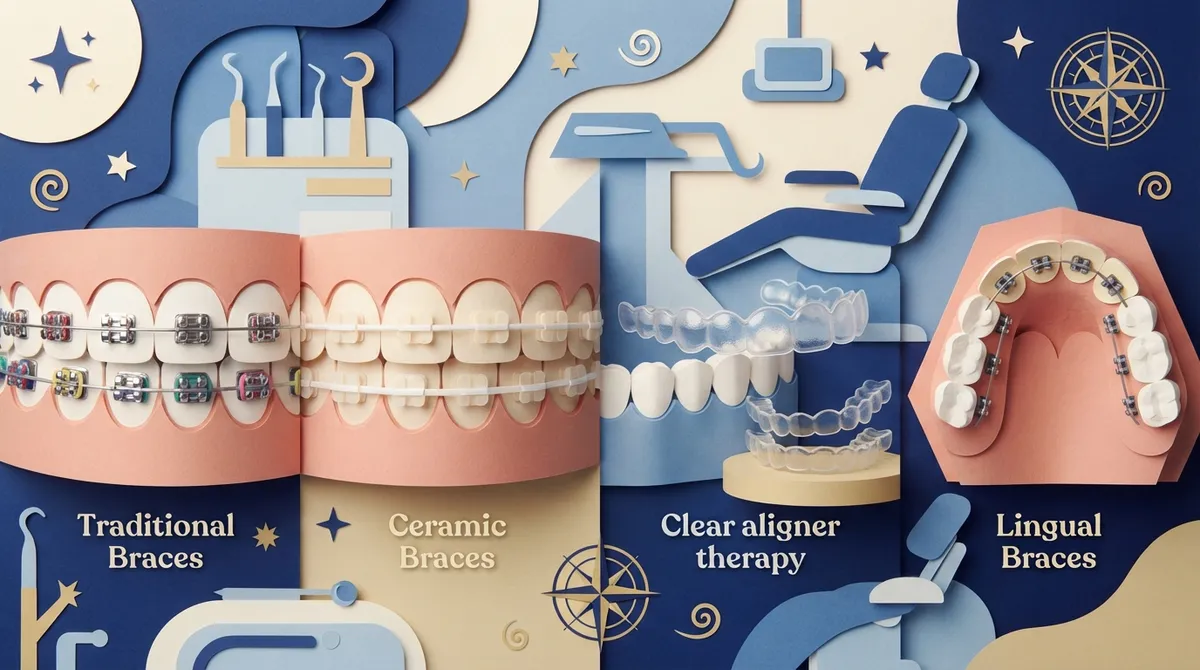
1. Traditional Metal Braces
Metal braces use brackets bonded to the front of each tooth, connected by a wire and held with small elastic bands. They are the most tried-and-true option and can handle almost any bite or alignment problem, from mild crowding to complex cases.
Many adults are surprised to learn that metal braces are having a bit of a comeback. They’re often the most budget-friendly choice and tend to move teeth efficiently. You can read more in our All About Braces guide.
2. Ceramic (Clear) Braces
Ceramic braces work just like metal ones, but the brackets are tooth-colored or clear, making them much less noticeable. This makes them a favorite among professionals and image-conscious teens alike.
One trade-off: ceramic brackets can be a bit more fragile than metal, and they typically cost more. Still, for many adults, the discreet look is well worth it. Curious how they stack up against traditional brackets? Check out our comparison on Metal vs. Clear Braces for Adults.
3. Self-Ligating Braces
Self-ligating braces use brackets with built-in clips instead of elastic ties to hold the wire in place. Some patients find them easier to keep clean since there are fewer places for food to get stuck. That said, research shows the clip design doesn’t automatically make treatment faster for everyone. They’re available in both metal and ceramic versions.
4. Lingual Braces
Lingual braces attach to the back of your teeth, facing your tongue, so they’re essentially invisible from the front. They are custom-made for your mouth, which makes them a great choice for anyone who wants zero visible hardware.
The catch? They tend to cost more, take some getting used to, and may affect your speech for a few weeks. If discretion is your top priority, though, lingual braces are worth discussing at your consultation.
5. Clear Aligners
Clear aligners are removable, see-through trays that gradually shift your teeth into place. They’re wildly popular with adults because you can take them out to eat, brush, and floss like normal. At Brockway Orthodontics, we offer Spark™ Clear Aligners, a more affordable alternative that delivers the same discreet, comfortable experience patients love.
The catch with aligners is that success depends on you. They only work if you wear them as directed, typically 20 to 22 hours a day. Skipping wear time can slow things down or reduce how well they work.
Comparing Your Options at a Glance
| Type of Braces | Visibility | Removable? | Best For |
|---|---|---|---|
| Metal Braces | Most visible | No | Complex cases, budget-conscious patients |
| Ceramic Braces | Low visibility | No | Professionals wanting a subtle look |
| Self-Ligating Braces | Visible (metal) or low (ceramic) | No | Patients who want easier cleaning |
| Lingual Braces | Hidden | No | Total discretion, no visible hardware |
| Clear Aligners | Nearly invisible | Yes | Mild-to-moderate cases, active lifestyles |
How to Choose the Right Option for You
There’s no single “best” answer for everyone. The right choice depends on your bite, your goals, and your daily habits. Here’s a simple process to help you decide:
- Book a consultation for a full exam, including digital images and a bite assessment
- Discuss your cosmetic goals and how visible you’re comfortable with treatment being
- Review your budget and ask about financing or payment plans
- Consider your lifestyle, like public speaking, eating out, or playing sports
- Ask your orthodontist which option fits your specific bite and tooth movement needs
Our team walks you through every step during Your First Visit, so nothing feels rushed or confusing.
What to Expect Before Treatment Begins
Before any adult starts treatment, your orthodontist needs to check a few things first:
- Gum health and bone levels supporting your teeth
- Existing dental work, like crowns, bridges, or fillings
- Any missing teeth or past dental trauma
- Active cavities or gum disease, which usually need treatment first
- Your overall oral hygiene habits and commitment to appointments
Skipping this step can lead to complications down the road, so a thorough exam really does matter. According to the American Dental Association, healthy gums and teeth are the foundation for any successful orthodontic outcome.
Common Concerns Adults Have About Braces
Will It Hurt?
Most people feel some pressure or tenderness after getting braces on or after adjustments. This usually fades within a few days. It’s normal, and it means your teeth are moving in the right direction.
What About Risks?
Less common risks include root shortening, gum recession, or minor bone loss. These risks are higher if you’ve had previous orthodontic treatment, dental trauma, or very large tooth movements. Your orthodontist will review these details with you honestly before starting.
What Foods Should I Avoid?
With fixed braces, steer clear of sticky candy, hard nuts, and crunchy snacks like popcorn. These can bend wires or pop off brackets. Clear aligner wearers don’t have this issue since the trays come out at mealtime.
Life After Braces: Why Retainers Matter So Much
Here’s something many adults don’t expect: your teeth can shift even after treatment ends. That’s why long-term retainer wear, at least part-time, is essential to protect your results. Teeth naturally continue to move throughout life, and skipping your retainer schedule is one of the top reasons people experience relapse.
If you’ve been through orthodontic treatment before and now find your teeth shifting again, you’re not alone. Many adults return for a second round of treatment, and it’s nothing to be embarrassed about. Learn more on our Retainers page about how to protect your smile for good.
Why Choose Brockway Orthodontics in Clearwater
Dr. Brockway believes every patient deserves personalized, judgment-free care, no matter their age or starting point. Our Clearwater office is equipped with modern technology, including digital impressions and 3D imaging, so your treatment plan is precise from day one. We also offer same-day treatment options in certain cases, because we know your schedule is busy.
From metal braces to ceramic braces to Spark™ Clear Aligners, we tailor every plan to fit your bite, your goals, and your life. Explore our full Services to see everything we offer families and adults alike. You can also see what our Clearwater patients are saying by checking out Visit us on Google — Brockway Orthodontics.
For general guidance on orthodontic standards in our state, the Florida Association of Orthodontists is a helpful, trustworthy resource as you do your research.
Your Next Step Toward a Confident Smile
Choosing among the different types of braces for adults doesn’t have to feel confusing or stressful. With the right guidance, you’ll land on a treatment plan that fits your goals, your comfort level, and your daily routine. Dr. Brockway and our caring team are here to answer every question, big or small, so you feel supported the entire way.
Ready to explore your options? Book appointment online today and take the first step toward the smile you’ve always wanted. Have questions before scheduling? Feel free to Contact us anytime, we’re happy to help.
FAQs
Q: What are the best types of braces for adults?
A: It really depends on your bite, budget, and how discreet you want treatment to be. Metal braces work well for complex cases, ceramic braces offer a subtle look, and clear aligners like Spark™ are great for adults who want flexibility. Your orthodontist can help you find the best match after a full exam.
Q: Are clear aligners as effective as traditional braces for adults?
A: Clear aligners work great for mild to moderate cases, but they do require discipline since you must wear them 20 to 22 hours a day. For more complex bite issues, traditional braces sometimes get the job done faster. Your orthodontist will let you know which option truly fits your smile goals.
Q: How long do adult braces take to work?
A: Treatment time varies widely, but most adults wear braces or aligners for about 12 to 24 months. Factors like the complexity of your bite, how well you follow instructions, and attendance at appointments all play a role. Your orthodontist will give you a personalized timeline at your consultation.
Q: Can adults get braces if they have crowns, fillings, or missing teeth?
A: Yes, in most cases! Your orthodontist will simply need to evaluate your existing dental work and any missing teeth before creating your treatment plan. A little extra planning goes a long way toward making sure your braces or aligners work safely and effectively.
Q: Do adults need to wear retainers permanently after braces?
A: Pretty much, yes, at least part-time. Teeth naturally shift over time, so long-term retainer wear helps protect all the hard work you put into your smile. Think of it as a small, easy habit that keeps your results looking great for years to come.
Our Service Area