Key Takeaways
-
LightForce braces use 3D-printed custom brackets designed specifically for each tooth, reducing average treatment time to 15-17 months compared to 24 months with traditional braces.
-
Research shows LightForce patients require fewer office visits (8-11 visits vs 12-15), with some studies reporting fewer emergency visits due to loose brackets.
-
LightForce braces use tooth-colored ceramic material for a more discreet appearance than metal braces, making them popular with adults and image-conscious teens.
-
Not all orthodontists offer LightForce treatment as it requires specialized training; orthodontist experience significantly influences treatment outcomes.
-
LightForce works best for mild to moderate crowding, spacing, or bite issues; complex cases involving severe misalignment or jaw growth may require alternative approaches.
-
Cost varies by provider and case complexity, and insurance coverage depends on your specific plan, so clarifying expenses upfront is essential before committing to treatment.
Picture braces made just for your teeth, like a custom suit instead of one bought off the rack. That’s the idea behind LightForce braces, one of the newest options in modern orthodontic care. If you’ve been researching ways to straighten your smile and keep hearing this name pop up, you’re in good company. Parents, teens, busy professionals, and adults getting a second chance at a straight smile are all asking the same question: are these custom brackets worth it?
At Brockway Orthodontics, we love talking about new technology because it means better, faster, and more comfortable care for our patients in Clearwater. In this guide, we’ll break down exactly what LightForce braces are, how they work, and whether they might be a good fit for you or your child. No confusing dental jargon here, just straight answers in plain language.
What Are LightForce Braces, Exactly?
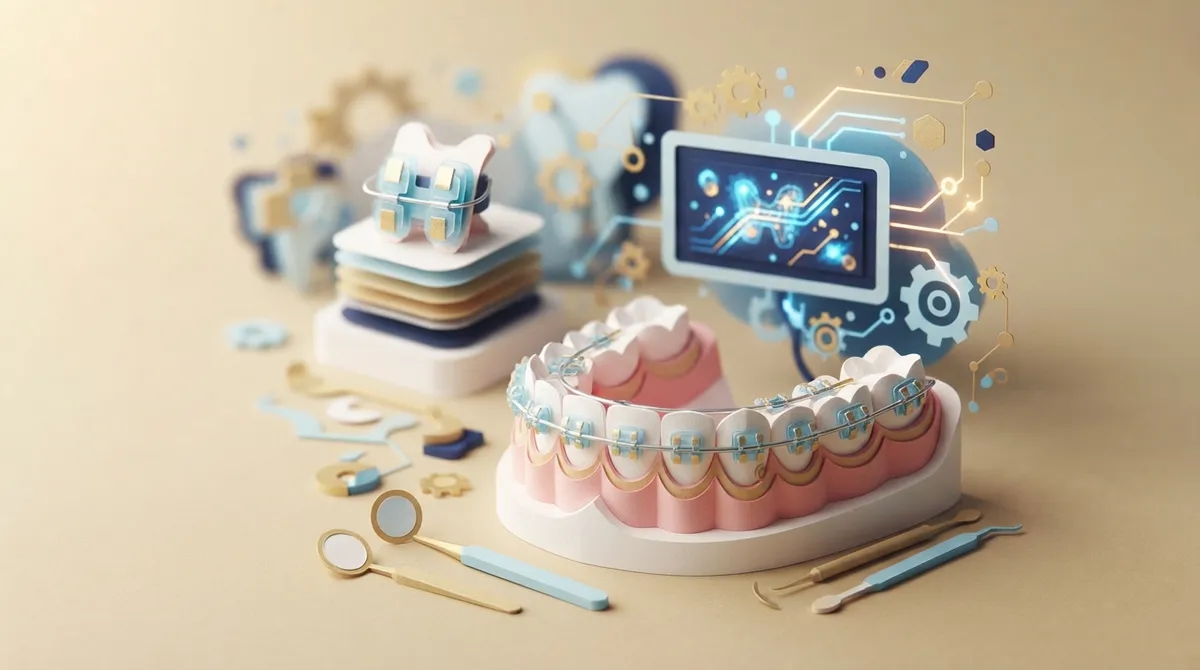
LightForce braces are fixed orthodontic appliances, similar to traditional braces, but with one big twist. Every single bracket is designed and 3D-printed specifically for your tooth and your treatment plan. No two patients get the same set of brackets.
Here’s how the process generally works:
- Your orthodontist takes a digital scan of your teeth instead of a gooey mold.
- That scan gets turned into a 3D treatment plan using special software called LightPlan.
- Your orthodontist reviews and approves the plan, adjusting it based on your unique bite and goals.
- Each bracket is 3D-printed to match the exact shape of that specific tooth.
- The brackets are bonded onto your teeth using a precise, indirect bonding method.
- You’ll have periodic adjustment visits, just like with regular braces, using archwires to gently move your teeth.
Because each bracket is custom-made, your orthodontist can control the base shape, the slot where the wire sits, and even small features like hooks and tie wings. Think of it like a tailor adjusting every seam instead of hemming pants that were made for someone else.
How Are LightForce Braces Different From Traditional Braces
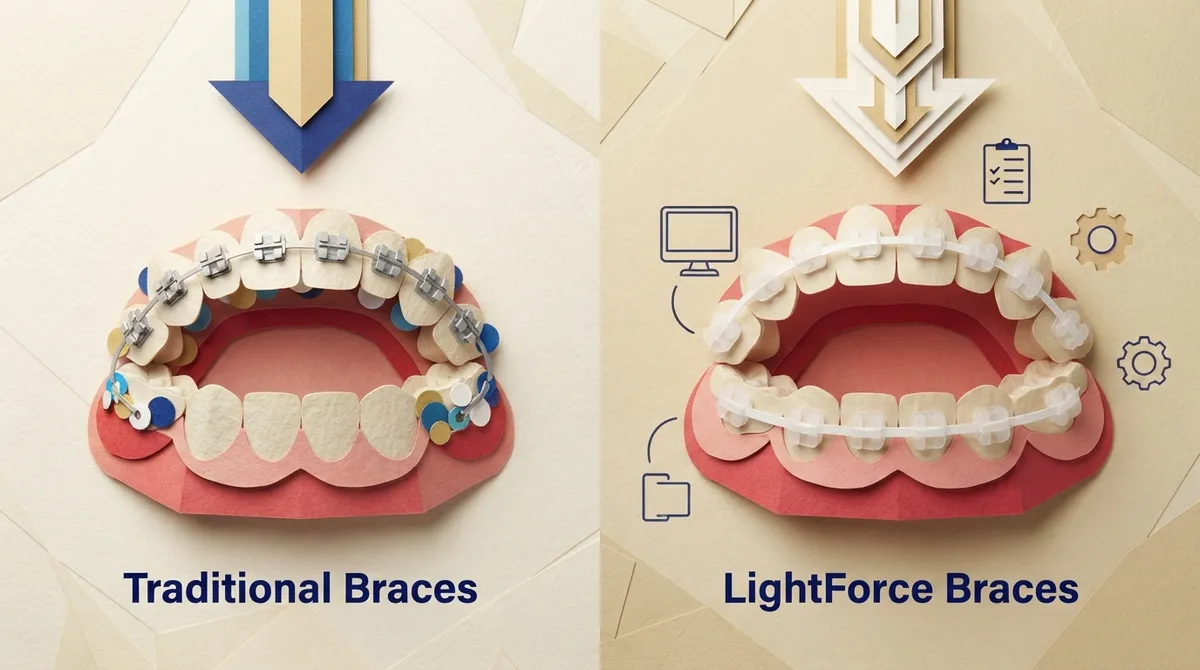
Traditional metal or ceramic braces use brackets that come in standard shapes and sizes. Your orthodontist picks the closest match for your tooth, then works with wires and adjustments to guide your teeth into place.
LightForce flips that process. Instead of fitting your teeth to the bracket, the bracket is built to fit your teeth. Here’s a simple comparison to help make sense of the differences.
| Feature | Traditional Braces | LightForce Braces |
|---|---|---|
| Bracket Design | Standard, mass-produced shapes | Custom 3D-printed for each tooth |
| Material | Metal or ceramic | Tooth-colored ceramic (polycrystalline alumina) |
| Visibility | Metal is noticeable; ceramic is subtle | Designed to blend with tooth color |
| Treatment Planning | Manual adjustments during visits | Digital 3D planning before bonding |
| Average Treatment Time* | About 24 months | About 15 to 17 months |
| Average Number of Visits* | 12 to 15 visits | 8 to 11 visits |
*These numbers come from a 2024 multi-practice retrospective study and represent averages, not guarantees. Your own results will depend on your case, your compliance, and your orthodontist’s experience.
Are LightForce Braces Actually Faster
This is probably the question we hear most, especially from busy adults and parents juggling packed schedules. The short answer is that research looks promising, but individual results vary quite a bit.
A 2024 multi-practice study found that LightForce patients finished treatment in about 15 to 17 months, compared to roughly 24 months for people wearing conventional brackets. That’s close to a 30% difference in treatment time. Patients also averaged fewer office visits, about 8 to 11 compared to 12 to 15.
A newer 2026 retrospective study looked at 94 younger patients with mild to moderate misalignment. It compared three treatment types: LightForce brackets, clear aligners, and conventional brackets. The results were interesting:
- LightForce brackets averaged 15.89 months of treatment
- Clear aligners averaged 14.39 months
- Conventional brackets averaged 27.79 months
The study also found that treatment quality was similar across all three options for patients with simpler cases. One important note from the researchers: how experienced the orthodontist is can heavily influence these results. That’s a great reminder of why choosing a skilled, experienced provider matters just as much as the technology itself.
Who Might Be a Good Candidate
LightForce braces aren’t automatically the right choice for every smile. Like any orthodontic treatment, success depends on several factors your orthodontist will evaluate during your first visit.
Good candidates often include patients who:
- Have mild to moderate crowding, spacing, or bite issues
- Want a more discreet option than metal braces
- Are committed to keeping up with oral hygiene during treatment
- Don’t have major dental restorations that complicate bracket placement
- Are working with an orthodontist trained in the LightForce digital workflow
More complex cases involving jaw growth issues, severe misalignment, or certain periodontal concerns may need a different approach. This is exactly why a thorough evaluation matters so much. Every smile is different, and what works beautifully for one patient may not be the best plan for another.
Potential Benefits Worth Knowing About
There’s a lot to like about the LightForce approach, especially if you’re someone who values precision and a more personalized treatment experience.
A Prescription Made Just for You
Because your treatment plan is designed digitally before any brackets are printed, your orthodontist can visualize how your teeth will move well before your first adjustment. That kind of planning can lead to more predictable results.
A More Discreet Look
The ceramic material is tooth-colored, which many patients, especially adult patients and image-conscious teens, appreciate. It’s a nice middle ground between traditional metal brackets and clear aligners.
Fewer Emergency Visits, Possibly
Some research, including a mechanical and clinical review, reported a meaningful drop in emergency visits caused by loose brackets when compared to conventional treatment. Fewer surprise appointments means less disruption to your busy life.
Potential Downsides to Consider
No treatment is perfect, and it’s only fair to talk about the trade-offs too. Being upfront about pros and cons is part of how we build trust with our patients here in Clearwater.
- Cost can be higher or vary depending on your case and provider
- Not every orthodontist offers LightForce, since it requires special training
- Ceramic brackets can chip or fracture more easily than metal ones
- You may still experience normal discomfort during adjustments
- Regular risks of any fixed braces still apply, including possible enamel decalcification, gum irritation, and relapse if retainers aren’t worn
Most of the strongest evidence supporting LightForce comes from retrospective studies rather than large randomized trials. That doesn’t mean the results aren’t encouraging, it just means we should treat the data as promising rather than guaranteed.
What Happens After Treatment
Just like with any type of braces, finishing treatment doesn’t mean your job is done. Your teeth still want to shift back to their old positions over time, a process called relapse.
That’s why retainers are such a critical part of your smile’s long-term success. Whether you had LightForce brackets, traditional braces, or Spark™ Clear Aligners, wearing your retainer as instructed helps protect the results you worked so hard to achieve.
How Brockway Orthodontics Approaches Modern Orthodontic Care
Here in Clearwater, we believe technology should make your journey easier, not more complicated. Dr. Brockway stays current on advancements across the orthodontic field so she can guide you toward the option that fits your goals, your budget, and your lifestyle.
We offer a full range of orthodontic services, including metal braces, ceramic braces, and Spark™ Clear Aligners, a more affordable alternative to other clear aligner brands. Every recommendation we make starts with listening to what you actually want from your smile.
Digital scanning and 3D imaging are already part of how we plan treatment for our patients. This kind of precision, paired with genuine care, is what helps families throughout Pinellas County feel confident in their choice. You can even see what real patients are saying by checking out Brockway Orthodontics reviews on Google.
Questions to Ask During Your Consultation
Whether you’re considering LightForce, traditional braces, or clear aligners, coming prepared with questions helps you make a confident decision. Here are a few worth asking:
- Am I a good candidate for this type of treatment based on my bite and dental history?
- How long do you expect my treatment to take?
- How many appointments will I need throughout treatment?
- What does this option cost, and what financing choices are available?
- How should I care for my teeth and appliances during treatment?
According to the American Dental Association, good oral hygiene habits are essential during any orthodontic treatment to prevent decay and gum problems. Brushing after meals, flossing daily, and keeping up with regular cleanings all matter more once you have brackets or aligners in your mouth.
Insurance and Cost Considerations
Orthodontic insurance coverage varies a lot depending on your plan and provider. Some plans cover a portion of orthodontic treatment regardless of the bracket type, while others may have specific exclusions for newer technology like custom 3D-printed brackets.
Our team can help you understand your financing and insurance options before you commit to any treatment. We want cost to be crystal clear from day one, with no surprises later. The Florida Association of Orthodontists also offers helpful resources for patients researching orthodontic care across the state.
Ready to Explore Your Smile Options
Choosing the right orthodontic treatment is a big decision, and it’s one you shouldn’t have to make alone. Whether you’re curious about custom 3D-printed brackets, traditional braces, or clear aligners, our team at Brockway Orthodontics is here to walk you through every option with honesty and warmth.
We’d love to meet you and your family, answer your questions, and help you find the smile plan that fits your life. Ready to get started? Book your appointment online today and take the first step toward a smile you’ll love showing off. You can also follow along with real patient transformations and practice updates on our Instagram and Facebook pages.
FAQs
Q: What are LightForce braces and how do they work?
A: LightForce braces are custom fixed braces where each bracket is 3D-printed just for your tooth. Your orthodontist scans your teeth digitally, plans your treatment in special software, then bonds the custom brackets to your teeth. From there, treatment works a lot like traditional braces, using archwires and regular adjustments to guide your smile into place.
Q: Are LightForce braces better than traditional metal braces?
A: It really depends on your case and goals! Studies suggest LightForce may lead to shorter treatment times and fewer visits for some patients, plus they’re more discreet since they’re tooth-colored. That said, traditional braces are still a reliable, proven option, and the best choice comes down to your specific smile needs. Your orthodontist can help you weigh the pros and cons together.
Q: How long does treatment with LightForce braces take?
A: On average, studies show LightForce treatment taking around 15 to 17 months, compared to about 24 months for traditional braces. A 2026 study on younger patients found similar numbers, around 15.89 months for LightForce cases. Keep in mind these are averages, and your actual timeline depends on your unique bite, compliance, and case complexity.
Q: Do LightForce braces require retainers after treatment?
A: Yes, absolutely! Just like with any orthodontic treatment, your teeth can shift back over time without a retainer. Wearing your retainer as directed is the key to protecting your beautiful new smile for years to come, no matter which type of braces got you there.
Q: Are LightForce braces covered by dental insurance?
A: Coverage varies quite a bit depending on your specific insurance plan and provider. Some plans cover orthodontic treatment generally, while others may treat custom 3D-printed brackets differently. We’re always happy to help you review your financing and insurance options so there are no surprises along the way.
Our Service Area