Key Takeaways
-
Braces change your smile and lip position, not your bone structure or face shape; they work by moving teeth which causes lips to rest differently, creating subtle appearance changes around your mouth area only.
-
Growing children have more potential for facial changes than adults because their jaws are still developing; early treatment with specific appliances can guide jaw growth and create measurable lip and profile changes.
-
Correcting your bite can make your jawline and chin appear more balanced by allowing your jaws to meet in a healthier position, though braces themselves don't reshape bone.
-
Tooth extractions done carefully as part of a personalized plan won't cause a sunken face; orthodontists evaluate crowding, protrusion, and facial balance before recommending extractions.
-
Your side profile can look more balanced if front teeth stick out noticeably, as moving them back reduces lip protrusion; the amount of change depends on your starting position and natural lip thickness.
-
Professional in-person evaluation is essential for predicting your specific facial changes; online before-and-after photos are unreliable because results depend on individual anatomy, growth, and treatment plans.
If you’ve been searching “will braces change my face,” you’re not alone. It’s one of the most common questions we hear at our Clearwater office, and honestly, it’s a great question to ask before starting treatment. Whether you’re a parent thinking about your teen’s smile, an adult professional considering treatment for the first time, or someone who’s had braces before and wants to know what’s realistic this time around, understanding the real answer helps you set the right expectations.
Here’s the short version: braces can absolutely change how your face looks, but not in the dramatic, sculpting way social media sometimes suggests. The changes happen mostly around your mouth and lips, not your bone structure. Let’s break down exactly what braces can and can’t do, so you walk into your consultation feeling confident and informed.
The Real Answer: Braces Change Your Smile, Not Your Skeleton
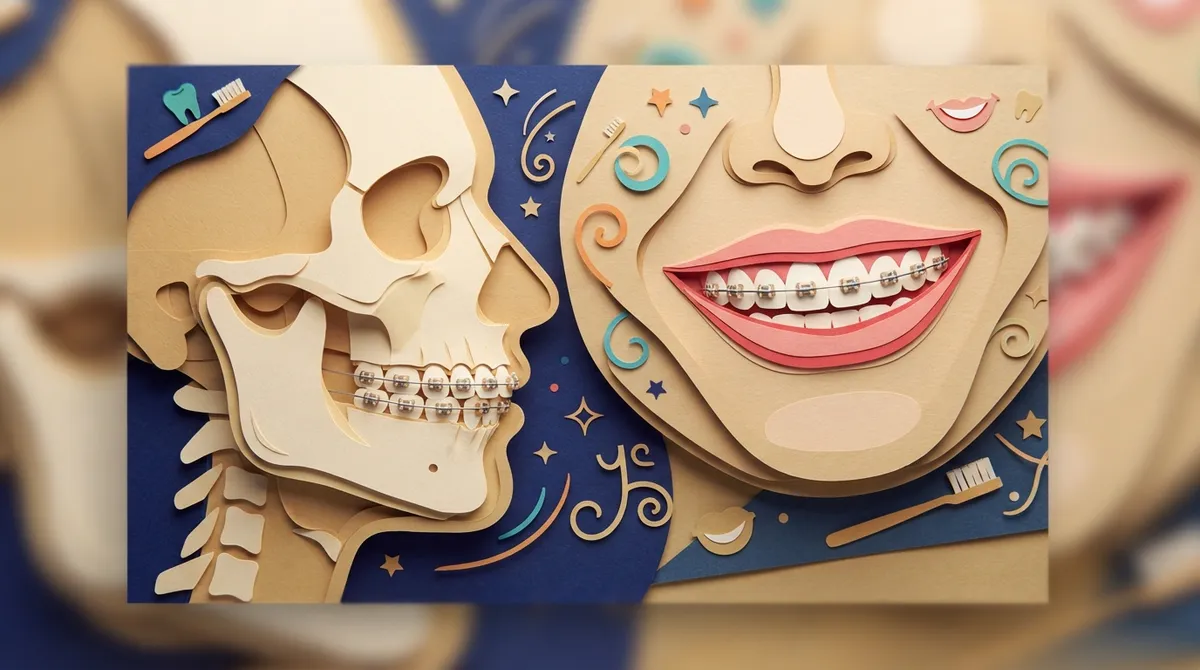
Braces work by moving teeth through the bone that supports them. They don’t reshape your jawbone, cheekbones, or nose. If you’re an adult and your facial bones have finished growing, braces alone won’t give you a different bone structure. What they will do is improve the position of your teeth, which can subtly change how your lips and mouth area look.
Think of it like this: your teeth act like a scaffold for your lips. When teeth are crowded, tipped forward, or misaligned, your lips rest differently than they would with straight, well-positioned teeth. Move the teeth, and the lips often settle into a new, more balanced position. That’s the main way braces influence your appearance.
What Changes You Might Actually Notice
Here are the most common facial changes patients notice during and after treatment with traditional braces or clear aligners:
- A fuller, more balanced smile as crowded or gapped teeth align
- Reduced lip protrusion if front teeth were sticking out before treatment
- Better lip closure and less strain when resting your mouth
- A more symmetrical smile line as your bite improves
- Subtle changes to your profile if your bite correction shifts how your jaws meet
Notice that none of these are about changing your bone structure. They’re about your soft tissue adapting to a healthier, more aligned foundation underneath.
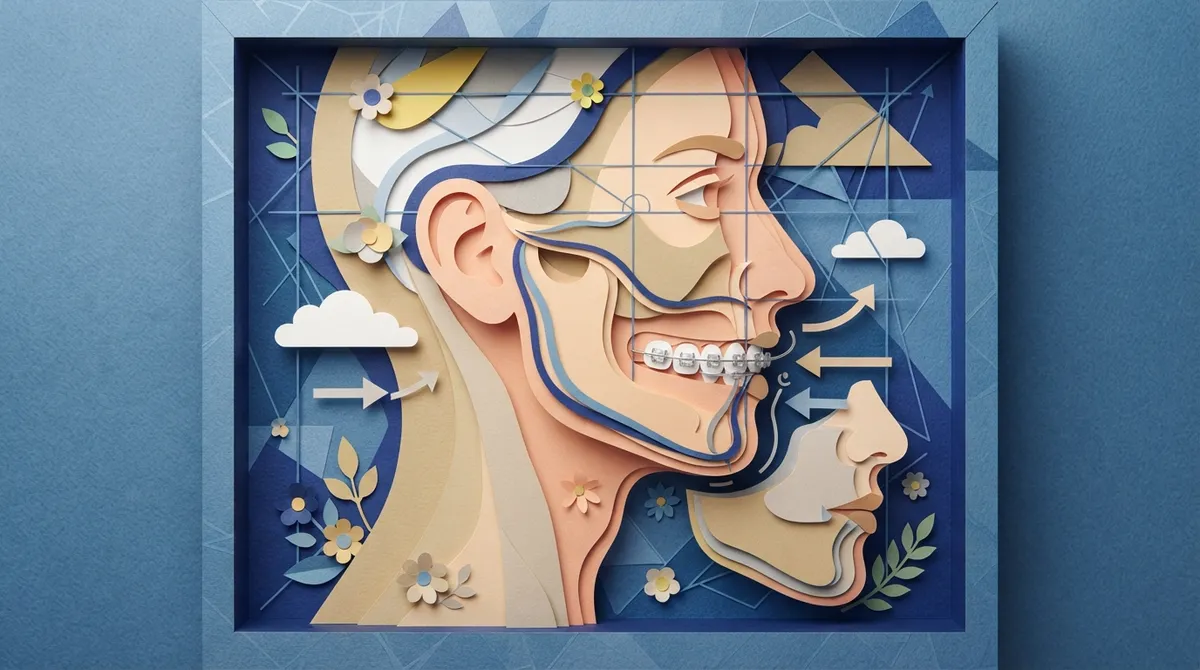
Will Braces Change My Face Shape Specifically?
This is where we need to be careful and honest with you. Braces do not change your face shape in the way a cheekbone or jaw surgery would. Your basic facial shape, whether round, oval, square, or heart-shaped, comes from your underlying bone structure. Braces move teeth, not bones.
What braces can do is create the appearance of subtle change, especially around your lower face and mouth. If you had a lot of protruding front teeth, straightening them can make your profile look less pronounced. If your bite was very open or deep, correcting it can change how your chin and lower lip relate to the rest of your face. These are real changes, just more limited than many people expect.
Do Braces Change Your Jawline or Chin?
Braces themselves don’t reposition an adult’s jawbone. However, correcting your bite can change how your jaws meet, which sometimes affects the appearance of your chin or lower jawline. For example, fixing a significant overbite might allow the lower jaw to sit in a more forward, balanced position relative to the upper jaw. This isn’t the braces moving bone. It’s the teeth guiding the jaws into better alignment.
For adults with a significant skeletal discrepancy, like a jaw that’s noticeably too far forward or back, braces alone typically cannot fully correct this. In these cases, your orthodontist might recommend a combined plan involving both orthodontics and jaw surgery. This is a conversation worth having early, which is why your first visit to Brockway Orthodontics includes a thorough evaluation of your bite and profile.
Braces and Kids: A Different Story During Growth
For parents of children and teens, there’s an important distinction to understand. Growing kids have more potential for their orthodontic treatment to influence facial development because their jaws are still growing. Certain early treatments, like palatal expanders or growth-guiding appliances, can work with a child’s natural growth to help guide jaw development in a positive direction.
A 2025 systematic review looked at early treatment for kids with a specific bite issue called Class III malocclusion, where the lower jaw grows more than the upper jaw. Researchers studied children between about 6 and 12 years old. They found that certain appliances, like facemask treatment combined with expansion, were linked to measurable changes in lip position and profile. In fact, one approach was associated with a 1.58 mm increase in upper-lip fullness and changes in the angle between the nose and upper lip.
Another approach using anchored facemask treatment showed even bigger changes, including upper-lip changes, lower-lip retrusion, and backward chin movement of nearly 5 millimeters. It’s important to note these results are specific to early treatment in growing children with a particular bite problem. They should not be assumed to apply to routine braces for teens or adults. If you’re wondering whether your child could benefit from early intervention, our early treatment and adolescent treatment pages explain what we look for and when to start.
Comparing Facial Changes: Growing Kids vs. Adults
| Factor | Growing Children/Teens | Adults |
|---|---|---|
| Jaw growth potential | Still developing, can be guided | Growth complete, cannot be redirected |
| Facial bone changes | Possible with specific early appliances | Braces alone don’t reshape bone |
| Lip position changes | Often more noticeable | Subtle, tooth-position dependent |
| Best treatment window | Often ages 7-12 for early intervention | Any age, but results depend on bite severity |
| Major skeletal correction | Sometimes achievable with growth modification | May require orthodontics plus jaw surgery |
What About Tooth Extractions? Will They Make My Face Look Sunken?
This is a common worry, especially among adults considering treatment or those who had braces years ago with extractions. The idea that pulling teeth automatically causes a sunken or hollow look isn’t accurate. Whether extractions are the right choice, and how they might affect your lip support, depends entirely on your specific case.
Your orthodontist looks at several things before recommending extractions:
- How crowded your teeth are and how much space is needed
- How much your front teeth currently protrude
- Your natural facial profile and lip fullness
- Your bite relationship between upper and lower teeth
- Your overall facial balance and goals for treatment
When extractions are planned carefully as part of a personalized treatment plan, they’re meant to improve your smile and profile, not create a sunken appearance. This is exactly why a thorough consultation matters so much. At Brockway Orthodontics, Dr. Brockway takes time to evaluate your whole face, not just your teeth, before recommending any treatment plan.
Can Braces Make My Face Look Slimmer?
Many patients ask this, especially those interested in aesthetic improvements. The truth is nuanced. Braces don’t reduce facial fat or change your bone width. However, correcting an open bite, deep bite, or significant overbite can change how your lips rest and how your lower face appears in photos and in the mirror.
For example, patients with a severe overbite sometimes have a lower face that looks shorter or recessed. As braces correct a deep overbite, the lower jaw and chin often appear more proportional to the rest of the face. This can create the impression of a slimmer, more balanced look, even though no fat or bone was actually removed.
Will Braces Change My Lips or Side Profile?
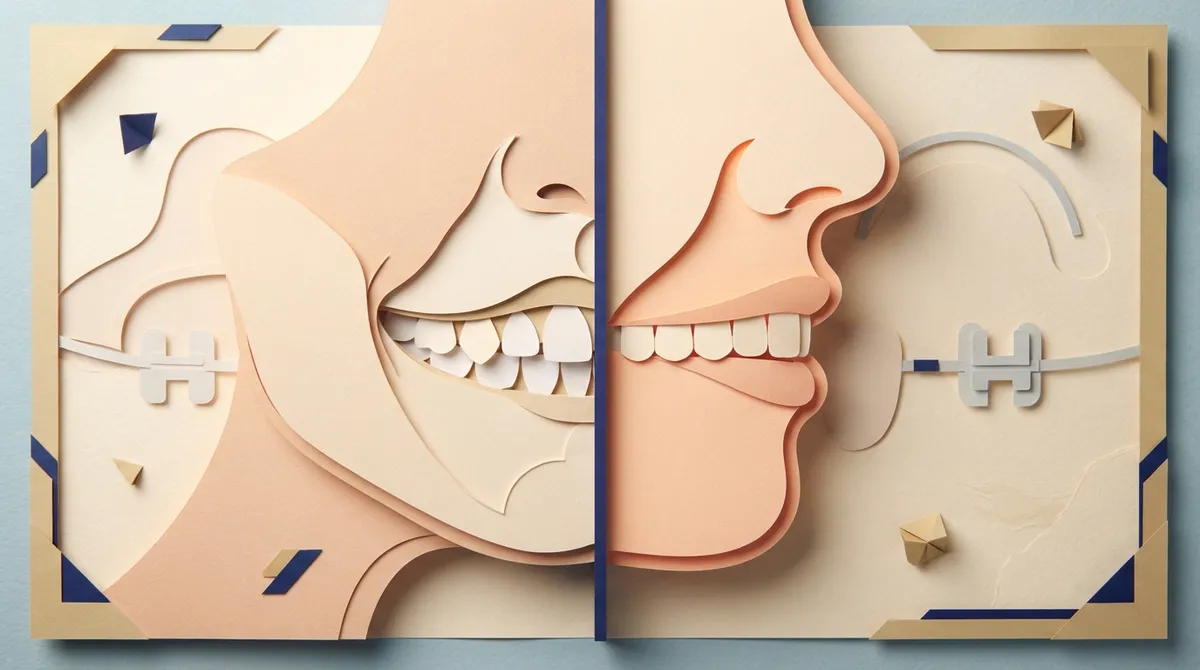
Yes, this is one of the more predictable changes. If your front teeth stick out noticeably, moving them back into proper alignment often reduces how much your lips protrude. Your side profile, the view of your face from the side, can look more balanced as a result.
That said, the amount of change depends on where your teeth started, your natural lip thickness, and your treatment plan. Someone with mild crowding won’t see the same profile change as someone with significant protrusion. This is why comparing your case to a friend’s before-and-after photos isn’t always fair. Every smile and every face is different.
Setting Realistic Expectations at Your Consultation
Before-and-after photos are everywhere online, and they can be exciting to look at. But it’s worth remembering that facial changes over the course of treatment can also come from growth, aging, weight changes, or other factors unrelated to braces. Not every visible difference in a photo is caused by orthodontic treatment alone.
The best way to know what to expect for your own face is a personal evaluation. During your consultation, your orthodontist will examine:
- Your current bite and how your teeth meet
- Your facial profile from the front and side
- Whether you’re still growing (for younger patients)
- The position and angle of your front teeth
- Your lip support and overall facial balance
This kind of personalized assessment is far more useful than comparing your situation to generic photos online. According to the American Dental Association, individualized treatment planning is essential for predictable, healthy outcomes in any dental or orthodontic care.
Choosing the Right Treatment for Your Goals
Whether you’re considering Spark™ Clear Aligners for a more discreet option, traditional metal braces, or ceramic braces that blend in with your teeth, the treatment method itself doesn’t change what’s biologically possible. What matters most is the treatment plan built around your specific bite, teeth, and facial goals.
Adults exploring treatment often appreciate that Spark™ Clear Aligners offer an affordable, less noticeable path to a straighter smile without sacrificing effectiveness. Teens and young adults, meanwhile, often want options that fit their active lifestyles and social calendars. Whatever your situation, our team walks you through all your treatment options so you can choose what fits your life and your goals.
For patients who’ve had orthodontic relapse and are considering retreatment, we understand this can feel discouraging. The good news is that many relapse cases can be corrected effectively, and understanding what facial changes to expect the second time around is just as important as the first. We also offer guidance on retainers to help protect your results long term, since keeping your new smile in place is just as important as achieving it.
Why Professional Evaluation Matters More Than Guesswork
It’s tempting to search for quick answers online, but every face and bite is unique. A qualified orthodontist can look at your x-rays, photos, and bite pattern to give you an honest, personalized answer about what changes you might see. This is far more reliable than generalizing from someone else’s treatment results.
The Florida Association of Orthodontists emphasizes the importance of seeing a specialist for a full evaluation before starting any orthodontic treatment plan. This ensures your treatment is based on your actual anatomy and goals, not assumptions.
At Brockway Orthodontics, we serve families and adults throughout Clearwater, Florida, and we take pride in explaining every step of your treatment in plain, friendly language. We want you to feel informed and comfortable, not confused by dental jargon. You can also visit us on Google — Brockway Orthodontics to see what our patients say about their experience and results.
Frequently Asked Questions Worth Knowing Before You Start
Many patients want quick, clear answers before committing to treatment. Here are a few more details that often come up in consultations:
- Ask your orthodontist to show you digital imaging of your projected results before starting treatment.
- Bring up any specific facial concerns you have, like lip fullness or profile balance, during your first visit.
- Discuss whether you’re a candidate for extractions and how that decision was made for your case.
- If you’re an adult with a significant bite issue, ask whether jaw surgery might be part of a comprehensive plan.
- For parents, ask about the right timing for your child’s first orthodontic evaluation to catch growth-related issues early.
Following Brockway Orthodontics on Instagram or Facebook is also a great way to see real patient transformations and get a feel for what treatment looks like day to day.
Your Next Step Toward a Confident Smile
So, will braces change my face? For most people, the honest answer is: braces will change your smile and may subtly improve your lip position and profile, but they won’t reshape your bone structure. The real transformation happens through healthier teeth, a more balanced bite, and a smile you feel proud to show off every day.
If you’re curious what changes you might expect for your unique face and bite, the best next step is a personal consultation. Dr. Brockway and our caring Clearwater team are here to answer your questions honestly and help you feel confident about your treatment plan. Ready to find out what’s possible for your smile? Book appointment online today, or feel free to contact us with any questions you have along the way. We can’t wait to help you smile with confidence.
FAQs
Q: Will braces change my face shape?
A: Braces mainly change how your teeth and lips look, not your actual face shape or bone structure. If your front teeth stick out, straightening them can make your profile look more balanced, but your basic face shape stays the same. For a clear picture of what to expect for your own face, a personal consultation is your best bet.
Q: Do braces change your jawline or chin?
A: Braces alone don’t reposition an adult’s jawbone, but correcting your bite can change how your jaws meet, which sometimes improves the look of your chin or jawline. This happens because your teeth guide your jaw into a healthier position, not because braces reshape bone. For bigger jaw discrepancies, your orthodontist might suggest pairing braces with jaw surgery.
Q: Will braces with tooth extractions make my face look sunken?
A: Not if extractions are planned carefully as part of your personalized treatment! Orthodontists look at your crowding, tooth position, and profile before recommending extractions, all to support your natural facial balance. This is exactly the kind of detail we walk through during your consultation at Brockway Orthodontics.
Q: How can I find out what facial changes to expect from braces?
A: The best way is a one-on-one evaluation with an orthodontist who can look at your bite, teeth, and profile in person. Every face responds a little differently to treatment, so personalized advice beats guessing from online photos every time. We’d love to walk you through your options during a friendly consultation.
Q: Do braces change an adult’s face differently than a child’s?
A: Yes, quite a bit! Kids are still growing, so certain early treatments can help guide healthy jaw development in ways that simply aren’t possible once growth is complete. Adults can still see great improvements to their smile and lip position, but major skeletal changes usually require more than braces alone.
Our Service Area