
Key Takeaways
-
Braces can effectively improve speech issues caused by structural dental problems like gaps, overbites, underbites, and crowding by correcting tongue and lip positioning during sound formation.
-
Approximately 56% of patients experience temporary speech changes after getting braces, but most adapt within days to two weeks as their mouth adjusts to the new hardware.
-
Speech impediments from non-structural causes like neurological conditions or learned habits may require combining braces with professional speech therapy for optimal results.
-
Early orthodontic treatment between ages 7-10 can be transformative for children with speech concerns, using tools like palatal expanders to guide jaw development before issues become complex.
-
Both traditional braces and clear aligners can deliver excellent results for structure-caused speech problems, though traditional braces are better for complex bite issues while aligners cause only brief adjustment periods.
-
Beyond speech improvement, braces provide additional benefits including better chewing, easier oral hygiene, reduced jaw pain, and increased confidence that improve overall daily quality of life.
Have you ever caught yourself hesitating before speaking because of a lisp or a whistling sound that sneaks out on certain words? You are definitely not alone. Many people live with speech issues that they never connect to their teeth or bite. The surprising truth is that your dental alignment plays a huge role in how clearly you speak. Crooked teeth, overbites, underbites, and crowding can all affect how your tongue and lips move when you form sounds. The good news? Orthodontic treatment like braces can make a real difference. In this article, we will walk you through exactly how braces can help with speech impediments, what kinds of issues they address, and what to realistically expect during and after treatment. Whether you are a parent wondering about your child, a teen curious about your options, or an adult ready to finally tackle this concern, we have got answers for you.

How Your Teeth Affect the Way You Talk
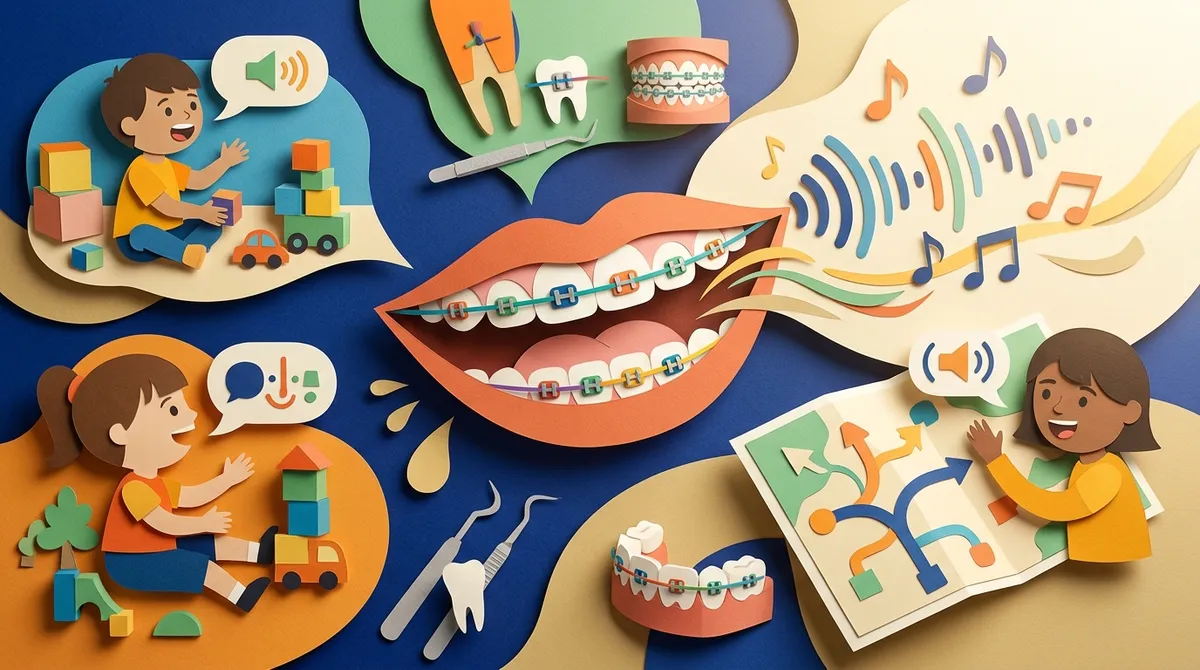
It might surprise you to learn just how much your teeth influence your speech. When you speak, your tongue, lips, and teeth work together like a team. If one player is out of position, the whole performance can suffer. Teeth that are crooked, crowded, or misaligned can throw off this delicate balance.
Here is how misaligned teeth can cause speech problems:
- Your tongue cannot find the right resting position
- Gaps between teeth let air escape, causing whistling sounds
- An overbite pushes your tongue too far back
- An underbite changes how your upper and lower lips meet
- Crowded teeth disrupt the path your tongue takes to form sounds
The American Dental Association recognizes malocclusion (misaligned bite) as a condition that can affect not just chewing but also speech and overall oral health. This makes orthodontic care more than just a cosmetic concern.
What Speech Problems Can Braces Help Fix?
Braces are most effective at improving speech issues that are directly caused by structural dental problems. If the root cause of your speech impediment is your bite or tooth alignment, braces have a strong chance of helping you speak more clearly.
Common speech problems that braces can improve include:
- Lisping: Difficulty pronouncing “s” and “z” sounds, often caused by gaps or an open bite
- Whistling: Air escaping through spaces between teeth
- Difficulty with “th,” “sh,” and “ch” sounds: Often linked to overcrowding or a misaligned bite
- Slurred or muffled speech: Caused by the tongue lacking proper support
- Tongue thrust: When the tongue pushes forward during speech due to an open bite
| Speech Problem | Likely Dental Cause | How Braces Help |
|---|---|---|
| Lisping | Gaps, open bite, crowding | Closes gaps, aligns teeth for better tongue control |
| Whistling | Spaces between teeth | Eliminates air escape by closing gaps |
| “S” and “Z” difficulties | Misaligned bite or crowded teeth | Provides better surface for tongue movement |
| Tongue thrust | Open bite | Corrects open bite to give tongue proper support |
| Muffled sounds | Overbite or underbite | Aligns upper and lower jaw for clearer sound |

When Braces May Not Be Enough on Their Own
It is important to be honest with you here. Braces are a powerful tool, but they are not a cure-all for every type of speech issue. Speech impediments that come from non-structural causes — such as motor dysfunction, neurological conditions, or learned speech habits — may not respond to orthodontic treatment alone.
In those cases, a combination approach works best. Many patients see excellent results when they pair orthodontic treatment with professional speech therapy. The braces correct the structural issue, and the speech therapist helps retrain the muscles and habits that developed over years of compensation.
Here are situations where speech therapy alongside braces is often recommended:
- When the speech habit has been present for many years and is deeply ingrained
- When there is a motor or neurological component to the impediment
- When a child has already developed compensatory speech patterns
- When the speech problem involves multiple sounds or is complex in nature
If you are unsure which category you fall into, a consultation with an orthodontist is a great first step. You can also schedule a free consultation with our team at Brockway Orthodontics to get personalized guidance.
What Happens to Your Speech When You First Get Braces?
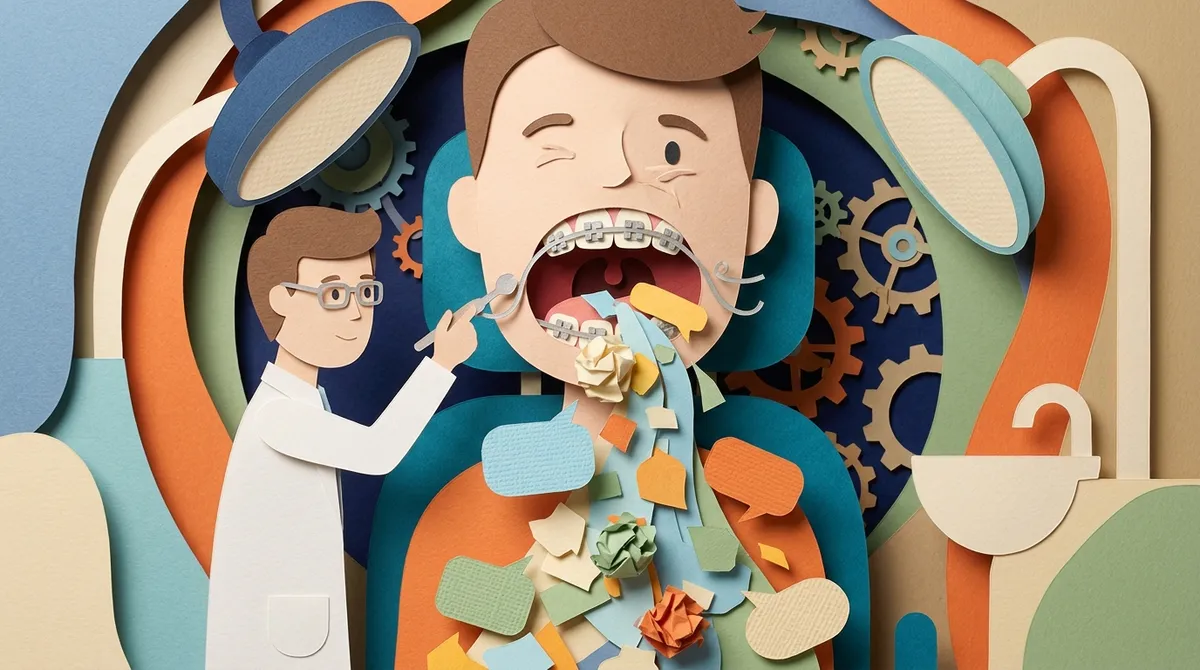
Here is something many people do not talk about enough: braces can temporarily affect your speech when you first get them. This is completely normal and nothing to worry about. Your mouth simply needs time to adjust to the new hardware.
According to research, approximately 56% of patients notice some change in their speech right after braces are placed. The good news is that most people adapt within just a few days, and many find their speech returns to normal or improves within one to two weeks.
| Timeframe | What to Expect |
|---|---|
| Day 1-2 | Slight lisp or unusual tongue positioning as you adjust |
| Days 3-7 | Rapid improvement as your tongue adapts to the new surfaces |
| Weeks 2-4 | Speech feels mostly natural again for most patients |
| Months 1-6 | Continued improvement as teeth shift and alignment improves |
A great tip to speed up your adjustment? Practice speaking out loud every day. Read books aloud, talk with friends, or even sing along to your favorite songs. The more you use your voice, the faster your mouth will adapt.
Early Treatment for Children Can Make a Big Difference
If you are a parent reading this and your child has a speech impediment, early action can be life-changing. The early orthodontic treatment window — typically between ages 7 and 10 — is a golden opportunity to address structural issues before they become more complex.
At this stage, orthodontists can use tools like palatal expanders and space maintainers to guide jaw and tooth development. These devices can correct bite problems early, giving your child a better foundation for clear speech during the crucial years when they are developing language skills and confidence.
Early treatment benefits for children with speech concerns include:
- Correcting jaw width issues that affect tongue placement
- Creating space so teeth erupt in the right position
- Reducing the need for more extensive treatment later
- Building confidence during important social development years
You can learn more about adolescent orthodontic treatment options to find the right fit for your teen as well.
Clear Aligners vs. Traditional Braces for Speech
Many patients ask whether clear aligners work as well as traditional braces when it comes to improving speech. The answer depends on your specific situation, but both options can deliver excellent results for structurally-caused speech issues.
| Treatment Type | Initial Speech Effect | Best For | Adjustment Period |
|---|---|---|---|
| Traditional Braces | Mild adjustment period | Complex bite issues, severe misalignment | Days to 2 weeks |
| Clear Aligners | Slight “s” sound change due to trays covering teeth | Mild to moderate alignment issues | Days to 1 week |
Clear aligners, like Spark™ Clear Aligners, are a popular choice for adults and teens who want a more discreet option. They can correct many of the same structural issues as traditional braces. Some patients find the thin plastic trays cause a brief lisp, but this resolves quickly for most people.
If you want to explore your options in detail, check out our complete guide to braces or learn about all orthodontic services available at our practice.
The Broader Benefits of Braces Beyond Speech
Fixing a speech impediment is a wonderful reason to pursue orthodontic treatment, but it is just one of many benefits. Straighter teeth and a corrected bite touch almost every area of your daily life.
Here are additional ways braces improve your wellbeing:
- Better chewing: A properly aligned bite makes eating easier and more comfortable
- Improved oral hygiene: Straight teeth are easier to brush and floss
- Reduced jaw pain: Correcting bite issues can relieve TMJ discomfort
- Greater confidence: A beautiful smile changes how you carry yourself
- Healthier digestion: Proper chewing supports better digestion
The Florida Association of Orthodontists highlights that orthodontic treatment improves both function and aesthetics, making it a valuable investment in your long-term health. Whether you are pursuing adult orthodontic treatment or exploring options for your child, the rewards go far beyond a straighter smile.
Steps to Take If You Think Braces Can Help Your Speech
Ready to find out if braces could improve your speech? Here is a simple roadmap to follow:
- Schedule an orthodontic consultation: An orthodontist can examine your bite and teeth to identify any structural causes of your speech issues
- Discuss your speech concerns openly: Be specific about the sounds that are difficult and how long the issue has been present
- Consider a speech therapy evaluation: Ask your orthodontist if working alongside a speech therapist would benefit your case
- Review your treatment options: Explore whether traditional braces, clear aligners, or other appliances are the best fit for you
- Understand your timeline: Ask how long treatment is expected to take and when speech improvements might become noticeable
- Commit to the process: Follow your orthodontist’s instructions and practice speaking regularly for the best results
At Brockway Orthodontics, Dr. Brockway and the team take a personalized approach to every patient. They work with you to understand your unique needs and design a treatment plan that addresses both your smile and your overall oral function. You can also check out our reviews on Google to see what patients are saying about their experience.
Your First Visit: What to Expect
Walking into an orthodontic office for the first time can feel a little nerve-wracking, but it does not have to be. Your first visit is simply a chance to have a friendly conversation, get a thorough exam, and learn about your options — no pressure, no commitments required.
During your initial consultation, the orthodontist will:
- Review your dental and medical history
- Examine your teeth, bite, and jaw alignment
- Take X-rays or digital scans if needed
- Discuss any concerns you have, including speech issues
- Present a customized treatment plan with timeline and cost information
You can also explore financing and insurance options to make treatment as accessible as possible. A beautiful, functional smile should be within reach for everyone.
Ready to Speak Clearly and Smile Confidently?
If a speech impediment has been holding you back, it is time to find out whether orthodontic treatment can make a difference. Braces have helped countless patients not only achieve straighter smiles but also speak with more clarity and confidence. The connection between your teeth and your speech is real, and the solution may be closer than you think.
Do not let another day go by wondering “what if.” Take the first step toward clearer speech and a healthier smile by reaching out to our friendly team. Book your free consultation online today and let’s find the right treatment path for you. We can’t wait to meet you and help you shine!
FAQs
Q: Will braces fix my speech impediment permanently?
A: If your speech impediment is caused by a structural dental issue like a gap, overbite, or crowding, braces can make a lasting improvement by correcting the underlying cause. That said, some patients also benefit from speech therapy to retrain habits that developed over years — combining both approaches often gives the best long-term results!
Q: How long after getting braces will my speech improve?
A: Most patients notice a temporary speech change in the first day or two after braces are placed, which resolves within a week or two as your mouth adjusts. Meaningful improvements in speech related to your misalignment may become noticeable over the first few months of treatment as your teeth begin to shift into better positions.
Q: Can braces help my child’s lisp?
A: Absolutely — and the earlier you address it, the better! If your child’s lisp is caused by a gap, open bite, or crowding, braces or early orthodontic appliances can make a significant difference. We recommend scheduling an evaluation around age 7 so we can catch any issues while your child’s jaw is still developing.
Q: Do clear aligners fix speech problems as well as traditional braces?
A: Clear aligners can correct many of the same structural issues as traditional braces, making them effective for speech improvements too. The choice between aligners and braces really depends on the type and severity of your dental misalignment, which is something we love to help you figure out during your free consultation!
Q: Do I need speech therapy as well as braces?
A: It depends on the cause of your speech issue. If it is purely structural, braces alone may do the trick. However, if you have had the speech habit for many years or there are other contributing factors, combining orthodontic treatment with speech therapy can give you the clearest, fastest results. Your orthodontist can help point you in the right direction.