Key Takeaways
-
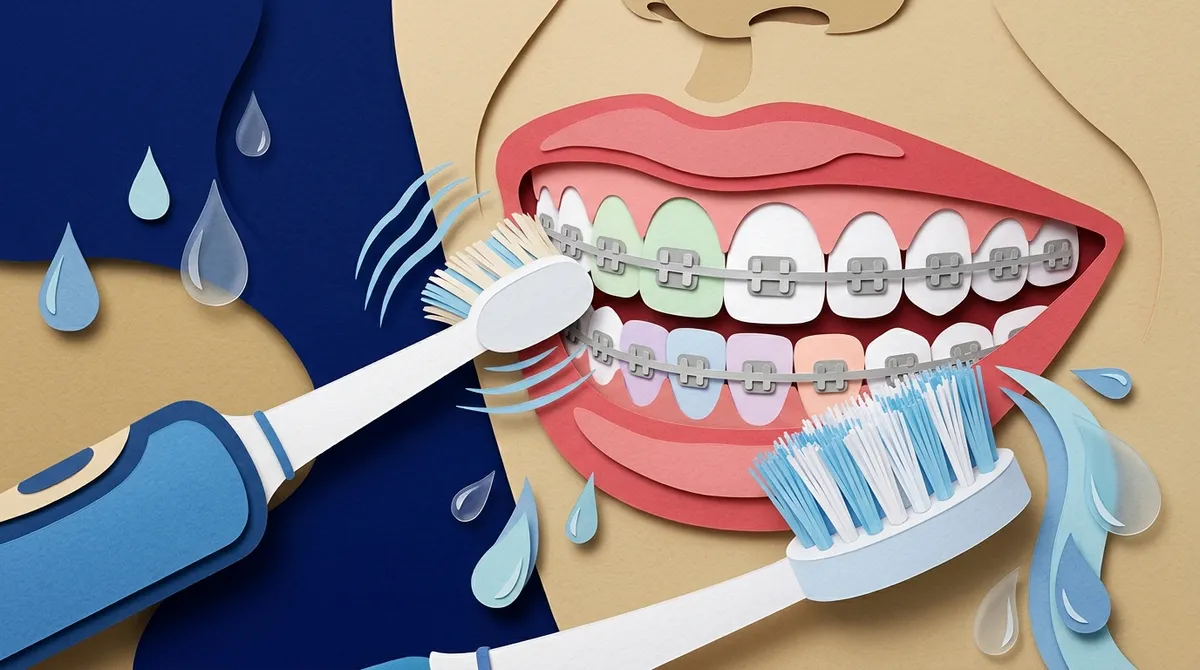
Hold your electric toothbrush at a 45-degree angle to your gum line, angling above and below each bracket separately to remove plaque and food trapped in these hard-to-reach areas.
-
Apply only light, gentle pressure and let the brush's vibrations do the work—pressing too hard can irritate gums, wear enamel, and loosen brackets; use the pressure sensor if available.
-
Brush for a full two minutes, spending 30 seconds on each quadrant of your mouth, and use your brush's built-in timer to ensure you don't miss any areas.
-
Use only soft-bristled brush heads and replace them every 8-10 weeks since braces wear out bristles faster; avoid whitening and charcoal toothpastes that cause uneven discoloration around brackets.
-
Rinse your mouth with water for 30 seconds before brushing to loosen food particles, and wait at least 30 minutes after acidic foods before brushing to protect softened enamel.
-
Floss daily using a threader or water flosser to remove debris under the archwire that electric brushing cannot reach, and maintain regular orthodontist appointments for professional plaque checks.
Getting braces is exciting! You are on your way to a straighter, healthier smile. But here is something many people do not realize right away — how you brush your teeth changes completely once braces are involved. Learning how to use an electric toothbrush with braces the right way can make a huge difference in your results. Done correctly, it protects your teeth, keeps your gums healthy, and helps your orthodontic treatment go smoothly. Done wrong, it can lead to staining, decay, and even damage to your brackets.
The good news? Most orthodontists actually love electric toothbrushes for patients with braces. Electric toothbrushes remove more plaque and debris than manual brushing because of their consistent vibrations and motion. They are easier to use, especially around brackets and wires. But there are common mistakes that patients make every single day — and they are totally avoidable. Let’s walk through the 12 biggest ones so you can brush with confidence from day one. If you want more general care tips, check out this guide on 9 oral hygiene with braces tips for a healthier smile.
Why Electric Toothbrushes Are Great for Braces
Before we get into the mistakes, let’s celebrate the good news. Most orthodontists recommend electric toothbrushes for patients with braces. The oscillating or vibrating head gets into the tricky spots around brackets and under wires far better than a manual brush can. As long as you use the right technique, an electric toothbrush is one of the best tools you have during your treatment. You can learn more about everything braces-related over at our all about braces page.
At Brockway Orthodontics, we always encourage patients to invest in a good electric toothbrush. It is a simple upgrade that pays off big time for your oral health. According to the American Dental Association, proper brushing is one of the most important habits for preventing tooth decay — and braces make that habit even more critical.
The 12 Mistakes to Stop Making Right Now
Mistake 1: Skipping the Pre-Brush Rinse
Many people jump straight into brushing without rinsing first. That is a missed opportunity! Rinsing your mouth with water before brushing loosens food particles stuck in your braces. This makes your electric toothbrush far more effective. Just 30 seconds of rinsing can free up debris so your brush can focus on cleaning instead of dislodging big chunks of food.
Mistake 2: Pressing Too Hard
Electric toothbrushes are designed to do the work for you. Pressing hard does not clean better — it actually causes problems. Too much pressure can irritate your gums, wear down your enamel, and even loosen brackets over time. Let the brush’s motion do its job. Apply only a light, gentle touch. Many electric toothbrushes have a pressure sensor that signals when you are pushing too hard — use it!
Mistake 3: Using the Wrong Angle
This is one of the most common technique mistakes. You should hold your electric toothbrush at a 45-degree angle to the gum line. This position is the standard recommended angle for optimal plaque removal. When brushing with braces, you need to angle the brush both above and below each bracket. This gets the areas where food and plaque like to hide. Think of each bracket as having a top and a bottom — clean both.
| Brushing Area | Correct Angle | Why It Matters |
|---|---|---|
| Gum line | 45 degrees toward gums | Removes plaque buildup at gum edge |
| Above bracket | Angled downward toward bracket | Cleans food trapped above wire |
| Below bracket | Angled upward toward bracket | Clears debris under archwire |
| Chewing surfaces | Straight on | Removes food and plaque from biting area |
Mistake 4: Brushing Too Fast
Rushing through brushing is a big mistake. You should brush for at least two minutes, twice a day. Spend 30 seconds on each quadrant of your mouth — top right, top left, bottom right, and bottom left. Many electric toothbrushes have built-in two-minute timers. Use them! Speeding through your routine means you miss spots and leave plaque behind. For a full step-by-step guide, visit this article on how to brush teeth with braces and keep your smile healthy.
Mistake 5: Forgetting the Inner Surfaces
Most people focus on the outer surfaces of their teeth — the ones you see when you smile. But the inner surfaces (facing your tongue and cheeks) collect just as much plaque. Make sure you brush:
- The outer surface of every tooth
- The inner surface of every tooth
- The chewing surfaces
- Around every bracket and under the archwire
Mistake 6: Using the Wrong Bristle Type
Hard or medium bristles can damage your braces and irritate your gums. Always use a soft-bristled brush head. Soft bristles are gentle enough to clean around brackets without scratching or causing harm. Check the packaging of your brush head before you buy — soft is always the right choice for braces wearers.
Mistake 7: Using the Wrong Toothpaste
Not all toothpastes are created equal when you have braces. Orthodontists recommend fluoride toothpaste or nano-hydroxyapatite toothpaste. These formulas strengthen your enamel and protect against decay — both extra important during orthodontic treatment. Avoid whitening toothpastes during treatment. They can bleach the area around your brackets, leaving uneven coloring when your braces come off.
| Toothpaste Type | Good for Braces? | Why |
|---|---|---|
| Fluoride toothpaste | Yes ✅ | Strengthens enamel, fights decay |
| Nano-hydroxyapatite toothpaste | Yes ✅ | Remineralizes enamel effectively |
| Whitening toothpaste | No ❌ | Can cause uneven bleaching around brackets |
| Charcoal toothpaste | No ❌ | Abrasive, can damage enamel and brackets |
Mistake 8: Skipping Flossing Because You Brush
Electric brushing does not replace flossing — ever! Flossing is essential alongside electric brushing. Use a floss threader or orthodontic floss to clean between teeth and under the archwire. This removes debris that no toothbrush can reach. You can also use a water flosser for extra convenience. Check out this helpful resource on 8 best tips to brush and floss with braces daily.
Mistake 9: Neglecting the Gum Line
Braces make it easy for plaque to build up right at the gum line. If you ignore this area, you risk gingivitis and gum swelling — which can actually slow down your orthodontic treatment. Always make sure to:
- Angle the brush head toward your gums at 45 degrees
- Use gentle circular motions along the gum line
- Check the mirror after brushing to spot any missed areas
- Pay extra attention to the back molars where plaque loves to hide
Mistake 10: Not Replacing Brush Heads Often Enough
Brush heads wear out faster when you have braces. The metal brackets and wires are rough on bristles. A worn brush head does not clean effectively. Replace your electric toothbrush head every 8–10 weeks instead of the usual 12 weeks. When the bristles look frayed or bent, it is time for a new head.
Mistake 11: Brushing Right After Eating Acidic Foods
This one surprises people. If you eat or drink something acidic — like orange juice, soda, or citrus — wait at least 30 minutes before brushing. Brushing too soon after acidic exposure can actually push the acid deeper into softened enamel. Instead, rinse your mouth with water right away, then wait before brushing. This small habit protects your enamel during treatment.
Mistake 12: Skipping Routine Orthodontic Appointments
Even the best brushing routine cannot replace professional care. Regular visits to your orthodontist allow the team to check for plaque buildup, early decay, and gum issues that are hard to spot at home. Think of your orthodontist visits as a brushing backup system. The team at Brockway Orthodontics loves helping patients stay on track — because a healthy mouth means a faster path to that beautiful smile. You can schedule a free consultation to get personalized advice on your brushing routine.
Step-by-Step: How to Use an Electric Toothbrush with Braces
Now that you know the mistakes to avoid, here is the correct process for brushing with an electric toothbrush when you have braces:
- Rinse your mouth with water to loosen any stuck food particles before you begin.
- Apply a pea-sized amount of fluoride or nano-hydroxyapatite toothpaste to your soft-bristled brush head.
- Hold the brush at a 45-degree angle to your gum line and turn on the brush before placing it in your mouth.
- Start at the back of your mouth on one side and slowly guide the brush toward the front, spending a few seconds on each tooth.
- Angle the brush above each bracket to clean the surface between the bracket and the gum, then angle it below to clean under the archwire.
- Move to the inner surfaces of all teeth, angling the brush the same way toward the gum line.
- Brush the chewing surfaces of your back teeth in a gentle back-and-forth motion.
- Brush for a full two minutes — 30 seconds per quadrant — using the timer on your brush if available.
- Rinse thoroughly and check the mirror to make sure all surfaces look clean and bracket areas are clear.
- Floss using a threader or orthodontic flosser to clean between teeth and under the archwire.
Quick Comparison: Electric vs. Manual Toothbrush with Braces
| Feature | Electric Toothbrush | Manual Toothbrush |
|---|---|---|
| Plaque removal around brackets | Superior ✅ | Adequate with effort |
| Ease of use with braces | Easier | More technique required |
| Pressure control | Built-in sensors available | Manual control only |
| Timer built-in | Yes, most models | No |
| Orthodontist recommendation | Most recommend ✅ | Acceptable alternative |
| Cost | Higher upfront cost | Lower cost |
If you are curious about what treatment options pair well with great oral hygiene habits, explore 7 smart steps to brush teeth with braces like a pro. And for those wondering whether braces are the right path, this comparison of clear aligners vs. braces is a great place to start.
Bonus Tips for Braces Brushing Success
Beyond avoiding the big mistakes, here are a few extra habits that keep your mouth healthy throughout treatment:
- Use an antimicrobial mouthwash after brushing to kill bacteria that brushing misses
- Keep a travel toothbrush and small toothpaste in your bag for brushing after school or lunch
- Drink plenty of water throughout the day to rinse away food and keep your mouth moist
- Avoid sticky and hard foods that get lodged in brackets — check out foods to avoid with braces for a full guide
- Ask your orthodontist to show you your brushing blind spots at each appointment
The Florida Association of Orthodontists also encourages patients to maintain consistent oral hygiene habits throughout their treatment for the best long-term outcomes. And you can always find additional patient tips and smile inspiration on our Brockway Orthodontics Instagram page.
If you are a parent helping your child navigate braces care, you might also enjoy this resource on orthodontics for kids: what every parent should know. For teens who want to stay on top of their braces game, check out braces for teens: a complete guide to treatment and care.
Ready for a Smile That Shines?
Learning how to use an electric toothbrush with braces is not complicated — but it does take intentional habit-building. Avoiding these 12 mistakes will protect your enamel, keep your gums healthy, and help you get the best possible result from your orthodontic treatment. The payoff is absolutely worth it: a clean, healthy, beautiful smile waiting for you at the finish line.
Whether you are just starting your braces journey or you are mid-treatment and looking to improve your routine, the team at Brockway Orthodontics is always here to help. You can visit us on Google — Brockway Orthodontics to read reviews from real patients who have been right where you are. We serve families throughout the Clearwater area and love being part of every smile transformation.
Ready to take the next step toward your best smile? Book your free consultation at Brockway Orthodontics today and let our team guide you every step of the way — including exactly how to care for your teeth throughout your treatment!
FAQs
Q: Can I use an electric toothbrush if I have braces?
A: Absolutely — and we actually encourage it! Most orthodontists recommend electric toothbrushes for patients with braces because they remove more plaque around brackets and wires than manual brushing. Just make sure to use a soft-bristled brush head and let the brush do the work with gentle pressure.
Q: What angle should I hold my electric toothbrush when brushing with braces?
A: Hold your electric toothbrush at a 45-degree angle to your gum line — that is the sweet spot for removing plaque effectively. When cleaning around brackets, angle the brush above and below each bracket to make sure you are getting into all those tricky hidden spots.
Q: How long should I brush with an electric toothbrush if I have braces?
A: Brush for a full two minutes, twice a day. A great way to make sure you are thorough is to spend 30 seconds on each quadrant of your mouth — upper right, upper left, lower right, and lower left. Many electric toothbrushes have a built-in timer to help you stay on track!
Q: Do electric toothbrushes damage braces or brackets?
A: Not at all, as long as you use a soft-bristled head and apply light pressure. The vibrating motion of an electric toothbrush is perfectly safe for brackets and wires. The key is to let the brush do its job — pressing too hard is the main thing to avoid, and some models even have a pressure sensor to alert you.
Q: What type of toothpaste is best for brushing with braces?
A: Fluoride toothpaste or nano-hydroxyapatite toothpaste are the top choices recommended by orthodontists during braces treatment. Both help strengthen your enamel and protect against decay — which is extra important when you have brackets and wires making cleaning a little trickier. Just skip whitening or charcoal toothpastes for now to avoid uneven bleaching around your brackets.
Our Service Area