Key Takeaways
-
Lower front teeth are more likely to shift back than upper teeth after orthodontic treatment, making a bottom retainer essential to protect your investment during the 12-month adjustment period when bone and gum tissue adapt.
-
Fixed retainers require consistent flossing with threaders or water flossers to prevent plaque buildup around the bonded wire, while removable retainers are easier to clean but require high compliance to be effective.
-
Studies show fixed retainers prevent 0.2mm of relapse compared to 0.8-1.0mm for removable retainers, though removable retainers work well for diligent wearers who maintain consistent nighttime use.
-
Never attempt DIY repairs on broken retainers with superglue or dental wax; instead, save broken pieces and contact your orthodontist immediately to prevent further tooth shifting.
-
Retainers maintain tooth position but cannot correct already-shifted teeth; if relapse has occurred, you may need short-term aligner treatment or limited braces before a new retainer is fitted.
-
Many orthodontists recommend wearing removable retainers nightly indefinitely because teeth continue shifting slowly throughout life due to aging, making long-term retention a realistic necessity rather than optional.
So your braces just came off, or maybe you’re nearing the end of your clear aligner journey, and now everyone keeps talking about your bottom retainer. Here’s the truth: this small appliance is the unsung hero of your whole orthodontic story. Your lower front teeth are actually more likely to shift back than your upper teeth, which is exactly why your bottom retainer deserves just as much attention as those months (or years) you spent in braces.
Whether you’re a parent watching your teen finish treatment, a busy professional who just got your braces off, or someone dealing with relapse after years without a retainer, this guide breaks down everything you need to know. We’ll cover the types of bottom retainers, how to care for them, and what to do when things go sideways. Let’s dig in, friend to friend.
1. A Bottom Retainer Keeps Your Lower Teeth Where They Belong
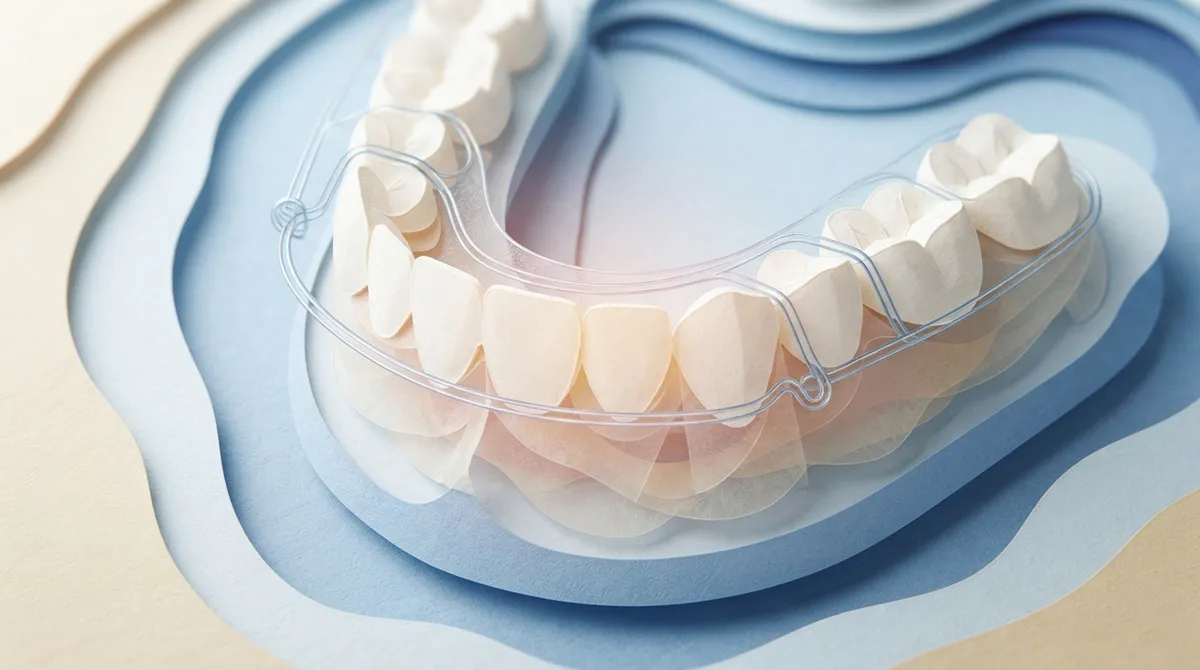
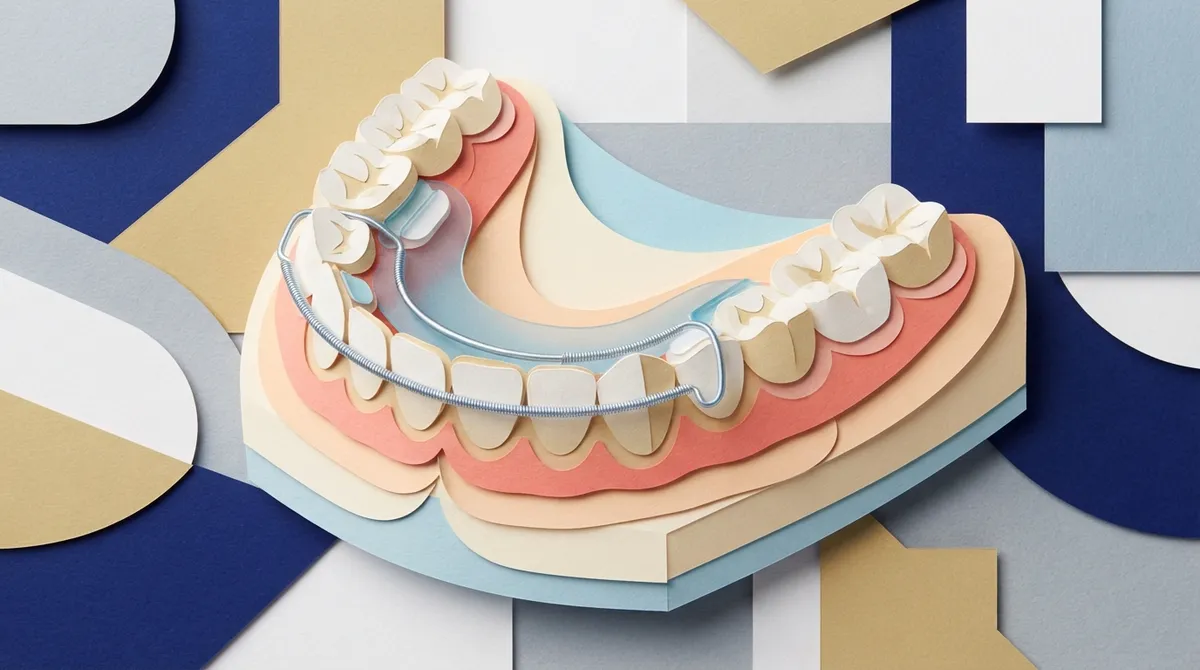
A bottom retainer is a small appliance made to hold your lower, or mandibular, teeth in their new position after orthodontic treatment. It’s used after braces, Spark™ Clear Aligners, or any other straightening treatment. Without it, your teeth have a sneaky habit of drifting back toward their old spots, a process called relapse.
Think of it like this: your teeth just spent months (or years!) getting comfortable in new positions. But bone and gum tissue need time to adjust too. A 2023 critical review noted that periodontal tissues may need up to about 12 months to fully adapt to a tooth’s new home. Your bottom retainer is what protects your investment during that adjustment period, and honestly, for a long time after.
2. There Are Two Main Types to Choose From
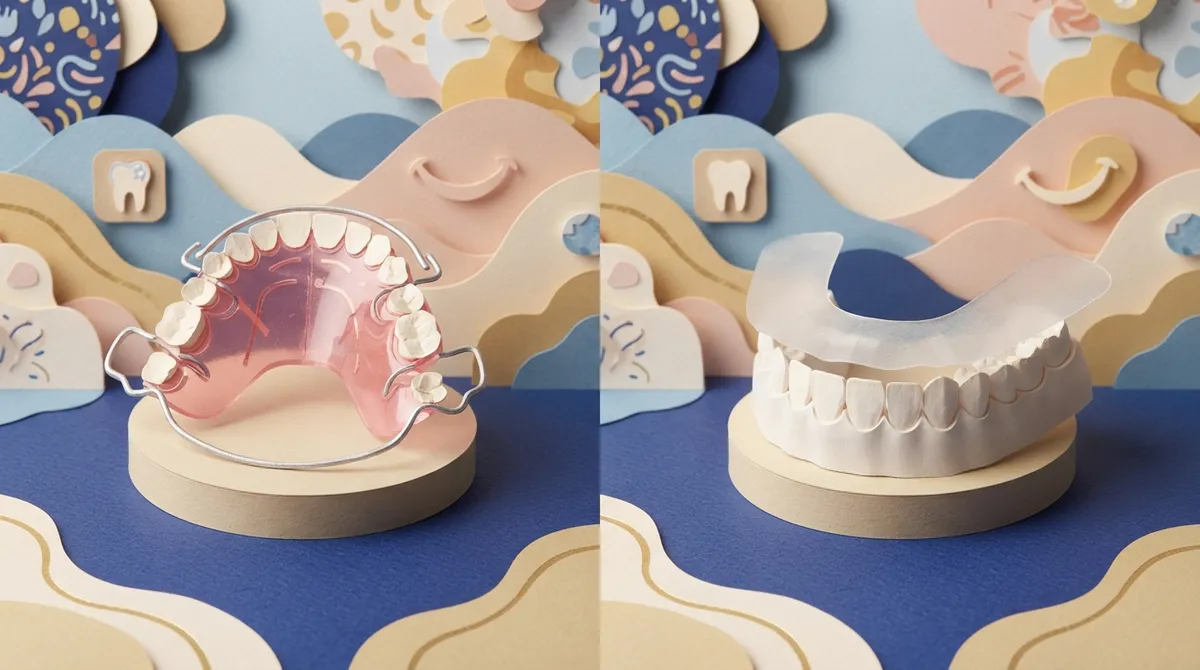
When it comes to bottom retainers, you basically have two options: fixed or removable. Each has its own personality, so to speak, and neither one is automatically “better” for everyone.
- Fixed (bonded) retainers: A thin wire glued to the back of your lower front teeth, the side facing your tongue.
- Removable retainers: Either a clear plastic tray (like a mini aligner) or a Hawley retainer made of acrylic and wire.
Your orthodontist will help you decide which one fits your lifestyle, your bite, and your ability to stay consistent. If you’re curious about the details, our retainers page walks through the options we offer at our Clearwater practice.
3. Fixed Retainers Work Without You Having to Remember Anything
Here’s the beauty of a fixed lower retainer: it’s just there, quietly doing its job every single day. You don’t have to remember to pop it in before bed or worry about losing it in a napkin at a restaurant. For busy parents managing a teen’s schedule, or professionals who simply forget things by 9 p.m., this is a big win.
Studies back this up too. A 2020 meta-analysis found that fixed retainers showed greater overall effectiveness compared to removable ones in the studies reviewed. Another Cochrane review reported a mean difference of 0.60 mm in tooth movement (measured using Little’s Irregularity Index) favoring fixed multistrand retainers over thermoplastic removable ones. In plain English: the wire tends to keep things a little more stable.
4. But Fixed Retainers Need Extra Cleaning Attention
Nothing in life is free, and that includes the convenience of a fixed retainer. Because the wire sits right up against your teeth, plaque and tartar love to hide around it. If you skip flossing, you’re setting yourself up for gum irritation or even cavities near the wire.
Here’s how to keep things clean:
- Use a floss threader or orthodontic floss to get under the wire every night.
- Try a water flosser if regular floss feels frustrating.
- Ask about interdental brushes for tight spots.
- Keep up with regular dental checkups so your dentist can spot buildup early.
The American Dental Association recommends daily flossing for everyone, but it becomes even more important when you have a wire bonded behind your teeth. If you’re not sure you’re cleaning correctly, bring it up at your next visit. We’re happy to show you the ropes.
5. Removable Retainers Give You More Freedom
If you’d rather take your retainer out to eat, brush, or for a big presentation at work, a removable bottom retainer might be your best friend. Clear plastic trays are practically invisible, which teens and adult professionals both tend to love.
The catch? Removable retainers only work if you actually wear them. A 2020 meta-analysis found that mandibular removable retainers had a mean increase of 0.72 mm in tooth irregularity during the retention period, while fixed retainers showed no significant change in the same analysis. That doesn’t mean removable retainers fail, it just means consistency really matters.
6. Most People Wear Removable Retainers Long-Term, Even for Life
Here’s something a lot of patients don’t expect: many orthodontists recommend wearing a removable retainer at night indefinitely. Why? Because your teeth can keep shifting slowly throughout your entire life, even decades after treatment ends. It’s just how mouths work as we age.
So if your orthodontist tells you to wear your retainer a few nights a week forever, they’re not being dramatic. They’re being realistic. Think of it as a small, easy habit that protects years of hard work (and money).
Quick Comparison: Fixed vs. Removable Bottom Retainers
| Feature | Fixed Retainer | Removable Retainer |
|---|---|---|
| Compliance needed | Low (always in place) | High (must wear as directed) |
| Cleaning difficulty | Higher, needs floss threaders | Easier, remove to clean |
| Visibility | Hidden behind teeth | Clear trays are nearly invisible |
| Failure rate (bond issues) | 3.5% to 53% reported across studies | Wear/tear over time, less bond risk |
| Best for | People who want low-maintenance retention | People who prefer removing for meals or events |
7. Retention Isn’t a Guarantee If Life Gets in the Way
Even a great retainer isn’t magic. A systematic review of fixed-retainer failures found bond-failure rates ranging from about 3.5% to 53% for metal retainers, depending on the study and design. One study noted an overall failure rate of around 40% after two years for a specific type of multistranded wire retainer.
That sounds scary, but here’s the reassuring part: failures are usually fixable. A loose or broken wire just means a quick trip back to your orthodontist. It’s not a reason to panic, just a reason to call promptly.
8. Signs Your Bottom Retainer Needs Professional Attention
Never try to force a retainer that doesn’t fit right. That’s a hard rule. If something feels off, it’s your body’s way of telling you to get checked out. Watch for these warning signs:
- The retainer feels unusually tight or won’t seat properly.
- You notice a sharp edge or the wire feels loose.
- One side of the retainer lifts off your teeth.
- You feel noticeable pain, not just mild pressure.
- Your teeth look visibly different than they did before.
Tightness often means your teeth have already started shifting. Waiting it out usually makes things worse, not better. If you notice any of these signs, don’t wait, reach out and contact us so Dr. Brockway can take a look.
9. A Broken Retainer Needs Quick Action, Not a DIY Fix
We get it, life is busy, and a trip to the orthodontist can feel like one more thing on your to-do list. But a broken bottom retainer is not something to patch up with superglue or dental wax at home. Doing so can cause more harm than good.
Here’s what to do instead:
- Save any broken pieces and bring them to your appointment.
- Avoid chewing on the area if it’s a fixed retainer with a loose wire.
- Call your orthodontic office as soon as you notice the problem.
- Ask about a temporary solution if you can’t be seen right away.
Our team moves quickly on retainer repairs because we know how important it is to protect your progress. Curious what to expect? Check out our guide on what to do if your retainer breaks for a step-by-step walkthrough.
10. Retainers Maintain Teeth, They Don’t Move Them
This is a common misunderstanding we hear a lot: “Can I just wear my old retainer again to fix my shifted teeth?” Unfortunately, retainers are built to hold teeth still, not push them into new positions. If your lower teeth have already moved, a retainer alone usually won’t correct it.
In these cases, your orthodontist might suggest:
- A new, properly fitted retainer to stop further movement.
- Short-term aligner treatment to nudge teeth back.
- Limited braces treatment for more significant shifts.
This is actually one of the most common reasons adults come back to see us years after their first round of braces. If this sounds familiar, know that you’re definitely not alone, and there’s no shame in a little touch-up treatment. Many of our adult treatment patients are relapse cases looking for a second chance at their smile.
11. Proper Cleaning Habits Protect Your Retainer and Your Smile
Whether you have a fixed or removable bottom retainer, cleaning it correctly matters more than most people realize. Here’s a simple routine that works:
- Rinse with cool or lukewarm water, never hot.
- Brush gently with a soft toothbrush and an orthodontist-approved cleaner.
- Avoid bleach, alcohol-based mouthwash, or harsh chemicals.
- Store removable retainers in a ventilated case, away from pets and heat.
- Bring your retainer to every checkup so we can assess its fit and condition.
Hot water might seem like a good way to sanitize a plastic retainer, but it can actually warp the material and ruin the fit. A little lukewarm water and a soft brush go a long way.
12. Both Options Have Real Data Behind Them
We know statistics can feel a little dry, but they’re helpful when you’re deciding which retainer fits your life. A 2018 systematic review reported mean anterior relapse of about 0.2 mm for permanent (fixed) retainers, compared to roughly 1.0 mm and 0.8 mm for two different removable retainer groups. Results varied depending on the study, so these numbers shouldn’t be treated as a personal guarantee, but they do show a general pattern favoring fixed retainers for lower front teeth stability.
That said, plenty of patients do wonderfully with removable retainers because they’re diligent about wearing them. The right choice really depends on your habits, your bite, your gum health, and how your orthodontist reads your specific risk of relapse. This is exactly why a personalized consultation matters so much, and it’s something we take seriously at Dr. Brockway’s practice. Learn more about her approach on our Meet Dr. Brockway page.
13. Regular Checkups Keep Small Problems From Becoming Big Ones
Fixed lower retainers should be checked by your orthodontist regularly, even if nothing feels wrong. A quick look lets us catch a loosening wire, early plaque buildup, or subtle shifting before it becomes a bigger issue. Removable retainer wearers benefit from checkups too, since we can verify the fit and make sure teeth haven’t drifted.
If it’s been a while since your last retainer check, now’s a great time to schedule one. For families in the Clearwater area, our team makes this process simple and stress-free, whether you’re bringing in a teenager, checking on your own retainer years after treatment, or helping an aging parent with a loose wire.
Want to see what real patients say about their experience? You can visit us on Google — Brockway Orthodontics to read reviews from our Clearwater community. We’re also active on Facebook and Instagram, where we share smile transformations and helpful tips.
Your Bottom Retainer, Your Confidence
Your bottom retainer might be small, but it plays a huge role in protecting years of orthodontic progress. Whether you choose a fixed wire or a removable clear tray, the real key is consistency and regular checkups with a trusted orthodontist. According to the Florida Association of Orthodontists, retention is considered an essential final phase of orthodontic care, not an optional add-on.
At Brockway Orthodontics, we treat every patient, whether you’re a teenager fresh out of braces or an adult dealing with relapse, like part of our extended Clearwater family. Dr. Brockway takes the time to explain your retainer options clearly, so you always know what’s happening and why. If your retainer feels off, you’ve lost it, or you’re just due for a checkup, don’t wait around wondering. Book appointment online today and let’s make sure your smile stays exactly where you worked so hard to put it.
FAQs
Q: What is a bottom retainer and why do I need one after braces?
A: A bottom retainer holds your lower teeth in their new position after braces or clear aligners. Without it, your teeth can slowly drift back toward their old spots, a process called relapse. Think of it as the final, important step that protects all the hard work you put into your smile.
Q: Is a fixed or removable bottom retainer better?
A: Honestly, it depends on you! Fixed retainers work quietly in the background with no daily effort, while removable ones give you the freedom to take them out for meals or big moments. Your orthodontist will help you weigh factors like your hygiene habits and relapse risk to find your best fit.
Q: How long do I need to wear my lower retainer?
A: Many patients wear a removable bottom retainer nightly for a long time, sometimes for life, since teeth can keep shifting slowly as we age. Fixed retainers often stay in place for years, sometimes permanently, with regular checkups along the way.
Q: What should I do if my bottom retainer breaks or feels loose?
A: Don’t try to fix it yourself at home, that can make things worse. Save any pieces, avoid chewing near a loose wire, and call your orthodontist right away so they can repair or replace it before your teeth start shifting.
Q: Can a bottom retainer fix teeth that have already shifted?
A: Unfortunately, no, retainers are designed to hold teeth still, not move them. If your lower teeth have already relapsed, your orthodontist might suggest short-term aligners or limited braces to nudge things back before fitting a fresh retainer.
Our Service Area