Key Takeaways
-
Water flossers are a helpful extra for rinsing food from around brackets and gumlines, but they do not remove plaque like brushing and should never replace fluoride toothpaste brushing.
-
Research is mixed: one 106-teen study found a water jet plus brushing beat brushing alone over four weeks, while a 2023 randomized trial found no meaningful added benefit.
-
String floss performed better in easy-to-reach areas, while a water flosser may work as well in hard-to-reach back spots and can be a practical option for teens who struggle with floss.
-
Start on the lowest or low-medium pressure setting, use an orthodontic tip designed for braces, and use lukewarm water if your teeth are sensitive.
-
Brush first, then lean over the sink, aim the stream at the gumline, and trace around each bracket above and below the wire, working in a consistent order.
-
Stop and contact your orthodontist if gum bleeding persists after a week or two, or if you notice swelling, pain, or a loose bracket or poking wire.
Let’s be honest: cleaning around braces can feel like a daily puzzle. Brackets, wires, and tiny gaps all trap food. String floss can feel like wrestling a shoelace through a fence. So it’s no surprise that many families ask about water flossers during braces treatment and whether they’re worth buying.
Here’s the friendly truth. A water flosser (also called an oral irrigator) can be a helpful extra tool for rinsing around brackets and gumlines. But research on it is mixed, and it works best as a partner to brushing, not a replacement for it. In this guide, we’ll walk through nine practical tips, share what recent studies found, and help you decide if one fits your routine. Whether you’re a parent helping a teen, a teen doing it solo, or an adult juggling a busy career, you’ll find something useful here.
1. Know What a Water Flosser Actually Does
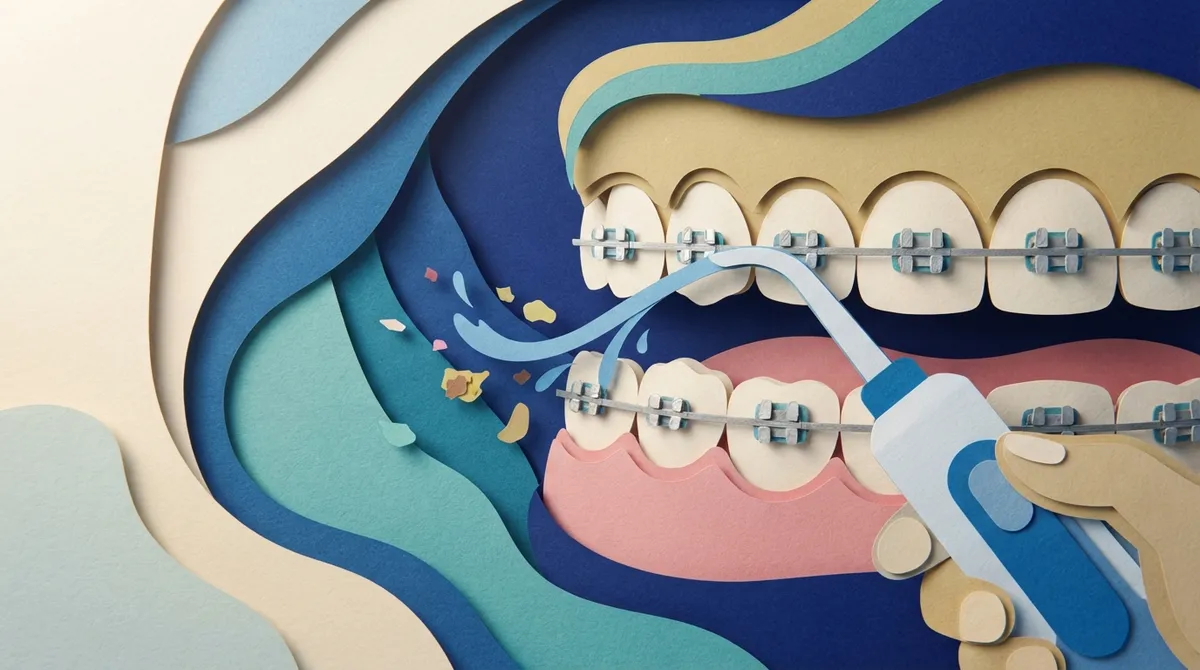
A water flosser sends a thin, pulsing stream of water between teeth and along the gumline. Think of it as a tiny pressure rinse for places a brush can miss. With braces, that means the stream can wash food bits from around brackets, under wires, and near the gums.
It does not scrub plaque off the way a toothbrush does. Plaque is a sticky film, and brushing still does the heavy lifting. So the best way to think about it is this: brush first, then rinse. The water flosser is a helper, not the star of the show.

2. Remember: It Adds to Brushing, It Doesn’t Replace It
This is the most important tip in the whole article. Using water flossers during braces treatment does not mean you can skip brushing with fluoride toothpaste. Fluoride helps protect enamel, and brushing removes plaque that water alone may not.
It also doesn’t replace any other cleaning your orthodontist recommends, like floss threaders or small interdental brushes. If your care team gave you a routine, keep it. Then ask whether adding a water flosser makes sense for you. For a refresher on technique, our guide on how to brush teeth with braces walks through each step.
3. Understand What the Research Really Says
Here’s where it gets interesting. Studies don’t all agree, and that’s okay. Let’s look at what recent research found.
One randomized study followed 106 adolescents with fixed braces for four weeks. Teens who used a water jet with an orthodontic tip plus brushing had less plaque and less gum bleeding than teens who only brushed. The water jet group also did better than the flossing group on some measures. That’s encouraging, but it applies to that device, that tip, and that short time frame.
Other studies were less exciting. A 2023 randomized trial found no meaningful extra benefit from adding a Waterpik to manual brushing for plaque, gum health, or bleeding. A 2025 review found a small plaque reduction at four weeks, but not at two to three months, and described some of the evidence as very low certainty.
The takeaway? A water flosser may help some people, but it isn’t a magic fix. Good habits matter more than any single gadget.
4. Compare Water Flossing and String Floss Honestly
So which is better? The honest answer is: it depends on the person and the area of the mouth. Here’s a quick side-by-side based on the research summary.
| Study | What It Found |
|---|---|
| 2008 adolescent study (106 participants) | Water jet plus brushing reduced plaque and bleeding more than brushing alone over four weeks |
| 2023 randomized trial | No significant added benefit from a water flosser plus brushing versus brushing alone |
| 2023 crossover study | Floss did better in easy-to-reach areas; the irrigator was similar in hard-to-reach back areas |
| 2024 adolescent crossover study | No statistically significant difference between irrigator and floss |
| 2025 review | Possible modest plaque benefit at four weeks; very low certainty for some evidence |
In plain words: floss may work well where you can reach, while a water flosser may help in tricky spots. One 2024 study suggested an irrigator may be a practical option for teens who struggle with string floss. If flossing feels impossible with your braces, that’s worth discussing with your orthodontist. You can also read our tips on how to floss with braces to see if a few tweaks make it easier.
5. Start With the Right Settings and Tip
Your first try should feel comfortable, not like a power wash. Begin with the lowest or a low-medium pressure setting. If it feels fine, you can slowly raise it. Never push to a level that hurts.
Many brands sell an orthodontic tip with a small brush-like head designed for braces. The studies above that showed benefits used a device with an orthodontic tip. Follow the instructions that came with your device, and ask your orthodontist if a specific tip suits your brackets. Use lukewarm water if cold water makes your teeth sensitive.
6. Follow a Simple Step-by-Step Routine
A good routine is easier to keep. Here’s a simple order many patients find helpful:
- Brush first. Use fluoride toothpaste and take your time around each bracket.
- Lean over the sink. Close your lips slightly so water can flow out without a big splash.
- Turn it on after the tip is in your mouth. This saves your bathroom mirror.
- Aim at the gumline. Point the tip so the stream hits where the tooth meets the gum.
- Trace around each bracket. Pause briefly above and below the wire for each tooth.
- Work in order. Start in one back corner and move around so you don’t skip any teeth. Clean the inner surfaces too.
- Finish with a quick check. Look in the mirror for any leftover food.
Most people do this once a day, often at night. Ask your orthodontist how often is right for you, since they know your mouth best.
7. Make It Work for Your Lifestyle
Different people need different setups, and that’s perfectly fine. Here’s how it might look for each kind of patient.
- Parents: A countertop model near the bathroom sink can make a bedtime routine quicker. Kids often find the water stream fun, which can help build habits. Our article on helping kids build appliance care habits has more ideas.
- Teens and young adults: A cordless model is easy to toss in a bag for dorm life or sleepovers. It can feel faster than threading floss before a busy morning.
- Busy professionals: A compact unit can fit a tight schedule. A quick rinse after lunch is not practical for everyone, so pick a time you can stick with, like evenings.
- Health-conscious patients and past relapse patients: If you have gum concerns, ask your dental team before adding any new tool, so it matches your plan.
The best routine is the one you’ll actually follow. A tool that sits in a drawer helps nobody.
8. Watch for Warning Signs and Know When to Call
A water flosser should feel comfortable. If it causes lasting pain, stop and check in with your care team. Some mild gum bleeding can happen when gums are inflamed and you’re just starting a new habit. But bleeding that keeps going isn’t something to ignore.
Call your orthodontist or dentist if you notice:
- Gum bleeding that doesn’t improve after a week or two
- Swollen, red, or puffy gums
- Ongoing bad breath even with good cleaning
- Pain when using the device
- A loose bracket or poking wire
These signs may mean your technique needs a review or your gums need professional care. If something breaks, our guide to orthodontic emergency fixes can help you stay calm until your visit. And if a gum problem is slowing your progress, our article on why gum health matters explains the bigger picture.
9. Keep Up With Checkups and Professional Advice
No home tool replaces professional care. Regular orthodontic visits let your team check your teeth, wires, and gums, and spot trouble early. Routine dental cleanings matter too, since a hygienist can reach plaque you can’t. The American Dental Association also reminds patients to brush twice a day with fluoride toothpaste and clean between teeth daily.
At your next visit, bring your water flosser or ask your team to watch your technique. A quick demo can fix small habits, like aiming at the wrong angle. Our piece on why orthodontic checkups matter shows how these visits protect your results. Good hygiene also supports faster, smoother treatment, which ties into common mistakes that extend how long you need braces.
Are Water Flossers Safe for Your Braces?
When used as directed, a water flosser is generally considered gentle on braces. The stream is not meant to loosen brackets. Still, very high pressure aimed directly at a bracket isn’t a great idea. Start low, keep the tip moving, and follow your orthodontist’s advice.
Also remember that braces type matters. Metal braces, ceramic braces, and clear aligners all have different cleaning needs. If you wear clear aligners, you remove them to clean your teeth, so the routine looks different. Our comparison of cleaning routines for braces and aligners breaks that down.
A Quick Daily Checklist
Here’s a simple way to tie it all together:
- Brush with fluoride toothpaste, focusing on each bracket
- Clean between teeth the way your orthodontist recommends
- Add a water flosser if it helps you stay consistent
- Skip sticky and hard foods that cause trouble
- Keep every scheduled appointment
Small steps, repeated daily, add up to a healthier smile when the braces come off.
Your Smile Team Is Here to Help
So, are water flossers during braces treatment worth it? For many patients, they’re a useful extra tool, especially for rinsing around brackets and hard-to-reach spots. But the science is mixed, and they work best alongside brushing and your orthodontist’s guidance. The right choice depends on your mouth, your braces, and your habits.
At Brockway Orthodontics in Clearwater, Dr. Brockway takes time to listen and explain, so you feel comfortable and informed at every step. We help kids, teens, and adults build routines that fit real life. Want personalized advice on your cleaning routine? Book your appointment online or contact our friendly team with any questions. You can also see what our patients say when you visit us on Google — Brockway Orthodontics. We can’t wait to help you get the healthy, confident smile you deserve.
FAQs
Q: Can you use a water flosser with braces?
A: Yes, most people with fixed braces can use one, and it can help rinse food from around brackets, wires, and gumlines. Just start at a low, comfortable pressure and check with your orthodontist first. It’s a helpful extra, not a replacement for brushing.
Q: Is a water flosser better than string floss for braces?
A: Not always! Studies are mixed. Some show floss works better in easy-to-reach areas, while a water flosser does about as well in tricky back spots. The best choice is the one you’ll use every day, so ask your orthodontist what fits you.
Q: Can a water flosser replace brushing or flossing when you have braces?
A: No, it shouldn’t replace either one. Brushing with fluoride toothpaste is still the main way to remove plaque, and your orthodontist may suggest other cleaning tools too. Think of the water flosser as a friendly teammate, not the whole team.
Q: How often should I use a water flosser during orthodontic treatment?
A: Many people use it once a day, often at night after brushing. Your orthodontist can tell you what’s right for your mouth and your type of braces.
Q: Can water flossing damage braces or make gums bleed?
A: When used gently and as directed, it’s generally considered safe for braces. Mild bleeding can happen at first if gums are inflamed, but bleeding or pain that sticks around isn’t normal. If that happens, stop and let your dental team take a look.
Our Service Area