Key Takeaways
-
Professional orthodontic supervision is critical: studies show a 75% reduction in bite alignment issues with supervised clear aligners versus unsupervised at-home kits, and nearly 42% of teeth show signs of root resorption without regular monitoring.
-
At-home aligners only work for very mild cases; complex cases with crowding, deep bites, crossbites, or past relapse require in-person care because attachments and bite adjustments cannot be properly placed or monitored remotely.
-
Self-taken impressions frequently result in poor aligner fit and treatment delays; professional digital scans and a full clinical exam catch hidden issues like gum disease, jaw problems, and decay that at-home kits completely miss.
-
Alignment treatment success requires 20-22 hours of daily wear and refinements when teeth don't move as planned; without accountability checkups, patients often skip compliance and miss the need for mid-treatment adjustments.
-
At-home aligners appear cheaper upfront but hidden costs multiply if problems arise; professionally-fitted aligners provide transparent pricing, emergency access, and guarantees that unsupervised kits cannot offer.
-
Critical warning signs you need professional care: noticeable crowding, previous orthodontic relapse, gum sensitivity, uneven bite, jaw discomfort, or treatment for children—these factors make at-home treatment risky and ineffective.
Thinking about straightening your teeth without leaving your living room? You’re not alone. The idea of clear aligners at home sounds tempting: no waiting rooms, no office visits, just a box in the mail and a straighter smile on the way. But here’s the truth we want every Clearwater family and adult professional to know before signing up for a mail-order smile plan. Skipping proper orthodontic supervision can turn a simple fix into a costly, painful mess.
At Brockway Orthodontics, we’ve seen patients come to us after at-home aligner kits left them with shifted bites, sore gums, or teeth that just didn’t move the way they hoped. We want better for you. This article walks through the biggest mistakes people make when they try clear aligners at home, so you can make a smart, informed choice for your smile. Whether you’re a busy parent, a teen dreaming of a graduation-ready grin, or an adult professional wanting discreet treatment, this guide is for you.

What Does “Clear Aligners at Home” Actually Mean?
Clear aligners at home usually means a remote treatment process. You take your own impressions or scans, send them off, and a treatment plan gets created without much (or any) in-person contact with a licensed provider. It sounds convenient, but it skips a lot of the checks that keep your smile safe.
Real orthodontic care, like what you’d get through Spark™ Clear Aligners at our Clearwater office, starts with an actual exam. Dr. Brockway looks at your bite, your jaw, your gum health, and your goals before any plan is made. That difference matters more than people realize.
Mild to Moderate Cases Only
Research backs this up too. A 2023 systematic review found that clear aligners work best for mild to moderate misalignment, with a more stable treatment course than traditional brackets in those cases. Complex bite problems and rotations are much less predictable without hands-on adjustments.
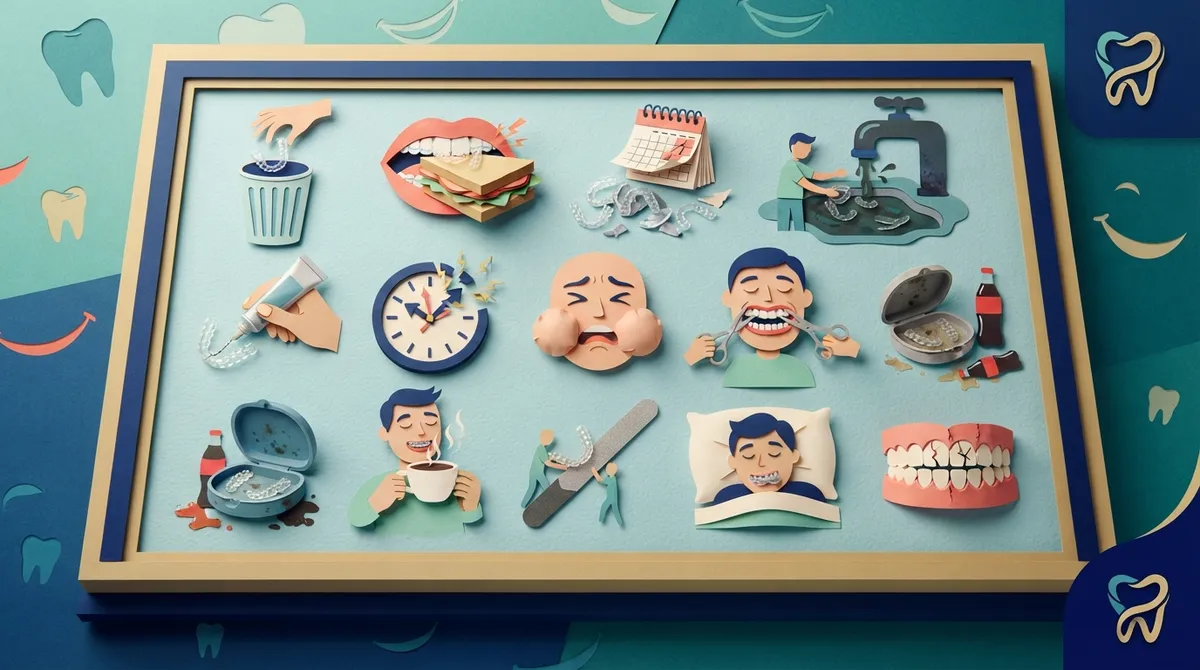
13 Mistakes to Avoid With Clear Aligners at Home
Let’s get into the specifics. These are the most common missteps we see, and how to steer clear of them.
1. Skipping a Professional Exam First
Never start any aligner treatment without a real orthodontic evaluation. A trained eye can catch issues like gum disease, jaw problems, or hidden decay that a self-taken scan will miss completely.
2. Assuming Every Case Qualifies
Not every smile is a good match for remote treatment. Severe crowding, deep bites, or crossbites often need in-person care and sometimes attachments that only a clinician can place correctly.
3. Taking Your Own Impressions Incorrectly
A rushed or sloppy at-home impression can throw off your whole treatment plan. Bad data in means a bad aligner fit out, and that can slow your progress or make it worse.
4. Ignoring Root Resorption Risks
This one surprises people. A 2019 review found that nearly 42% of teeth showed signs of apical root resorption after aligner treatment in one study, with upper and lower front teeth most affected. Regular checkups help catch this early.
5. Not Wearing Aligners Long Enough Each Day
Treatment success depends heavily on compliance. Most aligners need 20 to 22 hours of wear daily. Without an accountability partner or in-person check-ins, it’s easy to slack off.
6. Skipping Refinements When Needed
Sometimes your teeth don’t move exactly as planned. Without a clinician monitoring progress, you may not know a refinement is needed until it’s too late in the process.
7. Believing It’s Always Cheaper
At-home kits can look like a bargain upfront, but hidden costs add up if something goes wrong. You might end up paying twice: once for the kit, and again for a professional to fix the outcome.
8. Forgetting About Attachments
Many tooth movements need small tooth-colored attachments to work properly. These have to be placed by a trained provider, something a mail-order kit simply cannot offer.
9. Overlooking Gum and Bone Health
If you have any periodontal concerns, moving teeth without professional monitoring can make things worse. A dentist or orthodontist checks your gum health before ever starting treatment.
10. Underestimating Bite Problems
A bite that looks fine on the surface may hide deeper issues. Only an in-person exam with X-rays can properly evaluate your jaw joint and bite alignment.
11. Not Having Access to a Real Person When Something Feels Off
If your aligner feels painful or doesn’t fit right, who do you call? With true local care, you can walk right into your orthodontic office and get answers fast.
12. Assuming All Clear Aligners Are the Same Quality
Material quality, trimming precision, and fit vary widely. Professionally fitted aligners, like Spark™ Clear Aligners, are designed with comfort and predictable movement in mind.
13. Skipping Retainers After Treatment
Even if remote aligner treatment goes well, skipping the retainer phase invites relapse. We always recommend a proper retainer plan to protect your results long term.
Clear Aligners at Home vs. In-Office Care: A Side-by-Side Look
| Factor | At-Home Aligners | In-Office Aligner Care |
|---|---|---|
| Initial Exam | Self-scan or impression kit | Full clinical exam with X-rays |
| Provider Supervision | Limited or remote only | Ongoing, in-person monitoring |
| Best Suited For | Very mild cases only | Mild to complex cases |
| Attachments Available | Rarely offered | Yes, placed as needed |
| Emergency Support | Email or chat only | Walk-in or same-day appointments |
| Refinement Options | Limited | Fully available |
Signs You Might Be a Better Fit for Professional Aligner Care
Here are some signs it’s time to book a real consultation instead of ordering a kit online:
- You have noticeable crowding or gaps beyond a small amount
- You’ve had orthodontic treatment before and experienced relapse
- You have gum sensitivity or a history of gum disease
- Your bite feels uneven or you have jaw discomfort
- You want a guarantee that a licensed provider is reviewing your case
- You’re a parent seeking treatment for a child or teenager
Why Professional Supervision Matters So Much
The data on clear aligners is honestly pretty encouraging when treatment is properly supervised. A 2024 comparative study found a 75% reduction in the PAR index (a measure of bite alignment) after 12 months with clear aligners, close to the 80% seen with traditional braces. Average treatment time was even slightly shorter, at 14.5 months versus 16.2 months for braces. Patient satisfaction with aligners hit 85% in that same study, compared to 65% for braces.
But none of these numbers apply to unsupervised, at-home-only treatment. They reflect care delivered with a trained provider checking progress along the way. According to the American Dental Association, orthodontic treatment planning should always involve a licensed professional evaluating your full oral health picture, not just your teeth.
What a Real Consultation Looks Like
When you visit Brockway Orthodontics for your first visit, Dr. Brockway will review your bite, take digital scans (no goopy molds needed), and walk you through your options. This includes discussing whether Spark™ Clear Aligners, ceramic braces, or metal braces makes the most sense for your goals and lifestyle.
Steps to Safely Start Clear Aligner Treatment
- Schedule an in-person consultation with a licensed orthodontist
- Get a full exam including X-rays and a bite assessment
- Discuss your treatment goals and timeline honestly
- Receive digital scans instead of at-home impression kits
- Review your custom treatment plan with your provider
- Begin wearing your aligners as instructed, aiming for 20-22 hours daily
- Attend scheduled check-ins to track your progress
- Transition to a retainer once treatment is complete
Who Benefits Most From In-Office Clear Aligner Treatment
Different life stages call for different approaches. Here’s how in-office care serves our most common patients:
- Parents of kids and teens: Get peace of mind knowing a professional is tracking your child’s growing smile every step of the way
- Teens and young adults: Enjoy a discreet option perfect for prom or graduation photos, without the guesswork of a mail-order kit
- Adult professionals: Fit checkups around a busy schedule while still getting expert oversight
- Relapse patients: Get an honest reassessment of what went wrong before and a plan to fix it for good
- Health-conscious patients: Have gum health and periodontal concerns properly monitored throughout treatment
A Few Things to Ask Before Choosing Any Aligner Provider
Before you commit to any treatment path, ask these questions:
- Will a licensed orthodontist personally review my scans and plan?
- What happens if my teeth don’t move as expected?
- Can I get attachments if my case needs them?
- Is there a real office I can visit if something feels wrong?
- What does the plan cost including any refinements or follow-ups?
A 2024 survey by the British Orthodontic Society found that 77.3% of orthodontic practices now use clear aligner therapy, though many clinicians still reserve it for select cases rather than everyone. That’s a good reminder that even professionals are thoughtful about who’s a good aligner candidate.
The Brockway Orthodontics Difference in Clearwater
We know Clearwater families and professionals want convenience. That’s exactly why we offer digital scans instead of messy molds, and in select cases, same-day treatment starts. You get the modern, tech-forward experience you’re looking for, paired with the safety net of real, hands-on supervision from Dr. Brockway and her team.
We also make sure every patient understands their financing and insurance options so cost never has to be a barrier to safe, effective treatment. Curious what past patients have to say? You can visit us on Google — Brockway Orthodontics to read real reviews from our Clearwater community.
Final Thoughts on Clear Aligners at Home
Clear aligners at home might sound like an easy shortcut, but your smile deserves better than guesswork. Mild cases might see decent results, but anything more complex needs a real professional watching your progress. The Florida Association of Orthodontists encourages patients to seek licensed, supervised care for exactly this reason: safety and predictable results matter more than convenience alone.
If you’re ready for a smile plan built around your unique needs, not a one-size-fits-all kit, we’d love to meet you. Book your appointment online today and let Dr. Brockway show you what personalized, professional aligner care really looks like. You can also follow our smile transformations on Instagram or connect with us on Facebook for more tips and patient stories.
FAQs
Q: Are clear aligners at home safe?
A: They can work for very mild cases, but without a professional exam, you might miss issues like gum disease or bite problems. We always recommend starting with a real orthodontic consultation for peace of mind.
Q: Who is a good candidate for at-home clear aligners?
A: Honestly, only patients with very mild spacing or crowding tend to do well without in-person supervision. If you have a complex bite, past relapse, or gum concerns, professional care is a much safer bet.
Q: How do at-home clear aligners work?
A: You typically take your own impressions or scans, send them off, and receive a digital treatment plan with little to no in-person contact. It skips the hands-on evaluation that catches hidden problems early.
Q: Are at-home clear aligners as effective as braces?
A: Studies show professionally supervised clear aligners can be just as effective as braces for many cases, sometimes even faster. But that success depends heavily on proper oversight, not a mail-order kit alone.
Q: How much do clear aligners at home cost?
A: At-home kits often look cheaper upfront, but hidden costs can pile up if refinements or fixes are needed later. Professional care, like our Spark™ Clear Aligners in Clearwater, offers transparent pricing and financing options from the start.
Our Service Area