Key Takeaways
-
An orthodontic exam is an assessment visit, not a braces appointment, and braces or aligners are generally not placed that day.
-
The American Association of Orthodontists recommends a first check-up by age 7, which is an evaluation that often leads only to monitoring.
-
Share your full medical and dental history, including past injuries, medications, and any earlier orthodontic work, so the plan reflects your complete picture.
-
Voice your personal goals and concerns, and ask about treatment timing, duration, cost, and financing before you leave, so you finish with a clear next step.
Walking into your first orthodontic visit can feel a little like stepping into the unknown. Will it hurt? Will they put braces on right away? Do you need to bring anything? If you have ever wondered what happens during an orthodontic exam, you are in good company. Most parents, teens, and adults ask the very same questions.
Here is the good news. An orthodontic exam is mostly a friendly chat, a careful look at your smile, and a plan for what comes next. It is an assessment visit, not a braces appointment. But a few simple missteps can keep you from getting the most out of that time.
In this guide, we will walk you through what really happens in the exam chair. We will also share seven common mistakes that waste a first visit, so you can show up prepared and confident. Whether you are booking for your 7-year-old, your teenager, or yourself, you will leave knowing exactly what to expect.

What Happens During an Orthodontic Exam: The Big Picture
An orthodontic exam looks at how your teeth, jaws, and bite fit and work together. It is about much more than whether your teeth look straight. The orthodontist checks tooth alignment, spacing, jaw relationships, and how your teeth are growing in.
Here is what the orthodontist may look for:
- Crowding or gaps between teeth
- Crossbite, overbite, underbite, or open bite
- Facial balance and jaw position
- How adult teeth are coming in (or if some are missing, extra, or stuck)
- Habits like thumb sucking or mouth breathing that affect the bite
Think of it like a home inspection before a renovation. We look at the foundation first, then talk about the plan. At Brockway Orthodontics, your first visit is built around that same idea: listen, look, explain, and plan together.
A Step-by-Step Look at the Exam
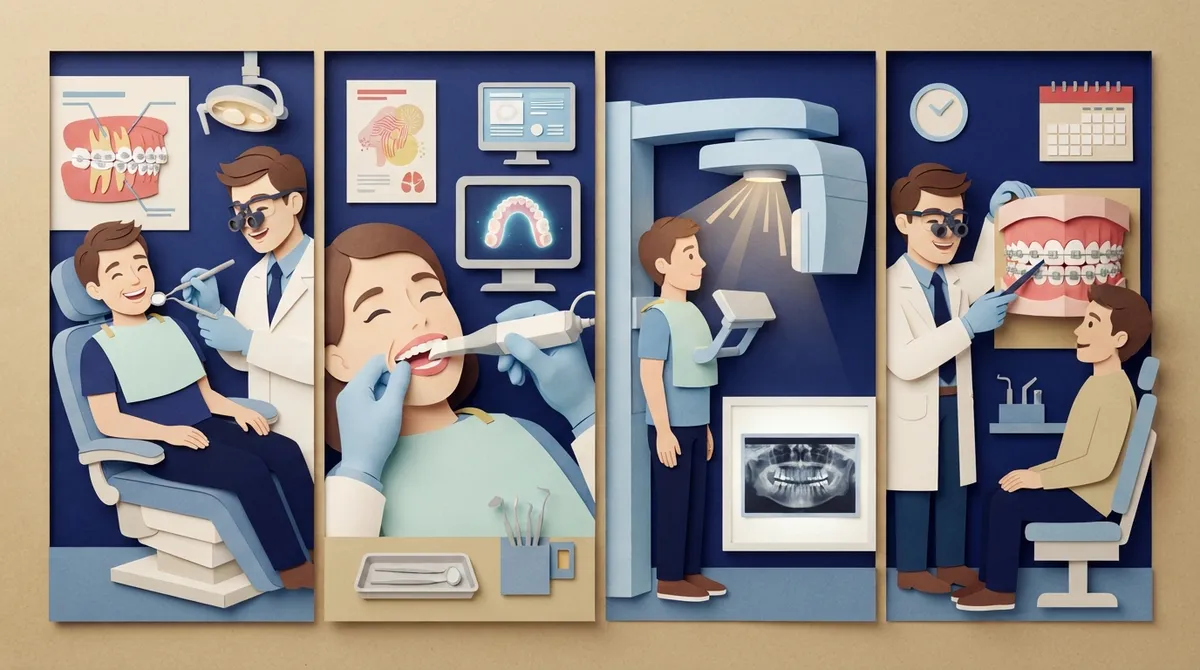
Every practice runs a little differently, and the steps below vary based on age and need. Here is the typical flow.
- Welcome and paperwork. You share medical and dental history, plus any concerns or goals.
- A friendly conversation. The orthodontist asks what bothers you about your smile or bite. Be honest here. It shapes everything.
- The clinical exam. The orthodontist checks your teeth, bite, and jaw. This part is gentle and should not hurt.
- Diagnostic records, if needed. These may include photos, X-rays, or a digital scan.
- The big talk. You hear what was found, what it means, and what your options are.
Most exams are about assessment and planning. Braces or aligners are generally not placed at this visit. Appointment length varies by practice and by the needs of each patient.
Diagnostic Records: What They Are and Why They Matter
Not every patient needs every record at the first visit. The orthodontist chooses based on your age, your findings, and what is needed to make a clear diagnosis. Here is a quick look at the most common ones.
| Record | What It Shows | Why It Helps |
|---|---|---|
| Photos of face and teeth | Facial balance, smile, and tooth position | Tracks changes and supports planning |
| Dental X-rays | Tooth development, roots, and jaw position | Spots unerupted, impacted, missing, or extra teeth |
| Digital scan or impressions | The exact shape and fit of your teeth and bite | Helps design braces or aligners precisely |
X-rays are chosen based on clinical need, not as a one-size-fits-all step. At our Clearwater office, we use modern tools like digital scans instead of messy molds, which makes this part much more comfortable.
7 Orthodontic Exam Mistakes That Waste Your First Visit
A little preparation goes a long way. Here are the seven mistakes we see most often, and how to dodge them.
1. Assuming the Exam Means You Will Get Braces
Many people feel nervous because they think the exam equals a commitment. It does not. Possible outcomes include no treatment, monitoring as teeth and jaws develop, or treatment now for a problem worth addressing. You stay in the driver’s seat.
2. Waiting Too Long to Book a Child’s First Visit
The American Association of Orthodontists recommends a first check-up by age 7. That is an evaluation, not a signal to start braces. Many children are simply monitored or need nothing at that age. Catching a bite issue early gives you more choices. You can learn more about early treatment and why timing matters.
3. Skipping Your Medical and Dental History
Forgetting to mention past injuries, allergies, medications, or earlier orthodontic work can cloud the picture. Bring a short list. If you had braces before and your teeth shifted, say so. That detail helps us understand relapse and plan the right fix.
4. Keeping Your Concerns to Yourself
Maybe your jaw clicks. Maybe you avoid smiling in photos. Maybe chewing feels awkward. Speak up! Your goals matter just as much as the clinical findings. Teens and adults especially should share their must-haves, like a discreet option for work or graduation photos.
5. Not Asking About Timing, Duration, and Cost
The exam is the perfect moment to talk about how long treatment may take and what it may cost. Ask about payment options too. Our team can walk you through financing and insurance so there are no surprises.
6. Not Comparing Treatment Options
Braces and clear aligners each have strengths. Metal braces, ceramic (clear) braces, and Spark™ Clear Aligners are all on the table at Brockway Orthodontics. Ask which one fits your bite and lifestyle. Our guide to braces vs. clear aligners is a helpful starting point.
7. Leaving Without a Clear Next Step
Do not walk out unsure what happens next. Before you go, confirm whether you should schedule treatment, return for a monitoring check, or simply come back in a year. A clear plan keeps your smile journey moving.
Questions Worth Asking at Your Exam
Bring a short list to your visit. Here are good ones to start with:
- Is there a problem with my bite or my child’s, and what is causing it?
- Do I need treatment now, or can we monitor?
- What are my options, and which do you recommend?
- How long will treatment take, and what will it cost?
- What can I do at home to protect my teeth in the meantime?
There are no silly questions. A good orthodontist wants you to feel informed, not rushed.
What to Expect for Different Ages
The exam looks a little different depending on who is in the chair.
Children (Around Age 7)
The focus is on growth and development. The orthodontist watches how permanent teeth are erupting and how the jaws are shaping up. The AAO notes children should not experience discomfort at a first exam. For more, read our guide on orthodontics for kids.
Teens and Young Adults
Most permanent teeth are in, so we can map out a full plan. Teens often care about looks and comfort, so we talk about options that feel modern and fit their life. See our page on adolescent treatment for details.
Adults and Relapse Patients
Busy professionals want efficient, discreet care. If you had braces years ago and your teeth drifted, we look at what changed and whether a retainer routine was missed. Adults can absolutely benefit, and our adult treatment options are built with that in mind.
How to Prepare So Your Visit Goes Smoothly
A few small steps can make your exam calm and productive.
- Brush and floss before you arrive.
- Gather any dental records or past X-rays if you have them.
- Write down your concerns and questions.
- Bring your insurance information.
- Arrive a few minutes early to settle in.
That is really all it takes. If you want a deeper walk-through, our post on what to expect during your orthodontic exam covers even more detail.
Why Choose a Local Specialist for Your Exam
An orthodontist focuses only on teeth, bite, and jaw alignment. That specialty training helps catch subtle issues a quick glance might miss. Dr. Brockway takes time to listen to your concerns and dreams for your smile, so you feel comfortable and informed from the first hello.
If you want to see how other families feel about their care, visit us on Google — Brockway Orthodontics to read patient reviews. You can also learn more about Dr. Brockway and our welcoming approach. For general guidance on oral health, the American Dental Association is a trusted resource, and the Florida Association of Orthodontists offers helpful state-level information.
Ready to Take the First Step?
An orthodontic exam does not have to be stressful. It is a friendly visit where you learn what is going on with your bite and what your options are, with zero pressure to jump into treatment. Avoid the seven mistakes above, bring your questions, and you will walk out with real answers.
Ready to see what your smile needs? Book your appointment online today, or contact us with any questions. We cannot wait to meet you and your family!
FAQs
Q: What does an orthodontist check during an exam?
A: We look at how your teeth, jaws, and bite fit and work together. That includes alignment, spacing, crowding, jaw position, and how adult teeth are coming in. We also ask about your history and goals, so the whole picture is clear.
Q: At what age should a child have their first orthodontic exam?
A: The American Association of Orthodontists recommends a first check-up no later than age 7. This is just an evaluation, not a promise of braces. Many kids are simply monitored as they grow, and some need no early treatment at all.
Q: Do I need X-rays at an orthodontic exam?
A: Not always! X-rays and other records are chosen based on your age and what we find during the exam. When they are needed, X-rays help us see tooth development, hidden or extra teeth, and how the jaws relate to your teeth.
Q: Will an orthodontic exam hurt?
A: No, an exam is gentle and should not cause discomfort. We look at your teeth and bite, take photos, and may do a quick scan or X-rays. If you ever feel uneasy, just tell us and we will slow down.
Q: Does an orthodontic exam mean I will need braces?
A: Not at all. After the exam, you may hear that no treatment is needed, that we should monitor your growth, or that treatment makes sense now. You will get clear options and time to decide what feels right for you.
Our Service Area