
Key Takeaways
-
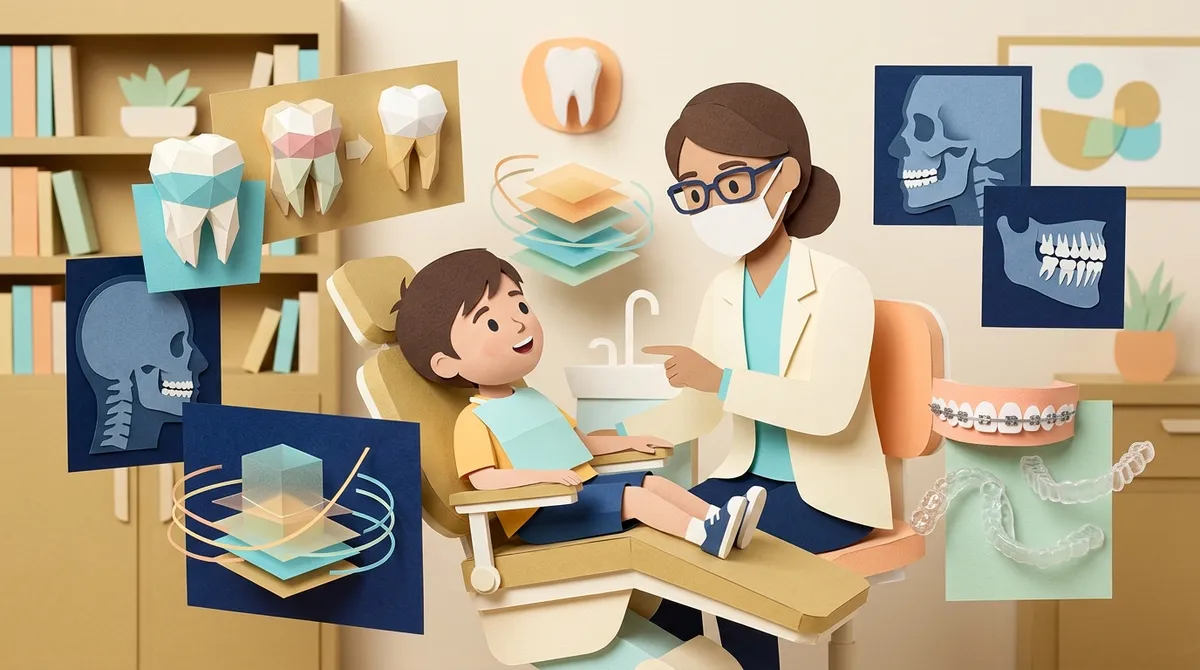
Schedule your orthodontic exam by age 7, as early detection of alignment issues prevents more complex problems later and makes treatment more effective.
-
An orthodontic exam takes 45-60 minutes and uses advanced diagnostic tools like digital 3D scans, X-rays, and photographs to create a personalized treatment plan tailored to your specific needs.
-
Address any existing cavities or gum disease with your general dentist before starting orthodontic treatment, as healthy teeth and gums provide a foundation for better long-term results.
-
Modern treatment options including traditional braces, clear aligners, and Spark aligners are now more affordable with flexible payment plans, making orthodontics accessible regardless of budget.
-
During the exam, discuss all treatment options, timelines, and expected outcomes with your orthodontist, and bring insurance information to understand coverage and explore available financing plans.
-
Common issues identified during exams include crowded teeth, overbites, underbites, crossbites, and jaw misalignment—identifying these early enables simpler and more effective treatment.
So, you’ve decided it’s time to look into straightening your smile — congratulations! Whether you’re a parent bringing in your child for the first time, a teenager ready for a confidence boost, or an adult professional finally putting yourself first, an orthodontic exam is the exciting first step on your journey to a healthier, happier smile. And honestly? There’s nothing to be nervous about.
An orthodontic exam is a thorough evaluation that helps your orthodontist understand your unique dental situation. It covers everything from your bite and jaw alignment to the health of your gums and teeth. The goal is simple: to create a personalized treatment plan that works best for you. Let’s walk through exactly what happens so you can show up feeling confident and excited.
What Is an Orthodontic Exam?
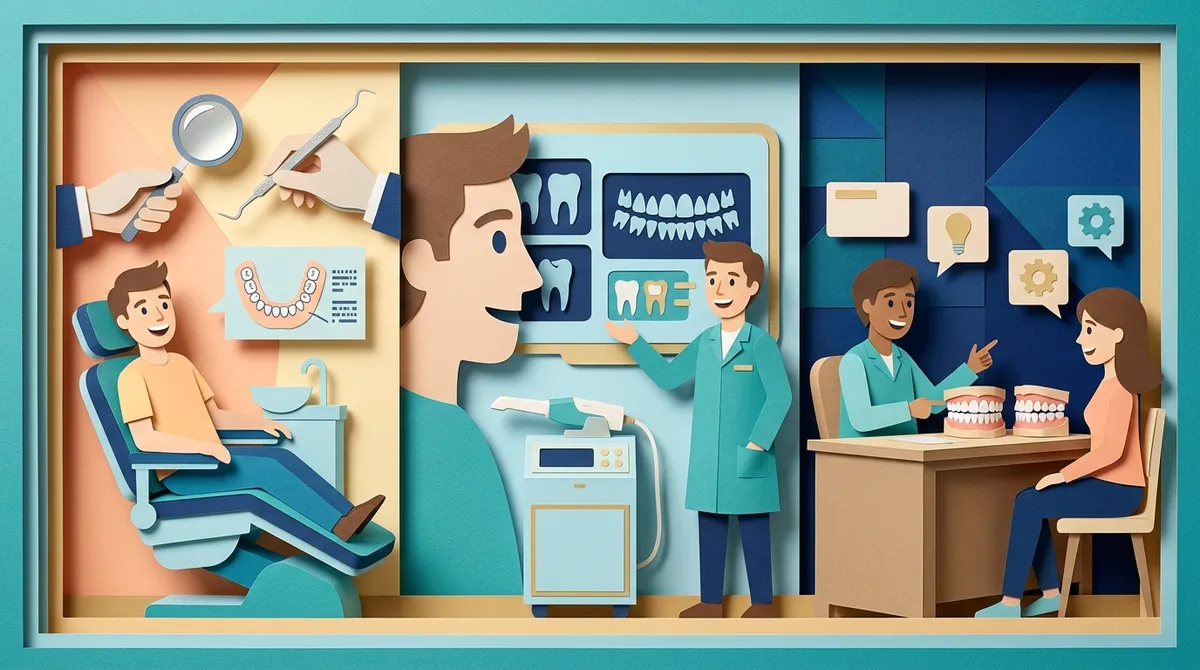
An orthodontic exam is a detailed initial evaluation conducted by a licensed orthodontist. It goes far beyond a regular dental checkup. Your orthodontist will assess your teeth, bite, jaw, and facial structure to identify any alignment issues. This exam is the foundation for all future treatment decisions.
At your first visit to Brockway Orthodontics, you can expect a warm, welcoming experience from start to finish. Meet Dr. Brockway and the team — they’ll make sure you feel right at home before anything else happens. The exam typically lasts between 45 and 60 minutes, so there’s plenty of time for all your questions.

Who Needs an Orthodontic Exam?
The short answer? Almost everyone can benefit from one! The American Dental Association recommends that children visit an orthodontist by age 7. At this age, the jaw is still developing, making early intervention more effective when needed.
But orthodontic exams aren’t just for kids. Here’s a quick look at who should consider scheduling one:
- Children ages 7 and up — Early detection can prevent bigger issues later
- Teenagers — The most common time for orthodontic treatment to begin
- Adults aged 25–45 — More adults than ever are seeking orthodontic care in 2026
- Relapse patients — Those who had previous treatment and notice shifting teeth
- Health-conscious individuals — Anyone with bite issues, jaw pain, or gum concerns
Learn more about early treatment options for children or explore adult orthodontic treatment if you’re ready to take the next step.
Step-by-Step: What Happens During an Orthodontic Exam
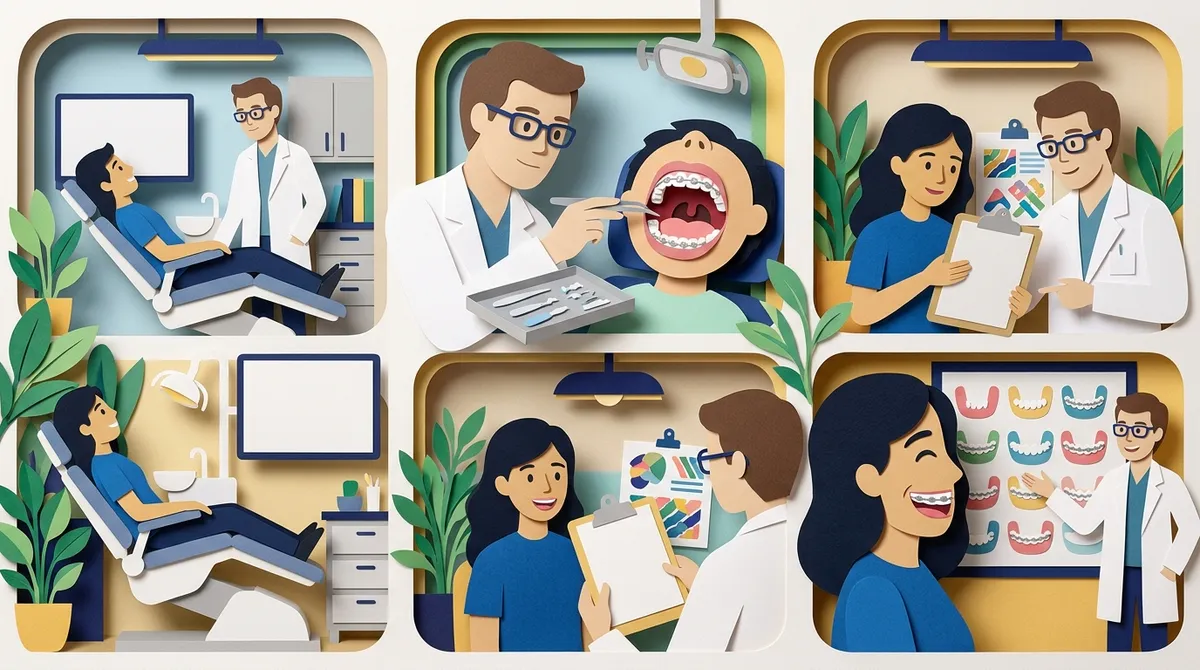
Knowing what to expect makes the whole experience much less intimidating. Here’s a numbered breakdown of the typical orthodontic exam process:
- Medical and dental history review — You’ll fill out forms covering your health background, medications, and any dental concerns.
- Chief complaint discussion — Your orthodontist listens to your main concerns. Crowded teeth? Jaw pain? An uneven smile? This is your time to speak up!
- Extra-oral examination — The orthodontist examines your face, jaw joints, and lymph nodes from the outside.
- Intra-oral examination — A close look inside your mouth at your teeth, gums, soft tissues, and bite alignment.
- Diagnostic records — X-rays, photographs, and digital scans are taken to give a complete picture of your oral health.
- Preliminary diagnosis — Based on all findings, your orthodontist identifies any issues and begins forming a plan.
- Treatment plan discussion — You’ll talk through options, timelines, costs, and expected outcomes together.
It’s truly a collaborative process. You’re not just a patient — you’re a partner in your own smile journey!
Diagnostic Tools Used in an Orthodontic Exam
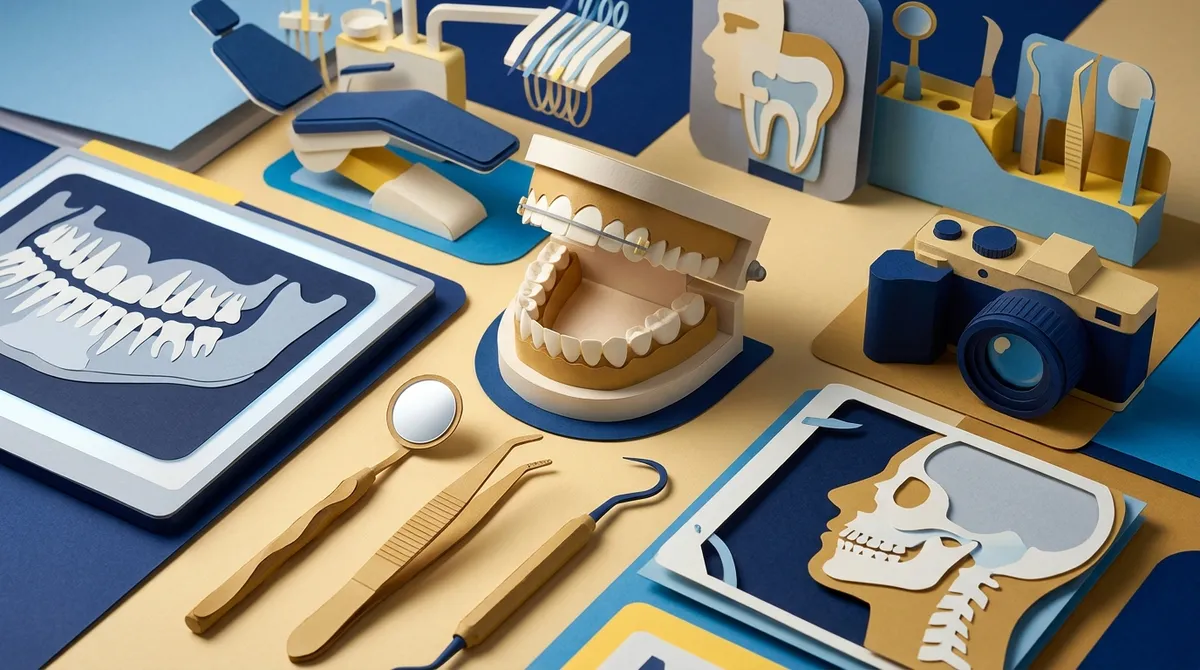
Modern orthodontic exams use some pretty cool technology to get a full picture of your oral health. Here’s what you might encounter:
| Diagnostic Tool | Purpose | What It Shows |
|---|---|---|
| Panoramic X-rays | Full jaw and tooth visualization | Root positions, bone levels, missing teeth |
| Cephalometric X-rays | Jaw and facial structure analysis | Skeletal relationships, growth patterns |
| Intraoral Photographs | Close-up images of teeth and gums | Crowding, spacing, bite issues |
| Digital Scans (iTero) | 3D digital impressions of teeth | Precise measurements for treatment planning |
| Extraoral Photographs | Facial profile and symmetry | Overall facial balance and jaw alignment |
Digital scans have largely replaced old-school putty impressions, which is great news for anyone with a sensitive gag reflex! These tools together give your orthodontist an incredibly accurate view of your oral health. The Florida Association of Orthodontists supports the use of advanced diagnostic technology to improve patient outcomes.
Common Issues Identified During an Orthodontic Exam
You might be surprised by what an orthodontic exam can uncover. Here are some of the most common findings:
- Crowded teeth — Not enough space for all teeth to fit properly
- Overbite or underbite — Upper or lower teeth extending too far forward
- Crossbite — Upper and lower teeth biting on the wrong side of each other
- Open bite — Upper and lower teeth don’t meet when the mouth is closed
- Spacing issues — Gaps between teeth that affect appearance and function
- Jaw misalignment — Issues with the temporomandibular joint (TMJ)
Identifying these issues early means simpler, more effective treatment. That’s why scheduling your orthodontic exam sooner rather than later is always a smart move.
Oral Health Must Come First
Before any orthodontic treatment begins, your orthodontist will confirm that your oral health is in good shape. If they spot signs of tooth decay, gum disease, or other dental issues, these will need to be addressed first. Think of it like building a house — you need a solid foundation before adding anything on top.
Your orthodontist may refer you to a general dentist or periodontist if treatment is needed before starting orthodontics. This teamwork approach ensures the best long-term results for your smile. Once the green light is given, it’s full speed ahead!
What Treatment Options Might Be Recommended?
After your orthodontic exam, you’ll receive a personalized treatment plan. Here’s a comparison of common treatment options to help you understand your choices:
| Treatment Option | Best For | Approximate Duration | Key Benefit |
|---|---|---|---|
| Traditional Braces | Children, teens, complex cases | 18–36 months | Highly effective for all bite types |
| Clear Aligners | Teens and adults, mild to moderate issues | 12–24 months | Discreet and removable |
| Spark™ Clear Aligners | Adults wanting maximum clarity | 12–24 months | Clearest aligner material available |
| Retainers | Post-treatment maintenance | Ongoing | Keeps your smile in place long-term |
Explore all about braces to see if traditional braces are the right fit for you. If you prefer something more discreet, check out Spark™ Clear Aligners — a fantastic option for both teens and adults.
Treatment Options by Patient Age Group
Not every treatment is right for every age group. Here’s a helpful breakdown:
| Age Group | Recommended Timing | Common Treatment | Learn More |
|---|---|---|---|
| Children (7–12) | As early as age 7 | Phase 1 / Early treatment | Early Treatment |
| Teenagers (13–18) | When most adult teeth are in | Braces or clear aligners | Adolescent Treatment |
| Adults (18+) | Any time is the right time! | Clear aligners, braces | Adult Treatment |
The right age for an orthodontic exam depends on your individual situation. For teens, adolescent treatment is one of the most popular and effective times to address alignment issues. And if you’re a busy adult, adult orthodontics in Clearwater has never been more accessible or comfortable.
Understanding Costs and Financing
One of the most common concerns patients have is cost. The good news is that orthodontic treatment is more affordable than ever in 2026, and there are flexible options available. During your exam, you’ll discuss estimated costs and payment plans. Brockway Orthodontics believes everyone deserves a beautiful smile, regardless of budget.
Here’s what to keep in mind about costs:
- Treatment costs vary based on complexity and type of treatment
- Many dental insurance plans cover a portion of orthodontic treatment
- Flexible payment plans make monthly costs manageable
- Starting early can sometimes reduce overall treatment costs
Visit the financing and insurance page to explore your options. You can also start with a free consultation for clear aligners in Clearwater, FL to get a sense of what your treatment might look like before committing.
Tips for Getting the Most Out of Your Orthodontic Exam
Want to make your appointment as smooth and productive as possible? Here are some helpful tips:
- Bring your insurance information — This saves time and helps you understand your coverage right away.
- List your concerns beforehand — Write down everything you want to ask. No question is too small!
- Be honest about your habits — Thumb sucking, teeth grinding, or mouth breathing can all affect treatment planning.
- Bring a parent or partner — A second set of ears helps you remember all the details discussed.
- Ask about all treatment options — Don’t be shy about asking for alternatives or comparing choices.
If you have questions before your visit, the FAQs page at Brockway Orthodontics is a great resource. You can also take a virtual look at the office to get comfortable before you even walk through the door!
After Your Orthodontic Exam: What Comes Next?
Once your exam is complete and your treatment plan is ready, the real fun begins! Here’s what typically happens next:
- Review your treatment plan — Go over the recommended options, timeline, and costs with your orthodontist.
- Address any pre-existing dental issues — Visit your general dentist if any cavities or gum concerns were identified.
- Schedule your first treatment appointment — Whether it’s braces or aligners, this is where the transformation begins!
- Set up your payment plan — Work with the office team to find a payment schedule that fits your budget.
It’s a straightforward process, and the team at Brockway Orthodontics will guide you through every single step. You’re never on your own during this journey. Explore all available services to see the full range of treatments offered.
Your Smile Transformation Starts Here
An orthodontic exam is more than just an appointment — it’s the beginning of a life-changing experience. Whether you’re a nervous parent, an excited teen, or a professional ready for change, this first step sets everything in motion. The process is gentle, informative, and completely personalized to you.
At Brockway Orthodontics, we love helping patients of all ages discover their best smiles. Visit us on Google to read reviews from real patients who’ve loved their experience with us. You can also check out our community on Instagram for before-and-after photos, tips, and smile inspiration!
Ready to take the first step toward the smile you’ve always wanted? Schedule your free orthodontic exam today and let’s start this journey together. We can’t wait to meet you!
FAQs
Q: When should my child have their first orthodontic exam?
A: The American Association of Orthodontists recommends that all children have their first orthodontic exam by age 7. At this age, an orthodontist can spot developing issues with jaw growth and tooth alignment early, which can make treatment simpler and more effective down the road. Don’t worry — many kids this age don’t need treatment right away, but monitoring their growth is always a great idea!
Q: How long does an orthodontic exam take?
A: A typical orthodontic exam takes between 45 and 60 minutes. This gives your orthodontist enough time to review your health history, examine your teeth and jaw, take diagnostic records like X-rays and digital scans, and discuss your treatment options. It goes by quickly, especially when the team makes you feel so welcome!
Q: Do I need to fix cavities before starting orthodontic treatment?
A: Yes, any existing dental issues like cavities or gum disease should be treated before orthodontic treatment begins. Your orthodontist will flag these during your exam and may refer you to your general dentist first. Think of it as building a strong foundation — healthy teeth and gums lead to better, longer-lasting orthodontic results!
Q: What diagnostic tools are used during an orthodontic exam?
A: Modern orthodontic exams use a variety of tools including panoramic and cephalometric X-rays, intraoral and extraoral photographs, and digital 3D scans (like the iTero scanner). These tools help your orthodontist get a complete and accurate picture of your teeth, roots, jaw, and facial structure — all without any discomfort!
Q: Is an orthodontic exam the same as a regular dental checkup?
A: Not quite! A regular dental checkup focuses on cleaning teeth and checking for cavities, while an orthodontic exam is specifically focused on the alignment of your teeth, bite, and jaw structure. Orthodontists receive additional specialized training beyond dental school to evaluate and treat these alignment issues. Both are important parts of maintaining great oral health!