Key Takeaways
-
Orthodontists complete 2-3 years of specialized training beyond dental school focused solely on teeth and jaw alignment, while general dentists lack this formal specialty education, making orthodontists the clear choice for complex bite and alignment problems.
-
Children should have their first orthodontic evaluation by age 7, as early intervention can guide jaw growth and significantly reduce the need for more complex treatment later in life.
-
General dentists can offer basic clear aligner treatment, but for moderate to complex cases involving significant crowding, bite problems, or jaw misalignment, a board-certified orthodontist delivers measurably better results.
-
Your dentist and orthodontist work as a team during treatment—your dentist handles cleanings and cavities while your orthodontist adjusts braces and monitors alignment, so you benefit from both specialists throughout your care.
-
Orthodontists treat a wide range of conditions including overbites, underbites, crowding, spacing, and jaw misalignment using tools like traditional braces, clear aligners, and palatal expanders that general dentists are not trained to use.
-
It’s never too late for orthodontic care—adults benefit from straight teeth that are easier to clean, reduced cavity and gum disease risk, and improved jaw function and comfort.
You brush. You floss. You see your dentist twice a year. So when someone mentions crooked teeth or a bite problem, you might wonder — do I really need to see a specialist? The answer matters more than you think. Knowing why you should see an orthodontist vs a dentist can save you time, money, and a lot of unnecessary frustration. These two professionals do very different jobs, even though both work inside your mouth. This guide breaks it all down in a simple, friendly way so you can make the best decision for your smile — or your child’s smile!

Orthodontists and Dentists: What Is the Difference?
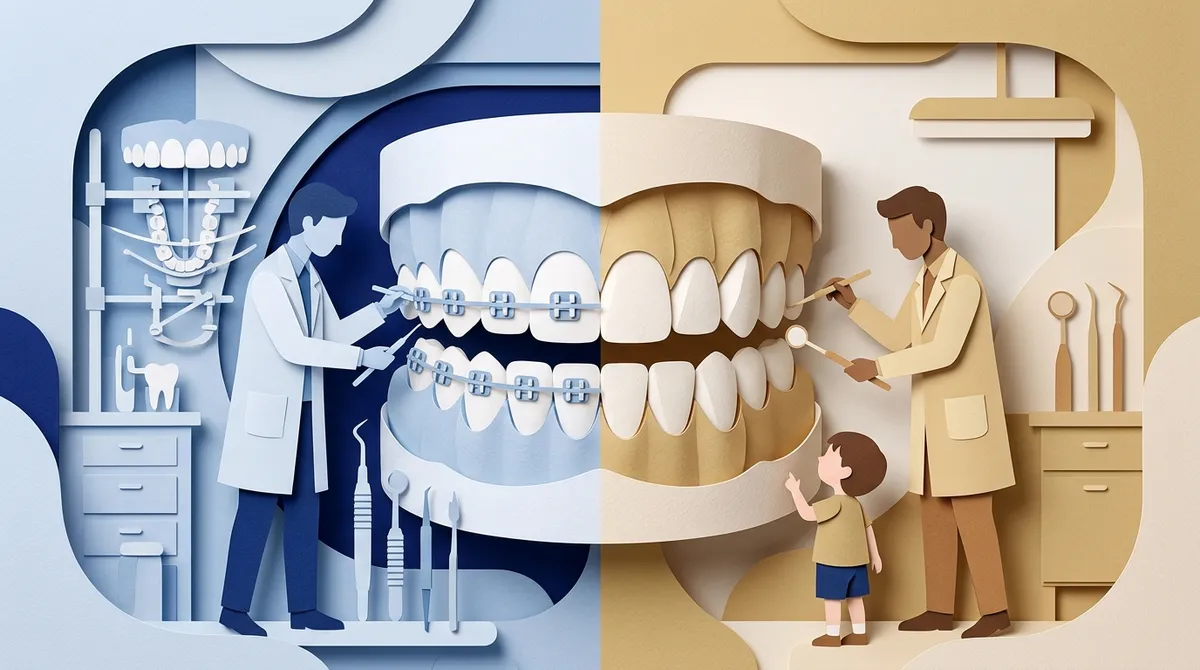
Both dentists and orthodontists go to dental school. That part is the same. But after dental school, orthodontists take an extra 2–3 years of specialized training in an accredited university program. This training focuses entirely on moving teeth, correcting bites, and guiding jaw growth. It is a significant difference in expertise. According to the American Dental Association, orthodontics is one of the recognized dental specialties, requiring this additional education before a dentist can call themselves an orthodontist.
Think of it this way. Your primary care doctor and a cardiologist both went to medical school. But you would see the cardiologist for a heart issue, right? The same logic applies here. Your dentist is your go-to for general oral health. Your orthodontist is your specialist for alignment and bite issues.
What Does a General Dentist Do?
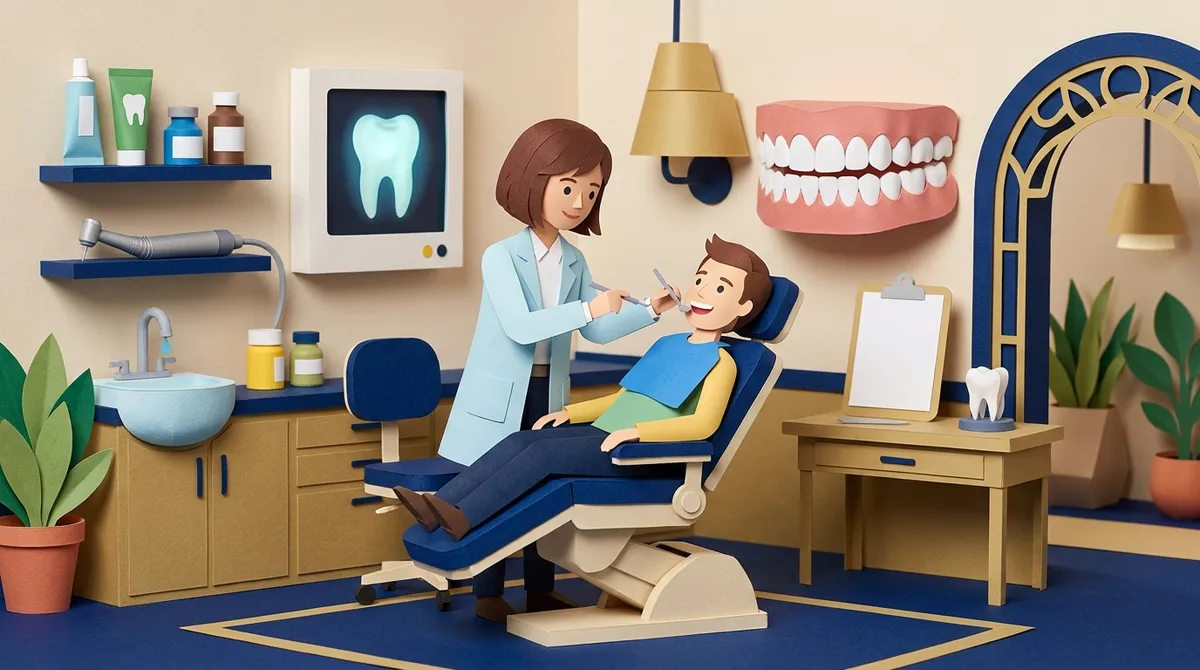
Your general dentist is a true hero for your overall oral health. They handle a wide range of services that keep your teeth and gums in great shape every day. Here is what your dentist typically takes care of:
- Routine cleanings and checkups
- Filling cavities and treating tooth decay
- Root canals and extractions
- Gum disease treatment
- Crowns, bridges, and veneers
- Teeth whitening
- X-rays and oral cancer screenings
Your dentist is the first line of defense for your oral health. They are often the ones who notice when something is off with your bite or alignment — and then refer you to an orthodontist for specialized care. This teamwork between dentists and orthodontists is actually one of the best parts of modern dental care.
What Does an Orthodontist Do?
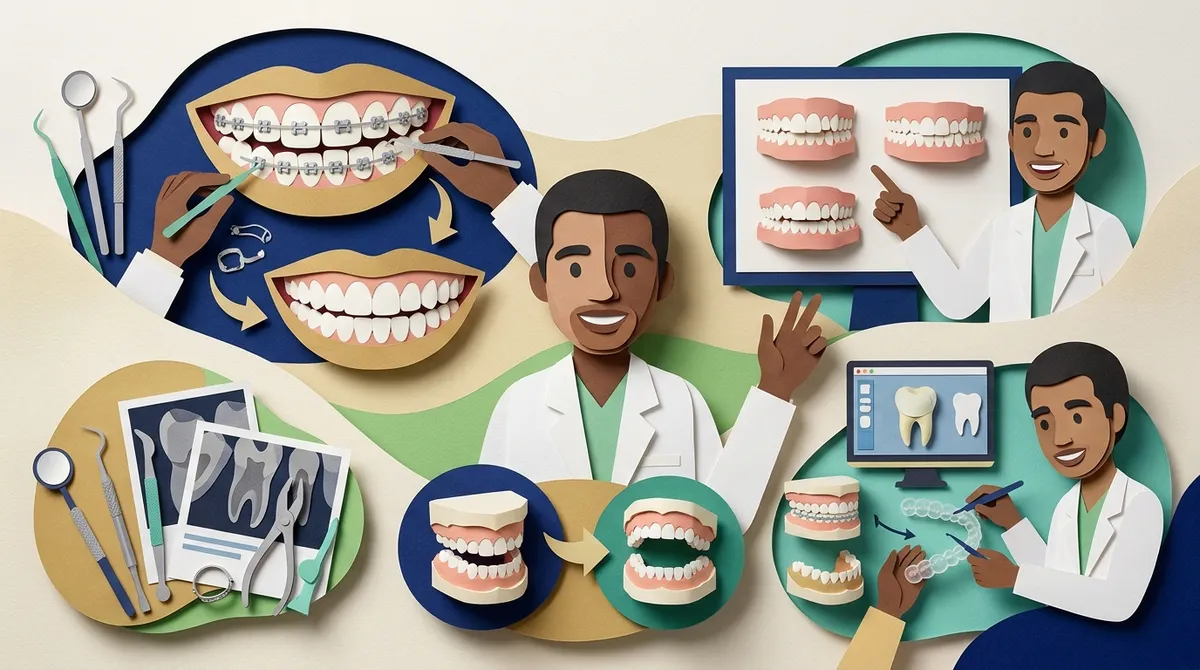
An orthodontist focuses almost entirely on one thing: moving teeth and correcting how your teeth and jaws line up. They use specialized tools and appliances to fix problems that a general dentist is not trained to handle at the same level. If you are wondering about orthodontic services and what they include, here is a helpful overview:
- Diagnosing crowded, crooked, or spaced-out teeth
- Correcting overbites, underbites, crossbites, and open bites
- Treating jaw misalignment issues
- Fitting and monitoring braces
- Fitting clear aligners for gradual teeth movement
- Using palatal expanders and other appliances
- Providing retainers after treatment to keep your smile in place
Orthodontists spend their entire career perfecting smiles. This laser focus is what makes them so effective at what they do. If you want to explore the differences in treatment options, check out this helpful comparison of clear aligners vs. braces to see which approach might work best for your situation.
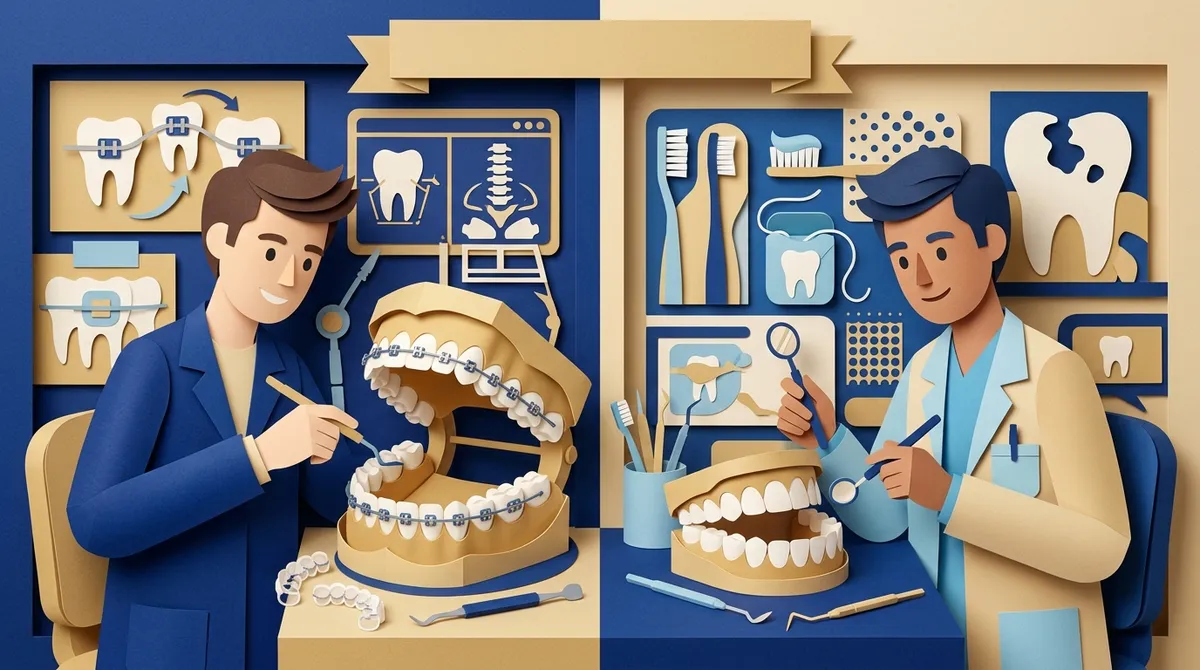
Side-by-Side Comparison: Orthodontist vs Dentist
| Feature | General Dentist | Orthodontist |
|---|---|---|
| Education | Dental school (4 years) | Dental school + 2–3 years specialty residency |
| Primary Focus | Overall oral health | Teeth and jaw alignment |
| Cleanings & Fillings | Yes | No |
| Braces & Aligners | Sometimes (basic cases) | Yes (all complexity levels) |
| Bite Correction | Limited | Full specialty training |
| Jaw Alignment | No | Yes |
| Retainers | Sometimes | Yes |
| Early Treatment for Kids | Can refer out | Specializes in this |
When Should You See an Orthodontist Instead of a Dentist?
There are clear signs that it is time to go beyond your regular dental checkup. Here are the top situations when seeing an orthodontist is the right move:
- Crowded or crooked teeth — When teeth overlap or twist, an orthodontist can create a personalized plan to straighten them safely.
- Bite problems — Overbites, underbites, crossbites, or open bites all require specialized care that goes beyond what a general dentist provides.
- Jaw pain or clicking — Jaw misalignment can cause discomfort, headaches, and even difficulty chewing.
- Gaps between teeth — Spaces between teeth are more than a cosmetic concern. They can affect how you bite and chew.
- Speech issues — Some speech problems are actually related to how the teeth and jaw are positioned. Orthodontic treatment can sometimes help. Learn more about whether braces can fix speech impediments.
- Your dentist recommends it — When your dentist refers you to an orthodontist, that is a strong signal you need specialized care.
- Your child is around age 7 — The American Association of Orthodontists recommends a first orthodontic visit around age 7. Early orthodontic treatment can guide jaw growth and reduce future treatment needs.
Can a General Dentist Offer Orthodontic Treatment?
Yes, some general dentists do offer basic orthodontic services, like certain clear aligner systems. However, they do not have the formal specialty training that orthodontists complete. For simple, mild cases, this might be okay. But for anything complex — like significant crowding, bite problems, or jaw issues — you really want a specialist in your corner.
The Florida Association of Orthodontists emphasizes that patients with complex alignment needs achieve the best results when treated by a board-certified orthodontist. The additional years of training simply make a measurable difference in outcomes.
What Orthodontic Problems Do Orthodontists Treat?
| Condition | Description | Orthodontic Solution |
|---|---|---|
| Overbite | Upper teeth extend too far over lower teeth | Braces, aligners |
| Underbite | Lower teeth sit in front of upper teeth | Braces, expanders |
| Crossbite | Upper and lower teeth do not meet properly | Palatal expander, braces |
| Open Bite | Front teeth do not touch when mouth is closed | Braces, aligners |
| Crowding | Too many teeth for the jaw space available | Braces, aligners, extractions |
| Spacing/Gaps | Gaps between teeth | Braces, aligners |
| Jaw Misalignment | Upper and lower jaws do not line up | Braces, expanders, surgery referral |
Why Early Orthodontic Treatment Makes a Big Difference
If you are a parent, this section is especially important for you. Early orthodontic intervention — often called Phase 1 treatment — can make a huge impact on your child’s development. When issues are caught early, an orthodontist can guide jaw growth, make space for incoming permanent teeth, and reduce the need for more complex treatment later.
The American Association of Orthodontists recommends that children have their first orthodontic evaluation by age 7. At this point, enough permanent teeth have come in for an orthodontist to spot potential problems. It does not mean braces start right away. Often, the orthodontist will just monitor growth and step in at the right time. To learn more about this, explore our page on orthodontics for kids and what parents should know.
Treatment Options an Orthodontist Offers
One of the great things about seeing a specialist is the range of options available. Orthodontists are trained in many different types of appliances and techniques. Here is a quick look at the most common ones:
- Traditional metal braces — Reliable and effective for all ages. Learn all about braces and what to expect during treatment.
- Ceramic braces — Similar to metal braces but less noticeable, using tooth-colored brackets.
- Clear aligners — Removable, virtually invisible trays that gradually shift teeth. At Brockway Orthodontics, we offer Spark™ Clear Aligners, a popular and highly effective option for teens and adults.
- Retainers — Used after active treatment to keep your teeth in their new positions. Explore more about orthodontic retainers and why they matter.
- Palatal expanders — Used to widen the upper jaw, especially in growing children, to create more space.
Adults Can Benefit From Orthodontic Care Too
Here is something that might surprise you — it is never too late to see an orthodontist! In 2026, more adults than ever are pursuing orthodontic treatment, and for good reason. Straight teeth are easier to clean, reducing the risk of cavities and gum disease. A corrected bite can ease jaw pain and improve chewing. And a confident smile? That is priceless at any age. If you are curious about your options, our adult orthodontic treatment page has everything you need to know.
Whether you want metal braces, ceramic braces, or clear aligners, there is a discreet and comfortable option available. Many professionals find that clear aligners fit beautifully into their busy work lives. Read more about why so many adults are getting orthodontic treatment in 2026.
How Orthodontists and Dentists Work Together
Here is the good news: you do not have to choose one over the other! Dentists and orthodontists work as a team. Your dentist handles cleanings, fillings, and general health. Your orthodontist handles alignment and bite issues. In fact, many dentists actively refer their patients to orthodontists when they spot a problem that needs specialized care. You keep seeing both throughout your treatment.
| During Orthodontic Treatment | Who You See | Why |
|---|---|---|
| Routine cleaning | General dentist | Maintains oral health during treatment |
| Braces adjustments | Orthodontist | Monitors and moves teeth on schedule |
| Cavity treatment | General dentist | Handles decay and restorations |
| Progress checks | Orthodontist | Tracks alignment and bite correction |
| Retainer fitting | Orthodontist | Keeps results locked in after treatment |
What to Expect at Your First Orthodontic Visit
Not sure what happens when you walk through the door? No worries at all! Your first orthodontic visit is usually relaxed and informative. Here is how it typically goes:
- A friendly welcome and health review — The team gathers some basic information about your oral and overall health history.
- A thorough exam — The orthodontist examines your teeth, bite, and jaw alignment, often with X-rays and photos.
- A personalized discussion — You will talk about what concerns you and what goals you have for your smile.
- Treatment options presented — The orthodontist explains what they found and which treatment options would work best for you.
- No pressure next steps — You will have time to ask questions and decide what feels right for you and your family.
At Brockway Orthodontics, we make the first visit warm and welcoming for patients of every age. You can learn more about what to expect on our Your First Visit page, or schedule your free consultation today and take that first exciting step toward a healthier, more confident smile.
We love connecting with our community! You can also follow us and see patient smile transformations on our Brockway Orthodontics Instagram page.
The Bottom Line: Why You Should See an Orthodontist
When it comes to straight teeth, a healthy bite, and long-term oral health, the expertise of an orthodontist simply cannot be matched by a general dentist. Both professionals play important roles, but for alignment and bite issues, you want a specialist with years of focused training. Whether you are a parent thinking about your child’s development, a teen wanting a confident smile, or an adult ready to finally tackle that bite problem — an orthodontist is the right choice.
If you are in the Clearwater area and ready to find out what a smile specialist can do for you, visit us on Google to read our patient reviews and find our office. We would love to meet you and your family!
Ready to take the next step? Book your free consultation at Brockway Orthodontics and discover what personalized, expert orthodontic care can do for your smile. We treat patients of all ages and can’t wait to help you shine!
FAQs
Q: What is the main difference in training between an orthodontist and a dentist?
A: Both start with the same dental school education, but orthodontists go on to complete an additional 2–3 years of specialized residency training focused entirely on teeth and jaw alignment. That extra training is what makes them the go-to specialists for bite correction, braces, and clear aligners!
Q: When should I see an orthodontist instead of my regular dentist?
A: You should see an orthodontist when you have issues like crowded teeth, bite problems, jaw pain, gaps, or when your dentist refers you for alignment care. Children should have their first orthodontic evaluation around age 7, even if no problems are obvious yet — early intervention can make a huge positive difference!
Q: Can a general dentist put on braces or clear aligners?
A: Some general dentists do offer basic clear aligner treatment, but they do not have the same specialized training as an orthodontist. For moderate to complex cases involving bite issues, jaw problems, or significant crowding, seeing a trained orthodontic specialist will give you the best and safest results.
Q: Is Invisalign or a clear aligner as effective as traditional braces?
A: Clear aligners can be just as effective as traditional braces for many types of cases, including mild to moderate crowding and spacing. For more complex bite or jaw issues, braces may be recommended. Your orthodontist will help you choose the best option based on your unique smile needs!
Q: Do orthodontists work with your regular dentist during treatment?
A: Absolutely — they are a team! Your dentist continues handling cleanings, cavities, and general oral health while your orthodontist focuses on moving your teeth and correcting your bite. Seeing both during orthodontic treatment keeps your smile healthy from every angle.