
Key Takeaways
-
Airway orthodontics expands dental arches instead of extracting teeth, preserving airway volume while straightening teeth and improving breathing quality during sleep.
-
Early intervention in children aged 6-12 using palatal expanders and growth-guiding techniques can positively shape jaw development and significantly increase upper airway dimensions.
-
Warning signs in children include loud snoring, mouth breathing, waking tired, dark circles, poor school focus, and crowded teeth—conditions warranting evaluation by age 7 per ADA recommendations.
-
Treatment uses 3D cone-beam CT imaging and multidisciplinary team collaboration with ENTs and sleep specialists, not just standard X-rays and orthodontist-led approaches.
-
Adults can benefit from mandibular advancement devices and clear aligner expansion protocols to improve sleep apnea symptoms, though children see greater potential from jaw development guidance.
-
Insurance coverage varies: standard orthodontic appliances may be covered under dental insurance while sleep apnea devices might fall under medical insurance with pre-authorization requirements.
Have you ever wondered if your teeth and jaw could affect how well you breathe at night? It sounds surprising, but the connection is very real. Airway orthodontics is an exciting, newer approach to orthodontic care that looks beyond straight teeth. It considers how your jaw, bite, and oral structure affect your breathing — especially while you sleep. For many families in Clearwater and beyond, this approach is opening doors to better health outcomes that go far beyond a beautiful smile.
Whether you’re a parent noticing your child snores, a teen who wakes up tired every morning, or an adult who has been told you might have sleep apnea, airway orthodontics might be worth exploring. It’s a holistic way of thinking about your oral health — one that connects the dots between your mouth and your overall well-being. Let’s break it all down in a way that’s easy to understand.

What Is Airway Orthodontics?
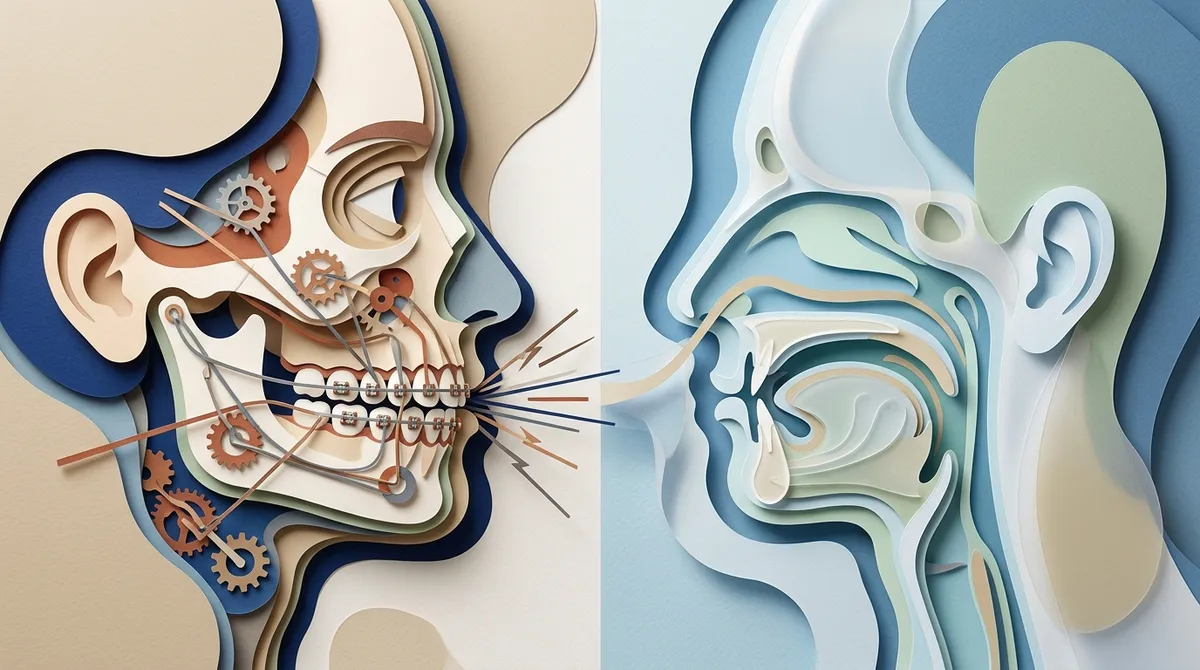
Airway orthodontics is an approach that looks at how your teeth, jaws, and soft tissues interact with your upper airway. Traditional orthodontics focuses mainly on straightening teeth and correcting bite problems. Airway orthodontics takes it a step further. It asks: Is your airway open enough for you to breathe freely?
The upper airway is the passage through which air flows from your nose and mouth into your lungs. When the jaw is too narrow, the tongue sits too low, or the palate is high and vaulted, there may not be enough room for air to flow freely. This can cause mouth breathing, snoring, and even obstructive sleep apnea (OSA). Airway-focused orthodontists evaluate all of these factors as part of a comprehensive treatment plan. To learn more about what a full orthodontic evaluation involves, check out what to expect at your first visit.
How Is It Different from Traditional Orthodontics?
This is a great question, and the answer really comes down to goals. Traditional orthodontics prioritizes tooth alignment and a proper bite. Airway orthodontics keeps those goals but adds breathing and sleep quality to the equation. Here’s a quick comparison:
| Feature | Traditional Orthodontics | Airway Orthodontics |
|---|---|---|
| Primary Goal | Straight teeth, aligned bite | Straight teeth + healthy airway |
| Breathing Evaluation | Not always included | Core part of assessment |
| Extraction Approach | May use extractions to create space | Typically avoids extractions; expands arches |
| Sleep Quality Focus | Minimal | High priority |
| Team Collaboration | Primarily orthodontist-led | Works with ENTs, sleep specialists, myofunctional therapists |
| Imaging Tools | Standard X-rays | Often includes 3D cone-beam CT imaging |
One key difference is that airway orthodontics typically avoids tooth extractions. Instead, it expands the dental arches to preserve or even enhance airway volume. This is a big deal for patients and parents who worry about unnecessary tooth removal.
Conditions That Airway Orthodontics Can Address
Airway orthodontics is designed to help with a range of issues that go beyond crooked teeth. Here are some of the most common conditions it targets:
- Chronic mouth breathing — Breathing through the mouth instead of the nose, especially during sleep
- Snoring — Often a sign that airflow is restricted during sleep
- Obstructive sleep apnea (OSA) — A serious condition where breathing repeatedly stops during sleep
- Sleep-disordered breathing (SDB) — A broad category of breathing problems that occur during sleep
- Narrow palate or dental arches — Can restrict tongue space and airflow
- Tongue tie or low tongue posture — Affects how the tongue rests and may impact the airway
Research has shown that orthopedic and surgical orthodontic treatments can significantly change upper airway dimensions. A systematic review published in Orthodontic Waves found that functional appliance therapy increased the sagittal dimension of the upper airway in growing patients with a Class II bite relationship. Early orthopedic intervention can positively influence airway anatomy — which is why timing matters so much. You can read more about the importance of timing in early intervention orthodontics and why it matters.
Signs Your Child May Need Airway Orthodontics
Parents, this section is especially for you! Children’s airways are still developing, which makes early treatment incredibly effective. Here are some signs to watch for:
- Your child snores loudly or seems restless during sleep
- They breathe through their mouth most of the time
- They wake up tired even after a full night of sleep
- They have dark circles under their eyes
- They struggle to focus or sit still at school (which can be linked to poor sleep)
- Their face appears long and narrow, or their teeth are crowded
- They grind their teeth at night
If any of these sound familiar, it may be worth scheduling an early orthodontic treatment evaluation as soon as possible. The American Dental Association recommends that children have their first orthodontic screening by age 7, and airway concerns make this even more important. Early care for kids is something our team takes very seriously — you can also explore what adolescent treatment looks like at Brockway Orthodontics.
Common Airway Orthodontic Treatments
Airway orthodontics uses a variety of tools and techniques. Here’s an overview of the most common ones:
| Treatment | What It Does | Best For |
|---|---|---|
| Palatal Expander | Widens the upper jaw to create more space for the tongue and improve airflow | Children and teens with narrow palates |
| Functional Appliances | Guide jaw growth and position to improve bite and airway space | Growing patients with Class II or III issues |
| Mandibular Advancement Devices | Move the lower jaw forward to open the airway during sleep | Adults with sleep apnea or snoring |
| Clear Aligners with Expansion | Gradually expand arches while maintaining a discreet appearance | Teens and adults seeking subtle treatment |
| Growth-Guiding Orthodontics | Uses natural growth windows in children to shape jaw development | Children aged 6-12 |
It’s worth noting that modern clear aligner systems can be adapted with expansion protocols to support airway goals. If you’re curious about clear aligner options that can support your smile and your health, take a look at our Spark™ Clear Aligners page to see what’s possible. Our adult treatment options also incorporate airway-conscious approaches.
How the Airway Is Evaluated Before Treatment
Before any treatment begins, an airway-focused orthodontist will conduct a thorough evaluation. This goes beyond a standard dental X-ray. Here’s what the process often includes:
- 3D cone-beam CT imaging — Gives a detailed three-dimensional view of the jaw, teeth, and airway space
- Clinical examination — Looks at tongue posture, tonsil size, facial structure, and nasal breathing ability
- Medical history review — Identifies sleep problems, allergies, or other health concerns
- Referrals to specialists — May include an ENT, sleep physician, or myofunctional therapist for a full picture
This team-based approach ensures that treatment addresses the root cause, not just the symptoms. The Florida Association of Orthodontists supports the use of comprehensive diagnostics to improve patient outcomes — and at Brockway Orthodontics, we’re committed to that same standard of thorough, personalized care.
Is Airway Orthodontics for Adults Too?
Absolutely! While early intervention in children offers the greatest potential, adults can benefit from airway orthodontics as well. Adult bones are no longer growing, so treatment options may differ slightly. However, palatal expansion, mandibular advancement, and clear aligner expansion protocols are all options that can still make a meaningful difference.
Research shows that mandibular advancement surgery is associated with successful treatment of obstructive sleep apnea in many patients. For adults who don’t require surgery, less invasive orthodontic tools can still help open the airway and improve sleep quality. Many adults in Clearwater are discovering this approach as part of a broader health journey. If you’re an adult considering your options, our adult orthodontics in Clearwater page is a great place to start.
What About Insurance and Cost?
One of the most common questions we hear is: does insurance cover airway orthodontics? The answer depends on your specific plan and the treatments involved. Here’s a general breakdown:
- Standard orthodontic treatments (braces, aligners, expanders) may be partially covered under dental insurance
- Sleep apnea-related appliances may fall under medical insurance rather than dental
- Some treatments may require pre-authorization or documentation from a sleep specialist
- Flexible payment plans can make treatment accessible even without full insurance coverage
We always encourage patients and families to explore all their options. Our financing and insurance page can help you understand what’s available and how to make treatment affordable. You can also explore our orthodontic financing options in Clearwater designed to fit a variety of budgets.
Why Choose Brockway Orthodontics for Airway-Focused Care
At Brockway Orthodontics, we believe great orthodontic care is about your whole health — not just your smile. Dr. Brockway takes the time to listen to each patient’s concerns, from sleep troubles to crowded teeth, and creates personalized treatment plans that truly fit their lives. Our practice uses modern technology, including digital impressions and 3D imaging, to plan treatment with precision and care.
We treat patients of all ages — from young children who need early intervention to adults looking for a healthier, more comfortable life. Whether your family needs traditional braces, clear aligners, or an airway-focused evaluation, we’re here to help every step of the way. We warmly invite you to visit us on Google — Brockway Orthodontics to read reviews from real Clearwater families who’ve experienced our care firsthand. You can also learn more about Dr. Brockway’s background and approach to see why so many families trust her with their smiles and their health.
Key Benefits of Airway Orthodontics at a Glance
Here’s a quick summary of what airway orthodontics can offer:
- Improved breathing — especially through the nose, not the mouth
- Better sleep quality for both children and adults
- Reduced snoring and sleep apnea symptoms
- Healthier jaw development in growing children
- A more balanced facial structure over time
- Straighter teeth without unnecessary extractions
- A comprehensive, whole-health approach to orthodontic care
If you’ve been searching for an approach to orthodontics that considers your full well-being, airway orthodontics could be the answer. It’s one of the most exciting developments in modern orthodontic care — and it’s helping families breathe easier, sleep better, and smile more confidently every single day.
Take the Next Step Toward a Healthier Smile and Better Breathing
Airway orthodontics is about so much more than straight teeth. It’s about helping you and your family feel your best — from the moment you wake up to the moment you fall asleep. Whether you’re concerned about a child’s snoring, your own sleep quality, or simply want a more complete evaluation, we’re ready to help. Follow along with our community on Brockway Orthodontics on Facebook for tips, updates, and smiles from our patients. Then, when you’re ready to take that first step, schedule your free consultation with our team today. We’d love to be part of your journey to better health and a brighter smile!
FAQs
Q: What is airway orthodontics and how is it different from regular braces?
A: Airway orthodontics is an approach that looks at how your teeth, jaw, and soft tissues affect your breathing and sleep — not just your smile! Unlike traditional orthodontics that focuses mainly on straightening teeth, airway orthodontics also evaluates and treats the upper airway to help with issues like snoring, mouth breathing, and sleep apnea.
Q: Can airway orthodontics help with snoring or sleep apnea?
A: Yes, it absolutely can! Treatments like palatal expanders, functional appliances, and mandibular advancement devices are designed to open up the airway, which can reduce snoring and improve symptoms of obstructive sleep apnea. Research confirms that orthodontic and orthopedic treatments can significantly improve upper airway dimensions.
Q: Is airway orthodontics only for children, or can adults benefit too?
A: Great news — people of all ages can benefit from airway orthodontics! Early treatment in growing children offers the greatest results since we can guide jaw development naturally. However, adults can also see meaningful improvements through treatments like clear aligner expansion protocols and mandibular advancement therapies.
Q: What are the signs that my child might need airway orthodontic treatment?
A: Watch for signs like loud snoring, chronic mouth breathing, waking up tired, dark circles under the eyes, difficulty focusing at school, or crowded teeth and a narrow palate. If any of these sound familiar, scheduling an early orthodontic evaluation is a wonderful first step toward helping your child breathe and sleep better!
Q: Does insurance cover airway orthodontic treatment?
A: Coverage varies depending on your plan and the specific treatments involved. Standard orthodontic appliances may be covered under dental insurance, while sleep apnea-related devices might fall under medical insurance. We recommend checking with your provider and exploring flexible financing options to make treatment accessible for your family.
Our Service Area