Key Takeaways
-
CBCT scans are specialized tools reserved for specific cases like impacted teeth or jaw asymmetry, not routine for all orthodontic patients; professional guidelines recommend ordering scans only when they actually change the treatment plan.
-
Digital intraoral scanners provide radiation-free 3D tooth models for custom aligners, retainers, and progress monitoring, replacing uncomfortable impression putty with quick scans that display results in real time.
-
The ALARA principle ('As Low As Reasonably Achievable') guides imaging decisions; younger patients require extra caution since they have more years of potential radiation exposure ahead.
-
Modern orthodontic care combines multiple digital records—photos, x-rays, digital scans, and CBCT data—into one complete file to build virtual treatment results and design precisely fitted appliances.
-
Different 3D imaging types serve distinct purposes: CBCT shows roots and bone structure, intraoral scanners capture tooth surfaces only, and 3D facial photography helps visualize smile integration with facial features.
-
Your orthodontist should explain the justification for any recommended scan before proceeding, ensuring every imaging procedure has a clear clinical purpose tied directly to your personalized treatment plan.
Ever wonder how your orthodontist knows exactly where your teeth are hiding, even the ones that haven’t come in yet? That’s the magic of 3D dental imaging. This technology has changed how orthodontists plan braces and clear aligner treatment. At Brockway Orthodontics in Clearwater, we use these tools to build smile plans that are personal, precise, and comfortable. Let’s walk through what 3D dental imaging really means, when it’s actually needed, and why it matters for your family’s smile journey.
If you’re a parent bringing your child in for their first check-up, or an adult finally ready to fix that smile you’ve been putting off, you’ve probably heard terms like CBCT scans or digital impressions. These sound technical, but they’re simpler than you think. In this guide, we’ll break down six key ways 3D imaging supports your treatment, plus answer common questions about safety and what to expect at your appointment.
1. Understanding What 3D Dental Imaging Actually Means
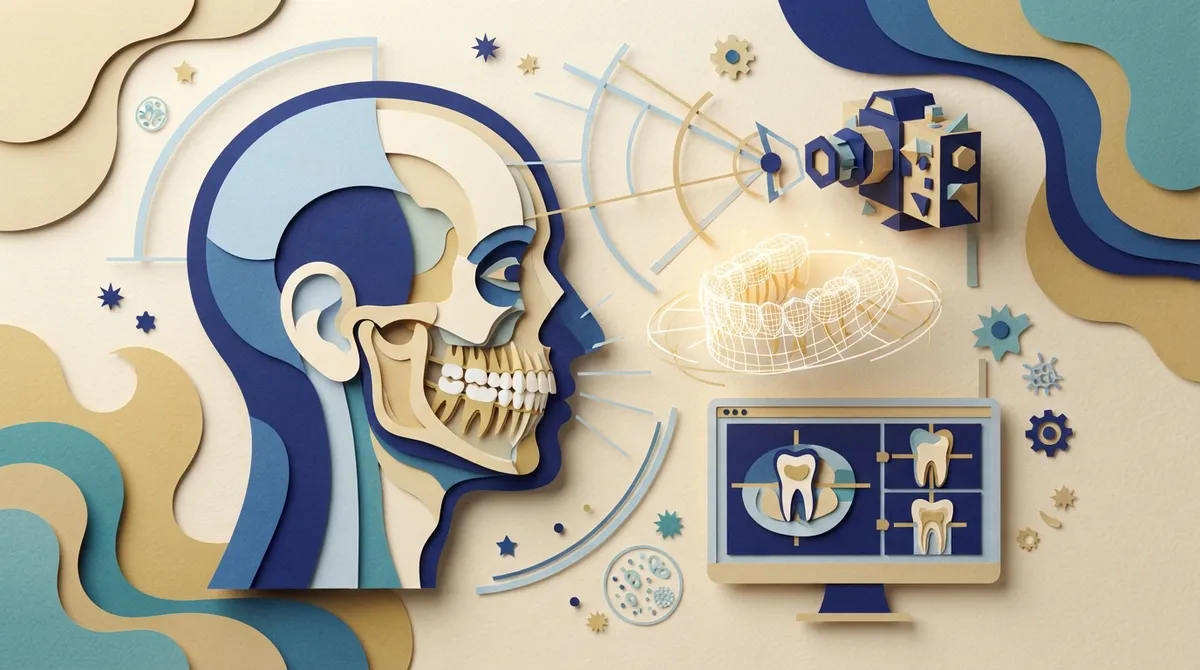
The phrase “3D dental imaging” covers a few different technologies. Each one has its own job in your orthodontic care.
The main types include:
- Cone-beam computed tomography (CBCT): This creates 3D pictures of your teeth, roots, jawbone, and even airway spaces. It uses a small amount of radiation.
- Digital intraoral scanners: These capture a 3D model of your teeth and gums without any radiation at all. Think of it as a tiny camera that takes hundreds of pictures to build a digital model.
- 3D facial photography: This adds a visual layer to help orthodontists see how your smile fits with your whole face.
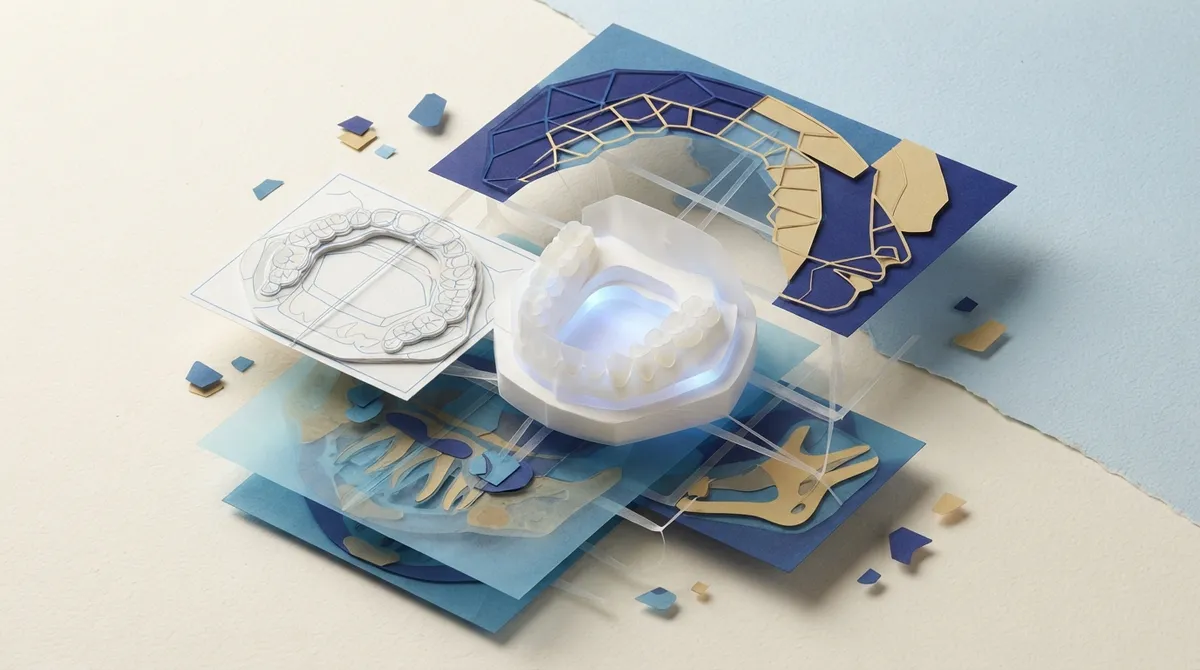
- Treatment planning software: This combines all the above into one virtual patient file your orthodontist can use to map out your care.
Not every patient needs every type of scan. Your orthodontist picks the right tool based on what your smile actually needs. This is a key idea we’ll come back to throughout this article.
2. CBCT Scans: When 3D X-Rays Make a Real Difference
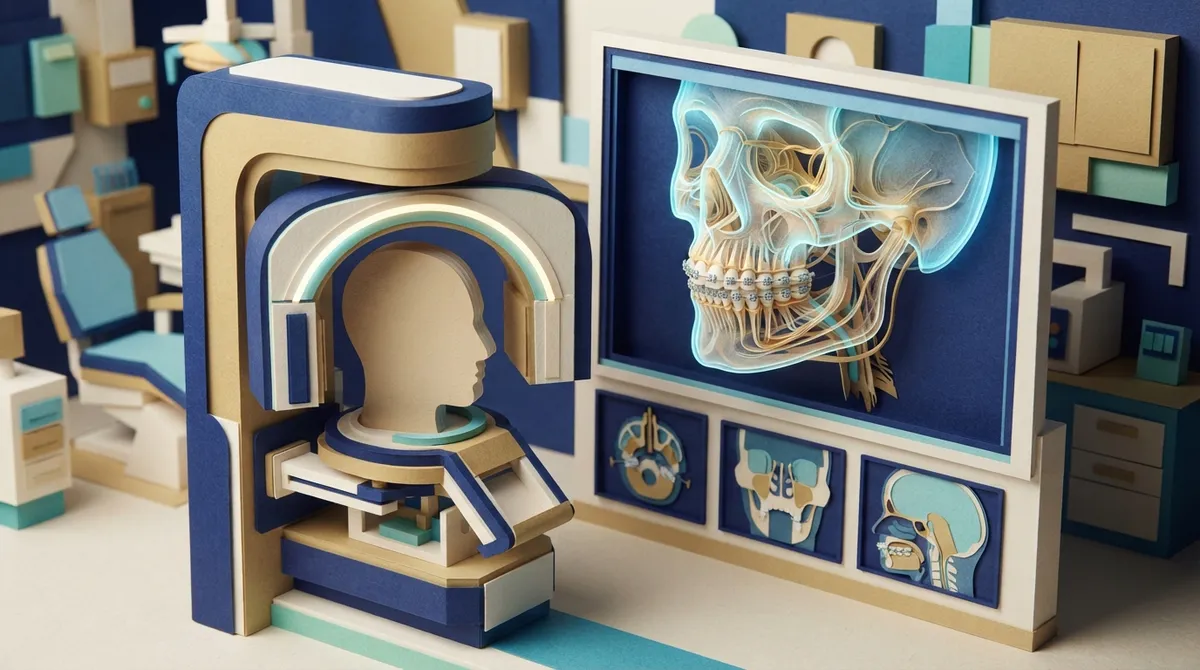
CBCT stands for cone-beam computed tomography. It’s a special type of 3D x-ray that shows your teeth, roots, jawbone, and surrounding structures from every angle. Unlike flat, 2D x-rays, CBCT gives your orthodontist a full picture, almost like turning your jaw into a 3D puzzle they can rotate and study.
According to research published on PubMed Central, orthodontics accounts for roughly 16% of all dental CBCT use, while maxillofacial surgery and dentoalveolar pathology make up larger shares. This tells us something important: CBCT isn’t for everyone. It’s a specialized tool for specific situations.
Common reasons an orthodontist might order a CBCT scan include:
- Impacted or ectopic teeth that haven’t come in properly
- Checking for root resorption, where tooth roots shorten during treatment
- Planning mini-implant placement for certain types of braces
- Evaluating jaw asymmetry or craniofacial differences
- Preparing for jaw surgery in more complex cases
- Assessing trauma cases where bone damage is a concern
Impacted teeth are one of the most common reasons orthodontists reach for 3D imaging. A flat x-ray might show a tooth is stuck, but it can’t always show exactly where it’s pointing or how close it is to other roots. A 3D scan clears up that mystery.
3. Why Not Every Patient Needs a CBCT Scan
Here’s something important to know: getting a 3D scan doesn’t mean you’ll get better treatment. It only helps when the extra information actually changes your treatment plan.
Major professional groups, including the American Academy of Oral and Maxillofacial Radiology, recommend against routine CBCT for every orthodontic patient. Instead, the guidance is clear: order a scan only when a regular x-ray or digital scan can’t answer the clinical question.
This approach follows a principle called ALARA, which stands for “As Low As Reasonably Achievable.” Some experts now use an updated version called ALADA, or “As Low As Diagnostically Acceptable.” Both mean the same basic thing: use the smallest amount of radiation needed to get a clear, useful picture.
Your orthodontist will always ask, “Will this scan change what we do?” If the answer is no, a simpler and lower-dose option is usually the better choice. This is especially true for children and teens, since younger patients have more years ahead where extra radiation exposure could add up. Learn more about how we approach adolescent treatment with safety in mind.
4. Digital Intraoral Scanners: The Radiation-Free Option
Not all 3D imaging involves x-rays. Digital intraoral scanners are handheld wands that take pictures of your teeth and gums to build a 3D model, all without any radiation.
These scanners have replaced the old-school method of biting into a tray of goopy putty. Instead, your orthodontist glides a small wand around your mouth, and a 3D model pops up on a screen in real time. Most patients say it’s faster and much more comfortable.
Here’s how these scans support your care:
| Use of Digital Scan | How It Helps You |
|---|---|
| Custom aligner design | Creates precise, comfortable trays for Spark™ Clear Aligners |
| Retainer fabrication | Builds a snug-fitting retainer that matches your finished smile |
| Progress monitoring | Tracks tooth movement over time without extra x-rays |
| Indirect bonding | Helps place brackets accurately for traditional braces |
| Patient education | Lets you see your smile plan on screen before treatment starts |
These scans are a big reason clear aligner treatment has become so popular and precise. A digital scan does not replace an x-ray, though. If your orthodontist needs to check roots, bone, or teeth that haven’t erupted, an x-ray or CBCT is still the right tool for that job.
5. What to Expect During a 3D Imaging Appointment
If you’re nervous about your first scan, don’t be. Most patients say 3D imaging is quicker and easier than they expected.
For a CBCT scan, you’ll typically stand or sit still while a machine rotates around your head. The whole process usually takes less than a minute of actual scanning time. You won’t feel anything at all, no pinching, no pressure, just a quiet whir as the machine moves.
For a digital intraoral scan, your orthodontist or their assistant will guide a small wand around your teeth. It might feel a little unusual at first, but there’s no biting, no gagging, and no mess. Many kids actually think it’s fun to watch their teeth appear on the screen.
Before any scan, your orthodontist will explain why it’s being recommended and what they hope to learn from it. This is part of what we call justification, making sure every scan has a clear purpose tied to your care. If you’re getting ready for your first visit, feel free to ask any questions about what imaging you might need.
6. Combining 3D Imaging Into a Complete Digital Treatment Plan
Modern orthodontic care often blends several types of records into one digital file. This might include photos, x-rays, digital scans, and sometimes CBCT data.
When these pieces come together, your orthodontist gets a complete view of your smile. This helps with:
- Building a virtual model of your expected treatment results
- Spotting problems early, before they become bigger issues
- Explaining your treatment plan in a way that’s easy to understand
- Designing appliances, aligners, and retainers that fit precisely
Of course, combining this much digital information also means your orthodontic office needs strong systems for privacy and data protection. A trustworthy practice will always explain how your records are stored and protected, and you should feel comfortable asking about this at your consultation.
It’s worth noting that 3D imaging quality can sometimes be affected by things like patient movement, metal fillings, or existing braces. That’s why a trained orthodontist needs to review the whole scan carefully, not just the one area they were originally curious about. This kind of thorough review is part of what separates a quality provider from a quick, one-size-fits-all approach. The American Dental Association offers helpful patient resources on dental imaging safety and standards, and the Florida Association of Orthodontists supports high standards of care across our state.
Why Choose Brockway Orthodontics for Your Smile Journey
At Brockway Orthodontics in Clearwater, Dr. Brockway blends modern technology with a warm, family-focused approach. Our office uses digital impressions and 3D imaging to plan treatment precisely, whether you’re exploring our full range of services, considering adult treatment, or bringing in your child for early treatment evaluation.
We know braces and aligners are a big decision for any family. That’s why Dr. Brockway takes the time to walk you through your imaging results in plain language, no confusing jargon, just clear answers about what’s happening in your mouth and what comes next. We also offer financing and insurance options to make quality care accessible for Clearwater families of all backgrounds.
Curious what other patients say about their experience? You can visit us on Google — Brockway Orthodontics to read real reviews from our Clearwater community. We’re also active on Facebook and Instagram, where we share smile transformations and helpful tips.
Ready to See Your Smile in 3D?
3D dental imaging has made orthodontic care more precise, more comfortable, and more personal than ever before. Whether it’s a digital scan for your child’s first set of aligners or a CBCT scan to check on an impacted tooth, this technology helps Dr. Brockway build a treatment plan made just for you.
Ready to see what modern imaging can do for your smile? Book your appointment online today, or feel free to contact our friendly Clearwater team with any questions. We can’t wait to welcome you to the Brockway Orthodontics family!
FAQs
Q: What is 3D dental imaging in orthodontics?
A: It’s a group of technologies, including CBCT scans and digital intraoral scanners, that create detailed 3D pictures of your teeth, roots, and jaw. Orthodontists use these images to plan braces and clear aligner treatment with more precision. Not every scan uses radiation, so your orthodontist picks the right tool for your specific needs.
Q: What is the difference between a dental CBCT scan and an intraoral scan?
A: A CBCT scan uses a small amount of radiation to show your teeth, roots, and jawbone in 3D, which is helpful for things like impacted teeth. An intraoral scanner uses no radiation at all and only captures the surface of your teeth and gums, perfect for making aligners and retainers. They serve different purposes, so your orthodontist chooses based on what information is actually needed.
Q: Does every orthodontic patient need a 3D scan?
A: Nope, not at all! Most patients do just fine with standard digital scans or basic x-rays. CBCT scans are reserved for specific situations, like impacted teeth or complex jaw concerns, where the extra 3D detail actually changes the treatment plan.
Q: Is CBCT radiation safe for children and teenagers?
A: When used appropriately, CBCT is considered safe, but orthodontists are extra careful with younger patients since kids have more years of potential exposure ahead. That’s why professional guidelines recommend using the smallest field of view and lowest dose that still gives a clear, useful image. Your orthodontist will only recommend a CBCT scan for your child if it’s truly necessary for their care.
Q: Can 3D dental imaging replace traditional dental X-rays?
A: Sometimes, but not always. Digital scanners can replace messy impressions for aligners and retainers, but they can’t see roots or bone like an x-ray or CBCT can. Your orthodontist will use the right combination of tools based on exactly what your smile needs.
Our Service Area