Key Takeaways
-
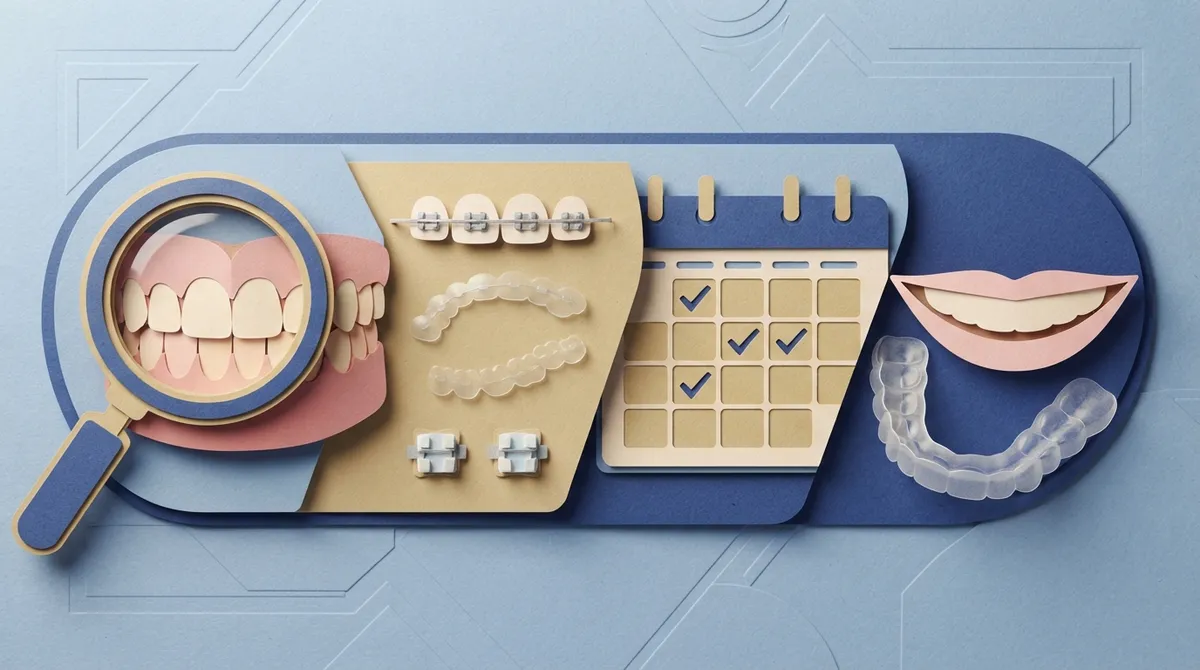
Orthodontic treatment follows four clear stages: consultation and diagnostics, treatment planning with options, active treatment with regular checkups every 4-12 weeks, and completion with retainer fitting to prevent teeth from shifting back.
-
Most orthodontic treatment lasts 12-24 months total, with regular progress checkups every 4-12 weeks where tooth movement is monitored and appliances are adjusted, though most actual movement happens between visits.
-
At your first visit, the orthodontist examines your teeth and bite while listening to your goals, then takes diagnostic records like photos, X-rays, and digital scans to create a personalized treatment plan.
-
Treatment options include traditional metal braces, ceramic clear braces, or clear aligners, each with different costs and aesthetics; your choice depends on your lifestyle, budget, and treatment needs.
-
Retainers are essential after treatment completion because teeth naturally drift back to old positions; long-term retainer wear is typically recommended, often starting full-time then transitioning to nighttime only.
-
Emergency orthodontic issues like broken wires or loose brackets require prompt contact with your office rather than waiting for the next scheduled visit to prevent treatment delays.
Starting orthodontic treatment can feel a little like stepping into the unknown. What happens at the first visit? Do you get braces right away? How many trips will it take? If you have asked yourself any of these questions, you are in good company. Knowing the orthodontist appointment stages ahead of time takes the mystery out of the process and helps you feel calm and ready.
Here is the good news: orthodontic care follows a clear path. Each visit has a purpose, and each stage builds on the last. Whether you are a parent planning for a child, a teen counting down to a big event, or an adult who wants a discreet fix, the basic steps look much the same. The details just change based on your smile and your treatment type.
In this friendly guide, we break the journey into four easy stages. You will learn what happens at each one, how long visits usually last, and how to get the most from every appointment. Let’s walk through it together.

Stage 1: Your Consultation and Diagnostic Records
Every smile story starts with a conversation. At your first visit, the orthodontist takes a close look at your teeth, bite, and jaws. Just as important, they listen. What bothers you about your smile? What are your goals? Is there a big event coming up? Sharing this helps shape a plan that fits your life.
If you are curious about what that first visit looks like, our guide on your first visit gives you a helpful preview. You can also read about what to expect during your orthodontic exam before you walk in the door.
What Happens During the Exam
The orthodontist checks how your teeth fit together, how your jaws line up, and the overall health of your mouth. They may also spot early signs of problems like crowding, gaps, or a bite that does not close well.
What Records Might Be Taken
To plan your treatment well, the team often gathers a few diagnostic records. Not every patient needs every item at the first visit. Common records include:
- Photographs of your face and smile from different angles
- X-rays to see tooth roots, jaw position, and teeth that have not come in yet
- Digital scans or impressions that create a precise model of your teeth
At Brockway Orthodontics, modern technology like digital scans means no messy molds, which most patients are happy to skip. If you want to prepare, here is how to prepare for your first orthodontist consultation.
Stage 2: Treatment Planning and Your Options
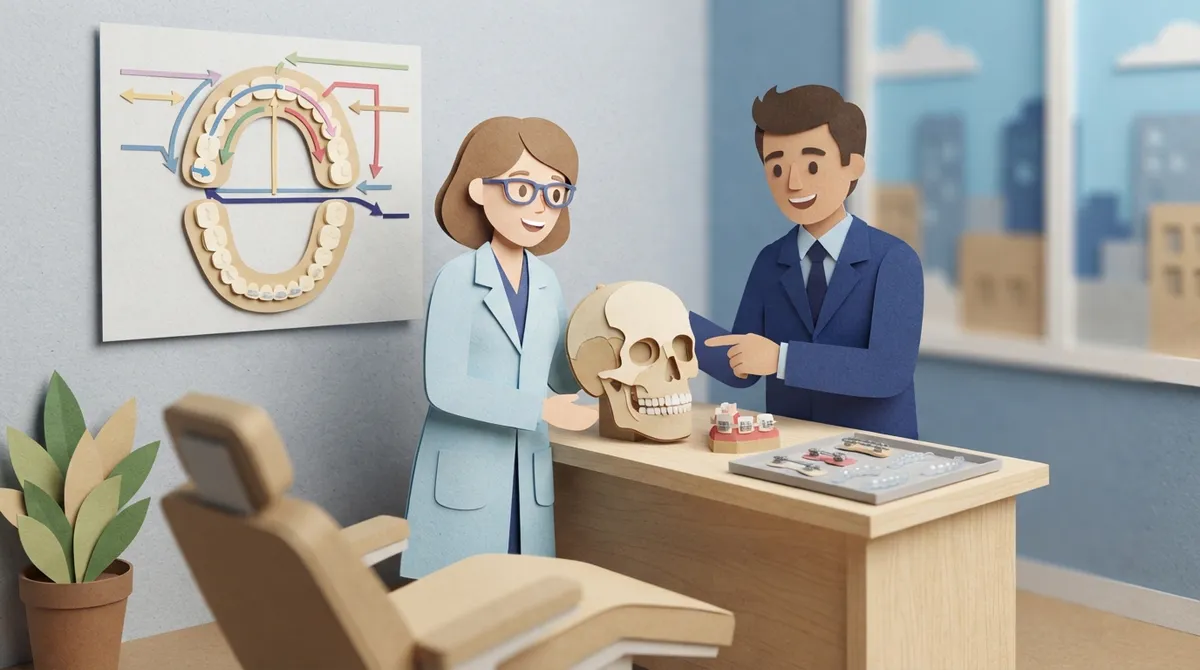
Once the records are in, the orthodontist builds a plan made just for you. This stage is where everything becomes clear. You will hear what is going on with your teeth, which treatment options could work, and about how long things may take.
For many people, this is the most exciting part. You finally see a roadmap to the smile you want. According to the NHS, orthodontic treatment usually lasts somewhere between 12 months and 2.5 years. The American Association of Orthodontists notes that most people wear braces for about 12 to 24 months, though the exact time depends on the person.
Choosing Between Treatment Types
Your orthodontist will explain the choices that fit your needs. At Brockway Orthodontics, those options include:
- Traditional metal braces, a proven and reliable choice
- Ceramic (clear) braces, which blend in with your teeth
- Spark™ Clear Aligners, a discreet and more affordable alternative to Invisalign
Not sure which way to lean? Our comparison of clear aligners vs. braces can help you weigh the pros and cons.
Getting Ready for Treatment
Before any appliance goes on, you will talk through the plan and give your okay. Sometimes a patient needs a little dental work first, such as treating a cavity or improving gum health. Starting with a healthy mouth sets you up for a smoother ride.
This is also the right time to talk about cost. Dr. Brockway and the team are happy to walk you through payment choices, so check out our page on financing and insurance to see how to make treatment fit your budget.
Stage 3: Getting Started and Active Treatment Visits
This is the stage most people picture when they think of orthodontics. It has two parts: the start-up visit and the ongoing checkups.
The Start-Up Appointment
If you chose braces, this is the day they are bonded to your teeth. If you chose aligners, you will receive your first set of trays and learn how to wear them. Some aligner plans also use small tooth-colored attachments to help guide movement.
This visit is often longer than your later ones, since there is a lot to cover. You will also get tips on brushing, flossing, and caring for your new appliance. For brushing help, try our simple guide on how to brush teeth with braces. And if you are wondering what to eat, our friendly food guide has you covered.
Regular Progress Checks
After the start-up visit, you will return for regular checkups. During these visits, the orthodontist looks at how your teeth are moving and checks your oral health. With braces, they may change wires or adjust other parts. With aligners, they check your progress and often hand you your next trays.
Here is something many people do not realize: most tooth movement happens between visits, not during them. The appointment is a quick tune-up that keeps things heading the right way.
How Often Will You Visit?
Visit schedules vary from person to person. Here is what trusted sources say:
| Source | Typical Visit Frequency |
|---|---|
| American Association of Orthodontists (braces adjustments) | Every 4 to 12 weeks, depending on treatment stage |
| American Association of Orthodontists (adjusting braces or picking up aligners) | Every 6 to 10 weeks |
| NHS guidance | Every 4 to 10 weeks |
As for how long each visit lasts, a York Hospitals NHS patient guide notes that checkups can run from about 15 minutes to an hour, depending on what needs to be done. For a closer look at the rhythm of these visits, see what to expect at each braces tightening visit.
What If Something Breaks?
Life happens. A wire pokes, a bracket pops loose, or an aligner cracks. Do not wait for your next scheduled visit. Call the office so the team can help you right away. Our guide on emergency vs. routine orthodontics explains which problems need quick attention. If you need fast help, Brockway Orthodontics also offers friendly care for urgent concerns.
Stage 4: Finishing Treatment and Retention
The big day arrives when your orthodontist says your teeth are where they need to be. For braces patients, this is the day the braces come off. For aligner patients, it is the day you finish your final set of trays. It feels great, and many people grin the whole way home.
But here is the key point: your journey is not quite over. Teeth have a natural habit of drifting back toward their old spots. That is where retainers come in.
Why Retainers Matter
A retainer holds your teeth in their new positions while the bone and gums settle around them. Your orthodontist will pick the right type for you and explain how and when to wear it. Some people wear retainers full-time at first and then move to nights only. Because teeth can shift over time, long-term wear is often recommended.
Learn more on our retainers page, or read how to wear a retainer after braces and keep your smile. Hoping to brighten things up? Here are proven ways to get white teeth after braces.
Keeping Up With Routine Dental Care
Throughout all four stages, keep seeing your regular dentist for cleanings and checkups. Healthy teeth and gums make for a better orthodontic result. Good habits with brushing, flossing, and following instructions for elastics or aligners all matter. The American Dental Association offers helpful general oral health tips at ada.org.
A Quick Look at All 4 Stages
Here is a simple summary you can save or share with the family.
| Stage | What Happens | What You Do |
|---|---|---|
| 1. Consultation and records | Exam, photos, X-rays, digital scans | Share your goals and ask questions |
| 2. Treatment planning | Plan, options, timeline, and cost review | Choose your treatment and give your okay |
| 3. Active treatment | Braces placed or aligners delivered, then regular checkups | Keep up hygiene and follow instructions |
| 4. Completion and retention | Braces removed or aligners finished, retainers given | Wear your retainer as prescribed |
Tips for Every Age and Stage of Life
The four stages stay the same, but your needs may look a little different depending on who you are.
- Parents: Early checkups can spot problems while a child is still growing. Read about early treatment and what every parent should know.
- Teens and young adults: Modern options like clear aligners and ceramic braces keep things low-key. See our adolescent treatment details.
- Busy adults: Efficient visits and discreet choices fit a packed schedule. Explore adult treatment options.
- Retreatment patients: If your teeth shifted after past braces, you are not alone. A fresh evaluation can show a clear path forward.
Every patient is different, and that is exactly why a personal plan matters. Dr. Brockway takes the time to listen, explain, and guide you. You can meet Dr. Brockway and learn more about her caring approach.
Ready to Begin? Take the First Step
Now that you know the four orthodontist appointment stages, the road ahead looks much less scary. It is a steady, step-by-step path from your first hello to your final retainer fitting, and a friendly team is with you at every turn.
Brockway Orthodontics proudly serves Clearwater, Florida with braces and clear aligners for the whole family. You can see what other patients say when you visit us on Google — Brockway Orthodontics. For added peace of mind, you can also look up trusted professional resources like the Florida Association of Orthodontists.
Ready to kick things off? Book your appointment online today, or contact us with any questions. We cannot wait to meet you and help you smile with confidence!
FAQs
Q: What happens at an orthodontist’s first appointment?
A: At the first visit, the orthodontist checks your teeth, bite, and jaws, and talks with you about your goals and concerns. They may also take photos, X-rays, or digital scans to plan your care. It is a relaxed visit, and you will have plenty of time to ask questions.
Q: How often do you need to see an orthodontist with braces or clear aligners?
A: Most patients visit every 4 to 12 weeks, depending on their treatment and stage. The American Association of Orthodontists commonly cites ranges like every 6 to 10 weeks for adjustments or aligner pickups, and the NHS says every 4 to 10 weeks. Your orthodontist will set the schedule that fits you best.
Q: How long does an orthodontist appointment usually take?
A: It depends on what is being done. Quick checkups can last as little as 15 minutes, while longer visits, like getting braces placed, may take up to an hour or more. Your team will give you a good idea of timing when you book.
Q: What happens when braces come off or aligner treatment ends?
A: Once your teeth reach their goal positions, your orthodontist removes your braces or confirms your last aligner set. You will then get a retainer to hold your new smile in place. Following your wear schedule keeps your hard work from shifting back.
Q: How long do you need to wear a retainer after orthodontic treatment?
A: Your orthodontist will set a plan just for you. Many people wear retainers full-time at first and then switch to nights. Since teeth can shift over time, long-term wear is often recommended to protect your results.
Our Service Area