Key Takeaways
-
Most orthodontists offer interest-free in-house payment plans requiring only a modest down payment ($400-$500), with balances split evenly over 12-24 months, making braces accessible without third-party financing.
-
Dental insurance orthodontic benefits typically range from $1,000-$2,000, but you must verify age limits, waiting periods, lifetime maximums, and in-network status before assuming coverage will reduce your monthly payment.
-
You can use pre-tax dollars from HSA or FSA accounts to pay for braces, effectively lowering out-of-pocket costs when combined with monthly payment plans—verify eligibility with your plan administrator first.
-
Longer repayment terms and larger down payments significantly reduce monthly costs; a $5,580 treatment with insurance can drop from $208/month over 18 months to $153/month over 24 months.
-
Third-party financing offers 12-60 month terms with promotional 0% interest, but deferred-interest plans charge retroactive interest if you miss the deadline, so read credit agreements carefully before committing.
-
Multi-patient family discounts and combining multiple payment sources (insurance + down payment + in-house financing) create layered strategies that bring monthly payments to comfortable, manageable levels.
Wondering how much braces monthly payment plans really cost? You are not alone. Every week, parents, teens, and busy professionals walk into orthodontic offices asking the same thing: “Can I afford this?” The good news is that a beautiful smile rarely requires paying thousands of dollars all at once. Most orthodontic practices, including Brockway Orthodontics in Clearwater, offer flexible ways to break your treatment cost into smaller, friendly monthly payments.
In this guide, we will walk through seven real payment options that can make braces fit your budget. We will also share example numbers, explain how insurance and financing affect your monthly bill, and answer the questions we hear most often. Whether you are a parent planning for your teen, an adult ready for a confidence boost, or someone returning for retreatment, this article will help you understand exactly what to expect. Let’s get your smile journey started on the right financial footing!

Why Braces Monthly Payment Plans Matter
A braces monthly payment plan simply means splitting your total treatment fee into smaller chunks instead of one big payment. This makes orthodontic care possible for way more families and individuals. Instead of stressing over a $5,000 lump sum, you pay a manageable amount each month, often similar to a car payment or gym membership.
Most practices calculate your monthly payment using a simple formula: total treatment fee, minus your insurance benefit, minus any down payment, divided by the number of months in your plan. For example, a $5,580 treatment fee with a $1,500 insurance benefit and a $400 down payment, spread over 24 months, comes out to about $153 per month with no interest. Without insurance, that same fee with a $500 down payment over 28 months lands around $181 monthly.
These numbers are examples, not guarantees. Your actual braces monthly payment depends on your specific case, your coverage, and the practice you choose. That is why a personalized consultation matters so much before you commit to any plan.
1. In-House Payment Plans Through Your Orthodontist
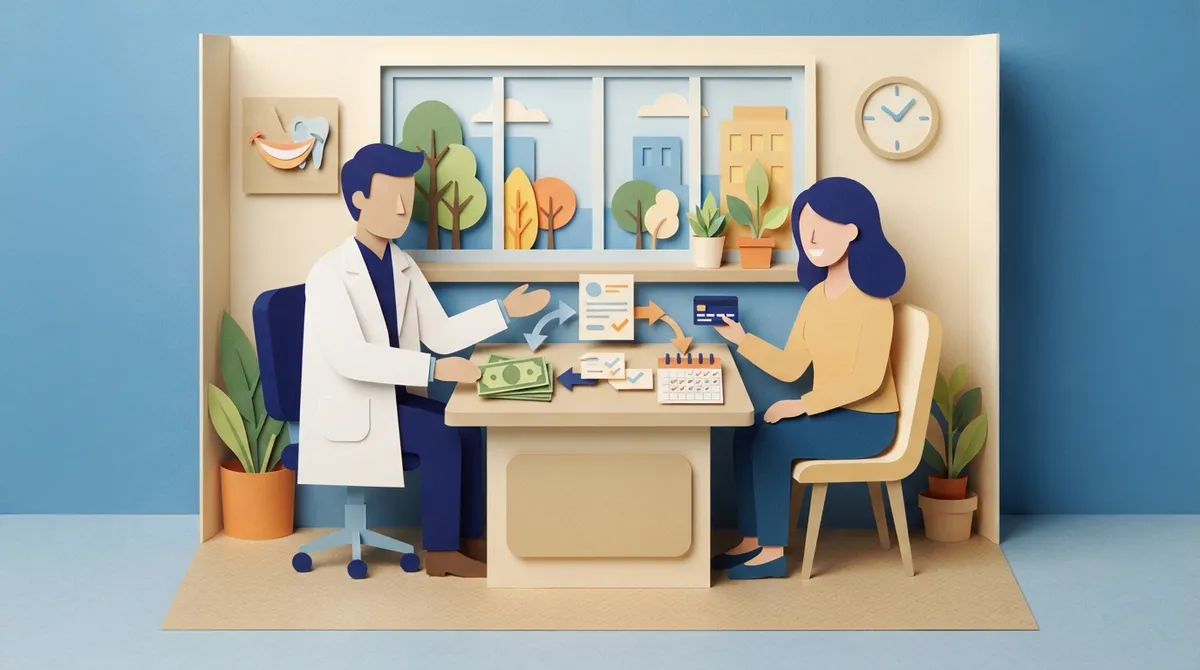
Many orthodontic offices, including ours, offer in-house payment plans directly through the practice. This is often the simplest and most affordable route because there is usually no interest charged.
- Typically requires a modest down payment upfront
- Remaining balance split evenly across 12 to 24 months
- Some practices extend terms to 24-30 months for more complex cases
- No credit check required in most cases
- Payments are made directly to the orthodontic office
In-house plans work well because your orthodontist already knows your treatment plan and total cost. There are no surprise fees from a third-party lender. If you are curious about how this works at our Clearwater practice, our financing and insurance page breaks down the details clearly.
2. Dental Insurance-Assisted Monthly Payments
If you have dental insurance with orthodontic coverage, your monthly payment could shrink significantly. Insurance benefits for orthodontics commonly range from $1,000 to $1,500, with some plans offering up to $2,000.
However, orthodontic coverage often comes with catches. Before assuming your insurance will cover a big chunk, check these details:
- Does your plan have an age limit for orthodontic benefits?
- Is there a waiting period before coverage kicks in?
- What is your lifetime orthodontic maximum?
- Are dependents covered, or just the policyholder?
- Is your orthodontist in-network with your specific plan?
According to the American Dental Association, orthodontic benefits vary widely between plans, so reading the fine print really pays off. Our team can help you figure out exactly what your policy covers before your treatment begins.
3. Third-Party Healthcare Financing
Sometimes a practice partners with outside financing companies to offer longer repayment terms. These programs often advertise terms from 12 months all the way up to 60 months, giving you much smaller monthly payments if needed.
Some of these plans include promotional 0% interest offers for a set period. But be careful. Deferred-interest plans can charge retroactive interest if you do not pay off the full balance by the deadline. Always read the credit agreement closely, and ask questions like:
- What happens if I miss the promotional period deadline?
- Is there a minimum monthly payment required?
- Does my credit score affect my approval or interest rate?
- Are there any hidden fees for early payoff?
Third-party financing can be a great option for larger treatment plans or when a longer term makes more sense for your budget.
4. Using HSA or FSA Funds for Braces
Did you know you might be able to use pre-tax dollars to pay for braces? Health Savings Accounts (HSA) and Flexible Spending Accounts (FSA) often allow eligible orthodontic expenses to be paid with these funds.
This can effectively lower your out-of-pocket cost since you are using pre-tax money. Rules vary by plan, so it is smart to check with your plan administrator or a tax professional before assuming eligibility. Combining HSA or FSA funds with a monthly payment plan is a popular strategy for many of our patients looking to stretch their budget further.
Sample Braces Monthly Payment Breakdown
To help you visualize how these numbers work, here is a simple comparison table based on common industry examples.
| Treatment Fee | Insurance Benefit | Down Payment | Term Length | Estimated Monthly Payment |
|---|---|---|---|---|
| $5,580 | $1,500 | $400 | 24 months | ~$153 |
| $5,580 | $0 | $500 | 28 months | ~$181 |
| $5,000 | $0 | $0 | 24 months | ~$208 |
| $5,000 | $0 | $0 | 18 months | ~$278 |
As you can see, a longer term or a bigger down payment usually means a smaller monthly bill. This is why it helps to sit down with your orthodontist and map out the numbers before starting treatment.
5. No Down Payment Options
Some patients ask if they can start braces with zero money down. While not every practice offers this, some do provide low or no down payment plans for qualifying patients.
Keep in mind that skipping the down payment usually means slightly higher monthly payments to make up the difference. It is worth asking your orthodontist directly whether this option fits your situation. If cost is a big concern, our team is happy to walk through different scenarios during your first visit so you know your options clearly.
6. Combining Multiple Payment Sources
Many families use a combination approach. For example, you might use dental insurance to lower the total balance, pay a small down payment from savings, and finance the rest through an in-house plan. This layered strategy can bring your braces monthly payment down to a very comfortable number.
This flexibility is one reason why treatments like Spark™ Clear Aligners and traditional braces remain accessible to so many families in Clearwater. No two financial situations look the same, so combining resources often makes the most sense.
7. Family and Multi-Patient Discounts
If you have more than one family member starting treatment, ask about multi-patient discounts. Many orthodontic practices offer reduced fees or lower down payments when siblings or parent-child pairs start treatment together.
This can make a real difference in your monthly budget, especially for larger families. At Brockway Orthodontics, we love working with entire families, from young kids just starting early treatment to parents pursuing adult treatment at the same time.
What Affects Your Braces Monthly Payment Amount
Several factors shape your final monthly payment. Understanding these can help you plan realistically before your consultation.
- Type of appliance (metal braces, ceramic braces, or clear aligners)
- Complexity of your case and length of treatment needed
- Whether you have dental insurance with orthodontic benefits
- Your down payment amount
- The length of your repayment term
- Whether interest or promotional financing applies
Traditional metal braces commonly cost between $3,000 and $7,000, according to published practice estimates. Ceramic braces and comprehensive clear aligner treatment may fall in a similar range depending on your specific needs. These are general estimates, not fixed prices, so a personalized quote is always the best way to know your true cost.
What Happens If You Miss a Payment?
Life happens, and sometimes payments get missed. Most orthodontic offices understand this and offer some flexibility, but policies vary. Some practices charge a late fee, while others may pause treatment until the account is current.
The best approach is always open communication. If you know a payment will be late, reach out to your orthodontic office right away. Most practices, including ours, would rather work with you than create unnecessary stress during your treatment journey.
Does Your Payment Plan Cover Everything?
One common question is whether the monthly payment includes everything, or if extra costs pop up later. Before signing any agreement, ask your orthodontist to clarify what is included, such as:
- Regular adjustment appointments
- Emergency visits for broken brackets or wires
- Retainers after treatment is complete
- X-rays and diagnostic imaging
- Follow-up visits during the retention phase
At Brockway Orthodontics, we believe in transparency. We walk every patient through exactly what their treatment plan covers so there are no surprise bills down the road. We also explain retainer care since keeping your new smile straight is just as important as the braces themselves.
Why Choose Brockway Orthodontics for Your Payment Plan
Dr. Brockway and her team believe every patient in Clearwater deserves access to expert orthodontic care, regardless of budget. We take time to explain your options clearly, whether that means in-house financing, working with your insurance, or exploring Spark™ Clear Aligners as a more budget-friendly alternative to other clear aligner brands.
We also use modern technology like digital impressions and 3D imaging to plan your treatment precisely, which helps us give you an accurate cost estimate from day one. No guesswork, no confusing paperwork, just honest numbers and a friendly team ready to answer your questions. You can learn more about our approach by visiting Meet Dr. Brockway or exploring our office page to see what makes our Clearwater practice feel like home.
Curious what other patients think? You can visit us on Google — Brockway Orthodontics to read real reviews from families across Pinellas County. We are also active on Facebook and Instagram, where we share smile transformations and helpful tips regularly. For broader orthodontic guidance, the Florida Association of Orthodontists is also a trusted resource for patients across the state.
Getting Started With Your Own Payment Plan
The best way to know your exact braces monthly payment is to schedule a consultation. Every mouth is different, and every budget is different too. During your visit, we will review your treatment needs, check your insurance benefits if applicable, and walk you through every payment option available.
Ready to see what your smile journey could look like? You can easily book appointment online and get a clear, no-pressure breakdown of your options. Or, if you have questions first, feel free to contact us and our friendly team will help guide you through the next steps.
Braces are an investment in your confidence and health, and with the right payment plan, that investment becomes surprisingly manageable. We look forward to helping you or your family start this exciting journey toward a healthier, happier smile right here in Clearwater.
FAQs
Q: How much are braces per month without insurance?
A: Without insurance, a typical braces monthly payment often falls between $150 and $280, depending on your total fee and repayment term. A longer term or bigger down payment can bring that number down nicely. We are happy to give you an exact estimate during your consultation!
Q: What is the average down payment for braces?
A: Down payments vary, but many practices ask for a few hundred dollars upfront, sometimes between $400 and $500. Some offices even offer low or no down payment options for qualifying patients. It really depends on your treatment plan and the practice you choose.
Q: Does dental insurance cover monthly braces payments?
A: Many dental insurance plans include orthodontic benefits that can lower your monthly payment, often in the $1,000 to $1,500 range. Just remember to check for age limits, waiting periods, and lifetime maximums first. Our team is glad to help you review your specific policy.
Q: Are orthodontist in-house payment plans interest-free?
A: Many in-house payment plans are interest-free, which is a big reason families love them! You simply divide your balance across monthly payments without extra finance charges. Always confirm this detail with your specific orthodontic office before signing up.
Q: Can I use an HSA or FSA to pay for braces?
A: Yes, in many cases you can use HSA or FSA funds for eligible orthodontic expenses, which helps you save with pre-tax dollars. Rules do vary by plan, so double check with your plan administrator first. Combining these funds with a monthly payment plan is a smart budgeting move many of our patients use.
Our Service Area