Key Takeaways
-
Fixed ceramic braces are more effective than aligners for complex cases requiring tooth extraction or rotations over 15 degrees, while aligners work equally well for mild-to-moderate crowding.
-
Invisalign and clear aligners require 20-22 hours of daily wear to be effective, making them dependent on patient compliance, whereas fixed ceramic braces work continuously without requiring discipline.
-
Research shows clear aligners have accuracy rates of 55-82% depending on tooth movement type and are unreliable for molar extrusion beyond 1.5mm, so case complexity should determine your choice.
-
Retainers are mandatory after either treatment option as teeth naturally shift over time, and skipping retainer use can lead to relapse requiring retreatment.
Trying to pick between clear braces and Invisalign? You’re not alone. This is one of the most common questions we hear at our Clearwater office. Both options can give you a beautiful, straight smile without the bold metal look of traditional braces. But they work in very different ways, and knowing the details can help you feel confident about your choice.
Whether you’re a parent looking at options for your teen, a busy professional wanting something discreet, or an adult ready for a second round of treatment after a relapse, this guide breaks it all down. We’ll cover how each option works, what the research says, and which situations tend to favor one over the other. By the end, you’ll have a clear picture (pun intended) of what might work best for your smile.
1. Understanding What Clear Braces Actually Are
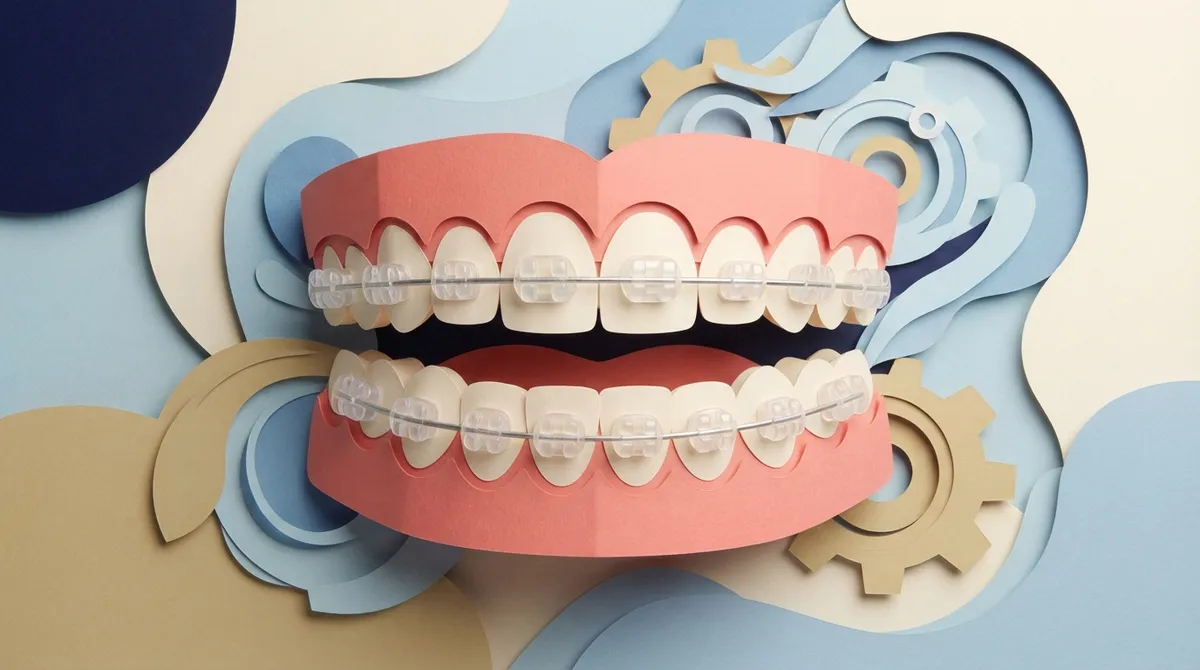
Clear braces usually mean ceramic or sapphire brackets that look tooth-colored instead of shiny metal. They connect to your teeth with a wire, just like traditional braces. The big difference is that they blend in much better with your natural smile.
Because they’re fixed in place, clear braces work all day, every day. You don’t have to remember to put them in or take them out. This makes them a great choice for people who might struggle with the discipline that removable options require. You can learn more about how these brackets work on our All About Braces page.
2. Understanding How Invisalign and Clear Aligners Work
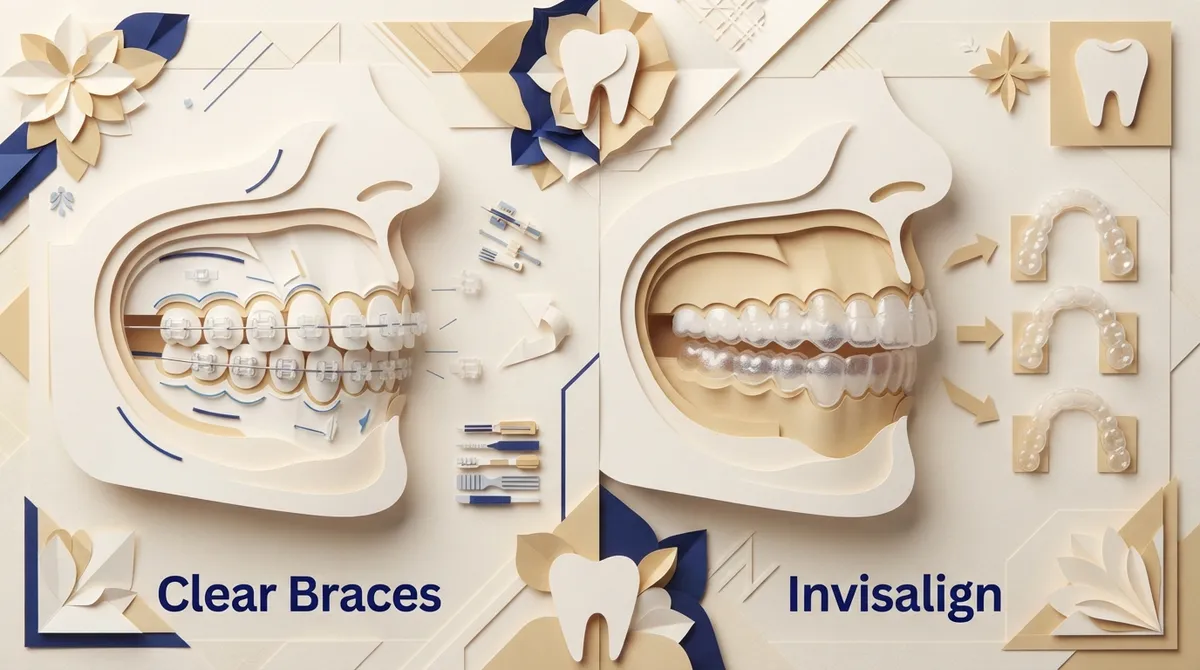
Invisalign is a brand name for a series of clear, removable trays. Each tray gently shifts your teeth a little bit before you switch to the next one. Since aligners have no metal or wires, most people barely notice them.
The catch is that aligners only work if you wear them enough. Most orthodontists recommend around 20 to 22 hours a day. If you keep taking them out to eat, snack, or “just for photos,” your treatment can slow down or stall. At Brockway Orthodontics, we also offer Spark™ Clear Aligners, which give patients an affordable clear aligner option with similar comfort and style benefits.
3. What Does the Research Actually Say
It’s easy to get lost in marketing claims, so let’s look at real evidence. A 2024 systematic review of 10 studies found no major difference in treatment time between clear aligners and fixed braces for mild-to-moderate crowding. However, the evidence was rated low certainty, meaning more research is still needed.
Another 2025 review looked at 15 trials involving over 1,000 patients. It found no big differences in treatment quality or speed for non-extraction cases. But for cases needing tooth extraction, fixed braces produced better results. This tells us that your specific case matters more than which brand name you choose.
Key Statistics Worth Knowing
- A 2024 umbrella review found clear aligners have an accuracy rate of about 55% to 82%, depending on the type of tooth movement needed.
- Aligners were less reliable for rotations greater than 15 degrees.
- Aligners were not effective for molar extrusion (moving a tooth downward) beyond 1.5 mm in the reviewed studies.
- A 2025 review of 21 randomized trials found lower plaque and gum inflammation scores with aligners, though overall evidence quality was limited.
4. Which One Handles Complex Cases Better
If your bite issue is simple, like mild crowding or small gaps, both options usually work well. But if you need bigger movements, like rotating a tooth a lot or correcting a deep bite, ceramic braces often win.
Fixed braces give your orthodontist more control over root movement and vertical positioning. This matters a lot for tricky cases, including those needing tooth extraction. Dr. Brockway can review your X-rays and bite pattern during your first visit to determine which option truly fits your needs.
5. Comparing Clear Braces and Invisalign Side by Side
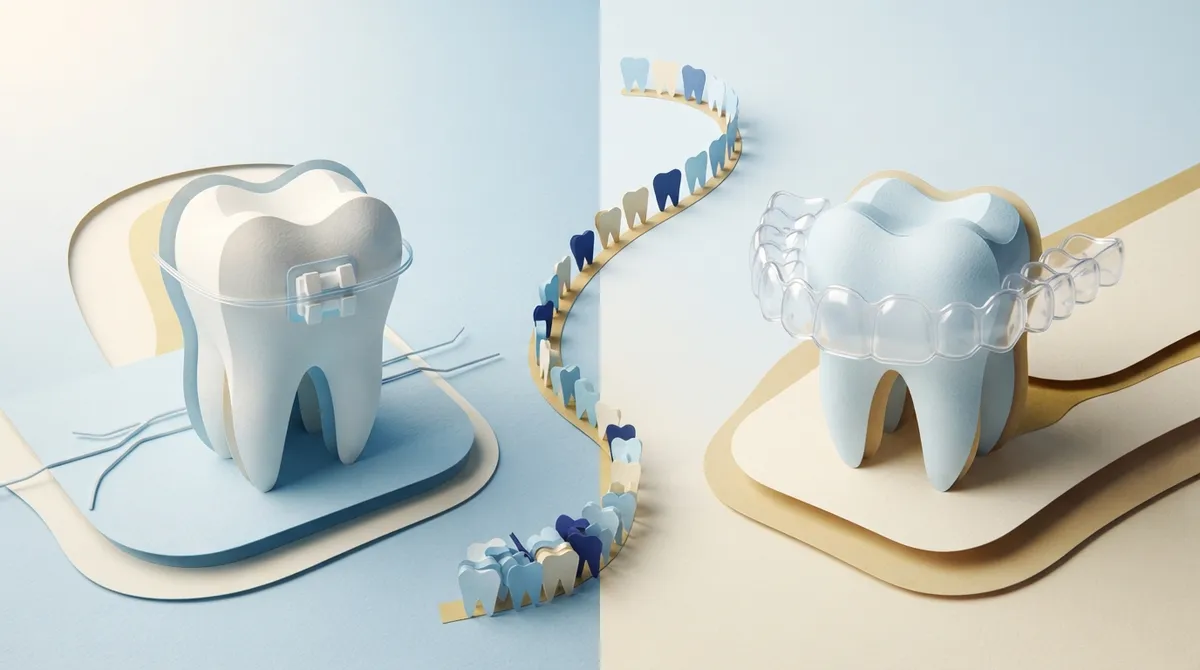
| Feature | Clear Ceramic Braces | Invisalign/Clear Aligners |
|---|---|---|
| Removable? | No, fixed in place | Yes, removable |
| Best for | Complex cases, rotations, extractions | Mild-to-moderate crowding and spacing |
| Visibility | Tooth-colored but still visible | Nearly invisible |
| Compliance needed | Low (always working) | High (20-22 hrs/day wear) |
| Eating restrictions | Some foods to avoid | Remove before eating |
| Oral hygiene | Requires care around brackets | Easier to brush and floss |
| Treatment duration | Similar for mild cases | Similar for mild cases |
6. Everyday Life With Each Option
Think about your daily habits before choosing. If you love snacking throughout the day, aligners mean taking them out and putting them back in constantly. Some people find this tedious, while others like the freedom to eat whatever they want.
Ceramic braces let you eat without removing anything, but you’ll need to avoid sticky or hard foods that can damage the brackets. Both options require good brushing habits. Our team can walk you through daily care tips no matter which path you choose.
7. Cost and Insurance Considerations
Cost is often a deciding factor for families and adult patients alike. Prices for both options can vary based on your case complexity and how long treatment takes. Many dental insurance plans offer partial coverage for both ceramic braces and clear aligners.
At Brockway Orthodontics, we work with patients to find financing and insurance options that fit their budget. We also offer Spark™ Clear Aligners as a more affordable alternative to some big-name aligner brands, without sacrificing quality of care.
8. Retainers Are Still Non-Negotiable
Here’s something that surprises a lot of patients: neither option eliminates the need for a retainer. Teeth naturally want to shift back over time, no matter how you straightened them. This is especially important for anyone who has experienced orthodontic relapse after previous treatment.
If you skipped wearing your retainer in the past and are seeing your smile shift again, you’re not alone. Many adults return to our office for retreatment. Sticking with your retainer schedule this time around will help protect your investment for good.
9. Steps to Decide What’s Right for You
- Schedule a consultation for a full exam, including X-rays and a bite assessment.
- Discuss your lifestyle honestly, including how disciplined you are with removable devices.
- Ask about the complexity of your case and whether extractions might be needed.
- Review the cost and financing options for both treatments.
- Talk about your timeline, especially if you have a big event like a graduation coming up.
- Choose the option that fits your comfort, budget, and treatment goals.
Every case is different, which is why a personalized plan matters so much. The American Dental Association also recommends working with a licensed professional to evaluate which treatment method truly fits your oral health needs. (Note: always verify with your provider before committing to a treatment plan.)
10. Why Local, Personalized Care Makes a Difference
Choosing an orthodontist isn’t just about picking a treatment type. It’s about finding someone who listens, explains your options clearly, and treats you like a person, not just a set of teeth. Dr. Brockway and her team pride themselves on building real relationships with patients throughout Clearwater and the surrounding Pinellas County area.
We use modern technology, including digital impressions and 3D imaging, to plan treatment with precision and comfort. This means fewer messy molds and a more accurate treatment plan from day one. We also offer same-day treatment options in certain cases, so you don’t have to juggle multiple appointments just to get started. You can browse our full range of orthodontic services to see everything we offer for kids, teens, and adults.
Curious what other patients think? You can visit us on Google — Brockway Orthodontics to read real reviews from families just like yours. You can also connect with us on Facebook or follow along on Instagram for smile transformations and helpful tips. For broader guidance on orthodontic standards, the Florida Association of Orthodontists is also a great resource.
Making Your Final Decision With Confidence
At the end of the day, there’s no single “best” choice between clear braces and Invisalign-style aligners. The right answer depends on your bite, your lifestyle, and your goals. Both options, when guided by a trained orthodontist, can lead to a smile you’ll be proud to show off.
If you’re ready to explore your options, our team would love to help. Whether you’re leaning toward ceramic braces, curious about Spark™ Clear Aligners, or simply unsure where to start, we’ll walk you through every step. Ready to get started? Book appointment online today and let’s find the perfect treatment plan for your smile. You can also contact us with any questions before your visit.
FAQs
Q: What is the difference between clear braces and Invisalign?
A: Clear braces are fixed, tooth-colored brackets connected by a wire, while Invisalign uses a series of removable clear trays. Clear braces work all the time since they can’t be taken out, while Invisalign depends on you wearing your trays consistently. Both can give great results, but they fit different lifestyles!
Q: Are clear ceramic braces more effective than Invisalign?
A: It really depends on your case! For mild-to-moderate crowding, research shows similar results between the two. But for more complex movements, like extractions or big rotations, ceramic braces often provide better control and predictability.
Q: Is Invisalign suitable for severe crowding or tooth extractions?
A: Invisalign and other clear aligners can struggle with very complex cases, especially those involving extractions or big rotations. Studies show fixed braces tend to offer shorter treatment time and better control in these trickier situations. Your orthodontist can help determine what your specific case needs.
Q: Do ceramic braces stain or break easily?
A: Ceramic brackets themselves resist staining well, but the elastic ties holding the wire can pick up color from foods like coffee or curry. They can also be a bit more fragile than metal brackets, so it’s smart to avoid hard or sticky foods during treatment.
Q: Will I need retainers after Invisalign or clear braces?
A: Yes, absolutely! No matter which treatment you choose, your teeth can shift back over time without a retainer. Wearing your retainer as directed is the best way to protect your beautiful new smile for years to come.
Our Service Area