Key Takeaways
-
Brush above and below the brackets using gentle circles angled toward the gumline for 2 minutes at least twice daily, and always after meals to prevent plaque buildup that causes swollen gums, cavities, and permanent white-spot marks.
-
Use an interdental brush daily to clean the narrow spaces beneath the archwire and around each bracket where regular toothbrushes cannot reach, selecting the correct size for comfortable fit without forcing.
-
Floss daily using a threader or orthodontic flosser to clean between teeth and under the wire by curving the floss in a 'C' shape and sliding it slightly under the gumline on each side.
-
Avoid sticky, sugary, and hard foods like caramel, popcorn, and apples bitten whole, as they cling to brackets and feed plaque bacteria or risk breaking brackets and bending wires.
-
Keep a portable braces cleaning kit in your bag with a travel toothbrush, toothpaste, and interdental brushes for quick cleanups when away from home, rinsing with water if you cannot brush immediately.
-
Wait about an hour after consuming acidic foods or drinks before brushing to avoid wearing down temporarily softened enamel, rinsing with plain water in the meantime instead.
If you have braces, you have probably stared at your smile in the mirror and wondered, “Is that a stray bit of lunch stuck on my bracket?” Trust me, you are not alone! Learning how to clean braces brackets is one of the most important skills you can pick up during orthodontic treatment. Brackets and wires create lots of tiny nooks where food and plaque love to hide.
The good news? It does not take fancy gear or a ton of time. It just takes the right tools, a gentle touch, and a steady routine. Clean braces help protect your gums, prevent cavities, and keep bad breath away. They also help you avoid the stubborn white marks that can show up around brackets when plaque sits too long.
In this friendly guide, we will walk through the exact steps, tools, and habits that keep your braces sparkling in 2026. Whether you are a teen starting out, a parent helping your child, or an adult balancing work and treatment, you will find simple tips here that really work. Let’s get those brackets clean!

Why Cleaning Your Braces Brackets Matters
Brackets are the little squares bonded to each tooth. The archwire runs through them like a track. While this setup moves your teeth beautifully, it also makes plaque removal harder than usual.
When plaque builds up around brackets, a few things can happen:
- Swollen or bleeding gums: Plaque irritates the gumline and causes inflammation.
- Tooth decay: Sugars and bacteria sit against the enamel and wear it down.
- Bad breath: Trapped food breaks down and creates odor.
- White-spot marks: These are early enamel damage that can become permanent around the bracket edges.
Nobody wants to take off their braces and find a ring of dull spots where the brackets used to be. A little daily effort now means a brighter, healthier smile later. If you want a refresher on the basics, take a peek at our All About Braces page.
The Tools You Need to Clean Braces Brackets
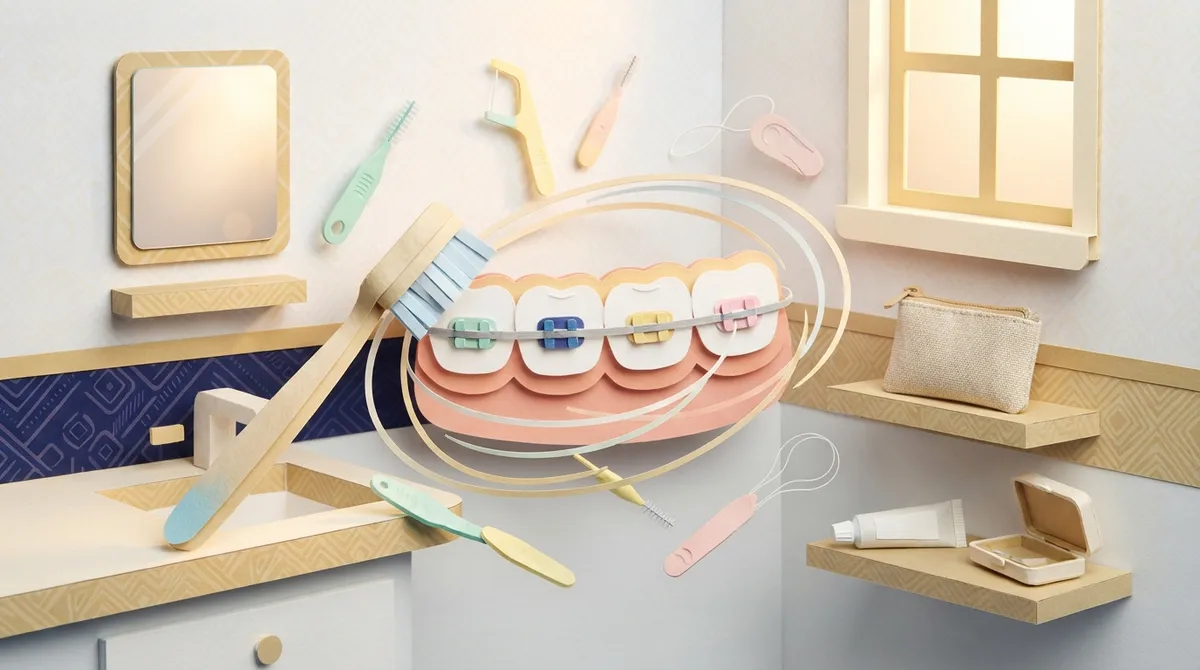
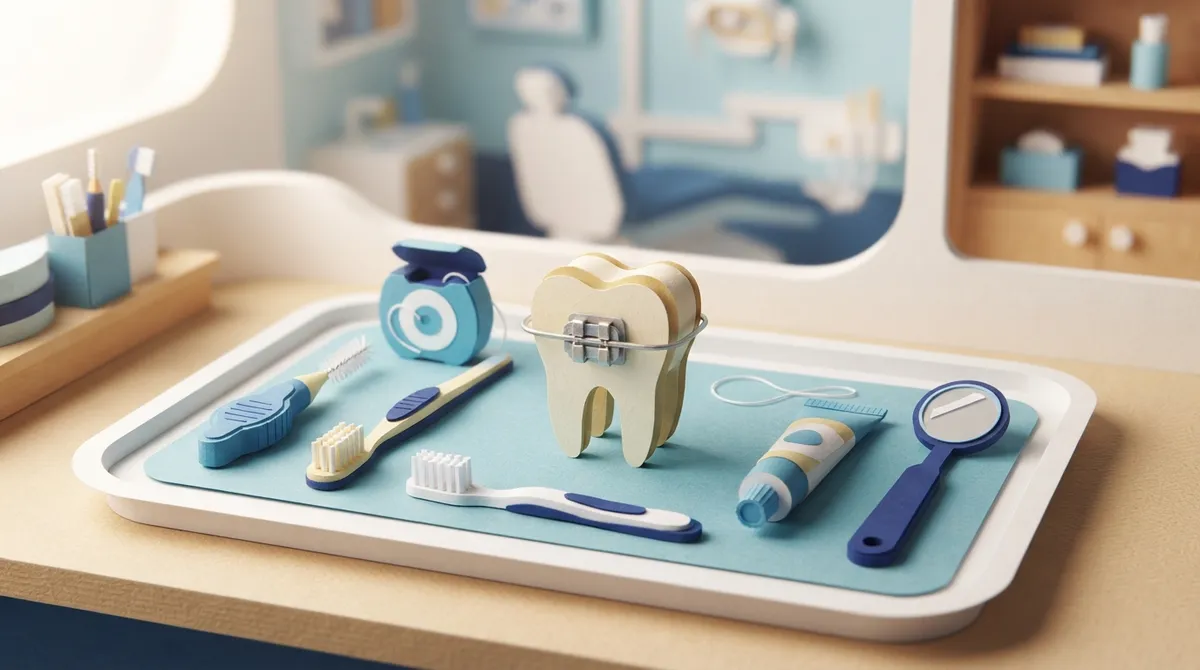
Think of this as your braces survival kit. You do not need everything on the market, just a few reliable helpers. Here is a simple breakdown:
| Tool | What It Does | How Often |
|---|---|---|
| Soft-bristled toothbrush (manual or electric) | Removes plaque from teeth, brackets, and gumline | At least twice daily |
| Fluoride toothpaste | Strengthens enamel and helps prevent decay | Every brushing |
| Interdental (interproximal) brush | Cleans around brackets and beneath the wire | Daily |
| Floss with a threader or orthodontic flosser | Cleans between teeth and under the archwire | Daily |
| Water flosser (optional) | Flushes away loose debris | As a helper, not a replacement |
| Small mirror | Lets you check for leftover food or plaque | After brushing |
A quick note on toothbrushes: whether you choose manual or electric, make sure the bristles are soft. The American Association of Orthodontists suggests replacing your toothbrush or brush head when it looks worn, or at least every three months. Bent bristles just do not clean as well around brackets.
How to Clean Braces Brackets Step by Step
Ready for the main event? Here is a simple routine you can follow every time you brush. Take your time, because rushing is how spots get missed.
- Rinse first. Swish water around your mouth to loosen food bits stuck in your braces.
- Add fluoride toothpaste. Use a pea-sized amount on a soft-bristled brush.
- Brush above the brackets. Angle the bristles toward the gumline and use small, gentle circles. Do not scrub hard.
- Brush below the brackets. Tilt the brush up and clean the area under the archwire the same way.
- Clean the brackets themselves. Brush straight on to the front of each bracket to sweep away plaque.
- Do not skip the insides and tops. Clean the tongue-side and chewing surfaces of every tooth.
- Use your interdental brush. Slide it gently between the wire and your teeth, and around each bracket.
- Floss. Use a threader or orthodontic flosser to clean between teeth and under the wire.
- Rinse and check. Look in the mirror for food or plaque still clinging to brackets or the gumline.
Want even more detail? Our guide on 7 Smart Steps to Brush Teeth With Braces Like a Pro breaks the technique down further.
How Long Should You Brush?
Aim for about two minutes each time. That feels long when you have braces, but it is the sweet spot. Try playing a favorite song or using a timer so you do not cut it short. Slow and steady wins here!
Using Interdental Brushes the Right Way
Interdental brushes look like tiny pipe cleaners, and they are fantastic for braces. They reach spots a regular toothbrush simply cannot, like the narrow space beneath the archwire.
Here are a few tips for getting the most from yours:
- Pick the right size. The brush should fit comfortably without forcing it. If it feels tight or hurts, go smaller.
- Move gently. Slide it in and out a few times beneath the wire and around each bracket.
- Use it daily. NHS guidance recommends interdental cleaning every day while wearing braces.
- Ask for a demo. Your orthodontist can show you the best size and angle during your visit.
Not sure which size fits you? Just ask at your next appointment. Our team loves showing patients hands-on tips, and if you are curious about what a first appointment is like, see Your First Visit.
Flossing With Braces Without the Frustration
Let’s be honest, flossing with braces can feel like a puzzle at first. But once you get the hang of it, it takes just a couple of minutes.
Try one of these options:
- Floss threaders: A small plastic loop that helps you slide regular floss under the archwire.
- Orthodontic flossers: These have a stiff end that threads through for you, so there is no fiddling.
- Water flosser: This is a great helper for flushing out debris, but it should not replace brushing or other between-teeth cleaning unless your dental professional says so.
Once the floss is under the wire, gently slide it up and down along the side of each tooth. Curve it into a “C” shape around the tooth and slip it slightly under the gumline. Then move on to the next one. For more tips, our post on How to Master Flossing With Braces Every Day is a handy read.
How Often Should You Clean Your Braces?
Great question! The short answer is: more often than you did before braces.
Here is a simple schedule many orthodontists suggest:
- Morning: Brush teeth and brackets thoroughly.
- After meals and snacks: Brush when you can, ideally for two minutes. The American Association of Orthodontists recommends brushing after meals or snacks and before bed.
- Night: A full routine with brushing, interdental brush, and floss.
Some NHS orthodontic guides even suggest toothpaste with at least 1,350 ppm fluoride and brushing up to three times daily. Always follow the specific plan your orthodontist gives you, since every smile and appliance is a little different.
A Quick Tip About Timing
If you have just had something acidic, like citrus fruit or soda, wait about an hour before brushing. Some NHS patient guides recommend this because acid can temporarily soften enamel, and brushing right away may wear it down. Rinse with plain water in the meantime.
What If You Cannot Brush Right Away?
Life happens. You are at school, at the office, or out with friends, and there is no sink in sight. Here is what to do:
- Rinse your mouth well with water to wash away loose food.
- Use a small interdental brush if you have one in your bag.
- Check for stuck bits in a mirror, like your phone camera.
- Brush properly as soon as you are able.
Keeping a mini braces kit in your backpack, purse, or desk drawer makes this super easy. Toss in a travel toothbrush, small toothpaste, and a few interdental brushes. Future you will be grateful!
Foods and Habits That Make Cleaning Easier
What you eat can make your cleaning job a breeze or a battle. Sticky, sugary foods cling to brackets and feed plaque bacteria. Hard foods can even snap a bracket or bend a wire.
Try to limit these:
- Frequent sugary snacks and sodas
- Caramel, taffy, and other sticky candies
- Popcorn, hard nuts, and ice
- Biting directly into apples or corn on the cob
Instead, enjoy softer, braces-friendly options and cut firm foods into small pieces. We have a full rundown in What Can You Eat With Braces? Your Friendly Food Guide, plus a handy list of foods to avoid with braces.
Common Mistakes When Cleaning Braces Brackets
Even the most dedicated brusher can slip into a few bad habits. Here are the ones we see most often:
- Brushing too hard. Hard scrubbing can irritate gums and wear enamel. Gentle circles do the job.
- Skipping the gumline. This is where plaque loves to hide around brackets.
- Only cleaning the front. The tongue-side and chewing surfaces matter just as much.
- Relying only on a water flosser. It is a helper, not a replacement.
- Forgetting your dental visits. Regular check-ups and professional cleanings should continue during treatment.
For a deeper look, check out our article on 5 Brushing Mistakes That Wreck Your Braces Results.
What to Do If a Bracket or Wire Comes Loose
Sometimes a bracket pops off or a wire starts poking. It is common and usually fixable. Do not try to repair it yourself with household tools. Instead:
- Rinse your mouth gently and avoid chewing on that side.
- Cover a sharp wire end with orthodontic wax if you have some.
- Call your orthodontist so they can schedule a quick fix.
Not sure whether it counts as an emergency? Our guide on Broken Bracket vs. Poking Wire can help you decide, and the Emergency Orthodontist in Clearwater page explains how we can help fast.
Tips for Parents, Teens, and Adults
Every age group has its own braces hurdles. Here are a few friendly pointers:
For Parents Helping Kids
Make it a team effort! Turn brushing into a fun routine with a favorite song or a sticker chart. Check their work in a mirror together, especially for younger kids. Our post on Orthodontics for Kids: What Every Parent Should Know has more ideas.
For Teens and Young Adults
Busy schedules and social plans make it easy to skip steps. Keep a travel kit in your bag and set phone reminders. A clean, bright smile will look amazing in all those graduation and event photos!
For Adult Professionals
Between meetings and lunches, cleaning can feel tricky. Keep a small kit in your desk, rinse after meals, and brush before bed. Many adults also love how discreet options like Spark™ Clear Aligners make cleaning simpler, since you can remove them to brush and floss normally.
Keeping Your Smile Healthy All Treatment Long
Cleaning your braces brackets is not a one-time chore. It is a daily habit that pays off with a healthier, brighter smile when your braces come off. Consistency really is the secret sauce.
Remember to keep up with your regular dental cleanings, too. Your dentist can spot early trouble spots, and your orthodontist can adjust your plan if needed. If you want more ongoing tips, our guide on How to Clean Your Braces Properly for a Healthy Smile is a great companion read. You can also learn more about oral health standards from the American Dental Association.
Conclusion: Your Brightest Braces Journey Starts Today
Learning how to clean braces brackets may feel like a lot at first, but it quickly becomes second nature. Brush gently above and below the wire, use an interdental brush daily, floss with a threader, and check your work in the mirror. Add in smart snack choices and regular dental visits, and you are set for a healthy, confident smile.
At Brockway Orthodontics in Clearwater, Dr. Brockway and our team are always happy to show you the right techniques, answer your questions, and cheer you on every step of the way. Curious how others feel about their care? Visit us on Google — Brockway Orthodontics to see what our patients say.
Ready to start your journey or need a little extra guidance? Book your appointment online and let’s get you smiling with confidence!
FAQs
Q: How do you clean around braces brackets and wires?
A: Use a soft-bristled brush with fluoride toothpaste and angle it toward the gumline. Brush above and below the wire with small, gentle circles, then use an interdental brush to clean beneath the archwire and around each bracket. Finish with floss and a quick mirror check!
Q: How often should I brush my teeth with braces?
A: Aim to brush at least twice a day, and ideally after meals and snacks, for about two minutes each time. Your orthodontist may suggest a specific schedule, so follow their advice for the best results.
Q: Can a water flosser replace flossing with braces?
A: A water flosser is a wonderful helper for flushing out loose food, but it should not replace brushing or other between-teeth cleaning unless your dental professional says it is okay. Think of it as a bonus tool in your routine.
Q: How can I prevent white spots around my brackets?
A: Brush thoroughly around every bracket, use fluoride toothpaste, and clean between teeth daily so plaque does not sit on the enamel. Limiting sugary snacks and keeping up with regular dental visits also helps protect your smile.
Q: What should I do if food is stuck in my braces and I cannot brush right away?
A: Rinse your mouth well with water to loosen the food, and use a small interdental brush if you have one handy. Then brush properly as soon as you can. Keeping a mini braces kit in your bag makes this so much easier!
Our Service Area