Key Takeaways
-
Clear aligners work only when worn, so you typically need to keep them in 20 to 22 hours a day, which makes daily wear discipline the central challenge compared to always-on braces.
-
Put aligners back in immediately after every meal, brushing and flossing first, so the 'take out, then put back in' moment becomes an automatic habit.
-
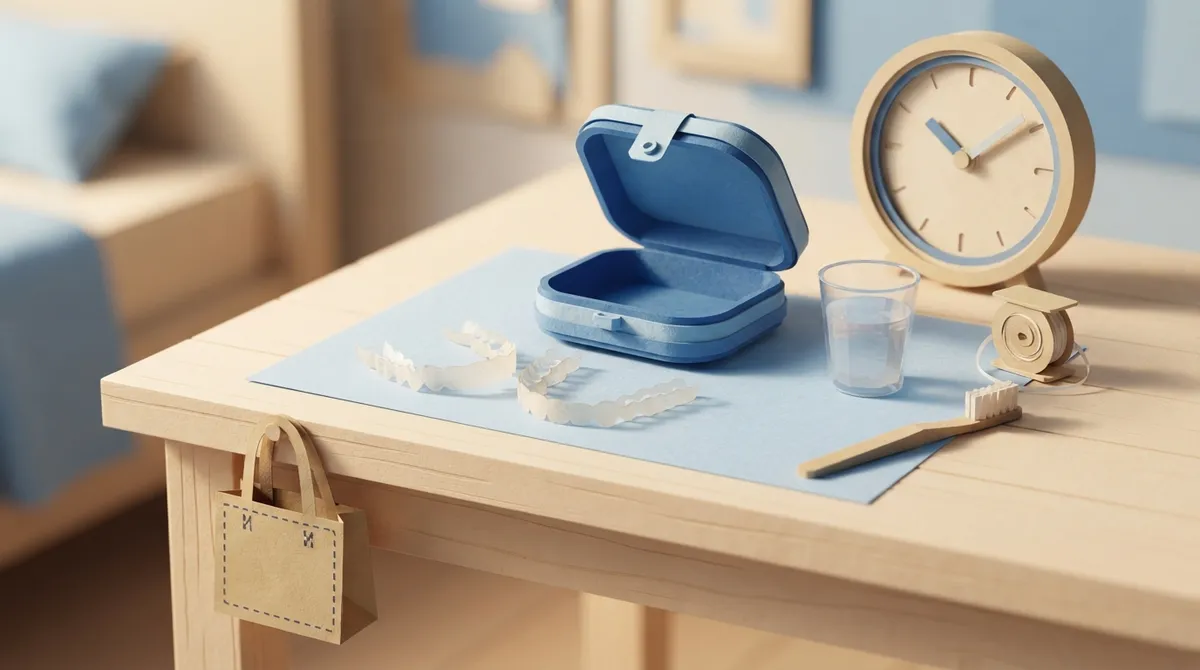
Always store aligners in their case rather than wrapping them in a napkin, since trays are often thrown away with napkins or lost, and keep a backup kit of case, toothbrush, and floss at work or in your bag.
-
Stick to plain water while aligners are in, since coffee, tea, juice, or snacking can trap stains and sugar against your teeth and lead to more frequent removal.
-
Never skip ahead to the next tray on your own; if you fall behind or a tray stops fitting, contact your orthodontist so they can adjust the plan safely.
-
If daily routines are a real struggle, braces may be the better fit, since they stay on your teeth and leave no daily wear decision to make.
Let’s start with a little honesty: nobody has ever forgotten to wear their braces. Because braces are glued to your teeth, they are on your teeth, all day, every day. Clear aligners are a different story. They pop in and out, which is wonderful for eating and brushing, but it also means you are the one in charge of keeping them in place. So, do clear aligners require more self-discipline than traditional braces? In most cases, yes.
That does not mean aligners are a bad choice. Far from it. Millions of teens and adults love them, and they can work beautifully when the wear routine fits the person. The key is knowing what the routine looks like before you start. In this friendly guide, we’ll walk through what daily life with aligners really involves, what happens when wear time slips, and how to set yourself up for success. We’ll also share a few habits that make the whole thing feel easy instead of stressful.

The Short Answer: Yes, Aligners Ask More of You Each Day
Clear aligners work only while they are in your mouth. Braces work around the clock whether you think about them or not. That one difference explains almost everything about the self-discipline question.
The American Association of Orthodontists (AAO) says aligners are typically worn 20 to 22 hours a day, or as your orthodontist directs. That leaves just a couple of hours for eating, drinking anything other than water, and brushing and flossing. It sounds simple on paper. In real life, it takes a bit of planning.
Think of it like a daily vitamin, but with a few more steps. You need to remember to put the aligners back in, keep them clean, store them safely, and switch to the next set on schedule. None of it is hard. It just needs to become a habit.

What Does a Day With Clear Aligners Actually Look Like?
Here is the basic rhythm most patients follow. Your orthodontist will give you exact instructions, because every treatment plan is a little different.
- Morning: Take out your aligners, brush and floss, and have breakfast. Put the aligners back in as soon as you finish.
- Midday: Remove them for lunch, then brush or at least rinse before putting them back. Keep your case handy so they never end up wrapped in a napkin.
- Afternoon: Stick with water while the aligners are in. Sipping coffee, tea, or juice with them in can trap stains and sugar against your teeth.
- Dinner: Take the aligners out, enjoy your meal, brush and floss, and pop them right back in.
- Bedtime: Wear them overnight. Sleeping hours count toward your daily total, which makes the 20 to 22 hours much easier to reach.
Notice how the day is built around meals. Each time you eat, there is a small “take out, then put back in” moment. Those moments are where most of the discipline lives.
Where Self-Discipline Really Comes In
It is not only about wearing the trays. Good aligner care has several moving parts, and each one takes a little attention.
- Wear time: Reaching your daily hours, not just most days but nearly every day.
- Putting them back in: Making it automatic after every meal or snack.
- Changing trays on schedule: Following the exact timing your orthodontist gives you, rather than rushing ahead or waiting too long.
- Keeping them clean and safe: Using a case, not napkins or pockets, so trays do not get lost, crushed, or chewed by a curious pet.
- Oral hygiene: Brushing and flossing before the aligners go back in, so food is not trapped against your teeth.
- Showing up: Attending your checkups so your orthodontist can confirm your teeth are moving as planned.
If that list feels like a lot, take a breath. Most people say the routine becomes second nature within a couple of weeks. It is just like learning to grab your keys before leaving the house.
Why Wear Time Matters So Much
Here is the important part. Aligners move teeth only while they are being worn. When the trays are sitting in a case, your teeth are not getting the gentle, steady pressure they need.
Inconsistent wear can slow your progress, stretch out your treatment time, or keep your teeth from following the planned path. If your teeth fall behind, a tray may not fit the way it should. Your orthodontist might ask you to wear a set a little longer or adjust the plan to get things back on track.
If you want a deeper look at this topic, our article on why aligner wear time affects treatment progress in 2026 explains how those daily hours add up. You can also read our 7 facts about how many hours a day aligners should be worn for a quick refresher.
How Do Aligners Compare to Braces on Day-to-Day Effort?
Braces are not effortless either. They come with their own list of to-dos, such as careful brushing around brackets, avoiding sticky foods, and wearing rubber bands if your orthodontist prescribes them. The difference is where the responsibility sits.
| Everyday Factor | Clear Aligners | Fixed Braces |
|---|---|---|
| Wear time | Patient must wear trays about 20 to 22 hours daily | Always on the teeth, no daily wear decision |
| Eating and drinking | Remove trays for meals and drinks other than water | No removal, but some foods are off limits |
| Brushing and flossing | Easier access to teeth when trays are out | Takes extra time around brackets and wires |
| Risk of forgetting | Higher, since trays can be left out or misplaced | Very low, since the appliance cannot be removed |
| Tray or part changes | Patient follows a set tray-change schedule | Orthodontist adjusts wires at visits |
| Other cooperation | Checkups and clean storage habits | Checkups, hygiene, and any prescribed elastics |
So, aligners call for more day-to-day self-management, while braces call for more careful cleaning and food choices. Neither is “easier” for everyone. It depends on which kind of routine suits you.
If you are weighing both options, our guide on braces vs. clear aligners in Clearwater and this helpful piece on how to compare responsibilities with braces and aligners can help you decide.
What Does the Research Say About Real-World Wear?
It helps to know you are not alone if wear time feels tricky. A 2021 retrospective cohort study looked at 2,644 clear-aligner patients. Using app engagement and self-reported wear time, the researchers sorted patients into three groups:
- 36.0% met the study’s definition of full compliance.
- 38.3% were fairly compliant.
- 25.7% were poorly compliant.
In the same group, 45.5% said they wore each aligner for 22 hours a day throughout treatment, while 17.7% fell short of that target for more than 75% of their aligners.
These numbers come from one study and rely partly on self-reporting, so they should not be treated as rates for everyone. The big takeaway is simple and kind: staying consistent is genuinely hard for many people, and that is normal. It also shows why choosing the right treatment for your lifestyle matters so much.
The study also noticed links between compliance and certain patient traits, but that does not prove any trait causes better or worse habits. What matters far more is your own routine and the instructions your orthodontist gives you.
Who Tends to Do Well With Aligners?
Instead of guessing from age or personality, think about how you handle small daily routines. Aligners often fit people who can say yes to most of these:
- I can build simple habits and stick with them.
- I don’t mind carrying a small case and a travel toothbrush.
- I’m comfortable taking aligners out for meals and putting them back in right away.
- I can follow a tray schedule without skipping ahead.
- I’ll show up for checkups and speak up if something feels off.
If that sounds like you, aligners could be a great match. If you are not sure, that is perfectly okay. A good orthodontist can talk through your lifestyle and help you decide.
What About Teenagers?
Parents often ask whether teens can handle aligners. Many can, especially with a little support at home. A gentle reminder system, a spot for the case in the backpack, and a quick check-in after school can make a big difference. Our guides on how to help teens remember aligner wear time and how to care for aligners during a school day are full of practical ideas.
Every teen is different, though. Some do wonderfully with aligners, while others do better with braces that simply stay put. Dr. Brockway will help you and your teen choose what fits.
What About Busy Adults?
Adult professionals often love how discreet aligners are, especially for meetings and photos. The challenge is that work days are full of coffee, snacks, and surprise lunches. Keeping a case in your bag and a toothbrush in your desk drawer can save the day. Our tips for fitting clear aligners into a busy adult schedule walk through exactly how to do it.
10 Easy Habits That Make Aligner Discipline Feel Natural
Good news: self-discipline here is mostly about smart systems, not willpower. Try these friendly habits.
- Tie it to meals. Make “finish eating, brush, aligners in” one single routine.
- Always use the case. Never wrap trays in a napkin. Napkins end up in the trash, and so do aligners.
- Set phone reminders. A gentle alarm after lunch or snack time can be a lifesaver at first.
- Keep a backup kit. A travel toothbrush, floss, and case in your bag, car, or desk means no excuses.
- Drink water, not much else. It keeps trays clear and cuts down on removing them for every sip.
- Plan snacks. Fewer snacking moments mean fewer times the trays are out.
- Check your fit. Notice if a new tray feels very different, and tell your orthodontist if something seems off.
- Mark your tray-change dates. Put them on a calendar so you never lose track.
- Keep trays away from pets. Dogs love chewing aligners. A closed case on a high shelf is the safest spot.
- Reward yourself. Celebrate each milestone, like finishing a set or reaching a halfway point. Progress deserves a little cheer.
Cleaning matters too. A simple daily routine keeps your trays fresh and clear. Our friendly guide on how to clean clear aligners covers the basics, and our post on why hot water can damage clear aligners will help you avoid a common mistake.
What If You Forget or Fall Behind?
It happens to everyone, so please don’t beat yourself up. If you forgot to wear your aligners for a few hours, put them back in and carry on with your routine. One short slip usually is not a disaster, but regular slips can add up.
The best move is to be honest with your orthodontist. If a tray stops fitting well or your teeth are not tracking the way the plan expects, your care team can tell you what to do next. That might mean wearing the current tray a bit longer or adjusting the treatment plan. Please do not skip ahead to the next tray on your own, since that can make things worse. If you are curious about why that is, read why not to skip ahead to a new aligner tray.
Regular checkups are your safety net. They give your orthodontist a chance to catch small issues early. If you want to know why those visits are so valuable, take a look at our article on why orthodontic checkups matter so much.
When Braces Might Be the Better Fit
Here is a gentle truth: if you already know that daily routines are a struggle, braces may take a lot of pressure off. Since they stay on your teeth, there is nothing to remember, nothing to lose, and nothing to leave on the lunch table.
Braces can also be a smart pick for certain bite and alignment needs. Your orthodontist looks at the full picture, including how your teeth need to move, and recommends the option that fits both your smile goals and your lifestyle. For help weighing this out, read which is right for you: clear aligners vs. braces or our friendly look at orthodontic options for people who forget removable appliances.
One more thing to remember: retainers are removable too, and they also take consistency. If you’ve finished treatment before and your teeth have shifted, you are not alone. Our article on orthodontic relapse warning signs can help you spot the signs.
How Brockway Orthodontics Helps You Succeed
At Brockway Orthodontics in Clearwater, Florida, we believe the right treatment is the one you can actually enjoy. Dr. Brockway takes time to listen to your daily routine, your worries, and your dreams for your smile. Then she helps you choose between Spark™ Clear Aligners, metal braces, or ceramic (clear) braces based on what fits you best.
Our team explains everything in a friendly, easy-to-follow way, so you know exactly what to expect and how to care for your appliance. Digital impressions mean no messy molds, and 3D imaging helps us plan your treatment with care. If you want to see what other families think, you can read Brockway Orthodontics reviews on Google.
To learn more about the aligner option we offer, visit our page on Spark™ Clear Aligners, or explore our orthodontic services to see everything available for kids, teens, and adults. For general oral health guidance, the American Dental Association is another trustworthy resource, and you can find more about orthodontic care across the state through the Florida Association of Orthodontists.
The Bottom Line
So, do clear aligners require more self-discipline? Generally, yes. Because you can take them out, you are the one who keeps them in. That means 20 to 22 hours a day, putting them back after meals, following your tray schedule, and keeping up with cleaning and checkups.
But “more discipline” does not mean “hard.” With a few simple habits and a supportive team, most people settle into the routine quickly. And if you decide a set-it-and-forget-it approach suits you better, braces are a wonderful choice too. The best treatment is the one that fits your life and gets you to a smile you love.
Ready to talk it through? Book your appointment online and let Dr. Brockway help you find the right path, or contact us with any questions. We would love to meet you.
FAQs
Q: How many hours a day should I wear clear aligners?
A: Most patients wear their aligners about 20 to 22 hours a day, or exactly as their orthodontist directs. That leaves a little time for meals, drinks other than water, and brushing and flossing. Your exact schedule can vary by treatment plan, so always follow your own instructions.
Q: What happens if I forget to wear my aligners for a few hours?
A: A short slip is usually not a big deal. Just put them back in and get back on track! If it happens often, treatment can slow down or your teeth may not follow the plan, so let your orthodontist know and they will tell you what to do next.
Q: Can I eat or drink with clear aligners in?
A: You can drink plain water with aligners in, but you will want to take them out for meals and for any other drink. Eating or sipping with them in can trap food and sugar against your teeth and may damage the trays. Brush and floss before putting them back in.
Q: Are clear aligners harder to manage than braces?
A: They are not harder, just different. Aligners need more daily self-management because you remove and replace them, while braces stay put but need careful cleaning and food choices. The better fit depends on which routine feels more natural to you.
Q: What should I do if my aligners stop fitting or my teeth are not tracking?
A: Reach out to your orthodontist right away rather than skipping ahead to the next tray. They may suggest wearing the current tray a bit longer or adjusting your plan to get you back on track. Checking in early keeps small bumps from turning into big delays.
Our Service Area