Key Takeaways
-
A deep bite means the upper front teeth overlap the lower front teeth vertically by more than about one-third of the lower teeth, though diagnostic cutoffs vary, so a professional exam is the best way to confirm it.
-
A mild deep bite may never cause problems, but a more pronounced one can lead to tooth wear, sensitivity, gum recession, or irritation where lower teeth contact the gums or roof of the mouth.
-
Deep bites come from tooth position, jaw growth, or both, and factors like inherited traits, tooth shape, habits, and loss of back tooth support can contribute.
-
Watch for signs such as hidden lower front teeth, chipped or worn teeth, sensitivity to hot or cold, sore gums or palate, and difficulty biting certain foods.
-
Treatment options include traditional braces, ceramic braces, clear aligners in selected cases, and bite-opening appliances, with jaw surgery reserved for severe skeletal cases.
-
Some relapse can occur after treatment, so wearing your retainer as directed by your orthodontist is essential for keeping your results stable over time.
Ever looked in the mirror, smiled wide, and noticed that your lower front teeth seem to vanish behind your upper ones? If so, you may be wondering, what is a deep bite, and is it something to worry about? You are not alone. Many kids, teens, and adults ask this exact question, and the good news is that the answer is friendly and reassuring.
A deep bite, also called a deep overbite, happens when the upper front teeth cover too much of the lower front teeth. Some overlap is perfectly healthy. The trouble starts when the overlap goes beyond what is normal. In this guide, we will compare a deep bite with a normal bite, explain what causes it, and walk through your treatment options in simple terms. Let’s dive in!
What Is a Deep Bite? A Simple Definition
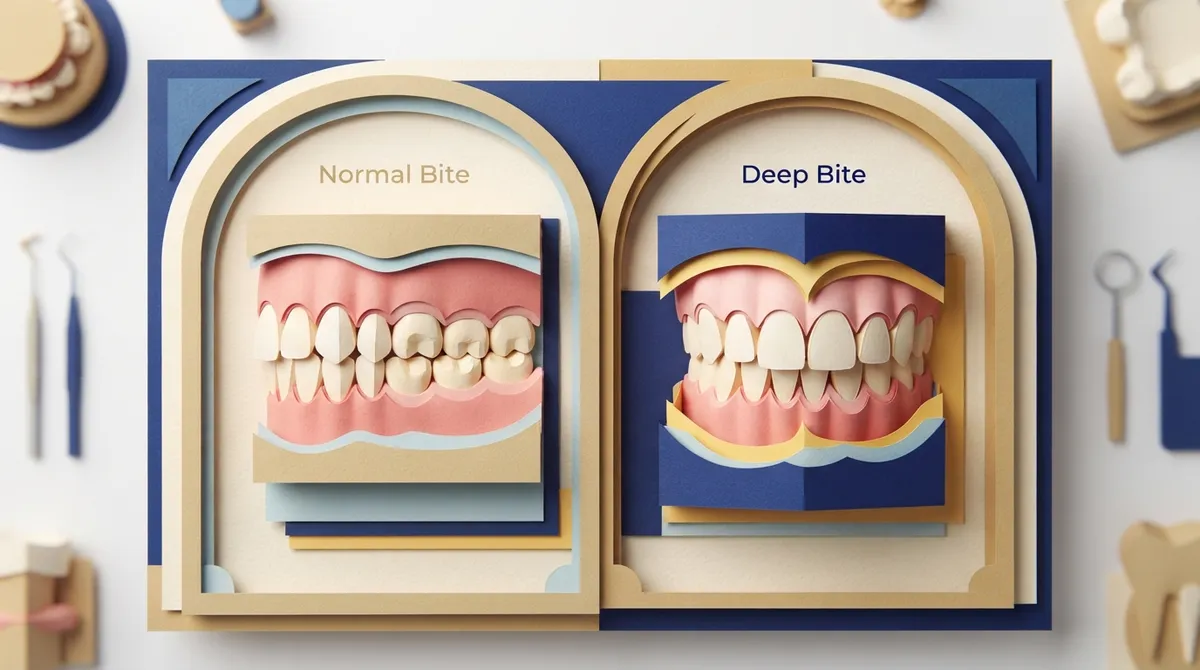
A deep bite is a bite pattern where the upper front teeth overlap the lower front teeth too much in the vertical direction. Think of your top teeth as a roof and your bottom teeth as a floor. In a deep bite, the roof hangs too far down over the floor.
A commonly used clinical guide is overlap of more than one-third of the lower front teeth. Still, diagnostic cutoffs vary, which is why an orthodontic exam matters. Your orthodontist looks at the whole picture, not just one number.
Here is the quick answer for anyone skimming: a deep bite is an excessive vertical overlap of the upper front teeth over the lower front teeth. It can come from tooth position, jaw growth, or both.
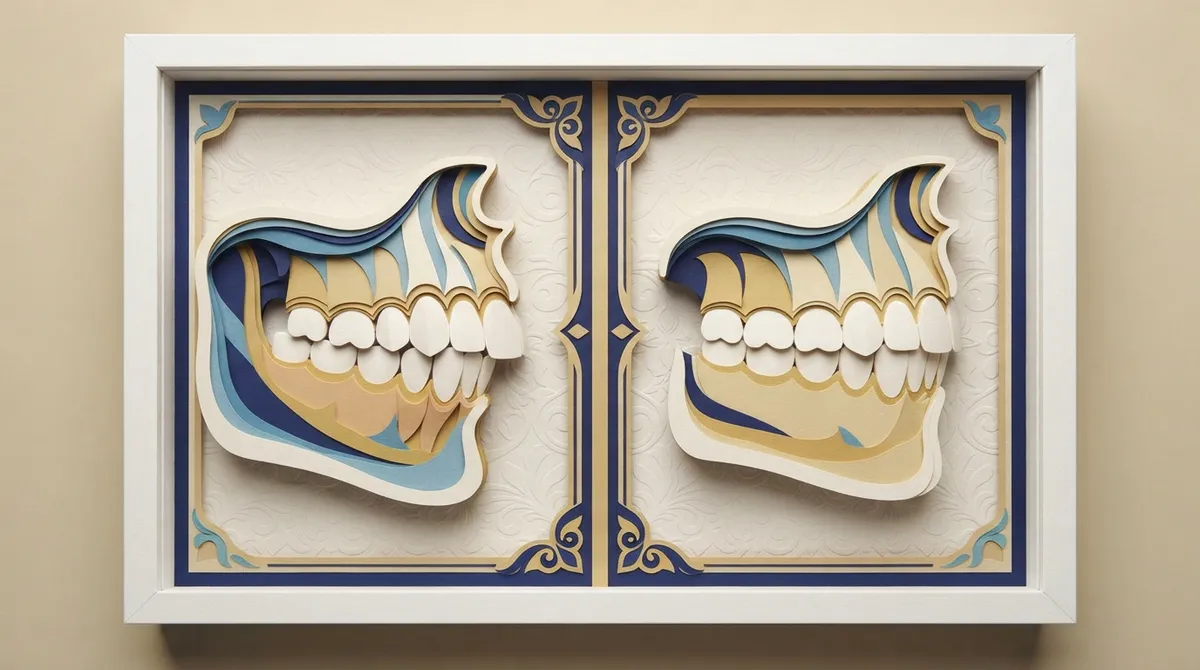
Deep Bite vs. Normal Bite: Side-by-Side Comparison
The easiest way to understand a deep bite is to compare it with a healthy bite. A small amount of overlap is normal and even helpful. Here is how the two stack up.
| Feature | Normal Bite | Deep Bite |
|---|---|---|
| Vertical overlap | Upper teeth cover a small part of lower teeth | Upper teeth cover more than about one-third of lower teeth |
| Lower front teeth visibility | Mostly visible when you smile | Often hidden behind upper teeth |
| Tooth wear risk | Low | Higher in more pronounced cases |
| Gum or palate contact | None | Lower teeth may touch the gums or roof of the mouth |
| Biting and chewing | Comfortable and balanced | May feel limited or uneven |
| Need for treatment | No | Depends on severity and symptoms |
Notice that a deep bite is not always a problem. Some people live happily with a mild deep bite and never have symptoms. The key is having it checked so you know where you stand.
How Common Is a Deep Bite?
If you have one, you are in good company. A U.S. population study cited in a systematic review found overbite of at least 5 mm in roughly 15% to 20% of people, depending on age group. Another review reported that published estimates range from 11.8% to 36.7%, mostly because studies use different definitions. A global review of permanent teeth reported a pooled deep-overbite prevalence of about 21.98%.
The takeaway? A deep bite is one of the more common bite patterns orthodontists see. Roughly one in five people may have some degree of it.
What Causes a Deep Bite?
Deep bites do not have just one cause. They usually come from a mix of factors. Orthodontists often group them into three types.
Dental Deep Bite
This type comes from the position of the teeth themselves. The front teeth may have grown in too far, or the back teeth may not have grown in far enough. The jaws can be a normal size and shape.
Skeletal Deep Bite
Here, the jaw growth pattern plays the main role. The upper and lower jaws may not line up well, which pushes the teeth into a deep overlap.
Combined Deep Bite
Many people have a little of both. Tooth position and jaw growth work together to create the bite.
Other contributing factors may include:
- Inherited traits: Bite patterns often run in families.
- Tooth shape and size: The form of the front teeth can affect how they overlap.
- Habits: Certain habits may play a role in some cases.
- Loss of back tooth support: When back teeth are missing or worn down, the bite can close deeper.
Signs You Might Have a Deep Bite
Some people have no symptoms at all. Others notice a few clues. Here are common signs to look for.
- Hidden lower teeth. When you bite down, your lower front teeth barely show.
- Worn or chipped teeth. Extra contact can wear down front teeth over time.
- Tooth sensitivity. Worn enamel may cause discomfort with hot or cold foods.
- Sore gums or roof of the mouth. In some cases, the lower teeth press into the gums behind the upper teeth or the palate.
- Gum recession. Heavy contact may contribute to gums pulling back.
- Biting difficulty. Some people find it hard to bite into certain foods comfortably.
A quick note on jaw pain: it may show up alongside a deep bite, but the research we reviewed does not prove that a deep bite directly causes jaw joint problems. If your jaw hurts, it is worth a conversation with your orthodontist or dentist.
Can a Deep Bite Cause Problems?
Sometimes yes, and sometimes no. A mild deep bite may never cause trouble. A more pronounced one can lead to real wear and tear.
One 2023 review looked at palatal impingement, where lower teeth touch the roof of the mouth, and at non-traumatic tooth contact. It found prevalence ranges of 8.4% to 51.5% and 5.9% to 15.9%, respectively. Those wide ranges reflect different groups of patients and different definitions, but they show that contact problems do happen in some deep bite cases.
That is why orthodontists check not only how deep the overlap is, but also whether the teeth are touching the gums or palate and how the whole bite fits together.
How Is a Deep Bite Diagnosed?
Diagnosis starts with a simple exam. During your visit, your orthodontist will:
- Measure how much your upper teeth cover your lower teeth.
- Check your gums and the roof of your mouth for contact or irritation.
- Look at how your teeth and jaws fit together.
- Review facial and jaw relationships.
If needed, imaging or other records may be used to plan treatment. At Brockway Orthodontics, we use modern tools like digital impressions and 3D imaging instead of messy molds, which makes planning more precise and a lot more comfortable. Curious about what the first appointment feels like? Take a peek at Your First Visit to see what to expect.
Deep Bite Treatment Options Compared
Here is where things get exciting. Treatment is not one-size-fits-all. Your plan depends on the cause, how severe the bite is, your age, and whether you are still growing. Orthodontic correction may involve moving the front teeth up (intrusion), moving the back teeth down (extrusion), changing the angle of the front teeth, or a mix of these.
| Option | How It Helps | Good For |
|---|---|---|
| Traditional braces | Reposition teeth with brackets and wires to open the bite | Teens and adults, including more complex bites |
| Ceramic (clear) braces | Work like metal braces with a more discreet look | Teens and adults who want a subtle option |
| Clear aligners | Move teeth gradually with a series of removable trays | Selected cases based on the bite pattern |
| Bite-opening appliances | Help guide jaw and tooth positions | Growing kids and teens, or specific bite needs |
| Orthodontics plus jaw surgery | Coordinates tooth movement with jaw correction | Selected severe skeletal cases |
Braces for a Deep Bite
Braces are a trusted way to correct many deep bites. They give your orthodontist precise control over tooth movement. If you want a closer look at how this works, read How Do Braces Fix a Deep Overbite? You can also explore All About Braces to learn about metal and ceramic options.
Clear Aligners for a Deep Bite
Can clear aligners fix a deep bite? In many selected cases, yes. Whether aligners are a good fit depends on the cause and severity of your bite, which is why a personal exam comes first. Brockway Orthodontics offers Spark™ Clear Aligners, an affordable, nearly invisible option that many teens and adults love for its comfort and flexibility. If you are weighing your choices, see Clear Aligners vs. Braces: Which One Is Right for You?
When Surgery Enters the Picture
In selected severe skeletal cases, orthodontic treatment may be coordinated with jaw surgery. This is not common, and not every deep bite needs it. Your orthodontist will tell you honestly whether it makes sense for you.
Treatment Needs by Age and Life Stage
A deep bite looks a little different depending on who has it. Here is how care often plays out for different groups.
- Kids and young children: Early checkups can spot bite patterns while jaws are still growing. Learn more about Early Treatment and why timing matters.
- Teens: Growth can help guide the bite. Braces and clear aligners both work well here. See our Adolescent Treatment page for details.
- Adults: Adults can absolutely correct a deep bite. Treatment may take a different approach since growth is complete. Visit Adult Treatment to learn more.
- Retreatment patients: If your bite shifted after earlier braces, a fresh look can help. Retainers play a big role in keeping results, so check out our guide to Retainers.
How Long Does Treatment Take, and Will It Last?
Treatment time varies from person to person. It depends on how deep the bite is, what is causing it, and the type of treatment you choose. Your orthodontist can give you a personal estimate after your exam.
As for staying power, one systematic review of deep-bite correction reported average overbite measurements of 5.3 mm before treatment, 2.6 mm right after, and 3.4 mm at long-term follow-up. That means some relapse can happen. The review also noted limits in the quality of the available evidence. The lesson? Wearing your retainer as directed is a smart move to protect your results.
Does a Deep Bite Always Need Treatment?
Not always. If your deep bite is mild and causes no wear, soreness, or other trouble, you may not need treatment right away. Your orthodontist can monitor it over time.
Treatment is more likely to be recommended when there is tooth wear, gum or palate irritation, or a bite that affects how you chew. Many people also choose treatment simply because they want a smile that looks and feels its best, and that is a perfectly good reason too.
Ready to Check Your Bite?
Dr. Brockway takes the time to listen to your goals and explain your options in plain, friendly language. Our team serves kids, teens, and adults, and we love helping families feel confident about their smiles. If you want to learn more about the doctor behind the care, Meet Dr. Brockway. You can also read what neighbors say about us when you visit us on Google — Brockway Orthodontics.
For general information on oral health and bite care, the American Dental Association and the Florida Association of Orthodontists are helpful, trusted resources.
Final Thoughts
So, what is a deep bite? It is simply too much vertical overlap between your upper and lower front teeth. It may be harmless or it may lead to wear and irritation, which is why a quick evaluation is worth your time. The sooner you know what is going on, the more options you have.
Whether you are a parent wondering about your child’s smile, a teen planning for graduation photos, or an adult ready for a change, we are here to help. Book your free consultation online and let’s talk about your bite, your goals, and the best path to a smile you love. You can also contact us with any questions.
FAQs
Q: What is considered a deep bite?
A: A deep bite is when your upper front teeth cover too much of your lower front teeth vertically. A common guide is overlap of more than one-third of the lower teeth, though exact cutoffs vary. Your orthodontist checks the whole bite to decide if it is a concern.
Q: Can clear aligners fix a deep bite?
A: In many selected cases, yes! Clear aligners can help open a deep bite, but it depends on the cause and how severe it is. A quick exam will tell us whether aligners, braces, or another approach fits you best.
Q: Does a deep bite need treatment if it does not cause symptoms?
A: Not always. A mild deep bite with no wear, soreness, or chewing trouble may only need to be watched over time. If it starts causing tooth wear or gum irritation, treatment becomes more likely.
Q: Can a deep bite damage my teeth or gums?
A: It can in more pronounced cases. A deep bite may lead to tooth wear, sensitivity, gum recession, or irritation of the gums or roof of the mouth. An orthodontic exam can tell you whether your bite is putting your teeth at risk.
Q: Can a deep bite come back after treatment?
A: Some relapse can happen, which is why retainers matter so much. Wearing your retainer as your orthodontist directs is the best way to help your new bite stay put for the long run.
Our Service Area