Key Takeaways
-
Orthodontic archwires store energy when bent to fit crooked teeth, then gently push teeth toward planned positions as they try to return to their original shape.
-
Tooth movement is biological: pressure causes bone to break down on the side the tooth moves toward and new bone to form on the opposite side, which is why braces take months.
-
Treatment typically progresses through a sequence of wires, starting with flexible thin NiTi wires for alignment and moving to stiffer rectangular stainless steel wires for control and finishing.
-
Force must be precisely calibrated, since too much can damage supporting tissues and contribute to root resorption, so patients should never bend, cut, or adjust an archwire at home.
-
Research does not clearly show that any single wire type moves teeth faster or causes less pain for everyone, so the best wire is the one your orthodontist selects for your stage and goals.
-
If a wire pokes, cover the sharp spot with orthodontic wax and call your orthodontist rather than trimming or bending the wire yourself.
If you have ever looked at someone’s braces and wondered how a thin little wire can actually move teeth, you are not alone. It is one of the most common questions we hear from kids, teens, adults, and curious parents. The answer is part engineering and part biology, and it is pretty fascinating once you see how it all fits together.
Understanding how orthodontic archwires work can make your treatment feel a lot less mysterious. It also helps explain why your orthodontist changes wires over time, why your teeth may feel sore after a visit, and why you should never try to bend or trim a wire yourself.
In this guide, we will walk through what an archwire is, how it applies gentle force, which wire materials are used, and what to do if a wire gives you trouble. If you are thinking about braces for yourself or your child, this is a great place to start.
What Is an Orthodontic Archwire?
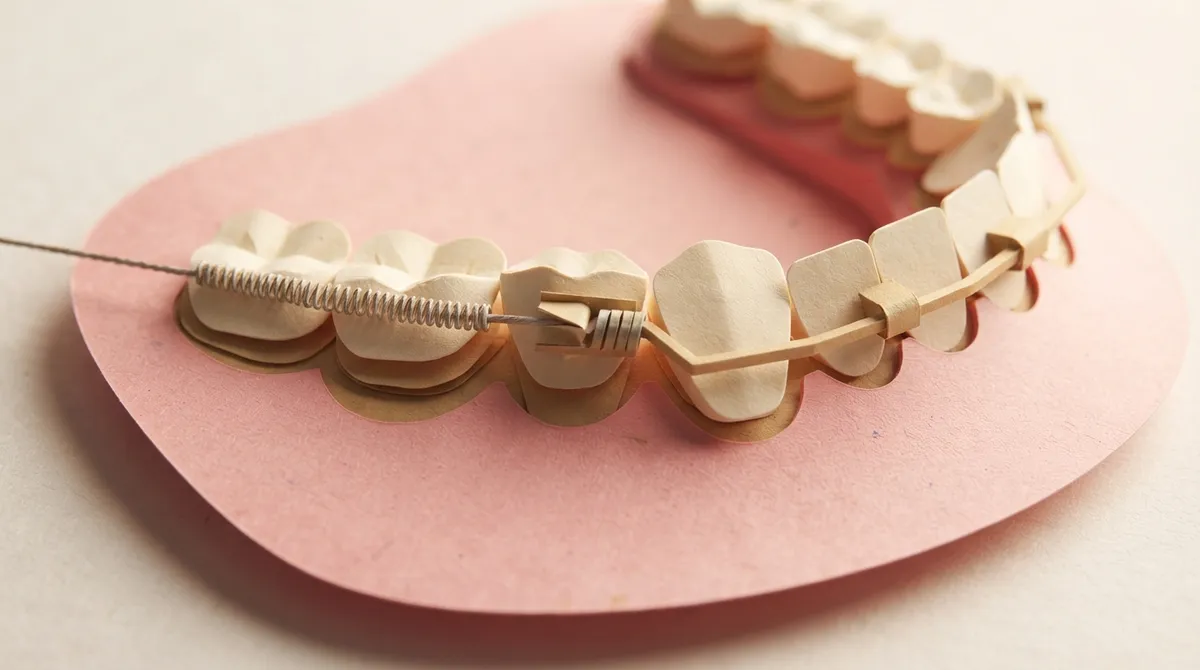
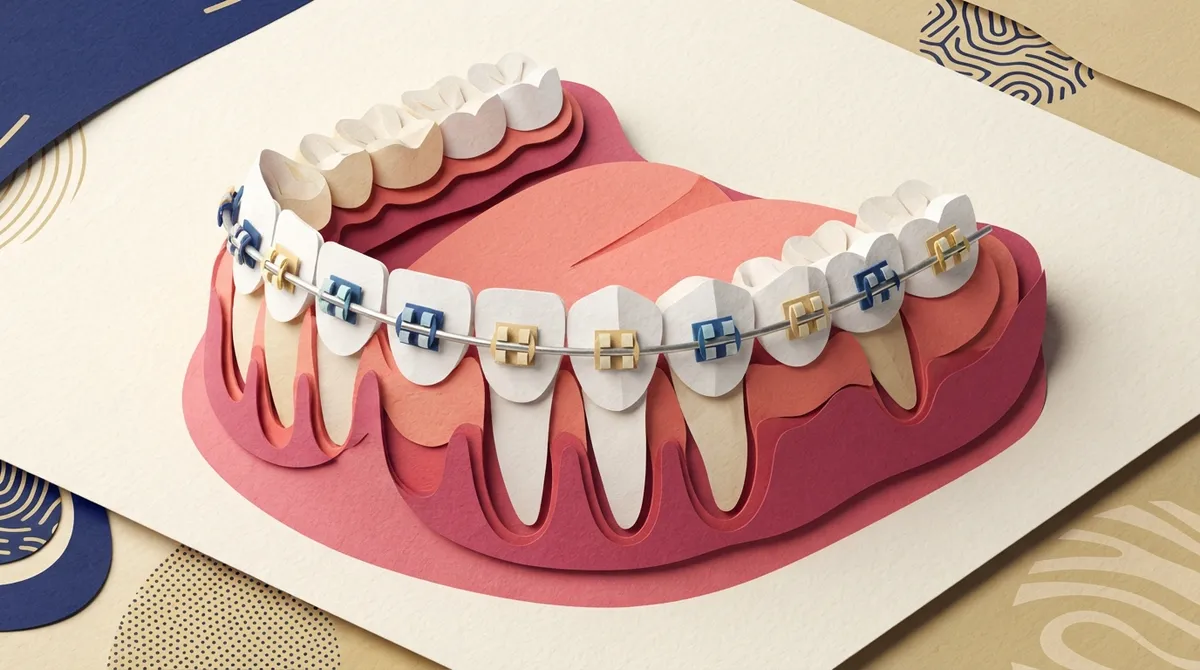
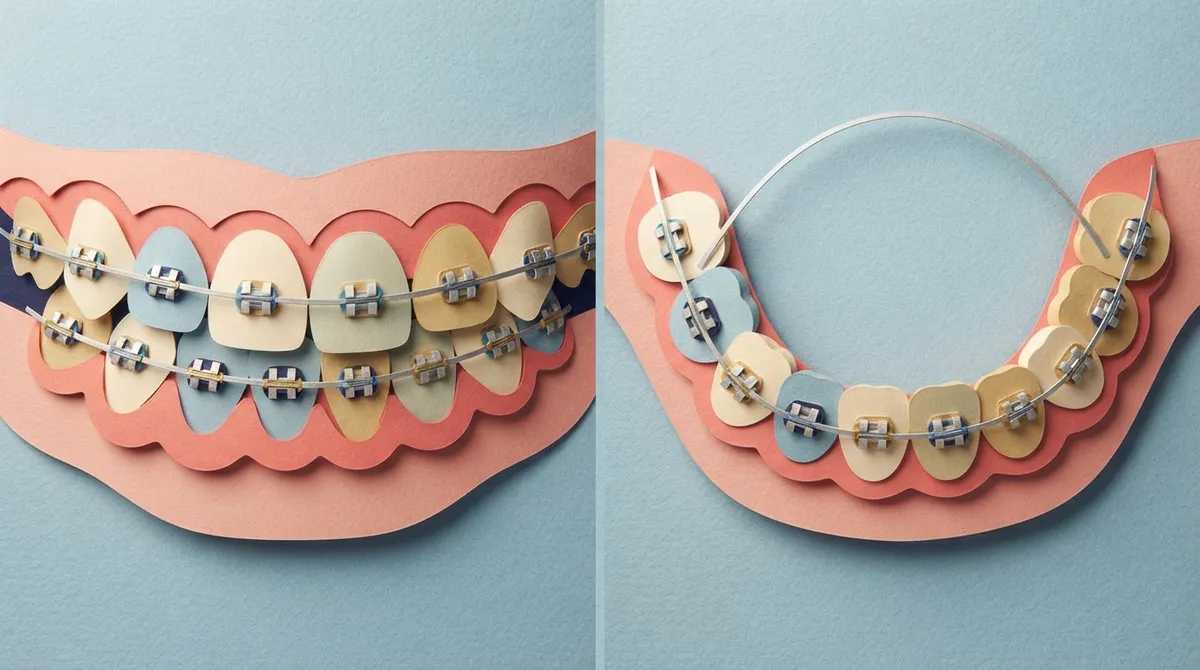
An orthodontic archwire is the shaped wire that runs through the slots of the brackets on your braces. It curves along your upper or lower teeth, following the natural arch of your smile. That is where the name comes from.
Think of the brackets as small handles bonded to your teeth, and the archwire as the guide that connects them all. The wire does not work alone. It works together with the brackets, small elastic ties or clips, and sometimes rubber bands to guide each tooth toward its planned position.
The wire’s interaction with the brackets and teeth applies controlled forces and moments. In simple terms, it can push, pull, and twist teeth in very small, carefully planned ways.
How Orthodontic Archwires Work: The Basic Idea
Here is the core idea. When your orthodontist first places a wire, it is bent to fit into brackets on teeth that are not yet in the right spot. Because the teeth are crooked or crowded, the wire has to flex to reach them all.
That flexing stores energy in the wire. Like a bent paper clip that wants to straighten out, the wire tries to return to its original shape. As it does, it sends a gentle, steady force through the brackets to the teeth.
Over time, that force nudges each tooth toward the position the wire was designed to hold. Your orthodontist then checks progress, adjusts or replaces the wire, and the process continues in stages until your smile is aligned.
A Simple Way to Picture It
Imagine a bent branch you try to tie against a straight fence. The branch wants to spring back, so it presses against the fence. That steady pressure is similar to what an archwire does, only much gentler and far more precise.
The Biology Behind Tooth Movement
The wire provides the force, but your body does the real work. Tooth movement is a biological response, not just a mechanical one.
Each tooth is held in the jaw by a thin layer of tissue called the periodontal ligament. It sits between the tooth root and the surrounding bone. When the archwire applies force, the ligament and bone respond.
- Pressure side: Bone around the tooth is gradually broken down (resorbed) where the tooth is being pushed toward.
- Tension side: New bone is built where the tooth is moving away from.
- Gradual shift: As bone remodels on both sides, the tooth slowly moves to its new home.
This is why braces take months rather than days. Your bone needs time to remodel safely. It is also why how long braces take to work varies from person to person.
Why the Right Amount of Force Matters
Force has to be just right. Too little may not trigger the response needed to move the tooth. Too much can irritate or damage the supporting tissues and may contribute to root resorption, which is a shortening of the tooth root.
That is why this is a job for a trained specialist. An orthodontist chooses wire type, size, and shape based on your specific treatment stage and goals. It is also why patients should never bend, cut, or adjust an archwire at home.
Types of Archwire Materials
Not all archwires are the same. Different alloys behave differently, and your orthodontist selects them based on what your teeth need at each stage.
| Wire Type | Key Traits | Common Use |
|---|---|---|
| Nickel-titanium (NiTi) | Very flexible and superelastic; returns to shape well | Early alignment of crowded or rotated teeth |
| Stainless steel | Stiffer and strong; offers more control | Later stages, space closing, and finishing |
| Beta-titanium (TMA) | Intermediate stiffness; easy to form and bend | Detailed adjustments and specific tooth movements |
Nickel-Titanium Wires
NiTi wires are flexible and springy, which makes them gentle and comfortable for the first phase of treatment. A 2023 systematic review of orthodontic metallurgy reported nickel-titanium as the most commonly used alloy among the studies it included. That describes the research reviewed, not a universal market share, but it shows how widely these wires are studied and used.
Stainless Steel Wires
Stainless steel is stiffer, so it does not flex as much. That stiffness is helpful later in treatment, when your orthodontist needs more control to close spaces or fine-tune how teeth fit together.
Beta-Titanium Wires
Beta-titanium sits in the middle. It offers a balance of flexibility and formability, so it is often used when your orthodontist wants to shape the wire for specific movements.
Wire Shape and Size Make a Difference Too
The metal is only part of the story. The wire’s cross-section, size, and the unsupported length between brackets all change how force is delivered.
- Round wires: Usually used early on. They are good for leveling and aligning but give less control over rotation and root angle.
- Rectangular wires: Used later. They fit more fully into the bracket slot, which gives better control of root torque and tooth position.
- Thinner wires: More flexible and gentler.
- Thicker wires: Stiffer and offer more control.
A 2024 review of contemporary archwires explains that force delivery depends on the alloy, cross-sectional dimensions, and the free wire length between brackets. There is no single force value that applies to every patient, which is why treatment is personalized.
The Typical Wire Sequence During Treatment
Most patients do not keep the same wire from start to finish. Your orthodontist usually moves through a sequence of wires as your teeth shift.
- Initial alignment: A flexible, thin round wire, often NiTi, begins gently straightening crowded or rotated teeth.
- Leveling: Slightly thicker wires help bring teeth to an even height.
- Working phase: Stiffer or rectangular wires help control tooth position, close gaps, and correct the bite.
- Finishing: Final wires fine-tune details so your teeth fit together well.
The exact order and timing are individualized. An archwire alone does not decide how long your treatment takes or guarantee a certain rate of movement. Things like your biology, your starting position, and how well you follow instructions all play a part.
What Happens at an Archwire Change Visit?
During an adjustment visit, your orthodontist may remove the old wire, check your progress, and place a new one. Sometimes the same wire is simply adjusted.
Here is what you can usually expect:
- Elastic ties or clips are removed.
- The old wire is taken out and your teeth and brackets are checked.
- A new or adjusted wire is placed and secured.
- You may feel mild pressure or tenderness for a day or two.
If you want a deeper look at the process, our guide to the braces tightening process walks through each visit in detail.
Do Certain Wires Move Teeth Faster or Hurt Less?
This is a really common question, and the honest answer is that the evidence is mixed. Many people hope a special wire will speed things up or eliminate soreness, but research does not clearly support one wire type as the best for every patient.
A 2024 review of aligning archwires, summarizing Cochrane evidence, reported insufficient evidence to determine whether a specific archwire type is generally better for alignment rate or pain. It noted limited evidence favoring coaxial superelastic NiTi over single-strand superelastic NiTi for tooth movement over 12 weeks.
One 2024 clinical study reported average movement of 1.2 mm per month for NiTi, 1.0 mm per month for stainless steel, and 0.9 mm per month for beta-titanium in a 60-patient, six-month study. These numbers come from one study with its own methods and patient group, so please do not treat them as typical rates for everyone. Your own movement will depend on your mouth, your plan, and your orthodontist’s approach.
The bottom line: the best wire is the one your orthodontist chooses for your specific stage and goals.
Wires in Braces vs. Clear Aligners
Archwires are part of traditional braces, including metal and ceramic options. Spark™ Clear Aligners work differently. Instead of a wire guiding teeth through brackets, a series of clear, custom trays applies planned pressure to move teeth step by step.
Both approaches can be effective, and the right choice depends on your bite, your age, and your lifestyle. If you are comparing, our article on clear aligners vs. braces can help you decide.
Archwire Care Tips for Braces Wearers
A little daily care helps your wire do its job and keeps you comfortable.
- Brush carefully: Clean around brackets and along the wire after meals.
- Floss daily: Floss threaders or interdental brushes help you reach under the wire.
- Avoid hard or sticky foods: They can bend wires or pop brackets loose. Our friendly food guide has plenty of ideas.
- Wear elastics as directed: They work together with the wire to guide your bite.
- Keep your appointments: Regular visits let your orthodontist move you to the next wire at the right time.
What to Do If Your Archwire Pokes or Comes Loose
Wire trouble happens, and it is usually manageable. Here is a simple plan.
- Stay calm. A poking wire is irritating but rarely an emergency.
- Use orthodontic wax. Roll a small piece and press it over the sharp spot.
- Try gentle repositioning only if safe. A cotton swab or the eraser end of a pencil can sometimes nudge a wire flat.
- Do not cut or bend it yourself. This can damage your braces or cause injury.
- Call your orthodontist. They can fix it quickly and safely.
Not sure whether it is urgent? Our comparison of a broken bracket vs. a poking wire can help you decide. You can also read why a DIY wire fix is rarely the best choice.
Why Expert Guidance Matters
Archwires look simple, but choosing and adjusting them is a skill. The alloy, size, shape, bracket type, and timing all have to work together for your unique smile. That is why having a caring, experienced specialist in your corner makes such a difference.
At Brockway Orthodontics, Dr. Brockway takes the time to listen to your goals and explain each step in friendly, plain language. Our Clearwater, Florida practice uses modern tools like digital impressions and 3D imaging to plan treatment precisely, and we welcome patients of all ages. You can read more about what families say on our patient reviews page, or visit us on Google — Brockway Orthodontics to see feedback from our Clearwater community.
For general information on oral health and orthodontic standards, the American Dental Association is a trusted resource, and the Florida Association of Orthodontists offers helpful state-level orthodontic information. For patient-friendly research on archwires, you can also explore peer-reviewed reviews through the National Library of Medicine.
Ready to Learn More About Your Smile?
Now you know that an archwire is much more than a piece of metal. It is a carefully chosen tool that stores energy, delivers gentle force, and works with your body’s natural bone remodeling to move teeth into place. Each wire change is a step toward your goal, and your orthodontist’s plan keeps it all on track.
If you are curious whether braces could be right for you or your child, we would love to meet you. Book your appointment online to get started, or contact us with any questions. We cannot wait to help you smile with confidence!
FAQs
Q: What does an orthodontic archwire do?
A: An archwire is the shaped wire that runs through the brackets on your braces. When it flexes to fit your teeth, it stores energy and gently pushes them toward their planned positions. It works together with your brackets and your body’s natural bone remodeling.
Q: Why does my orthodontist change my archwire?
A: Different stages of treatment need different wires. Flexible wires start the alignment, and stiffer or rectangular wires help with control and finishing later on. Your orthodontist swaps or adjusts wires as your teeth move, and the timing is personalized to you.
Q: Do some archwires make teeth move faster or hurt less?
A: Research does not clearly show that one wire type is best for every patient when it comes to speed or comfort. A 2024 review found insufficient evidence to name a generally superior wire. Your orthodontist picks the wire that fits your needs at each stage.
Q: What should I do if my archwire is poking me?
A: Press a small piece of orthodontic wax over the sharp spot for quick relief, and avoid cutting or bending the wire yourself. Then give your orthodontist a call so they can fix it safely. Most poking wires are easy to correct.
Q: How long does an archwire stay in place?
A: It depends on your treatment plan. Many patients move through several wires, and each one may stay in for a few weeks between visits. Your orthodontist will decide when it is time for the next wire based on how your teeth are responding.
Our Service Area