Key Takeaways
-
The American Association of Orthodontists recommends a first orthodontic check-up no later than age 7, when most children have a mix of baby and permanent teeth.
-
A first orthodontic visit is an evaluation, not a treatment commitment; many children are simply monitored and never need braces right away.
-
Early (Phase 1) treatment can help with certain underbites, crossbites, jaw shifts, and severe crowding while a child is still growing, but it isn't needed for every child.
-
Seek an evaluation sooner than age 7 if you notice baby teeth falling out very early or late, mouth breathing or snoring, difficulty chewing, or thumb sucking past toddler years.
-
Orthodontic treatment most often begins between ages 9 and 14, so an early visit helps plan the right timing rather than rushing into treatment.
-
It's never too late to get a check-up: children and teens of any age can benefit from an evaluation, and modern options like clear aligners suit many teens.
If you’ve ever stared at your child’s smile and wondered, “Is that normal, or should someone take a look?” you’re in great company. Parents ask us this all the time. The question of when should a child first see an orthodontist comes up at birthday parties, school pickup lines, and just about every dental cleaning.
Here’s the short answer: the American Association of Orthodontists (AAO) recommends a first check-up by age 7. That doesn’t mean your second grader is getting braces next week. It simply means a specialist gets an early peek at how things are developing.
So which path is better: booking that early visit, or waiting until the teen years? In this friendly guide, we’ll compare the two, explain what actually happens at a first visit, and help you decide with confidence. Whether you have a seven-year-old, a ten-year-old, or a teen, there’s a helpful answer here for you.
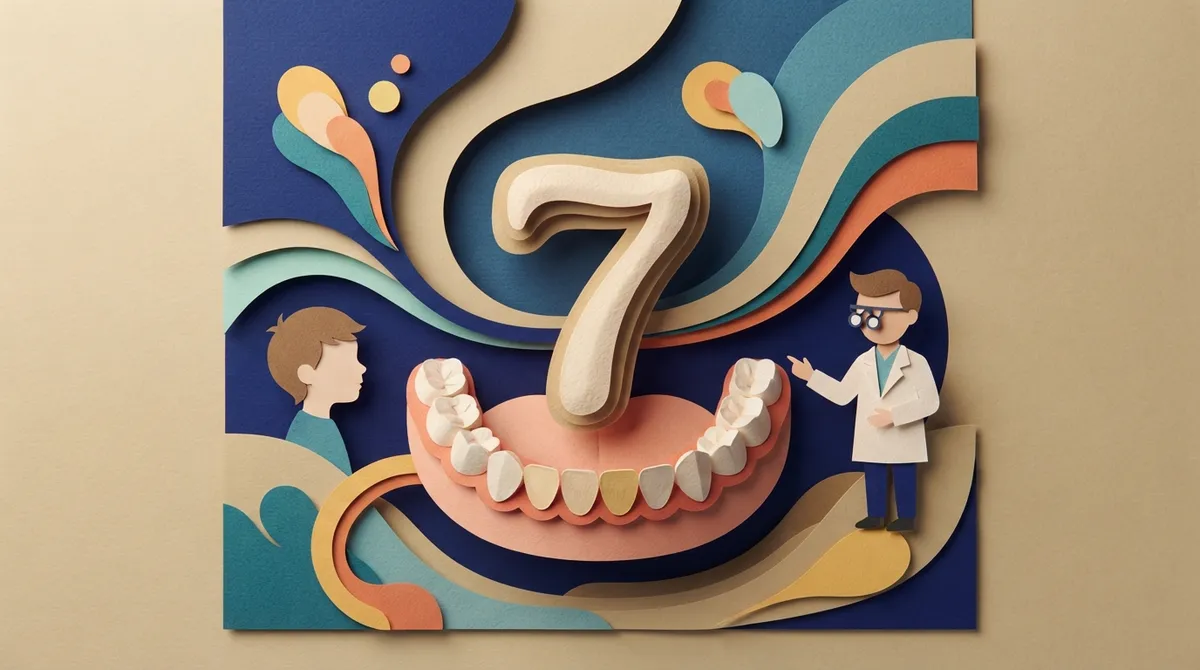
The Quick Answer: Age 7 Is the AAO Benchmark
The AAO recommends that children have their first orthodontic check-up no later than age 7. This is an evaluation, not a promise of treatment. Think of it like a first look under the hood.
Why age 7? At that age, most children have a fun mix of baby teeth and permanent teeth. That mix gives an orthodontist a helpful window into how the bite, jaws, and incoming teeth are developing.
Here’s what that early look can reveal:
- How the upper and lower teeth fit together
- Whether there is room for permanent teeth to come in
- Early signs of bite or jaw concerns
- Habits, like thumb sucking, that may affect growth
For many kids, the answer after that first visit is simply, “Everything looks great. Let’s keep an eye on things.” And that’s a wonderful outcome!
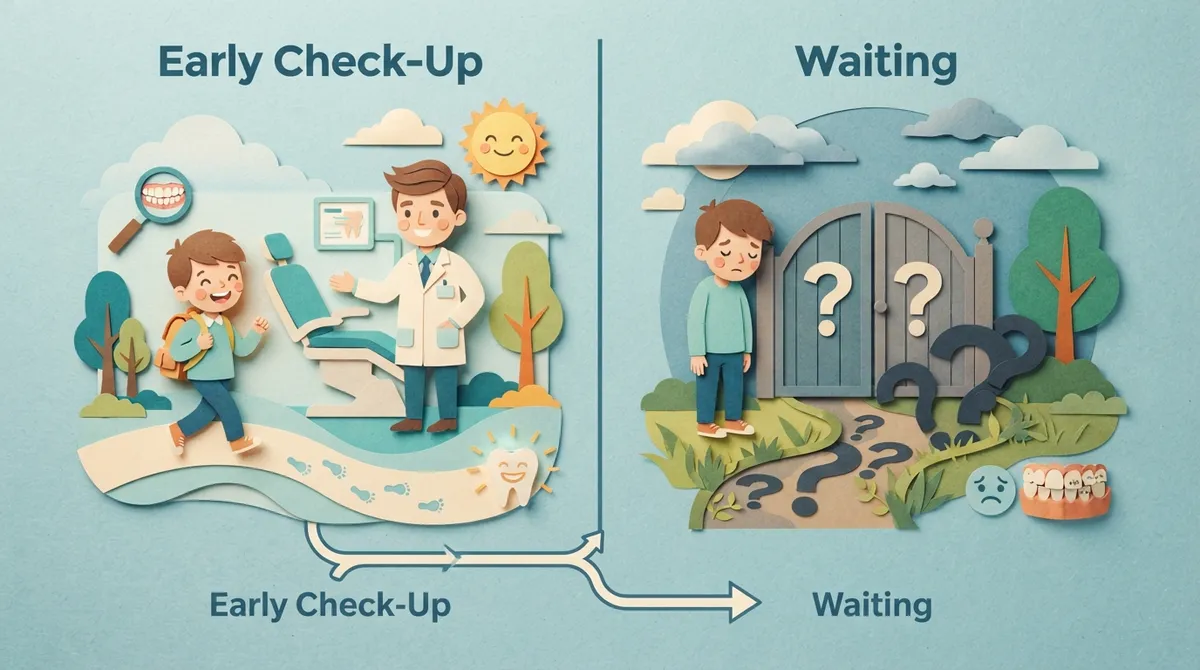
Early Check-Up vs. Waiting: A Side-by-Side Look
Let’s put the two approaches next to each other so you can see the real differences.
| Factor | Check-Up by Age 7 | Waiting Until the Teen Years |
|---|---|---|
| Main goal | Spot concerns early and plan the best timing | Evaluate once most permanent teeth are in |
| Does it mean braces right away? | No. Most kids are simply monitored | Often leads straight to a treatment discussion |
| Growth advantage | Some issues can be guided while the child is still growing | Fewer chances to use natural growth to help |
| Parent peace of mind | High, since you know where your child stands | Questions may go unanswered for years |
| Treatment options | May include early (Phase 1) care for select problems | Usually braces or clear aligners |
The big takeaway? An early visit gives you information, and information gives you options. Waiting isn’t always harmful, but you may miss the chance to treat certain problems at their ideal time.
Why the Age 7 Visit Matters So Much
It might feel early, but there’s real logic behind it. Around age 7, your child’s first permanent molars and incisors have usually arrived. An orthodontist can see how those new teeth are settling in and how the jaws are shaping up.
Some problems are easier to address while a child is still growing. These include certain underbites, crossbites, jaw shifts, and severe crowding. Habits like persistent thumb or finger sucking can also influence how the teeth and bite develop.
Spotting these things early gives the orthodontist more tools to work with. In some cases, a simple early step can make later treatment shorter or simpler. In many other cases, the best plan is to watch and wait, and that’s perfectly fine too.
Curious about how early care works in practice? Take a peek at our page on early treatment for a closer look.
Does Seeing an Orthodontist at 7 Mean Braces?
Nope! This is the biggest myth we hear, and we love clearing it up. A first visit is an evaluation, not a treatment plan.
After the exam, one of three things usually happens:
- Everything looks on track. You’ll likely be invited to come back for periodic check-ups as your child grows.
- A small concern is spotted. The orthodontist may recommend monitoring and begin treatment later, when the timing is just right.
- A concern would benefit from early care. The orthodontist explains the options, timing, and expected duration so you can decide together.
According to AAO materials, orthodontic treatment most often begins between ages 9 and 14, though timing varies with each child’s development. So the early visit is really about planning the right moment, not rushing in.
Signs Your Child Should Be Seen Sooner
You don’t have to wait for the age 7 mark if something catches your eye. AAO guidance says to seek an evaluation as soon as you recognize a concern. Trust your parent instincts!
Here are some signs worth mentioning to an orthodontist:
- Baby teeth that come out very early or very late
- Difficulty chewing or biting
- Mouth breathing or snoring
- Thumb or finger sucking that continues past the toddler years
- Teeth that look crowded, crooked, or oddly spaced
- A jaw that shifts or clicks when opening and closing
- Upper and lower teeth that don’t meet properly, or meet in an unusual way
- An upper jaw that looks narrow, or a lower jaw that sits forward
Seeing one of these doesn’t mean something is wrong. It just means a quick professional opinion could give you answers. If you’re wondering what to look for in more detail, our guide on the signs your child needs braces walks through them step by step.
What Happens at a Child’s First Orthodontic Visit?
Let’s take the mystery out of it. A first visit is relaxed, friendly, and usually pretty quick. Here’s a typical flow:
- A warm welcome. The team says hello, and your child gets comfortable in the chair.
- A gentle exam. The orthodontist looks at your child’s teeth, bite, and jaw development.
- Imaging, if needed. When clinically appropriate, the orthodontist may take images to see tooth position and development beneath the gums.
- A friendly chat. You’ll hear what the orthodontist sees, whether treatment is needed, what the timing might look like, and what your options are.
- A plan for next steps. That could be “see you in six months” or “let’s talk about a start date.”
At Brockway Orthodontics, we love helping families feel at ease from the very first hello. If you’d like to know exactly what to expect, check out your first visit for a peek inside.
Orthodontist vs. Dentist: Who Does What?
This is another question parents ask a lot. Do we still need the regular dentist if we see an orthodontist? Absolutely, yes!
An orthodontist is a dental specialist who focuses on diagnosing and treating irregularities of the teeth and jaws. Your family dentist keeps your child’s teeth clean and cavity-free. Both are important, and they work as a team.
| Question | Regular Dentist | Orthodontist |
|---|---|---|
| Focus | Cleanings, cavities, overall oral health | Alignment, bite, and jaw development |
| Typical visits | Every six months | Evaluation, then monitoring or treatment |
| Tools | Exams, cleanings, fillings | Braces, clear aligners, retainers, expanders |
| Best for | Everyday dental care | Straightening teeth and correcting bites |
Keep up with those routine dental visits, and add an orthodontic check-up when the time is right. Curious about how they differ? Our article on orthodontist vs. dentist breaks it down nicely.
Early (Phase 1) Treatment vs. Waiting for Full Treatment
Some children benefit from what’s often called early or Phase 1 treatment. This is a shorter round of care, often while a child still has many baby teeth, aimed at a specific problem.
Which problems might call for it? Certain underbites, crossbites, jaw shifts, and severe crowding are common examples. The goal isn’t to straighten every tooth right then. It’s to guide growth and create a healthier foundation.
Here’s how the two paths compare:
- Early (Phase 1) care: Shorter, targeted, and focused on specific concerns while the child is growing. It isn’t needed for every child.
- Waiting for comprehensive treatment: A common path for kids whose bite and spacing are developing well. Treatment begins once more permanent teeth have arrived.
Neither path is “better” for every child. The right choice depends on your child’s unique growth and needs. That’s exactly why the early evaluation is so useful. You can learn more about timing in our post on why timing matters for early intervention.
Is It Too Late If My Child Is Older Than 7?
Not at all! If your child is 9, 12, or even 15, you haven’t missed the boat. An older child can absolutely still benefit from a check-up.
Many kids start treatment in their preteen or teen years, and modern options make it comfortable and even fun. Teens can choose between traditional metal braces, ceramic (clear) braces, and clear aligners, depending on their needs and preferences.
If you have a teenager, these resources might be helpful:
- Adolescent treatment options
- Spark™ Clear Aligners, a more affordable alternative to Invisalign
- All about braces for kids and teens
The best time to see an orthodontist is whenever a question pops into your mind. Don’t wait for a perfect moment.
How Common Are Bite and Alignment Problems?
If you’re feeling a little worried, here’s some reassurance: you’re not alone. A 2026 systematic-review summary cited in a study of Japanese orthodontic patients reported that malocclusion, or a bite that doesn’t line up as expected, affects one in two or more children and adolescents worldwide. Rates vary by population and how problems are measured.
The same study looked at 11,608 first-visit orthodontic patients aged 18 or younger. About 55.4% went on to begin treatment. It’s worth remembering that this is a clinic-based sample, so it doesn’t tell us how many children overall need braces. But it does show that many families who come in for a first visit end up starting care, while many others are simply monitored.
The message is clear: alignment questions are very common, and a professional look is a smart, low-pressure way to get answers.
Making the Decision: A Simple Checklist
Still not sure whether to book that visit? Walk through this quick checklist:
- Is your child 7 or older and hasn’t seen an orthodontist? It’s a great time to schedule a first check-up.
- Have you noticed any of the signs we listed above? Don’t wait, since an earlier look may help.
- Is your child a teen who hasn’t been evaluated? It’s not too late, and many treatments are well suited to teens.
- Are you simply curious? That’s reason enough! Peace of mind is valuable.
And if cost is on your mind, we get it. Many families appreciate learning about financing and insurance options up front so there are no surprises.
Why Families Trust Brockway Orthodontics
At Brockway Orthodontics, we love celebrating families. Dr. Brockway takes time to listen to your concerns and explain things in a friendly, easy-to-understand way, so you and your child feel comfortable at every step. You can learn more about her on the Meet Dr. Brockway page.
We also use modern technology, like digital impressions instead of messy molds and 3D imaging, to plan care precisely and keep visits comfortable. In certain cases, same-day treatments can help busy families get started without juggling multiple appointments.
If you’d like to see what other local families think, you can visit us on Google — Brockway Orthodontics and read their experiences. For general guidance on dental health, resources from the American Dental Association and the Florida Association of Orthodontists are also helpful places to explore.
Wrapping It Up: Don’t Wait to Ask the Question
So, when should a child first see an orthodontist? The best answer is by age 7, or sooner if you notice a concern. An early check-up doesn’t commit you to braces. It simply gives you clear information and a trusted partner for your child’s smile journey.
Waiting isn’t a disaster, and older kids can still benefit greatly. But an early visit gives you more options and more peace of mind, and that’s a pretty great deal.
Ready to take the first step? Book your child’s appointment online and let’s start this journey together. Have questions first? Feel free to contact us, and our friendly team will be happy to help.
FAQs
Q: When should a child have their first orthodontist appointment?
A: The American Association of Orthodontists recommends a first check-up no later than age 7. At that age, kids usually have a mix of baby and permanent teeth, which helps the orthodontist spot developing bite or alignment concerns. If you notice a concern sooner, you can absolutely book earlier!
Q: Does a 7-year-old need braces if they see an orthodontist?
A: Not at all! A first visit is an evaluation, not a treatment plan. Many children simply need periodic monitoring, and treatment starts later when the timing is right. Only certain concerns benefit from early care.
Q: What happens at a child’s first orthodontic evaluation?
A: The orthodontist will gently examine your child’s teeth and bite and, when appropriate, take images to see tooth position and development. Then they’ll explain whether treatment is needed, the timing, your options, and how long care might take. It’s a relaxed, friendly visit for you and your child.
Q: If my child is older than 7, is it too late to see an orthodontist?
A: Not even close! An older child can still benefit from a check-up, and many kids begin treatment in their preteen or teen years. Orthodontic treatment most often begins between ages 9 and 14, so there’s plenty of time to get answers and start a plan.
Q: What is early or Phase 1 orthodontic treatment?
A: Phase 1 is a shorter, targeted round of care that happens while a child is still growing, often with many baby teeth still in place. It may help with certain underbites, crossbites, jaw shifts, severe crowding, and habits like persistent thumb sucking. It’s not needed for every child, which is why an early evaluation is so helpful.
Our Service Area