Key Takeaways
-
Book a free consultation first to explore options without financial pressure, then pursue a paid second opinion only if you need detailed records or have a complex case that warrants the extra investment.
-
A consultation does not automatically lead to braces; the orthodontist may recommend treatment now, later, regular monitoring, or no treatment at all, especially for children whose teeth are still developing.
-
Ask specific questions about treatment options, total costs, appointment frequency, insurance coverage, and whether waiting would affect outcomes—money questions are normal and expected.
-
The AAO recommends an initial orthodontic evaluation by age 7, but this is for early detection only; if you notice crowding, jaw shifts, or biting problems sooner, book an appointment earlier.
-
Bring your medical and dental history, current medications, insurance information, a list of concerns, and recent X-rays if available to maximize the value of your consultation visit.
-
Choose based on comfort and clarity rather than price alone; the best consultation leaves you informed and confident about your next steps, whether at a free or paid office.
So you’re thinking about braces. Maybe your child’s smile caught your eye, or you’ve been tucking your own teeth out of photos for years. Either way, the very first step is a braces consultation, and good news: it’s usually much less scary than people expect.
Here’s a question that trips up many families, though. Should you look for a free consultation, or is a paid one worth it? The AAO notes that many orthodontists offer initial consultations at little or no cost, but fees and what’s included vary by practice. That means two offices can use the same words and mean very different things.
In this friendly guide, we’ll compare free and paid consultations side by side. You’ll learn what happens during the visit, what records may be taken, and what questions to ask. Whether you’re a parent, a teen, a busy professional, or someone who had braces years ago and wants a second round, you’ll leave knowing exactly how to choose with confidence.
What Is a Braces Consultation, Really?
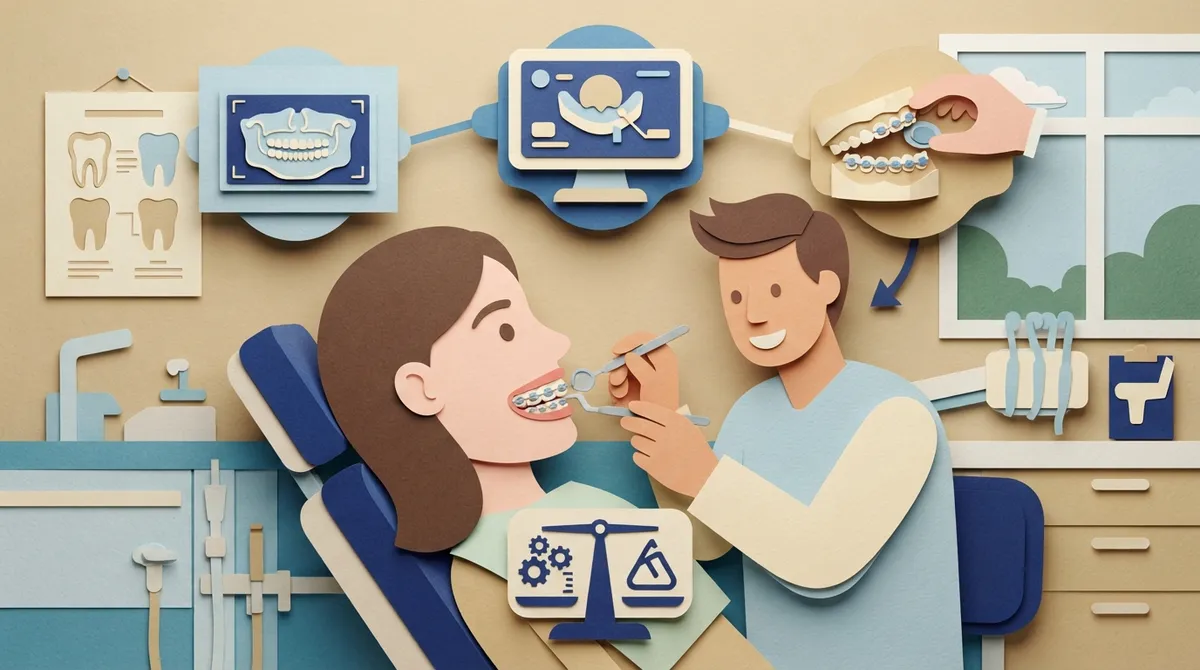
A braces consultation is your first orthodontic evaluation. Think of it as a get-to-know-you chat paired with a careful check-up. The orthodontist reviews your concerns and health history, examines your teeth, bite, and jaws, and explains whether treatment makes sense.
Here’s something that surprises many people: a consultation does not always end with braces. Your orthodontist might recommend treatment now, treatment later, regular monitoring, or no treatment at all. That’s especially common for kids whose teeth are still coming in.
The consultation is also your chance to ask questions. There are no silly ones. If you’re curious about how it feels, how long it takes, or what it costs, this is the time to speak up.

Free vs. Paid Consultation: The Quick Comparison
Let’s put the two options side by side. Keep in mind that every office sets its own policies, so this table shows common patterns rather than rules.
| Feature | Free Consultation | Paid Consultation |
|---|---|---|
| Cost | No charge or very low cost | A set fee, sometimes credited toward treatment |
| Exam of teeth, bite, and jaws | Typically included | Typically included |
| X-rays or scans | May or may not be included | Often included, depending on the office |
| Treatment options discussed | Yes | Yes, sometimes in more detail |
| Cost and timeline estimate | Usually provided | Usually provided |
| Best for | Comparing offices and getting started with no pressure | Complex cases or second opinions needing detailed records |
The big takeaway? Price alone doesn’t tell you the quality of the visit. What matters is what you walk away understanding.
The Case for a Free Consultation
A free consultation removes the biggest barrier for most families: worry about cost. You can learn about your options without any financial commitment, which makes it easy to visit more than one office if you’d like.
Free visits are especially helpful for these situations:
- First-timers: You just want to know if treatment is needed.
- Parents of young kids: You want a check-up around age 7 without a big bill.
- Comparison shoppers: You’d like to meet a few orthodontists and see who feels right.
- Budget planners: You want a clear picture of costs and payment options before deciding.
At Brockway Orthodontics, we offer a free consultation so you can get answers in a relaxed setting with no strings attached. Many people tell us they felt relieved just having a plan.
The Case for a Paid Consultation
A paid consultation isn’t a red flag. Some offices charge a fee because they include extra diagnostic records right away, such as detailed imaging or a thorough written treatment plan. Others credit the fee toward your treatment if you start there.
A paid visit may make sense when you:
- Want a second opinion on a complicated bite problem
- Need detailed records to share with another dentist or specialist
- Have a history of orthodontic treatment and want a full retreatment assessment
- Prefer a deeper first-day workup that moves things along faster
The key is transparency. Before you book, ask what the fee covers and whether it applies toward treatment. A trustworthy office will happily explain.
What Happens at a Braces Consultation?
Curious what the visit actually looks like? Here’s the typical flow, step by step.
- Welcome and conversation. You’ll share what’s bothering you and what you’d love to change. Your orthodontist may ask about dental and medical history, too.
- Clinical exam. The orthodontist looks at your teeth, bite, jaws, and how everything fits together.
- Records, if needed. This may include photographs, X-rays, or digital scans. Which records are needed depends on your individual case.
- Findings explained. You’ll hear about anything noticed, such as crowding, spacing, overbite, underbite, crossbite, or jaw growth and tooth eruption concerns.
- Options and next steps. If treatment is recommended, you’ll talk through choices, goals, timing, costs, and what comes next.
Want a closer look at the very first appointment? Our guide on your first visit walks you through it, and this article on what to expect and why it matters goes even deeper.
Do They Take X-Rays and Scans?
Often, yes, but it depends on your situation. Records help your orthodontist see things the eye can’t, like the position of tooth roots, jaw structure, and teeth that haven’t come in yet.
Modern offices frequently use digital scans instead of goopy impression trays, which most patients find far more comfortable. If you’ve recently had dental X-rays, ask the office whether they’d like a copy. It can save you time and avoid repeating images unnecessarily.
Consultation Needs by Age Group
Different people come in for different reasons. Here’s how a braces consultation tends to look for each group.
Children (Around Age 7)
The American Association of Orthodontists (AAO) recommends an initial orthodontic check-up by age 7. Important note: that’s an evaluation recommendation, not a promise that every child needs early treatment. Often the answer is simply, “Let’s keep an eye on things.” You can read more about early treatment and how timing works. If you notice a concern sooner, such as crowded teeth, a shifted jaw, or trouble biting, don’t wait. Book earlier.
Teens and Young Adults
For teens, the consultation is often about options and style. Metal, ceramic, or clear aligners? Our adolescent treatment page covers what’s available, and teens usually love hearing they have more choices than ever. Bonus: a graduation or big event can help set a timeline goal.
Busy Adult Professionals
Adults often want discreet, efficient care that fits a packed schedule. In a consultation, you can ask about Spark™ Clear Aligners, ceramic braces, and appointment frequency. Learn more about adult treatment before you come in.
Relapse and Retreatment Patients
Had braces years ago and your teeth have drifted? You’re far from alone. A consultation can show how much movement has happened and what it would take to fix it. It’s also a good time to talk about retainers so you keep your results this time.
Health-Conscious Patients
If you have gum concerns or more complex dental needs, say so up front. Your orthodontist can build a plan that protects your oral health while improving your bite and smile, and may coordinate with your general dentist.
How to Prepare for Your Consultation
A little prep goes a long way. Pack these items and you’ll get more out of every minute:
- A written list of your concerns and questions
- Medical and dental history, plus any current medications
- Insurance information
- Your regular dentist’s name and contact details
- Recent X-rays, if the office asks for them in advance
Not sure what to bring? Call the office ahead of time. They’ll gladly tell you. For more help, check out how to prepare for your first orthodontist consultation.
Questions Worth Asking
Your consultation is a two-way street. The AAO encourages patients to understand the diagnosis and the reasoning behind every recommendation. Here are smart questions to bring along:
- What did you find, and what does it mean for my (or my child’s) teeth?
- What are my treatment options, and what are the pros and cons of each?
- How long will treatment likely take, and how often are appointments?
- What is the total cost, and what does it include?
- How do insurance benefits and payment plans work?
- What happens if I wait to start?
- Will any other dental work or tooth removal be needed?
Money questions are totally normal. You can explore financing and insurance options ahead of time so you feel ready.
How to Choose: Free or Paid?
Here’s a simple way to decide. Ask yourself three questions.
Do I just need information? Choose free. It’s the easiest way to learn what’s going on and meet a team you might like.
Do I need detailed records or a second opinion? A paid visit may be worth it, especially if the fee is credited toward treatment.
Do I feel comfortable? This matters more than price. Pick the office where you feel heard, where the explanations are clear, and where nobody pressures you.
Remember, you can always combine both. Start with a free visit, then pursue a paid second opinion if something feels unclear.
Why Families Choose Brockway Orthodontics
At Brockway Orthodontics, we’re proud to be a go-to orthodontist in Clearwater, Florida. Dr. Brockway takes time to listen to your goals, explains everything in plain language, and creates a plan that fits your life. We treat the whole family, from kids getting a first check-up to adults exploring a discreet smile upgrade.
We offer metal braces, ceramic (clear) braces, and Spark™ Clear Aligners, an affordable clear option. Modern technology, including digital impressions and 3D imaging, keeps visits comfortable and treatment planning precise. In some cases, same-day treatment can even be possible, which busy families appreciate. Curious about what others think? Visit us on Google — Brockway Orthodontics to see what our Clearwater patients say.
Helpful Resources Before You Book
Want to do a little homework first? Reliable organizations like the Florida Association of Orthodontists and the American Dental Association share trustworthy oral health information. You can also browse our FAQs or explore our full list of services.
Ready for Your Braces Consultation?
Free or paid, the best braces consultation is the one that leaves you informed, comfortable, and excited about the next step. You don’t have to guess whether you need treatment or wonder what it costs. You just have to show up with your questions.
A friendly team is waiting to help you. Book your appointment online today, or contact us with any questions. We can’t wait to meet you and talk about your smile.
FAQs
Q: What happens at a braces consultation?
A: Your orthodontist chats with you about your concerns and health history, then checks your teeth, bite, and jaws. They may take photos, X-rays, or digital scans, and then explain what they found and what your options are. It’s relaxed, and you’ll have plenty of time to ask questions!
Q: Will I get braces at my first consultation?
A: Usually not. The first visit is all about learning what’s going on and making a plan. Your orthodontist may recommend treatment now, later, or simply monitoring your teeth, so there’s no pressure to start right away.
Q: How much does a braces consultation cost, and is it free?
A: Many orthodontists offer initial consultations at little or no cost, though fees and what’s included vary by practice. At Brockway Orthodontics, we offer a free consultation so you can get answers without any commitment. It never hurts to ask any office what’s covered before you book.
Q: What should I bring to my first orthodontist appointment?
A: Bring a list of your questions, your medical and dental history, any medications you take, and your insurance details. It also helps to know your regular dentist’s name. If you’ve had recent X-rays, ask the office whether they’d like a copy in advance.
Q: When should a child have their first orthodontic evaluation?
A: The American Association of Orthodontists recommends a first check-up by age 7. That doesn’t mean your child will need braces right then. It simply lets the orthodontist spot any concerns early and choose the best timing, and you should go sooner if you notice something that worries you.
Our Service Area