Key Takeaways
-
Crowding is measured as tooth-size–arch-length discrepancy: the space your teeth need compared with the space your arch provides, usually expressed in millimeters.
-
Orthodontists look beyond crooked front teeth, assessing your bite, jaw relationships, facial profile, gum health, and missing or unerupted teeth to understand why crowding occurs.
-
Space analysis on digital scans or dental casts yields the crowding number, but it is always interpreted together with your exam, growth stage, and goals rather than alone.
-
Little's Irregularity Index measures front-tooth misalignment only and does not capture total arch space shortage, so it cannot determine treatment by itself.
-
A crowding measurement alone does not mean extraction is needed; options like expansion, small enamel reduction, or tooth movement are weighed against your age, bite, and face.
-
Crowding evaluations benefit children, teens, adults, and relapse patients alike, and bringing past records, X-rays, and questions to your visit helps get the most from it.
If you have ever looked in the mirror and noticed teeth that overlap, twist, or seem to be fighting for space, you are not alone. Crowding is one of the most common reasons people visit an orthodontist. But here is something many patients do not realize: judging crowding is about much more than how crooked your front teeth look.
So how an orthodontist evaluates crowding is really a bit of detective work. It combines a careful exam, a look at your bite and jaws, a few helpful records, and some simple math about the space in your mouth. The goal is to understand why your teeth are crowded, not just that they are.
In this friendly guide, we will walk you through each step. Whether you are a parent wondering about your child’s smile, a teen dreaming of straighter teeth, or an adult thinking about treatment (or retreatment after relapse), you will know exactly what to expect. And here at Brockway Orthodontics, we love making this part feel easy and comfortable.
What Dental Crowding Really Means
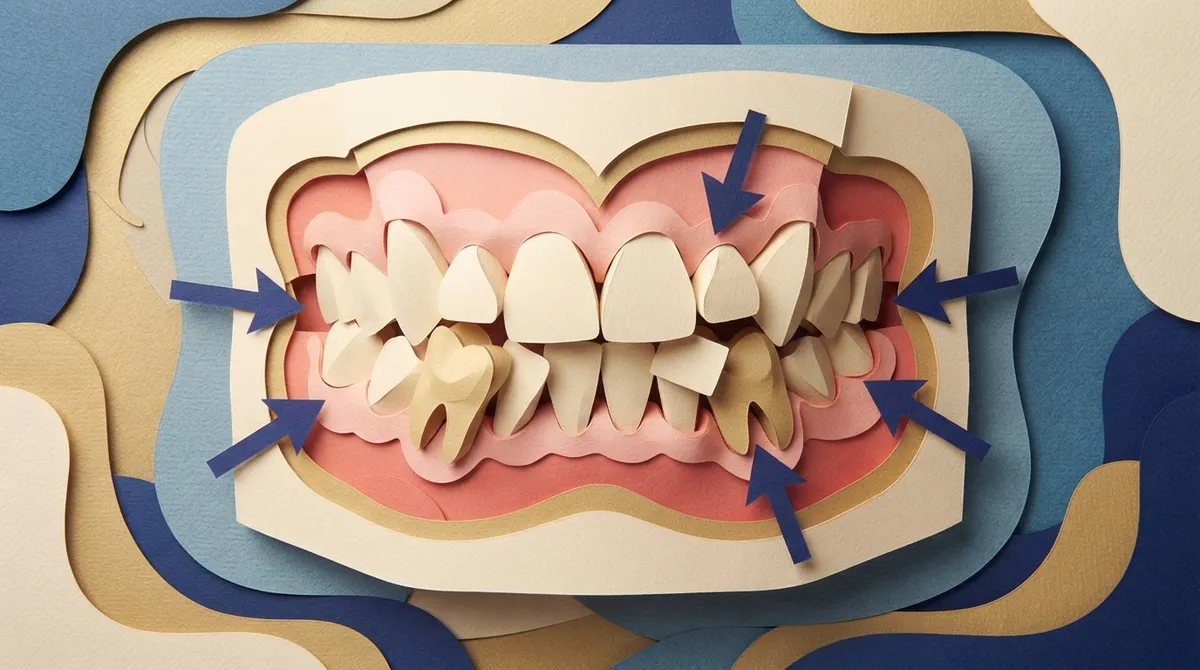
Crowding happens when there is not enough room in the dental arch for all the teeth to line up neatly. Orthodontists call this a tooth-size–arch-length discrepancy. In simple terms, the space your teeth need is bigger than the space you have.
This is usually measured in millimeters. A little shortage might cause slight overlap in the lower front teeth. A larger shortage can push teeth out of the arch or leave some trapped behind others.
Common signs of crowding include:
- Teeth that overlap or twist
- Teeth that sit in front of or behind their neighbors
- Canines (eye teeth) that look like they are pushed up or out
- Floss that shreds or snaps between tight contacts
- Spots that are hard to brush clean

Step 1: The Clinical Exam
Everything starts with a hands-on look at your mouth. During an exam, the orthodontist checks much more than the teeth you see in a photo.
They typically look at:
- How your teeth fit together when you bite down
- The shape and symmetry of your upper and lower arches
- Where each tooth sits and whether any are tipped or rotated
- Which teeth have come in, which are still coming, and whether any are missing
- The health of your gums and teeth
- How your face and jaws relate to each other, including your profile
This big-picture view matters because two people can have the same amount of crowding for very different reasons. One may have small jaws. Another may have larger teeth. A third may have lost baby teeth early. Each story leads to a different plan.
If you would like to know what a first appointment looks like, our page on your first visit walks you through it.
Step 2: Diagnostic Records
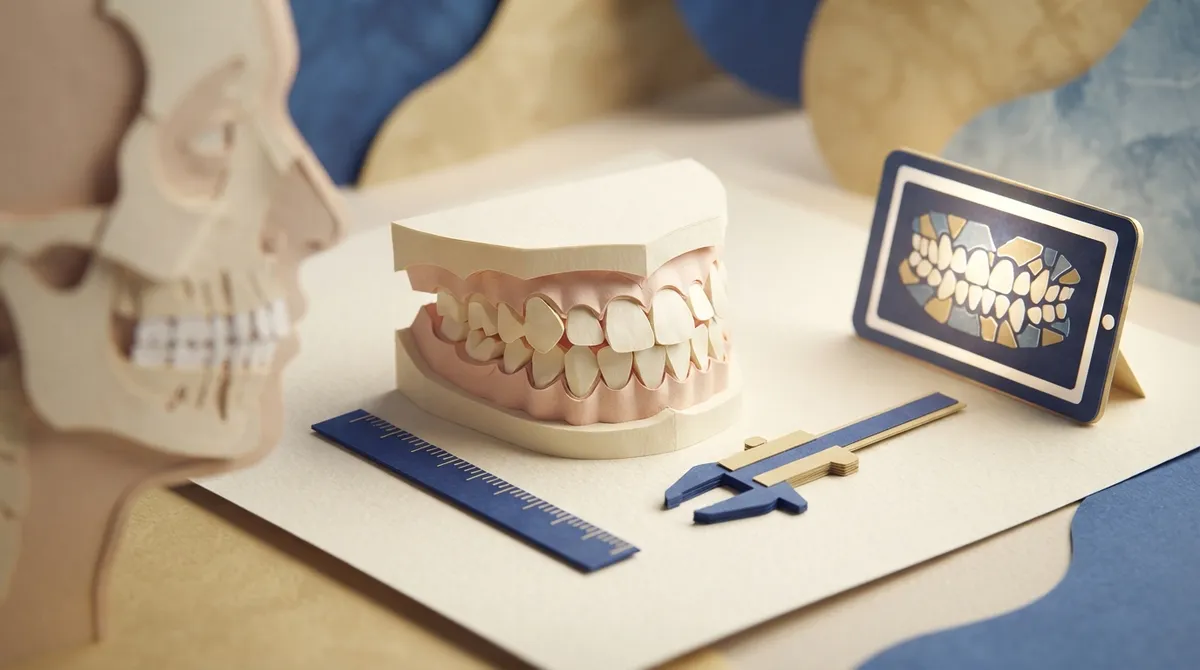
After the exam, your orthodontist may gather records to see what is going on beneath the surface and to measure things accurately. Not every patient needs every type of record. Each one is chosen to answer a specific clinical question.
| Record | What It Shows | Why It Helps With Crowding |
|---|---|---|
| Photographs | Face, smile, and teeth from several angles | Documents tooth position, profile, and smile |
| Digital scans or dental casts | An exact 3D copy of your teeth and arches | Allows precise space measurements |
| Radiographs (X-rays) | Roots, jaws, and teeth not yet visible | Reveals eruption, development, missing or extra teeth, and other concerns |
Modern practices often use digital scanning instead of goopy impressions. It is faster, more comfortable, and gives a very detailed picture. Our office uses this kind of technology so your visit stays relaxed.
Step 3: Space Analysis, the Math Behind Crowding
This is where crowding gets its number. A space analysis compares two things:
- Space available: the length of the dental arch where the teeth need to fit.
- Space required: the combined width of all the teeth that need to line up in that arch.
If the space required is larger than the space available, the difference is your crowding, usually written in millimeters. A shortage of 2 mm is very different from a shortage of 8 mm, and your orthodontist uses that number to think through the options.
Space analysis can be done on dental casts or on a digital model of your teeth. Either way, the result is never read in isolation. It is interpreted together with your exam, your bite, your face, and your goals.
Why Age and Growth Change the Picture
Space analysis looks a little different for a growing child than for an adult. In a child with a mix of baby and adult teeth, the orthodontist also considers teeth that have not come in yet and how much growth is still ahead. That is one reason an early evaluation can be so helpful. For adults, the jaws are done growing, so the plan leans more on the space that exists now.
Step 4: Measuring Irregularity
You may hear your orthodontist mention Little’s Irregularity Index. It is a quick way to describe how misaligned the six front teeth are. The orthodontist measures the gap between neighboring contact points on those teeth and adds up five measurements.
It is a handy snapshot of front-tooth irregularity, but it is only one tool. It does not measure the full space shortage in the arch, and it cannot decide your treatment by itself.
Research backs this up. One 2006 study found a correlation of -0.68 between the index and arch-length discrepancy. In that group, an index of 4 mm worked as an estimating cutoff for a shortage greater than 3 mm (sensitivity 0.78, specificity 0.76). Those numbers describe one study sample, not a universal rule for every patient.
Step 5: Putting It All Together
Now the orthodontist connects the dots. A crowding number alone cannot tell you what to do. The plan comes from the whole picture, including:
- Your age and how much growing you have left
- How your upper and lower jaws and teeth relate to each other
- Your facial profile
- Your gum and tooth health
- Whether any teeth are missing, extra, or still hidden
- What you want from your smile
Crowding categories like mild, moderate, and severe are also not set in stone. Thresholds vary between studies and clinics, so a millimeter measurement is a planning aid, not a universal label.
How Crowding Shapes Your Treatment Options
Once your orthodontist understands your crowding, they can talk through ways to create the room your teeth need. Depending on your case, that may include:
- Expansion: gently widening an arch, often useful in growing patients
- Enamel reduction: polishing tiny amounts of enamel between teeth to gain a little space
- Tooth removal: sometimes recommended when space is very limited
- Tooth movement: shifting teeth to use the space more efficiently
Does crowding always mean pulling teeth? Not at all. A millimeter number is not a stand-alone reason for extraction, expansion, or enamel reduction. Your orthodontist weighs everything above before recommending anything.
Then comes the fun part: choosing how to straighten your smile. Many patients love Spark™ Clear Aligners for a discreet look, while others prefer the precision of braces. If you are comparing, our guide on clear aligners vs. braces can help. And if you need ideas for crowded teeth specifically, take a peek at these crowded teeth treatment options.
Can Technology Help Evaluate Crowding?
Yes, and it keeps improving. A 2022 study of 26 patients (52 dental arches) found that measurements taken from photographs matched plaster-model measurements well, with correlations above 0.90 for the measures assessed. A 2025 study of an AI model that assessed lower front crowding from photos also reported strong agreement, with a mean absolute deviation of 0.36 mm.
These are exciting research results. Still, they do not replace a full exam by an orthodontist who can see your bite, jaws, and overall health in person.
Who Benefits From a Crowding Evaluation?
Almost everyone with overlapping or twisted teeth can learn something from one.
- Parents of children and teens: an evaluation can spot crowding while jaws are still growing and guide the best timing for care.
- Teens and young adults: it helps you plan for a smile you love before graduation, prom, or that big milestone.
- Adult professionals: it gives you the facts to pick an efficient, discreet option that fits a busy life. See our overview of adult treatment.
- Relapse patients: if your teeth shifted after earlier braces, an evaluation shows what changed and how to fix it. Good retainers help keep results in place afterward.
- Health-conscious patients: crowded teeth can be harder to clean, so evaluating crowding supports your gum and tooth health goals too.
Tips to Get the Most From Your Evaluation
- Write down your questions. Bring any worries about looks, comfort, or timing.
- Share your history. Mention past braces, lost teeth, or jaw concerns.
- Bring prior records if you have them. Old X-rays or photos can be a big help.
- Ask what your numbers mean. A good orthodontist is happy to explain your measurements in plain language.
- Talk about your goals. Your preferences matter when choosing a plan.
You can also read our guide on what to expect during your orthodontic exam for even more detail.
Ready for Your Crowding Evaluation in Clearwater?
Understanding how an orthodontist evaluates crowding takes the mystery out of that first visit. It starts with a thorough exam, adds the right records, measures the space in your arches, and then blends everything into a plan made just for you. No single number decides your treatment. Your whole story does.
At Brockway Orthodontics, Dr. Brockway takes time to listen to your concerns and explain each step in a friendly, easy way. With modern digital technology and options for the whole family, we make finding your path to a straighter, healthier smile simple. You can see what our patients say when you visit us on Google — Brockway Orthodontics.
For general guidance on oral health, the American Dental Association is a trusted resource, and the Florida Association of Orthodontists offers helpful information about orthodontic care in our state.
Curious about your own smile? Book your free consultation online and let us take a look. Prefer to chat first? Just contact us, and our friendly team will be happy to help.
FAQs
Q: How do orthodontists measure dental crowding?
A: They compare the space available in your dental arch with the combined width of the teeth that need to fit, using casts or digital scans. The difference is usually given in millimeters. That number is then read alongside your full exam, bite, and goals.
Q: What is tooth-size–arch-length discrepancy?
A: It is the fancy name for crowding. It simply means the space your teeth need is bigger than the space your arch has. The bigger the gap, the more crowding you have.
Q: Does crowding always require tooth extraction?
A: Not at all! Many crowded smiles can be treated with expansion, small amounts of enamel reduction, or smart tooth movement. Your orthodontist looks at your age, bite, jaws, and face before recommending anything.
Q: Can an orthodontist assess crowding with a digital scan?
A: Yes, digital scans are a wonderful tool for measuring space and planning treatment. They are comfortable, quick, and very detailed. Your orthodontist still pairs the scan with an in-person exam for the full picture.
Q: What does Little’s Irregularity Index measure?
A: It describes how misaligned your six front teeth are by adding up measurements between neighboring contact points. It is a helpful snapshot of front-tooth irregularity. It does not measure total arch space or decide treatment on its own.
Our Service Area