
Key Takeaways
-
Get written quotes from multiple orthodontists and compare what's included, not just the bottom line price, since a low advertised cost may exclude retainers, repairs, or follow-up visits.
-
Traditional metal braces are typically the most budget-friendly option; focus on what the quote includes (records, appointments, retainers, repairs, follow-up) rather than chasing the lowest advertised price.
-
Schedule your child's first orthodontist evaluation by age 7 per AAO recommendations; early monitoring can save money by starting treatment only when timing is right, not prematurely.
-
Use available payment tools including dental insurance benefits, employer health savings accounts, payment plans, and Medicaid (for medically necessary cases) to reduce out-of-pocket costs.
-
Avoid extra costs during treatment by keeping all appointments, maintaining good oral hygiene, avoiding bracket-breaking foods, and wearing retainers as directed to prevent delays.
-
Explore reduced-fee orthodontic care at dental schools and community programs, and verify your insurance's lifetime orthodontic maximum and any waiting periods before starting treatment.
If you have ever stared at an orthodontic quote and felt your stomach do a little flip, you are in good company. Parents everywhere want a healthy, confident smile for their child, and they also want to keep the family budget happy. The good news? Affordable braces for kids are very possible when you know what to ask and where to look.
Here is the secret most families learn too late: the cheapest advertised price is not always the best deal. A low number might leave out records, retainers, repairs, or follow-up visits. True savings come from understanding the full cost, picking the right treatment, and using every payment tool available.
In this friendly guide, we will walk through when kids really need braces, what drives the price, and smart ways to lower your out-of-pocket costs. We will also cover insurance, Medicaid, and payment plans in plain language. Let’s make this feel a whole lot less scary, together.

What Does “Affordable” Really Mean for Kids’ Braces?
Affordable does not mean bargain-bin. It means getting the right care for your child at a price your family can manage, with no surprise fees down the road.
When you compare quotes, look at the whole picture. A fair price should come with a clear plan, a qualified provider, and honest answers about what is included.
Here is what affordable braces for kids should feel like:
- Transparent: You get a written estimate that spells out every cost.
- Appropriate: Your child gets the treatment they truly need, not extras they do not.
- Flexible: There are payment options that fit your monthly budget.
- Complete: Follow-up care and retainers are part of the plan.
Please note that we cannot give you one national average price. Costs change from place to place, and they depend on your child’s bite, the type of braces, and how long treatment lasts. The best move is to get a local, written estimate for your child’s specific case.
When Should Kids See an Orthodontist?
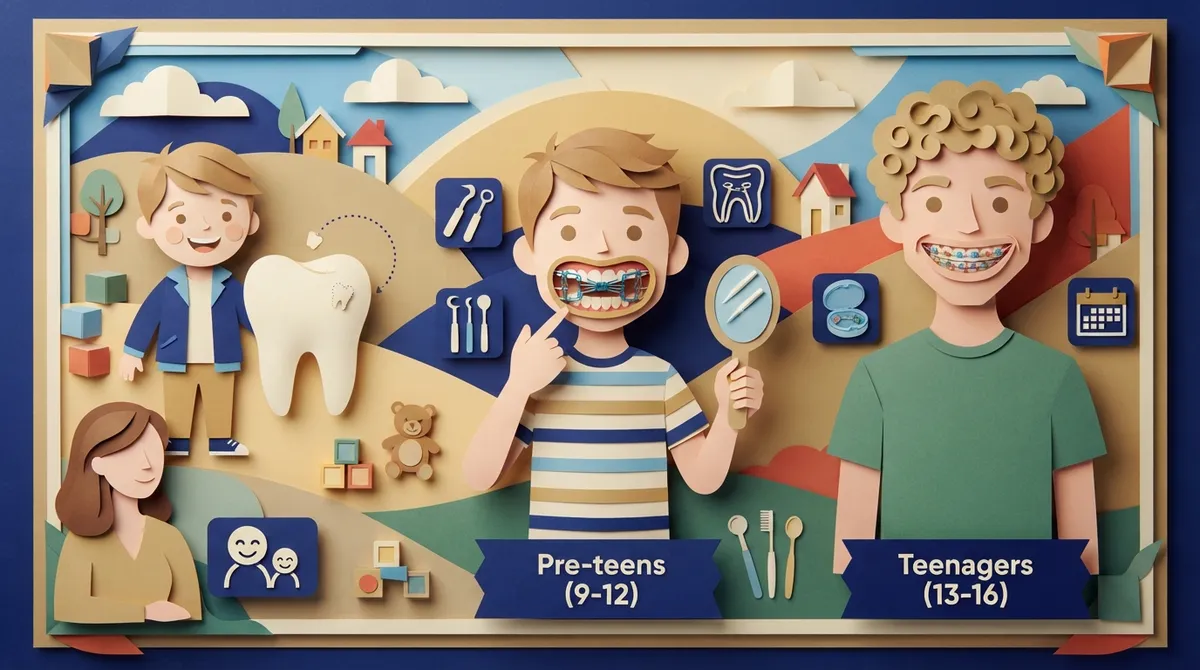
The American Association of Orthodontists (AAO) recommends a first check-up by age 7, or sooner if you or your dentist notice a concern. That might sound early, but here is the sweet part: a check-up does not mean braces right away.
At age 7, an orthodontist simply peeks at how your child’s teeth and jaws are growing. Many kids are just monitored for a while. This can actually save money, because we only start treatment when the timing is right.
Early treatment, sometimes called interceptive treatment, is only recommended for certain growing problems. These include some crossbites, underbites, severe crowding, or jaw-growth concerns. Most other issues are best treated after more permanent teeth come in.
Curious about the right timing for your family? Our guide on when your child should get braces breaks it down simply. You can also learn more about early treatment and who really benefits from it.
Why Waiting Can Be the Smart Choice
Starting treatment at the wrong time can mean longer treatment and higher bills. A good orthodontist will tell you honestly if your child can wait. That honesty is a green flag, not a sales tactic.
Which Type of Braces Is Most Budget-Friendly for Kids?
Traditional metal braces are usually described by the AAO as an effective and comparatively affordable option. They are strong, reliable, and great for many bite problems. Plus, kids love picking colorful bands to show off their personality.
That said, the best choice depends on your child’s bite, growth, goals, and how well they follow care instructions. Here is a quick look at the common options:
| Option | Typical Cost Level | Best For | Things to Consider |
|---|---|---|---|
| Metal braces | Generally the most budget-friendly | Most bite and alignment issues | Visible, but colorful bands make them fun |
| Ceramic (clear) braces | Often higher than metal | Kids and teens who want a subtler look | Need extra care to avoid staining |
| Clear aligners | Varies by case and brand | Mild to moderate cases and responsible wearers | Must be worn consistently to work |
At Brockway Orthodontics, we offer metal braces, ceramic braces, and Spark™ Clear Aligners, which are a more affordable alternative in the clear aligner world. Want the full picture on appliances? Peek at All About Braces or this friendly comparison of braces vs. clear aligners for kids.
How Much Do Braces for Kids Cost, and What Is Included?
This is the number one question we hear, and the honest answer is: it depends. Price varies by location, case difficulty, the appliance chosen, and how long your child needs treatment.
Instead of chasing one magic number, focus on what the quote includes. Two offices can quote the same price but include very different services.
Always ask for a written treatment plan that separates any early phase from later full treatment. Then check whether the fee covers each of these:
- Records: X-rays, photos, and digital scans.
- Appointments: All adjustment visits throughout treatment.
- Retainers: The retainers your child wears after braces come off.
- Repairs: Broken brackets or poking wires.
- Follow-up: Check-ups after treatment ends.
A low advertised price might not include every item above. Asking these questions upfront protects your wallet and keeps surprises away. For a deeper dive, our post on the cost of braces in 2026 walks through the factors in a friendly way.
What Are the Best Ways to Lower Your Out-of-Pocket Costs?
Now for the part every parent wants: real, practical savings. You do not need to do everything, but even one or two of these can make a big difference.
Compare Written Quotes
Visit more than one orthodontist and ask each for a written quote. Compare what is included, not just the bottom line. Many offices offer a free consultation, which makes this step easy and low pressure.
Ask About Payment Plans and Financing
Most orthodontic offices offer monthly payment plans, and some offer no-interest financing. Spreading the cost over time can turn a big bill into a manageable monthly amount. Ask about the down payment, the monthly cost, and whether there are any fees.
You can learn how this works in our guides on orthodontic financing and financing and insurance options.
Check Your Dental Insurance
Some dental plans include orthodontic benefits, but many have a lifetime maximum. That means the plan pays up to a set amount for a person’s entire life, not each year. Call your insurance company and ask these questions:
- Does my plan cover orthodontics for children?
- What is the lifetime orthodontic maximum?
- Is there a waiting period before benefits begin?
- Do I need pre-authorization?
Our helpful post on using dental insurance to help pay for braces explains how to get the most from your plan.
Explore Reduced-Fee and Community Programs
Some dental schools and community programs offer reduced-fee orthodontic care. Availability and eligibility vary a lot, so it is worth a quick search or a call to your local health department.
Use Pre-Tax Health Accounts
If your employer offers a flexible spending account or health savings account, you may be able to use pre-tax dollars for orthodontic costs. Check with your plan administrator to see what applies to your family.
Will Medicaid Pay for Braces for My Child?
For some families, the answer is yes. In the United States, Medicaid’s EPSDT benefit requires coverage of medically necessary orthodontic services for eligible children. This applies when treatment is needed to prevent disease, promote oral health, or restore the teeth and jaws to healthy function.
Here is the important catch: cosmetic-only orthodontics is not covered. Coverage is decided case by case, and state rules and processes vary. A child with a severe bite problem that affects chewing or oral health may qualify, while a child who simply wants straighter teeth likely will not.
If you think your child may qualify, here is a simple path to follow:
- Ask your child’s dentist or orthodontist for an evaluation.
- Request documentation of any medical need, such as trouble chewing or speaking.
- Contact your state Medicaid office to learn its orthodontic criteria and steps.
- Submit the required forms and wait for the medical-necessity decision.
Our team is happy to talk through your options. Just reach out to us and we will point you in the right direction.
How Do You Compare Orthodontists Without Looking Only at Price?
A cheaper quote can become expensive if it leads to delays, repeat visits, or poor results. So when you shop around, weigh more than just the number on the page.
Here is a friendly checklist to bring along to consultations:
- Qualifications: Is the provider a trained orthodontic specialist?
- Treatment plan: Do they explain the plan clearly and in writing?
- Total cost: Is everything included, with no hidden fees?
- Appointment access: Are visit times convenient for your family’s schedule?
- Follow-up: What happens after braces come off?
You can find more tips in 7 mistakes to avoid when choosing an orthodontist and our guide to finding a good pediatric orthodontist. For checking credentials, the American Dental Association is a trusted place to start learning about dental care standards.
What Can Families Do to Avoid Extra Costs During Treatment?
Here is a little secret: how your child cares for their braces can affect the final price. Orthodontic treatment needs regular monitoring and good oral hygiene. Missed visits, broken appliances, or poor brushing can stretch out treatment time and add costs.
Ask your orthodontist how missed appointments, broken brackets, or lost retainers might affect your bill. Then set your child up for success with a few easy habits:
- Keep every scheduled appointment.
- Brush and floss carefully every day.
- Avoid sticky, hard, or chewy foods that can break brackets.
- Wear rubber bands and retainers exactly as directed.
Need a handy list? Our guide on foods to avoid with braces keeps snack time simple. And if your child has a mishap, here is what to do about a broken bracket or poking wire.
Why Do Families in Clearwater Choose Brockway Orthodontics?
At Brockway Orthodontics, we believe great orthodontic care should feel welcoming and within reach. Dr. Brockway is a qualified orthodontist who truly cares about your child’s journey. She listens to your concerns, explains every option in friendly, plain language, and makes sure your family feels comfortable from the very first visit.
We treat the whole family, from young kids to teens and adults. Our office uses modern tools like digital impressions instead of messy molds and 3D imaging for precise planning. In certain cases, we can even offer same-day treatments, which is a lifesaver for busy parents.
Want to know what to expect? Read about your first visit or explore our affordable braces in Clearwater. We also share flexible options in braces payment plans customized to fit your lifestyle. And if you like hearing from real families, see what neighbors say when you visit us on Google — Brockway Orthodontics.
You can also stay connected with our smiling community on Facebook for tips and updates. And for statewide orthodontic information, the Florida Association of Orthodontists is a handy resource.
Your Smart Next Steps Toward Affordable Braces for Kids
Finding affordable braces for kids does not have to feel like climbing a mountain. Start with a check-up around age 7, get written quotes, ask what is included, and use every tool available. That includes payment plans, insurance benefits, health accounts, and Medicaid when your child qualifies.
Remember, the goal is a healthy, confident smile that lasts, delivered at a price your family can feel good about. And you do not have to figure it out alone.
Ready to take the first step? Book your free consultation online and let Dr. Brockway and our friendly team create a clear, honest plan for your child. We cannot wait to meet your family and help your little one smile big!
FAQs
Q: How much do braces for kids cost, and what is included in the price?
A: Costs vary by location, your child’s bite, the type of braces, and treatment length, so it is best to get a local written estimate. Be sure to ask whether the price includes records, visits, retainers, repairs, and follow-up care, because a low quote may leave some of these out.
Q: Does dental insurance cover braces for children?
A: Some dental plans include orthodontic benefits, but many have a lifetime maximum that caps what they will pay. Call your insurance company to ask about coverage, waiting periods, and pre-authorization so you know exactly what to expect.
Q: What is the cheapest type of braces for kids?
A: Traditional metal braces are generally the most budget-friendly option and work well for many bite problems. The best choice still depends on your child’s specific needs, so an orthodontist’s evaluation is the smartest first step.
Q: At what age should a child see an orthodontist?
A: The American Association of Orthodontists recommends a first evaluation by age 7, or sooner if you or your dentist notice a concern. A check-up does not mean braces right away, since many children are simply monitored until treatment is the right fit.
Q: Will Medicaid pay for braces for my child?
A: Medicaid’s EPSDT benefit covers medically necessary orthodontic care for eligible children, but cosmetic-only treatment is not covered. State rules and case-by-case decisions apply, so check with your state Medicaid office and your orthodontist about your child’s situation.
Our Service Area