Key Takeaways
-
Brush after lunch when possible, since the AAO advises brushing about two minutes after meals and snacks, and before bed, to clear plaque trapped around brackets and under wires.
-
If you can't brush at school, rinse thoroughly with plain water to dislodge food, but treat rinsing as a backup and brush as soon as you get home.
-
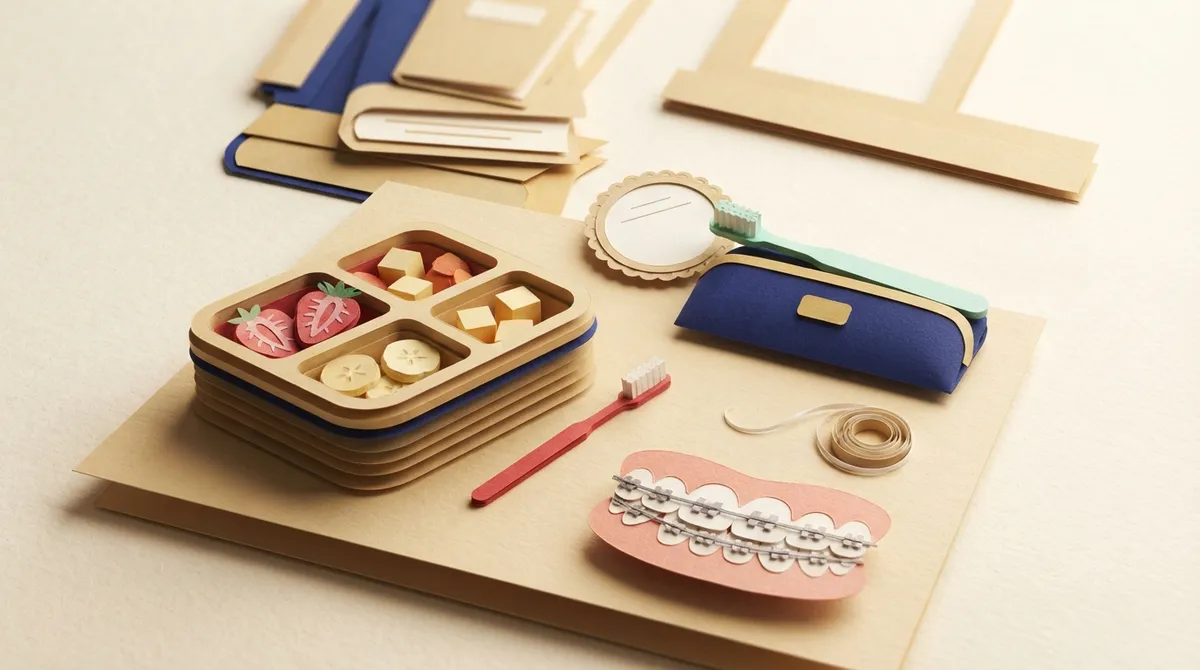
Pack a small hygiene kit with a travel toothbrush, fluoride toothpaste, an interdental brush, floss threaders, a mirror, and orthodontic wax so you never have an excuse.
-
Clean under the wire with an interdental brush, since it reaches the hidden spots between brackets where food and plaque collect.
-
Choose brace-friendly lunches and avoid hard, sticky, or chewy foods like popcorn, hard candy, caramel, gum, and whole raw carrots that can bend wires or pop brackets.
-
Never use toothpicks or pins to clear stuck food, and call your orthodontist if a bracket loosens or a wire pokes your cheek instead of trying to fix it yourself.
Let’s be honest: braces and school can feel like a tricky combo. Between the lunch rush, the bell schedule, and wanting to look cool in front of friends, brushing your teeth in the middle of the day might be the last thing on your mind. But here’s the good news. A simple oral hygiene routine for braces at school is easier than you think, and it can protect your smile for the whole journey.
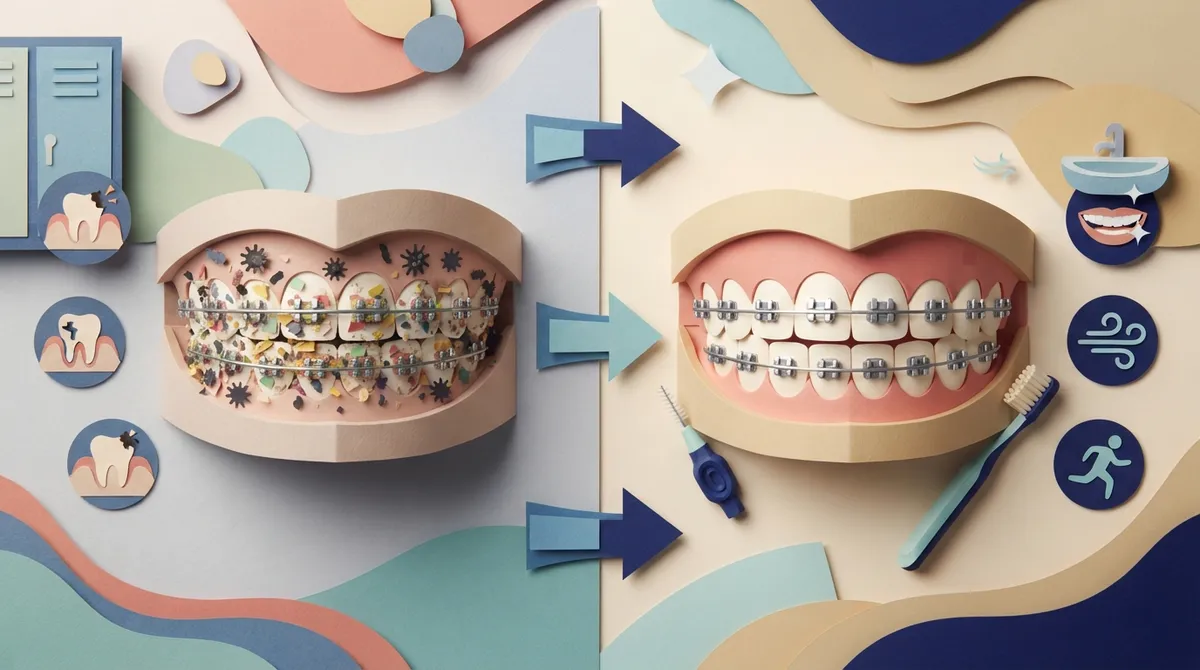
Fixed braces create extra little spots where plaque and food like to hide, around the brackets and under the wires. If those spots stay dirty, they can lead to cavities, puffy gums, and white marks on your teeth once the braces come off. Nobody wants that surprise on debonding day!
In this friendly guide, we’ll walk you through a practical school-day routine, a mini kit you can toss in your backpack, brace-friendly lunch ideas, and what to do when things go wrong. Whether you’re a student, a parent helping a busy teen, or a young adult juggling classes, you’ve got this.
Why Cleaning Braces at School Matters
Think of your braces like a tiny obstacle course for food. Every sandwich, snack, and sip can leave bits behind. Left alone, that sticky film called plaque builds up fast, especially around brackets and along the gumline.
The numbers show why good habits matter. According to the CDC’s 2024 Oral Health Surveillance Report, about 50% of U.S. children aged 6 to 9 had decayed, filled, or missing teeth, and about 10% of adolescents aged 12 to 19 had at least one untreated cavity. Braces make cleaning harder, so a little extra effort goes a long way.
Here’s what a solid school routine helps you avoid:
- Tooth decay around brackets and under wires
- Gum inflammation, which can look red, swollen, or bleed easily
- White or stained marks that show up after braces are removed
- Bad breath from trapped food (a big deal in third-period class!)
Keep in mind that every patient is different. Your orthodontist’s instructions always come first, so follow the advice they give you at your visits.
Pack Your Braces Hygiene Kit for School
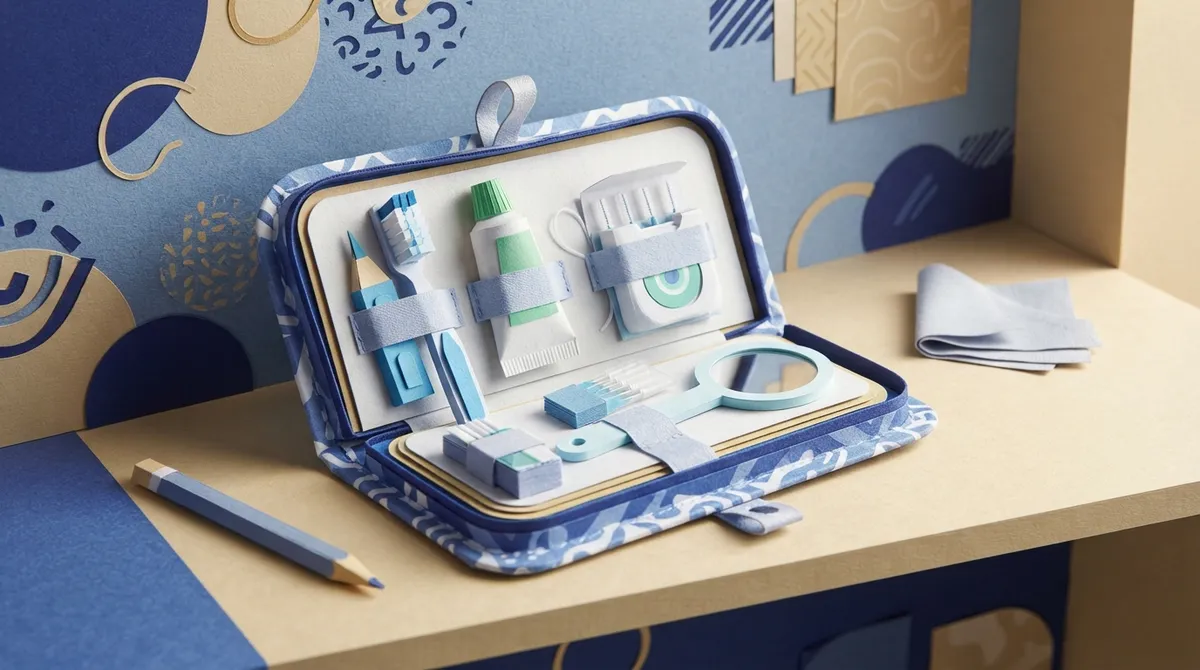
The secret to sticking with any routine is making it easy. A small kit in your backpack means you never have an excuse. Pick a zip pouch or pencil case that fits in a locker or bag pocket.
Here’s what to pack:
- A soft-bristled travel toothbrush with a cap so it stays clean
- Fluoride toothpaste in a travel size
- An interdental brush (those tiny brushes that slip under the wire and around brackets)
- Floss and floss threaders, or an orthodontist-recommended alternative
- A small mirror so you can check for stuck food
- Orthodontic wax in case a wire or bracket feels rough on your cheek
A few handy tips for your kit:
- Let your toothbrush air-dry after use instead of sealing it wet in a bag
- Replace the brush when the bristles start to look bent or frayed
- Never share toothbrushes or oral-care items with friends, even your best friend
Your Step-by-Step Oral Hygiene Routine for Braces at School
Now for the main event. This routine fits into a normal school day, and you can adjust it based on your schedule and your orthodontist’s advice.
Morning: Start Strong at Home
Your day begins before the school bus. Brush for about two minutes with fluoride toothpaste, paying extra attention to the gumline and around each bracket. Floss or use your interdental brush too. A clean start means less plaque to fight with later.
Lunchtime: The Most Important School Step
The best time for your school cleaning is right after lunch. The American Association of Orthodontists (AAO) advises brushing for about two minutes after meals and snacks, and before bed. Here’s how to do it quickly:
- Rinse first. Swish plain water around your mouth to loosen big food pieces.
- Brush above the brackets. Angle your toothbrush down toward the gumline and use small circles.
- Brush below the brackets. Angle the brush up this time so the bristles reach the bottom edge.
- Clean the brackets themselves. Brush across the front of each one.
- Use your interdental brush. Slide it gently under the wire and between the brackets to pull out hidden bits.
- Check the mirror. Make sure no food is clinging anywhere.
Want a deeper dive into technique? Our guide on how to brush your teeth with braces the right way breaks it down even further.
Evening: The Deep Clean
At night, take your time. Brush thoroughly for two minutes, then floss. With braces, regular floss can be threaded under the wire using a floss threader. Some patients also use a water flosser if their orthodontist recommends one. If flossing feels tricky, our post on how to floss with braces has easy steps to follow.
What If You Can’t Brush at School?
Real life happens. Maybe the restroom is crowded, you have a pop quiz, or your next class is across campus. Don’t stress. Here’s your backup plan.
If brushing isn’t possible, rinse thoroughly with plain water after you eat. Swish hard and let the water push food out of your brackets. This helps dislodge food and dilute leftover residue.
Here’s the important part: rinsing is a fallback, not a replacement for brushing. Brush as soon as you can, like right after school or when you get home. Mouthwash can be a nice extra, but it can’t scrub plaque off your teeth either.
What to Do When Food Gets Stuck in Class
We’ve all been there. A bit of spinach or popcorn hull sneaks under the wire right before a presentation. Try this:
- Excuse yourself quietly and head to the restroom
- Rinse with water and swish firmly
- Use your interdental brush to gently clear the spot
- Check your smile in the mirror, then head back to class
Skip toothpicks or pins, since they can damage your brackets or hurt your gums.
Brace-Friendly Lunch and Snack Choices
What you eat affects both your braces and your teeth. Hard, sticky, or chewy foods can bend wires or pop off brackets. Sugary snacks feed plaque too. The good news is that plenty of tasty lunch options are brace-friendly.
| Brace-Friendly Choices | Foods to Avoid or Limit |
|---|---|
| Soft sandwiches on tender bread | Hard candy and jawbreakers |
| Yogurt and cheese sticks | Chewing gum |
| Cooked pasta and soft wraps | Popcorn kernels |
| Bananas, berries, and cut-up apples | Caramel and taffy |
| Hummus with soft veggies | Whole raw carrots and hard pretzels |
| Water as your main drink | Frequent soda and sports drinks |
Water is your best friend at school. It keeps your mouth fresh and helps wash away food between brushing sessions. For more ideas, check out our friendly food guide for braces, and our list of foods to avoid with braces.
A Simple Daily Schedule at a Glance
Here’s how the routine can look across a normal school day:
| Time of Day | What to Do | Time Needed |
|---|---|---|
| Morning | Brush with fluoride toothpaste, floss or use interdental brush | 3 to 5 minutes |
| After lunch | Brush if possible; otherwise rinse with water | 2 to 3 minutes |
| After school snack | Rinse or brush, depending on what you ate | 1 to 2 minutes |
| Bedtime | Thorough brushing, flossing, and quick mirror check | 5 minutes |
Tips for Parents and Teens
If you’re a parent, you can be a big help without nagging. Here are some ideas that really work:
- Stock the backpack kit together so your teen feels ownership
- Keep a spare kit in the car or at home for busy days
- Check in with a friendly question like, “Did you get a chance to brush after lunch?”
- Celebrate good habits, since a clean smile is worth cheering for!
For teens and young adults, a little confidence goes a long way. Brushing at school is totally normal. Lots of students with braces do it, and chances are no one is paying attention. If you’re feeling shy, try going to the restroom a few minutes before the lunch crowd rushes in.
Want more support on this topic? Our post on smart ways to clean teeth with braces offers even more helpful ideas, and our guide to braces for teens covers the whole treatment journey.
When to Call Your Orthodontist
Sometimes a bracket loosens or a wire pokes. If that happens at school, tell a parent or guardian and contact your orthodontic practice for advice. Orthodontic wax can help with irritation for a short time. Please don’t try to repair the appliance with tools or pliers, since that can cause more damage.
Here are signs it’s time to reach out:
- A bracket or band comes loose
- A wire is poking your cheek or gums and wax doesn’t help
- Your gums stay red, swollen, or bleed regularly
- You notice white spots forming around your brackets
Not sure if it’s urgent? Our guide on emergency vs. routine orthodontics can help you decide. Also keep up with your regular dental check-ups during treatment, since cleanings and exams are part of keeping your teeth healthy.
Why Families Trust Brockway Orthodontics
At Brockway Orthodontics, we believe healthy habits are just as important as straight teeth. Dr. Brockway and our team take the time to explain how to care for your braces in a friendly, easy-to-understand way, so you and your family always know what to expect. Whether you choose metal braces, ceramic braces, or Spark Clear Aligners, we’re here to cheer you on at every step.
You can also see what other families say about us. Visit us on Google — Brockway Orthodontics to read reviews from our Clearwater community. For general oral health guidance, the American Dental Association is another trusted resource.
Final Thoughts
A good oral hygiene routine for braces at school doesn’t have to be complicated. Pack a small kit, brush after lunch when you can, rinse with water when you can’t, choose brace-friendly foods, and keep up with flossing every day. Small habits add up to a big, healthy, confident smile.
Have questions about caring for your braces, or thinking about starting treatment? We’d love to meet you! Book your appointment online or contact us today, and let’s get your smile story started.
FAQs
Q: How do you clean braces after lunch at school?
A: Start by rinsing with water, then brush above and below your brackets with a soft travel toothbrush and fluoride toothpaste. Finish with an interdental brush to clear food from under the wire, and check the mirror for anything left behind.
Q: What can I do if I cannot brush my teeth after eating at school?
A: No worries, it happens! Rinse well with plain water to loosen food and wash away residue, then brush thoroughly as soon as you can, like after school. Just remember that rinsing is a backup plan and not a replacement for brushing.
Q: How often should you brush and floss with braces?
A: The American Association of Orthodontists recommends brushing for about two minutes after meals or snacks and before bed, plus flossing daily. Your orthodontist may tailor this advice to you, so always follow their instructions.
Q: Can you use mouthwash instead of brushing with braces?
A: Mouthwash is a nice extra, but it can’t scrub away plaque stuck around your brackets and wires. Think of it as a bonus step, and keep brushing with fluoride toothpaste as your main routine.
Q: What should I do if a bracket or wire comes loose at school?
A: Tell a parent or guardian and call your orthodontic office for advice. Orthodontic wax can ease irritation in the meantime, but please don’t try to fix the braces yourself with tools.
Our Service Area