Key Takeaways
-
Wear your nighttime retainer consistently long-term, as teeth can shift throughout your entire life due to aging, gum changes, and natural pressure from lips and tongue.
-
Start with full-time retainer wear (20-22 hours daily) for the first few months after braces, then transition to nighttime-only wear once teeth stabilize, following your orthodontist's specific timeline.
-
If you skip retainer wear and it feels tight when you put it back in, contact your orthodontist immediately instead of forcing it, as this indicates tooth shifting that needs professional assessment.
-
Choose a retainer type you'll actually wear consistently—clear vacuum-formed retainers work well for most people, while bonded retainers offer slightly better stability but require meticulous daily cleaning.
-
Maintain your retainer by rinsing with cool water, brushing gently with mild soap, storing in its case, and never exposing it to heat, hot beverages, or pets to prevent warping and loss.
-
Watch for warning signs like persistent rubbing, looseness, cracks, or visible gaps between teeth, and schedule a check-up promptly to prevent further shifting and the need for retreatment.
So you just got your braces off, or maybe you finished your last clear aligner tray. Congratulations! Your smile looks amazing. But here’s the thing nobody warns you about enough: your teeth still want to move. That’s where a nighttime retainer comes in, and honestly, it’s one of the most important parts of your whole orthodontic journey. Many patients ask us the same question at Brockway Orthodontics: do I really need to wear this thing forever, or can I switch to nights only pretty soon?
This guide compares full-time retainer wear against nighttime-only wear, so you know exactly what to expect at each stage. We’ll walk through the science, the timelines, and the everyday tips that keep your smile exactly where you want it. Whether you’re a parent watching over a teen’s retainer habits, a busy professional squeezing in appointments, or someone returning for retreatment after a relapse, this article is for you. Let’s get into it.

What Is a Nighttime Retainer, Exactly?
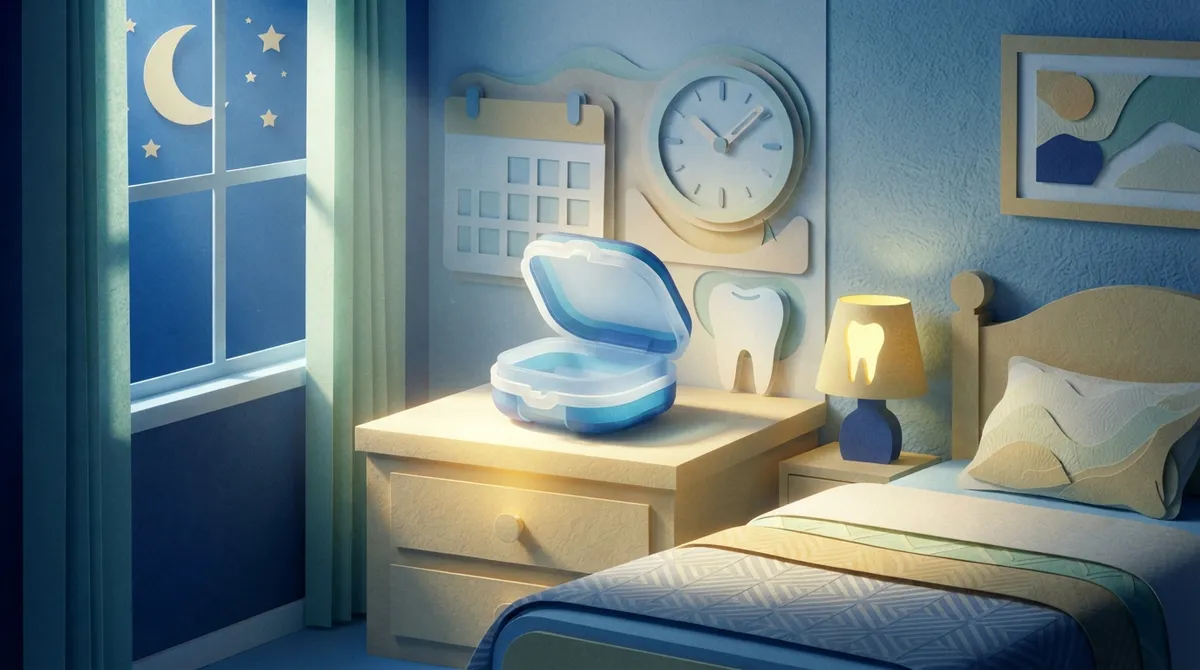
A nighttime retainer is a removable orthodontic appliance you wear while you sleep. Its job is simple: hold your teeth in their new position after braces or Spark™ Clear Aligners treatment. Unlike braces, it doesn’t move teeth. It just keeps them from drifting back.
Think of it like a seatbelt for your smile. Your teeth just went through a big change, and the bone and tissue around them need time to settle. Skip the retainer, and those teeth can slowly shift back toward their old spots. That’s the last thing you want after months (or years) of hard work.
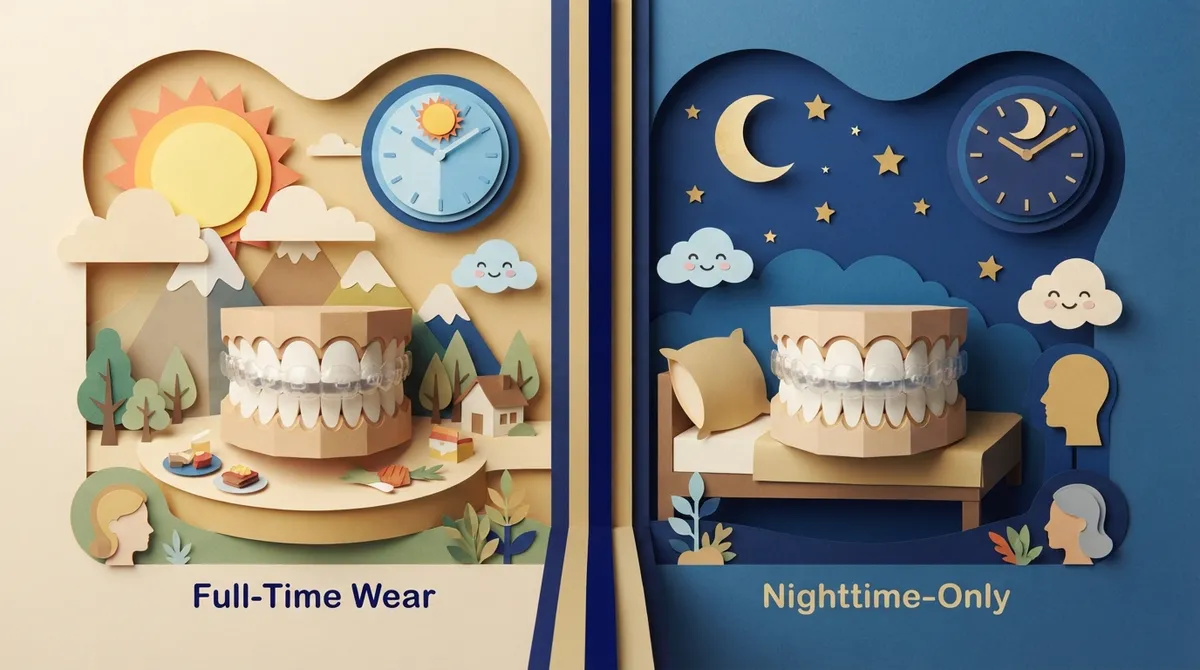
Full-Time Wear vs. Nighttime-Only: The Key Differences
Most orthodontic plans start with a full-time wear phase before moving to nights only. Here’s how the two stages usually compare.
| Feature | Full-Time Wear | Nighttime-Only Wear |
|---|---|---|
| When it’s used | First few months after braces or aligners | After teeth have stabilized, often long-term |
| Hours per day | 20-22 hours, removed for eating | 8-10 hours while sleeping |
| Purpose | Lock in new tooth position quickly | Maintain alignment over the long haul |
| Flexibility | Low, needs near-constant wear | Higher, fits into daily life easily |
| Risk if skipped | Faster relapse in early weeks | Gradual shifting over months or years |
Your orthodontist decides the exact schedule based on your bite, your age, and how much your teeth moved during treatment. There’s no single rule that fits everyone, so always follow what your provider tells you rather than a friend’s timeline.
Why Long-Term Nighttime Wear Still Matters
Here’s a fact that surprises a lot of patients: teeth can shift throughout your whole life, not just right after braces. Aging, gum changes, and even the natural pressure from your lips, cheeks, and tongue can nudge teeth out of place over time. That’s why many orthodontists, including our team at Brockway Orthodontics, recommend nighttime retainer wear indefinitely.
This isn’t just a sales pitch. Clinical guidance from hospital orthodontic departments commonly supports nightly wear for the long run, sometimes easing up to a few nights a week later on if your teeth stay stable. Your specific plan may differ, so it’s worth discussing during your next visit.
What Happens If You Stop Wearing It
Life gets busy. Maybe you misplaced your retainer for a few weeks, or maybe you just got lazy. Either way, here’s what tends to happen:
- Your retainer starts feeling tight or uncomfortable when you put it back in
- Small gaps or overlaps can start reappearing, especially on the lower front teeth
- You may need refinement trays or even a short round of braces again to correct the relapse
- The longer you wait to address it, the more treatment you may need later
If your retainer feels tight after a break in wear, don’t force it. Reach out to your orthodontist right away. Pushing a tight retainer into place can cause discomfort and won’t fix the underlying shift.
Types of Nighttime Retainers Compared
Not all retainers are the same. Choosing the right one often depends on your bite, your lifestyle, and your orthodontist’s recommendation. Here’s a quick breakdown.
- Clear vacuum-formed retainers (often called Essix retainers): These are thin, transparent plastic trays that fit snugly over your teeth. They’re popular because they’re nearly invisible and comfortable for sleeping.
- Hawley retainers: These have a pink acrylic base with a metal wire across the front teeth. They’re durable and adjustable, which some orthodontists prefer for certain bite corrections.
- Bonded (fixed) retainers: A thin wire glued behind your front teeth. These stay in all the time, including at night, and aren’t removed for sleep. They require careful brushing and flossing since food and plaque can build up around the wire.
A 2020 meta-analysis found that removable retainers do a solid job of maintaining alignment after braces, though fixed retainers showed slightly stronger results in some studies. The researchers noted the evidence certainty was low for several outcomes, so results can vary from patient to patient. In that same review, mandibular removable retainers showed an average change of about 0.72 mm on an irregularity scale, while upper arch retainers averaged around 0.48 mm. These numbers describe study averages, not a promise for your individual results.
Bonded vs. Removable: Which Wins for Long-Term Stability?
A separate review comparing bonded and vacuum-formed retainers found bonded retainers may offer better lower-arch stability over time. Both types performed similarly for the upper arch. The tradeoff? Bonded retainers tend to collect more plaque and calculus, so you’ll need to be extra diligent about cleaning around that wire every single day.
Interestingly, a 2025/2026 review looking at “smart retainers” with built-in wear-time sensors found no real improvement in how long people actually wore them. The average difference was less than an hour per day, and the researchers called the evidence uncertain. In other words, the retainer that works best is usually the one you’ll actually wear consistently, smart features or not.
How to Care for Your Nighttime Retainer
Good habits make your retainer last longer and keep your mouth healthy. Follow these simple steps:
- Remove your retainer before eating or drinking anything other than water.
- Rinse it with cool or lukewarm water after taking it out, never hot water, since heat can warp clear plastic.
- Brush it gently with a soft toothbrush and mild soap, or use a cleaner your orthodontist recommends.
- Store it in its case whenever it’s not in your mouth. Never wrap it in a napkin (it’s an easy way to lose it in the trash).
- Keep it away from pets. Dogs especially seem to love chewing on retainers.
- Bring it to every orthodontic appointment so your provider can check the fit.
The American Dental Association also recommends daily cleaning of any removable oral appliance to prevent bacteria buildup, which applies directly to your retainer routine.
Signs Your Retainer No Longer Fits
Your retainer should feel snug but never painful. Watch for these warning signs:
- Persistent rubbing or sore spots on your gums
- A retainer that suddenly feels loose or, conversely, too tight to seat fully
- Cracks, warping, or a wire that feels loose from the acrylic base
- Visible gaps forming between your teeth again
If you notice any of these, don’t wait it out. Contact your orthodontic office promptly, since delaying replacement can allow more shifting to happen. This is exactly the kind of issue our team handles often for retainer patients in Clearwater who come back after a busy season of forgetting their nightly routine.
Who Needs to Pay Extra Attention to Nighttime Retainer Wear?
While everyone benefits from good retainer habits, a few groups should be especially mindful:
- Parents of teens: Teenagers are notorious for skipping retainer wear. Gentle reminders and a consistent bedtime routine go a long way.
- Adult professionals: Busy schedules make it tempting to skip nights here and there. Keeping your retainer by your toothbrush helps build the habit.
- Orthodontic relapse patients: If you’ve had shifting before, your orthodontist may recommend a stricter wear schedule to protect your investment in retreatment.
- Health-conscious individuals with periodontal concerns: Gum health changes can affect tooth stability, making consistent retainer wear even more important.
For families managing braces and retainers across multiple ages, our full range of services is designed to make every stage of treatment easier to understand and follow through on.
Frequently Overlooked Retainer Questions
Can you eat or drink with your retainer in? Not really, aside from sipping plain water. Food particles can get trapped, and hot beverages can warp clear plastic retainers. Always pop it out before meals and snacks.
What about the transition schedule from full-time to nights only? This varies a lot. Some patients move to nighttime-only wear after just a few months. Others need a longer full-time phase depending on how much movement occurred during active treatment. Your orthodontist will guide you based on your specific case, not a one-size-fits-all calendar.
Why Choose Brockway Orthodontics for Your Retainer Care
Dr. Brockway and her team believe your orthodontic journey doesn’t end when the braces come off. Long-term retention is just as important as the active treatment phase, and we treat it that way. From your first visit through years of follow-up retainer checks, we’re here to answer questions, adjust your appliance, and make sure your smile stays exactly where it belongs.
We serve families throughout Clearwater with treatments for every age, from adolescent treatment to adult treatment options, including our popular Spark™ Clear Aligners as an affordable alternative to other aligner brands. Curious what other patients say about their experience? You can visit us on Google — Brockway Orthodontics to read real reviews from our community. You can also connect with us on Facebook or follow along on Instagram for smile tips and patient stories.
For broader guidance on orthodontic standards of care in our state, the Florida Association of Orthodontists is a helpful resource for finding board-certified providers and understanding treatment expectations.
Wrapping Up: Your Smile Deserves the Long Game
A nighttime retainer might seem like a small, easy-to-forget step after all the hard work of braces or aligners. But it’s honestly one of the most important habits you’ll build for your smile’s future. Whether you stick with a clear vacuum-formed retainer, a Hawley retainer, or a bonded wire, consistency is what keeps your teeth exactly where they belong.
If your retainer feels off, if it’s been a while since your last check, or if you’re just getting started with retention after finishing treatment, we’d love to help. Book appointment online with our Clearwater team today, and let’s make sure your smile stays as bright as the day your braces came off.
FAQs
Q: How long do I need to wear a retainer at night after braces?
A: Most patients wear their retainer nearly full-time for the first few months, then switch to nights only. Many orthodontists recommend continuing nighttime wear long-term, even for years, since teeth can shift throughout life. Your exact timeline depends on your bite and how your orthodontist sees your teeth settling.
Q: Do I have to wear my retainer every night for the rest of my life?
A: For many patients, yes, some form of long-term nighttime wear is recommended because teeth naturally shift with age. Some orthodontists may eventually approve fewer nights per week once your smile proves stable. It’s always best to follow your own provider’s specific instructions rather than a general rule.
Q: What happens if I stop wearing my nighttime retainer?
A: Your teeth can gradually drift back toward their old positions, sometimes within just a few weeks or months. You might notice your retainer feels tight when you try it again, which is a sign of movement. If this happens, reach out to your orthodontist rather than forcing it back into place.
Q: Can I eat or drink while wearing a nighttime retainer?
A: You should remove your retainer for anything except plain water. Eating with it in can damage the plastic or wire, and sugary or hot drinks can cause warping or bacteria buildup. Just pop it out, enjoy your snack, then pop it back in afterward.
Q: How should I clean and store my nighttime retainer?
A: Rinse it with cool or lukewarm water and brush gently with a soft toothbrush and mild soap. Avoid hot water since it can warp clear plastic retainers. Always store it in its ventilated case when you’re not wearing it, and keep it far away from curious pets.
Our Service Area