Key Takeaways
-
Palatal expansion widens the actual bone structure of the upper jaw rather than just moving teeth, making it essential for crossbites and severe crowding that braces alone cannot fix.
-
Ages 8-15 are ideal for traditional expansion when the mid-palatal suture is still soft, but MARPE and SARPE techniques now offer 92-94% success rates for older teens and adults.
-
Expansion typically involves 48.85% true skeletal bone change, 43.63% dental tipping, and 7.52% alveolar change, with younger patients seeing more stable bone widening results.
-
Active treatment takes 20-126 days depending on the appliance type, followed by a critical retention period where the expander stays passive to allow new bone to stabilize and prevent relapse.
-
Most patients experience pressure and mild soreness rather than sharp pain, with temporary side effects like speech changes and extra saliva that typically resolve within one to two weeks.
-
Palatal expansion is step one in a two-phase approach: expansion creates space first, then braces or clear aligners fine-tune individual tooth positions for optimal alignment.
If your child’s orthodontist just mentioned “palatal expansion,” you probably have a dozen questions bouncing around your head. Will it hurt? Is it even necessary? And why can’t braces just do the job alone? You’re not alone in asking these things. Parents in Clearwater ask us these same questions every week, and honestly, we love answering them. Getting the full picture helps you feel confident about your child’s (or your own) treatment plan.
This guide breaks down palatal expansion in plain language. We’ll compare it to braces-only treatment, explain who needs it, and walk through what to expect at every age. By the end, you’ll understand why this small appliance can make a big difference in your smile’s future.
What Is Palatal Expansion, Exactly?
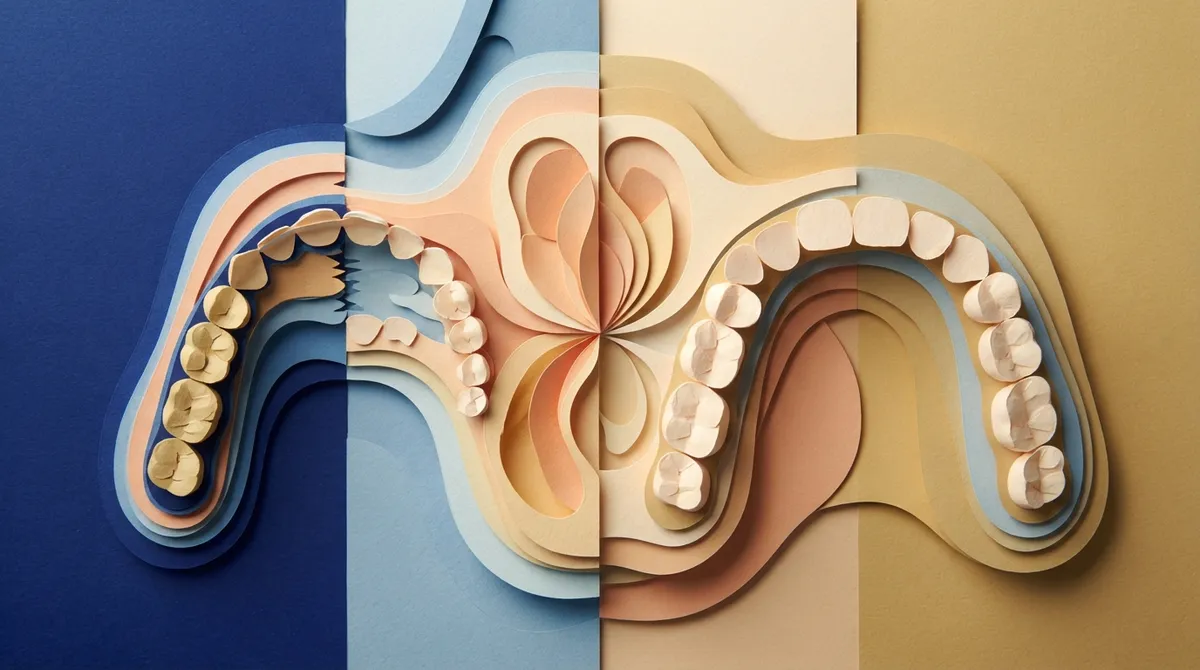
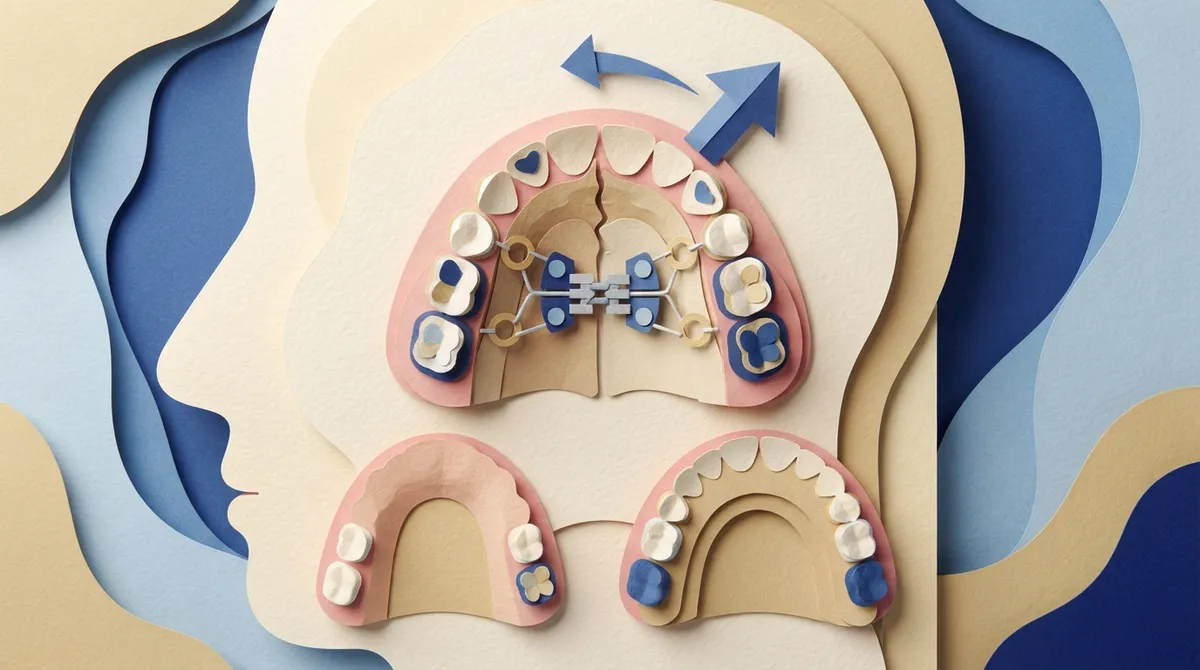
Palatal expansion, also called maxillary expansion, widens a narrow upper jaw. It works by applying steady, gentle pressure to the roof of the mouth and upper teeth. The goal is simple: create more room and fix a bite problem called posterior crossbite.
Think of your upper jaw like a shoe that’s too tight. Braces can shuffle teeth around inside that tight shoe, but sometimes the shoe itself needs to get bigger first. That’s exactly what a palate expander does. It widens the actual bone structure, not just the teeth sitting on top of it.
Why Would Someone Need This Treatment?
Not every patient needs palatal expansion. But for the right cases, it solves problems that braces alone simply cannot fix. Common reasons a dentist or orthodontist might recommend expansion include:
- A crossbite where upper teeth sit inside the lower teeth instead of outside
- A narrow, V-shaped upper arch instead of a rounded one
- Serious crowding with no room for teeth to line up properly
- Not enough space for permanent teeth to come in normally
- Impacted canines that are stuck and can’t erupt on their own
- A jaw that shifts to one side when biting down, caused by a crossbite
If any of these sound familiar, your orthodontist will likely bring up expansion during your first visit. It’s a normal part of building a solid treatment plan, not a sign that something went wrong.
Palatal Expansion vs. Braces Alone: The Real Comparison
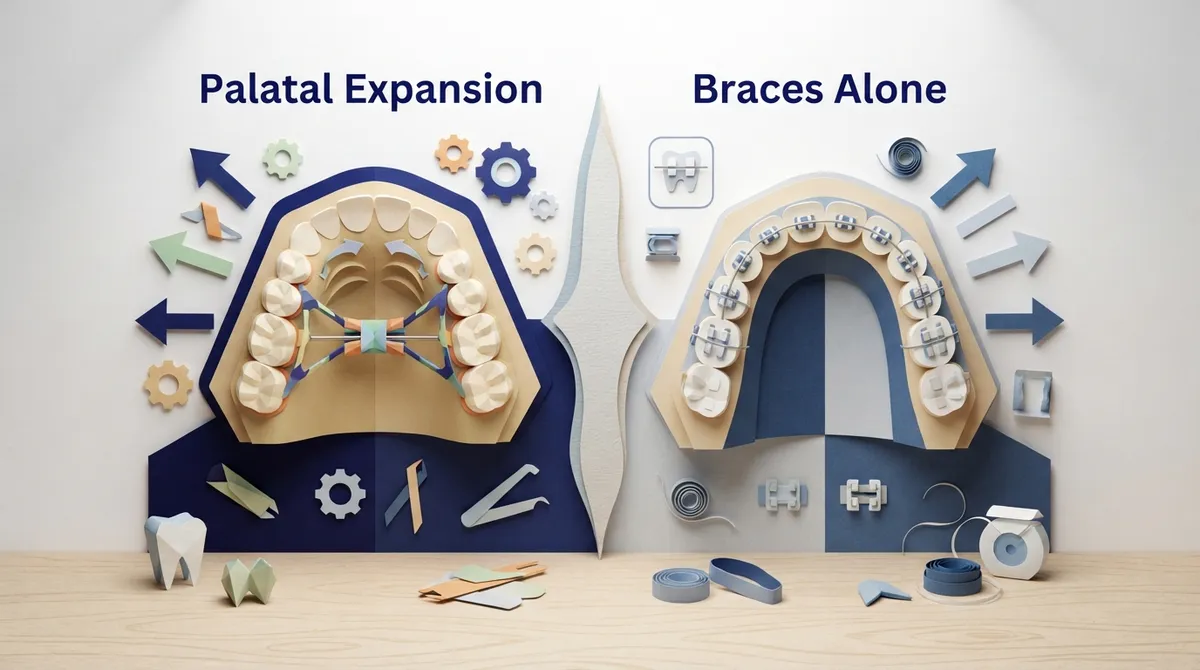
Parents often ask, “Can’t we just skip the expander and go straight to braces?” Sometimes, yes. But often, no. Here’s how the two approaches stack up against each other.
| Factor | Palatal Expansion First | Braces Alone |
|---|---|---|
| Fixes narrow jaw width | Yes, creates real skeletal room | No, only moves teeth within existing space |
| Best for crossbite | Highly effective, corrects root cause | May mask the problem temporarily |
| Treatment time | Weeks of activation, then months of stability | Ongoing tooth movement over many months |
| Ideal age | Most predictable ages 8 to 15 | Works well after growth or alongside expansion |
| Long-term stability | Strong when done during growth years | Can relapse if underlying width issue ignored |
The short answer? These two treatments usually work as a team, not as competitors. Expansion widens the foundation. Braces or Spark™ Clear Aligners then fine-tune the individual teeth into their final positions.
Why Age Matters So Much
Here’s something every parent should know: timing changes everything with palatal expansion. The bone in the middle of the roof of your mouth is called the mid-palatal suture. In kids, this suture is still soft and open, making expansion fairly straightforward.
As we get older, that suture fuses and hardens. This means the same treatment becomes much harder to pull off in teens and adults without extra help. According to one orthodontic evidence guide, ages 8 to 15 are generally the sweet spot for traditional expansion. After that window closes, treatment options shift.
Options for Older Teens and Adults
Just because someone missed the ideal window doesn’t mean expansion is off the table. Two modern approaches have changed the game for older patients:
- MARPE (Miniscrew-Assisted Rapid Palatal Expansion): Tiny screws anchor the expander directly into bone, giving it more grip on a stubborn suture.
- SARPE (Surgically Assisted Rapid Palatal Expansion): A minor surgical procedure loosens the suture first, then the expander does its job.
These aren’t experimental gimmicks anymore. A 2021 systematic review found MARPE had a mean success rate of 92.5% in late adolescents and adults. A separate 2023 review reported a similar success rate of 93.87%, with results ranging from 82.9% to 100% across different studies. That’s genuinely encouraging news for adults who assumed expansion wasn’t an option for them.
That said, the same research notes the evidence quality is still considered low. Success rates and complication rates vary a lot depending on age, anatomy, and the specific appliance used. This is exactly why individualized treatment planning matters so much, and why working with an experienced adult orthodontic provider makes a real difference.
Types of Palate Expanders: A Quick Breakdown
Not all expanders look or work the same way. Your orthodontist chooses the right type based on your age, diagnosis, and how much widening you need.
| Appliance Type | How It’s Held in Place | Best For |
|---|---|---|
| Tooth-borne expander | Attached to back teeth with bands | Growing children with open sutures |
| Tissue or bone-supported expander | Rests against the palate itself | Cases needing more skeletal control |
| Removable expander | Comes in and out like a retainer | Mild cases, younger patients |
| Fixed expander | Cemented in place, cannot be removed | Most standard rapid expansion cases |
| MARPE appliance | Anchored with miniscrews into bone | Late teens and adults with fused sutures |
| Surgically assisted (SARPE) | Combined with a small surgical procedure | Adults where nonsurgical options won’t work |
Rapid vs. Slow Expansion: What’s the Difference?
You may also hear your orthodontist mention “rapid” versus “slow” expansion. Both use a small screw mechanism, called a jackscrew, that gets turned on a schedule. The difference is speed and pressure.
- Rapid expansion uses faster activation, often turning the screw once or twice daily
- Slow expansion uses gentler, more gradual pressure over a longer stretch of time
- Rapid protocols tend to produce more skeletal (bone) change in younger patients
- Slow protocols may reduce some discomfort but take longer to reach the goal
Your orthodontist picks the protocol based on your specific diagnosis, age, and periodontal health. There’s no one-size-fits-all answer here, which is why a proper evaluation always comes first.
What Does Treatment Actually Feel Like?
Let’s talk about the part everyone really wants to know: does it hurt? The honest answer is that most patients feel pressure and mild soreness, not sharp pain. Think of it like the feeling after getting braces tightened, just in the roof of your mouth instead.
Here’s what you or your child can expect during active treatment:
- A feeling of pressure or tightness, especially right after each activation
- Mild soreness that usually fades within a day or two
- Extra saliva production, especially in the first few days
- Temporary changes in speech until the tongue adjusts
- A noticeable gap between the front teeth, which is completely normal and often closes later
- Some difficulty cleaning around the appliance at first
These side effects are expected and temporary. Most kids adjust within a week or two and barely notice the appliance after that. Parents are often more nervous about this step than the kids themselves!
How Long Does the Whole Process Take?
Timing varies quite a bit depending on the appliance and the amount of expansion needed. Research on MARPE treatment found expansion durations ranging anywhere from 20 to 126 days. That’s a big range, which shows just how much individual factors matter.
Here’s a general step-by-step overview of what the process usually looks like:
- Initial exam and imaging to confirm the diagnosis and measure the crossbite
- Custom appliance fitting, either tooth-borne, bone-anchored, or removable
- Active expansion phase, where the screw is turned on a set schedule
- A retention period where the appliance stays passive to let new bone form
- Transition into braces or clear aligners to finish aligning individual teeth
- Long-term retention with a retainer to maintain the new width
That retention phase matters more than people realize. The bone needs time to fill in and stabilize after expansion. Skipping this step is one of the biggest reasons relapse happens later.
Skeletal Change vs. Dental Tipping
One thing that surprises a lot of parents: not all expansion happens in the bone. Some of it happens because the teeth themselves tip outward, which is a different kind of movement.
A 2023 systematic review on MARPE found that expansion broke down roughly like this:
- About 48.85% came from actual basal skeletal change (real bone widening)
- Roughly 7.52% came from alveolar change (the bone directly around the tooth roots)
- Around 43.63% came from dental change (the teeth tipping or moving)
In younger, growing patients, a bigger share of the result tends to come from true skeletal widening. In older patients, more of the change comes from tooth movement and adaptation of the surrounding gum and bone tissue. This is another reason why starting treatment earlier, when appropriate, often produces more stable, predictable results.
Possible Risks and Side Effects
No orthodontic treatment is completely risk-free, and honesty matters here. Palatal expansion is generally safe and well-studied, but it’s worth understanding potential complications before starting.
| Potential Issue | How Common It Is |
|---|---|
| Incomplete expansion or relapse | Varies by age and appliance type |
| Mild gum irritation or recession | Possible, especially with tooth-borne expanders |
| Appliance breakage | Uncommon but can happen with hard foods |
| Miniscrew loosening (MARPE only) | Reported in some studies, varies widely |
| General complications in adult nonsurgical expansion | One review cited around 18.5% |
A small 2025 retrospective study of 24 MARPE patients found that 33.3% had some reported complication, while 58.3% experienced no adverse events at all. Two patients had procedural delays linked to screw-locking defects. These numbers are based on a small sample, so they shouldn’t be treated as a guarantee for every patient. Still, they highlight why follow-up visits and careful monitoring matter throughout treatment.
Can Expansion Help With More Than Just Crowding?
Absolutely. While crowding and crossbite are the most common reasons for treatment, expansion can also support other goals. It sometimes helps free up space for impacted teeth trying to erupt. It can correct a functional shift in the jaw caused by an uneven bite. Some families also ask about airway and breathing concerns, which is a growing area of interest in orthodontic research, though it should always be discussed directly with your provider rather than assumed as a guaranteed outcome.
If you’re weighing your options for your child or considering treatment for yourself as an adult, a personalized consultation is really the only way to know what’s right for your specific bite. Every mouth is different, and cookie-cutter answers rarely hold up under a real exam.
Why Choose Brockway Orthodontics for Your Family’s Care
At Brockway Orthodontics in Clearwater, we’ve built our practice around exactly this kind of personalized planning. Dr. Brockway takes the time to explain every option clearly, whether that’s a palate expander, traditional metal braces, ceramic braces, or Spark™ Clear Aligners, our more affordable alternative to Invisalign. We use modern tools like digital impressions and 3D imaging to plan treatment precisely, so there are no surprises along the way.
We also know families are busy. That’s why we offer same-day treatment options in certain cases, so your child doesn’t need multiple visits just to get started. Whether you’re bringing in a seven-year-old for an early treatment evaluation or exploring adolescent treatment options for a teenager, our team walks you through every step together.
Curious what other Clearwater families think of their experience with us? Feel free to visit us on Google — Brockway Orthodontics and read real reviews from patients just like you. We also recommend checking resources from the Florida Association of Orthodontists and the American Dental Association if you want to dig deeper into general orthodontic health guidelines.
Getting Started With a Confident Plan
Palatal expansion isn’t a scary word, it’s simply a tool that helps create the space your smile needs to thrive. Whether your child needs a straightforward expander or you’re an adult exploring MARPE options later in life, the right diagnosis makes all the difference. Working with an experienced team means you get an honest assessment, not a one-size-fits-all recommendation.
If you’ve been wondering whether palatal expansion is right for your family, there’s no better next step than a real conversation with a specialist who knows your options inside and out. Book your appointment online today, and let’s map out a treatment plan that fits your smile and your life. You can also follow along with patient stories and smile transformations on our Instagram and Facebook pages.
FAQs
Q: Does palatal expansion hurt?
A: Most patients feel pressure and mild soreness rather than sharp pain, especially right after each activation. The discomfort usually fades within a day or two, and most kids adjust within a week or two without much trouble at all.
Q: At what age is palatal expansion most effective?
A: Ages 8 to 15 are generally the sweet spot, since the mid-palatal suture is still soft and easier to widen. After that window, options like MARPE or surgically assisted expansion often become necessary.
Q: Can adults get a palate expander without surgery?
A: Yes, in many cases! MARPE, or miniscrew-assisted rapid palatal expansion, has shown success rates above 90% in recent studies for late adolescents and adults. It’s not guaranteed for everyone, so a personalized evaluation is key.
Q: How long do you need to wear a palatal expander?
A: Active expansion can take anywhere from a few weeks to a few months, depending on the appliance and how much widening is needed. After that, the appliance usually stays in passively for a retention period to let the bone stabilize.
Q: Will palatal expansion replace the need for braces?
A: Not usually. Expansion widens the jaw and creates space, but braces or clear aligners are typically still needed afterward to fine-tune each tooth into its ideal position. Think of it as step one in a bigger plan.
Our Service Area