
Key Takeaways
-
Verify that your orthodontist completed a 2-3 year specialty residency after dental school and check their state license and AAO membership before committing to treatment.
-
A trusted orthodontist conducts a thorough exam with records (X-rays, photos) before recommending treatment and explains costs, timing, alternatives, and risks in plain language.
-
Orthodontic specialists handle complex bite and jaw problems better than general dentists offering braces, as they have dedicated training focused solely on tooth movement and jaw development.
-
Ask about your complete treatment plan including emergency procedures, retainer care after braces are removed, and payment options to avoid surprises and ensure long-term success.
-
The right treatment option (braces vs. aligners) depends on your specific case complexity; a trusted provider explains why one fits you rather than pushing one product to everyone.
-
Red flags include treatment recommendations without an exam, vague pricing, pressure to sign immediately, or dismissing your questions—compare multiple consultations before deciding.
Picture this: your teen has just asked for braces, or you have finally decided to fix the smile you have hidden for years. You type “trusted orthodontist” into a search bar and get a wall of options. Some are dentists who offer braces on the side. Others are true specialists. How do you tell them apart, and which one is right for you?
Good news: you do not need a dental degree to sort this out. A trusted orthodontist is a licensed dental specialist with extra training who gives a careful diagnosis, explains your options clearly, and is honest about costs, timing, and follow-up. In this friendly guide, we compare a dedicated orthodontic specialist with a general dentist who offers braces. We will walk through credentials, consultations, treatment options, and the questions worth asking. By the end, you will feel ready to choose with confidence, whether you are a parent, a teen, a busy professional, or someone returning for a second round of treatment.

What Does “Trusted Orthodontist” Really Mean?
Trust is built on a few simple things. It is not about the flashiest ad or the lowest price. A trusted orthodontist usually shows these traits:
- Specialty training: Extra education focused only on moving teeth and guiding jaw growth.
- A real diagnosis: An exam and records before any treatment is recommended.
- Clear talk: Plain-English explanations of costs, timing, risks, and alternatives.
- Continuity of care: A plan for emergencies, broken wires, and retainers after treatment ends.
Think of it like choosing a family doctor. You want someone who listens, explains, and sticks with you. That same feeling should guide you here. If you would like a deeper checklist, our guide on how to choose an orthodontist covers more ground.
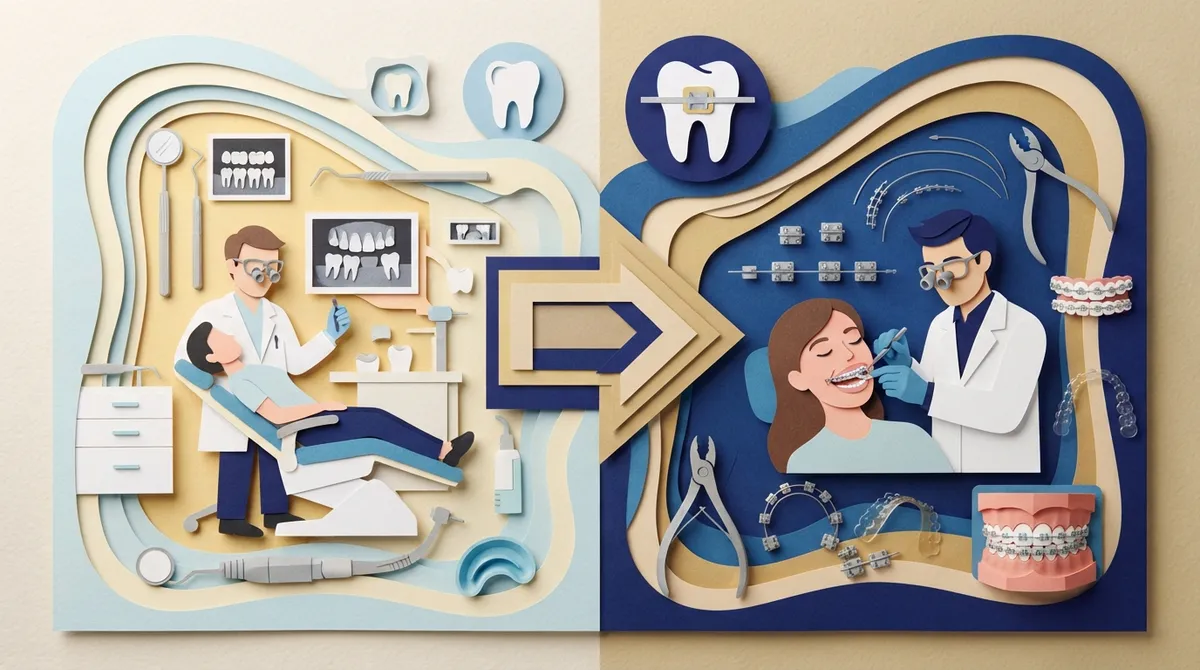
Orthodontic Specialist vs. General Dentist: The Core Difference
Here is the heart of the comparison. Both professionals care about your smile, and both can be wonderful. But their training paths are different.
An orthodontist is a dentist who finishes dental school and then completes an extra residency in orthodontics and dentofacial orthopedics. The American Board of Orthodontics describes this as typically an additional 2 to 3 years in an accredited program. A general dentist covers a wide range of care, such as cleanings, fillings, and crowns. Some offer braces or aligners after shorter courses.
Neither choice is automatically wrong. Still, for moving teeth and correcting bites, the specialist has spent years doing just that. Want a closer look? We break it down further in why see an orthodontist vs a dentist.
Side-by-Side Comparison
| Factor | Orthodontic Specialist | General Dentist Offering Braces |
|---|---|---|
| Training | Dental school plus 2–3 year orthodontic residency | Dental school plus optional short courses |
| Daily focus | Tooth movement, bite, and jaw development | Broad dental care across many areas |
| Case complexity | Handles simple to complex bites | Often best for mild, simple cases |
| Treatment options | Usually braces, ceramic braces, and aligners | May be limited to one or two systems |
| Best for | Kids, teens, adults, and retreatment cases | Minor alignment tweaks, when convenient |
The takeaway: if your case is anything beyond minor, the specialist path gives you more depth and more tools.
How to Verify Credentials Like a Pro
Trust, but verify. It only takes a few minutes, and it is completely normal to ask. Here is a simple process:
- Ask about specialty training. Confirm the provider completed an orthodontic residency after dental school.
- Check professional membership. American Association of Orthodontists (AAO) membership is limited to orthodontists who completed specialty education, so it is a helpful marker.
- Look up the state license. Your state dental licensing board can confirm the license is active.
- Ask about board certification. This one is optional but meaningful, as we explain below.
- Read patient feedback. Look for patterns about communication and follow-up, not just a star rating.
You can also look to groups like the Florida Association of Orthodontists and the American Dental Association for general guidance on dental care and professional standards.
Board Certification: A Bonus, Not a Requirement
Here is something many people mix up. Finishing an orthodontic residency is not the same as being board certified. ABO board certification is voluntary. It involves written and clinical exams, and it is time-limited, so it must be renewed. The ABO notes renewal requirements must be met every 10 years. If a provider is certified, that is a great sign of commitment. If not, it does not automatically mean they are less skilled. The key is verified specialty training. Our article on choosing a board certified orthodontist you can trust explains more.
What a Trustworthy Consultation Looks Like
Your first visit tells you a lot. A trustworthy consultation should feel like a conversation, not a sales pitch. Expect an exam, and records such as photos and X-rays when appropriate, so the orthodontist can study your teeth, bite, and the structures underneath.
You should leave knowing what is going on in your mouth and what your choices are. If you want a preview, see your first visit or read about what to expect and why it matters.
Green Flags vs. Red Flags
| Green Flags | Red Flags |
|---|---|
| Exam and records before recommending anything | A treatment pitch with no exam |
| Explains alternatives and why one fits you | Pushes one product for everyone |
| Gives clear total fees and payment options | Vague pricing or pressure to sign today |
| Discusses retainers and long-term follow-up | Never mentions life after treatment |
| Welcomes your questions | Rushes or dodges questions |
Braces vs. Clear Aligners: A Trusted Orthodontist Explains Why Fit Matters
This is where a trusted orthodontist really shines. Braces and clear aligners are both proven options, but the right one depends on you. A good provider explains why a certain approach fits your needs instead of calling one option perfect for everyone.
Aligners are popular. In an AAO member survey, clear aligner starts made up 23% of treatment starts in 2024, down from 25% in 2022. Those are survey estimates, not a full count of all providers, but they show aligners are common without replacing braces. Braces still do a lot of heavy lifting, especially for tougher bite problems.
- Metal braces: Strong, reliable, and great for many complex cases. See all about braces.
- Ceramic braces: Tooth-colored brackets for a more discreet look.
- Clear aligners: Removable and nearly invisible, ideal for many mild-to-moderate cases. Explore Spark™ Clear Aligners, a more affordable alternative to Invisalign.
Still weighing your choices? Our friendly take on braces vs clear aligners can help you decide.
Questions to Ask Before You Commit
Do not be shy here. Great orthodontists love informed patients. Bring this list to your consultation:
- What is my diagnosis, in plain words?
- What treatment do you recommend, and what are the alternatives?
- How long will treatment take, and how often are visits?
- What are the risks of waiting or skipping treatment?
- What is the total fee, and what does it include?
- Which insurance and payment options do you offer?
- Who will actually provide my care at each visit?
- What happens if a bracket breaks or I have pain between visits?
- What is the retainer and follow-up plan after treatment?
That last one matters more than most people realize, since retainers protect your results. Learn more about retainers before you start. And if cost is on your mind, check financing and insurance options so there are no surprises.
Who Needs What? Matching Care to Your Life
Every patient is different. Here is how trust looks across different groups:
- Parents of kids and teens: You want gentle communication and a plan that grows with your child. Look into early treatment and adolescent treatment.
- Teens and young adults: You may care most about a modern, low-key look before big events like graduation.
- Adult professionals: You need efficient, discreet care that fits a packed calendar. See adult treatment.
- Relapse patients: If your teeth shifted after past braces, retreatment is common and nothing to be embarrassed about.
- Health-conscious patients: If you have gum concerns or complex needs, a customized plan matters even more.
The numbers show you are in good company. An AAO member survey estimated about 4.67 million U.S. children ages 8 to 17 were in treatment in 2024, roughly 11.0% of that age group. It also estimated about 2.37 million adults were being treated by practicing orthodontists. Straightening smiles is truly for everyone.
Why Clearwater Families Choose Brockway Orthodontics
If you are searching in Clearwater, Florida, Brockway Orthodontics is a warm, welcoming place to start. Dr. Brockway brings extensive training and real care to every visit. She listens to your goals, explains your options in friendly, easy language, and makes sure you feel comfortable from day one. You can read more about her on the Meet Dr. Brockway page.
The practice treats the whole family, from teens getting first braces to adults seeking a discreet smile makeover. Modern tools like digital impressions (no messy molds) and 3D imaging help plan treatment precisely. In certain cases, same-day treatment can save busy families extra trips. Take a peek at our office, browse all services, or see what neighbors say at Visit us on Google — Brockway Orthodontics. You can also read patient reviews to hear real stories.
Our Verdict: Which One Wins?
So who is your trusted orthodontist: the specialist or the general dentist? For most braces and aligner needs, especially anything beyond a minor tweak, a verified orthodontic specialist offers the deepest training and the widest set of options. A general dentist can still be a fine fit for small, simple changes. What matters most is that you verify credentials, get a real diagnosis, and feel heard.
Do not pick on price or a single product alone. Compare consultations, treatment plans, office access, and aftercare. The right choice will feel clear, honest, and kind.
Ready to meet a team that checks every one of those boxes? Book your consultation online and let’s start your smile journey together. Have questions first? Just contact us and we will be happy to help.
FAQs
Q: How do I find a trusted orthodontist near me?
A: Start by confirming the provider is a trained orthodontic specialist, then check their license and read patient reviews for patterns about communication. Book a consultation or two so you can compare how each team explains your options. If you are in Clearwater, we would love to meet you at Brockway Orthodontics!
Q: Is an orthodontist the same as a dentist who offers braces?
A: Not quite! An orthodontist completes dental school plus an extra residency focused only on teeth and jaw alignment, typically 2 to 3 more years. A general dentist may offer braces after shorter courses, which can work for simple cases but may be limited for complex ones.
Q: What does ABO board-certified orthodontist mean, and is it required?
A: ABO board certification is a voluntary extra credential that involves written and clinical exams, and it must be renewed over time. It is not required to practice, but it shows added commitment. The most important thing is verified specialty training and clear, honest communication.
Q: What questions should I ask at an orthodontic consultation?
A: Ask about your diagnosis, treatment choices and alternatives, expected timeline, total cost, payment options, and who will provide your care. Also ask how emergencies are handled and what your retainer plan looks like after treatment. A trusted orthodontist will welcome every question.
Q: Are clear aligners or braces better for my teeth?
A: It depends on your unique smile and bite. Aligners are wonderful for many mild-to-moderate cases, while braces can be a better fit for more complex ones. A qualified orthodontist will explain why one option suits you instead of recommending the same thing for everyone.
Our Service Area