Key Takeaways
-
A dental midline mismatch is common and often not a health problem; a small difference may need no treatment, but the cause and bite determine whether it matters.
-
Upper and lower dental midlines can be off from each other and from the facial midline, and each comparison points to a different cause.
-
Causes fall into three groups: dental (crowding, spacing, missing teeth), skeletal (jaw size or shape differences), and functional (a lower jaw that slides sideways when biting).
-
A crossbite or early tooth contact can guide the lower jaw sideways, so the lower midline looks off even when the jaw rests centered; correcting the bite can fix it.
-
Moving front teeth alone won't fix a skeletal jaw asymmetry, so orthodontists must diagnose the cause through face, bite, jaw movement, and tooth checks before choosing treatment.
-
Braces, clear aligners, or elastics can often correct midline mismatches, but early evaluation in children can simplify treatment and prevent the bite problem from worsening.
Have you ever smiled in the mirror and noticed that the center of your top teeth does not line up with the center of your bottom teeth? Maybe a family member pointed it out. Maybe you spotted it in a photo and wondered, “Is that normal?” Good news: you are far from alone, and it is a very common finding in orthodontic offices.
There are several reasons why dental midlines may not match. Sometimes teeth have drifted or are crowded. Sometimes the jaws are different in size or position. And sometimes the lower jaw slides sideways when you bite down. Each cause is different, and each one calls for a different plan.
In this friendly guide, we will walk through what a dental midline is, the most common reasons it shifts, how an orthodontist figures out the cause, and what treatment can look like. Whether you are a parent noticing your child’s smile, a teen planning for braces, or an adult thinking about retreatment, you will leave with clear answers and less worry.
What Is a Dental Midline?
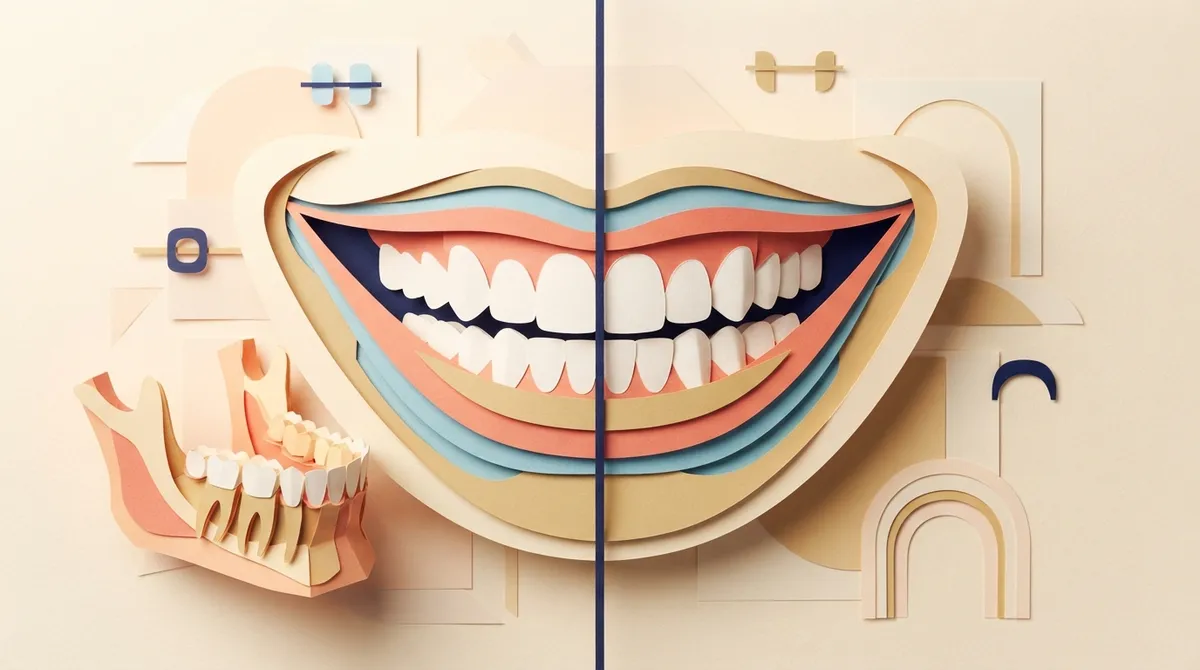
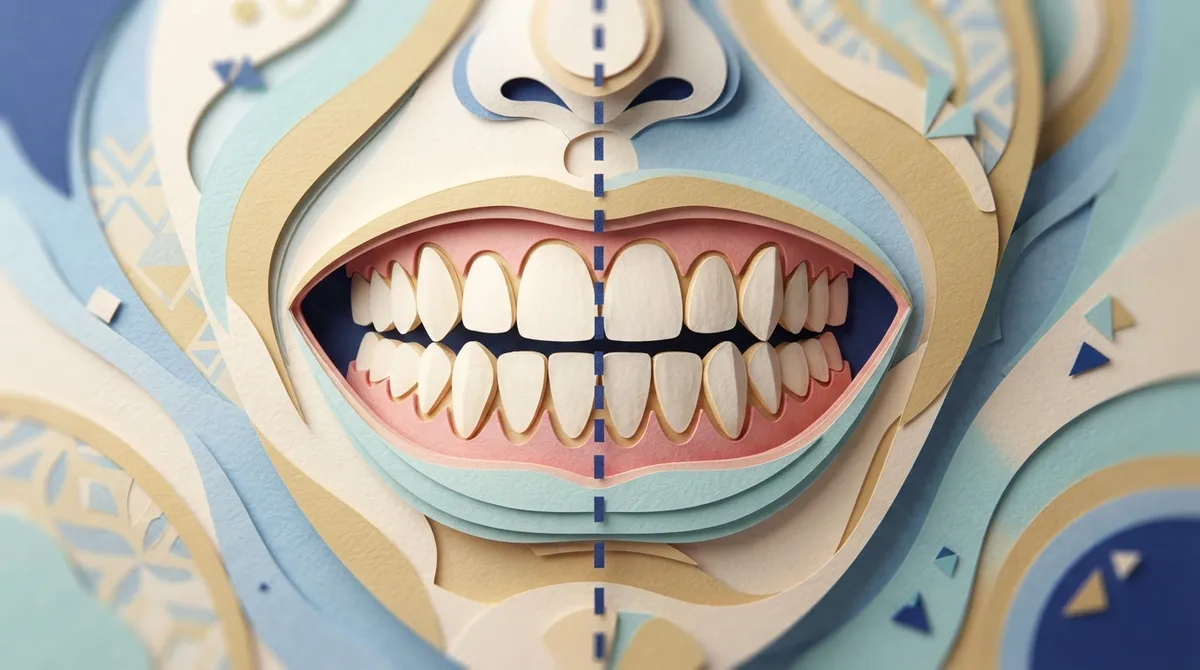
A dental midline is an imaginary vertical line that runs between your two upper front teeth (the upper central incisors). There is a second one between your two lower front teeth. Think of them as the “zipper” of your smile.
In an ideal bite, the upper midline and lower midline line up with each other. Ideally, they also line up with the middle of your face. But real smiles are rarely perfect, and that is okay.
Three Midlines, Three Different Things
Orthodontists look at three separate lines. They are related, but they are not the same finding.
- Upper dental midline: the center between your two top front teeth.
- Lower dental midline: the center between your two bottom front teeth.
- Facial midline: an imaginary line through the center of your face, often judged by the nose, the space between the eyes, and the chin.
The upper and lower midlines may not match each other. Or one of them may be off from the facial midline. These are different situations, and knowing which one you have is the first step toward the right answer.
Why Dental Midlines May Not Match
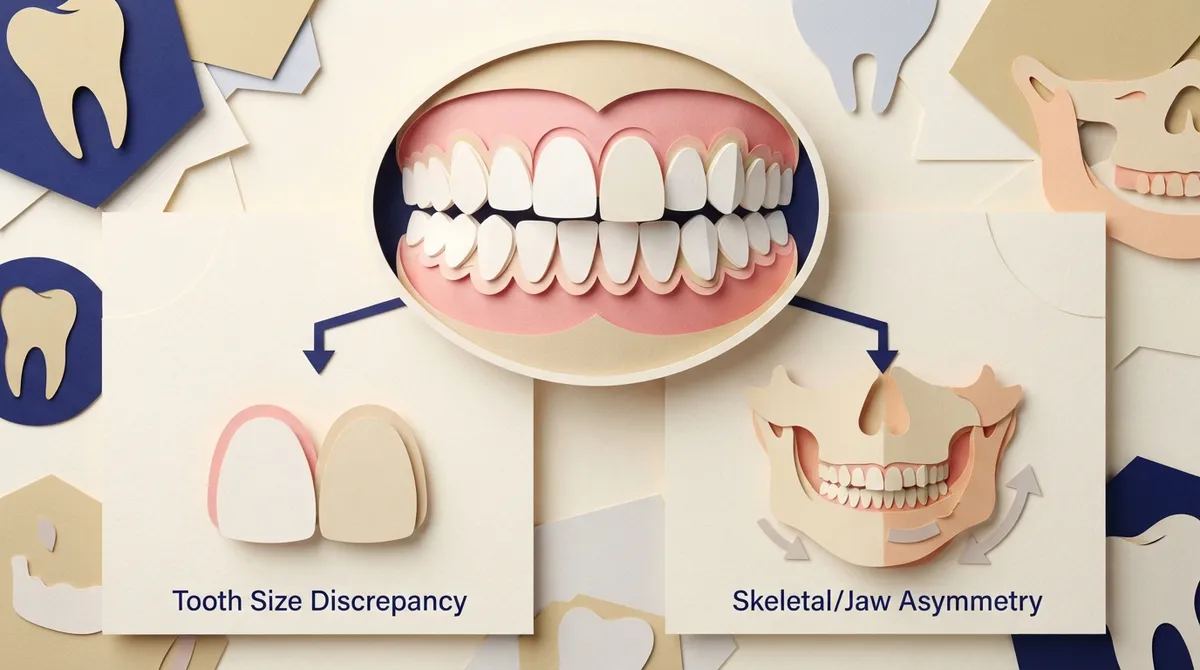
There is rarely just one reason. Often, more than one factor plays a part. The causes usually fall into three groups: tooth-related (dental), jaw-related (skeletal), and bite-related (functional).
| Type of Cause | What Is Happening | Common Examples |
|---|---|---|
| Dental | Teeth sit in uneven positions | Crowding, rotated or tipped front teeth, uneven spacing, missing teeth |
| Skeletal | Jaws differ in size, shape, or position | Unequal arch size, jaw asymmetry |
| Functional | The lower jaw shifts when you close | Crossbite, bite interference |
1. Crowding and Rotated Teeth
When there is not enough room in the mouth, teeth twist, tip, or overlap. If one side of the arch has more crowding than the other, the front teeth can slide toward the tighter side. That alone can pull a midline off center.
Crowding is one of the most common reasons we see in teens and adults. If this sounds like you, our guide on what causes crowded teeth goes deeper.
2. Uneven Spacing and Gaps
Gaps can also push teeth out of place. If one side has more space than the other, teeth tend to drift into the open area over time. This is a simple example of how uneven spacing can nudge a midline sideways.
Want to learn more about spacing? Check out teeth spacing causes and treatments.
3. Missing Teeth or Early Tooth Loss
Teeth work like a team. When one is missing, the neighbors often lean into the gap. This can happen when a baby tooth falls out too early, when a permanent tooth is lost or extracted, or when a tooth never formed at all (called a congenitally missing tooth).
The result? One side of the arch ends up with less room than the other, and the midline can shift. If you are curious how this works with treatment, read can I get braces with missing teeth.
4. Asymmetric Tooth Eruption
Not every tooth arrives on schedule. Sometimes a tooth on the left comes in earlier or later than its partner on the right. In growing kids, this can create a temporary or lasting midline difference. That is one big reason an early checkup is so helpful. You can learn more about timing in our early treatment information.
5. Unequal Arch Shape or Size
The upper and lower dental arches are shaped like horseshoes. If one arch is narrower, wider, or lopsided compared to the other, the midlines can end up in different spots. Sometimes this comes from the teeth alone. Other times it reflects the underlying jaw shape.
6. Crossbite and the Sliding Jaw
Here is a cause many people do not expect. Sometimes the lower jaw is not truly off-center. Instead, it slides to one side as you close your mouth.
This is called a functional mandibular shift. A crossbite or an “early touch” between teeth can guide the jaw sideways when your teeth come together. When that happens, the lower midline looks off even though the jaw may rest in a more centered spot.
It sounds technical, but the idea is simple: the teeth bump into each other, and the jaw takes a detour to get comfortable. We cover this more in how crossbite correction works.
7. Skeletal Asymmetry of the Jaws
In some people, one side of the lower jaw has grown a bit differently than the other. This is called skeletal asymmetry. It can affect the chin position, the bite, and the midlines.
This type needs careful evaluation. Moving the front teeth alone may not solve it, because the root of the issue is the jaw itself, not the teeth.
How Common Is a Midline Mismatch?
Research shows that midline differences are quite common, but the numbers vary a lot from study to study. That is because each study looks at different groups of people, different ages, and different ways of measuring.
- A 2023 study of children ages 7 to 15 in Babylon, Iraq, found dental midline shifting in about 55.66% of its sample. Of those with a shift, roughly 63.47% had a deviation of 2 mm or more.
- A 2025 study of 150 young Iraqi adults found midline deviation in about 26% of participants (16% lower jaw, 10% upper jaw).
- A 2018 study of orthodontic patients reported midline deviation in about 20.70% (12.50% upper and 8.30% lower).
Please keep in mind that these are local studies. They are not universal numbers for everyone. The big takeaway is simple: a midline difference is something orthodontists see often, and many people live with a small one without any problem.
Is a Midline Mismatch a Health Problem?
Not always. A small mismatch is common and does not automatically mean something is wrong. It also does not always need treatment.
Whether it matters depends on a few things:
- How large the difference is
- What is causing it
- Whether it affects how your teeth bite together
- How it looks in your smile and face
- How you feel about it
For some patients, the midline is purely a looks issue. For others, it points to a bite problem, such as a crossbite, that is worth fixing for comfort and long-term tooth health. An orthodontist can help you tell the difference.
How Do Orthodontists Find the Cause?
Figuring out why your midlines do not match is the key. Two people can have the same-looking midline shift for completely different reasons. That is why a careful exam matters more than a quick glance.
What Happens During the Evaluation
- Face check: The orthodontist compares your upper and lower dental midlines to the middle of your face, and looks at your chin and facial balance.
- Bite check: They look at how your teeth meet, including any crossbite, overbite, or underbite.
- Jaw movement check: They watch how your jaw closes. This helps spot a sliding jaw (functional shift) versus a fixed difference. Comparing the jaw and midlines at first tooth contact and in the fully closed bite is very telling.
- Tooth and arch check: They look at crowding, spacing, rotations, missing teeth, and whether the arches are symmetrical.
- Records: Photos, dental models or digital scans, and X-rays when needed. Imaging is chosen based on your individual needs, not a one-size-fits-all approach.
Modern tools make this easier and more comfortable. At Brockway Orthodontics, we use digital impressions instead of messy molds and 3D imaging to plan treatment with real precision. If you would like to know what a first visit feels like, take a peek at your first visit.
Can Braces or Clear Aligners Fix a Midline Mismatch?
Very often, yes. But the right approach depends on the cause. Here is how treatment can look for each type.
| Cause | Possible Approach |
|---|---|
| Crowding or drifting teeth | Braces or aligners to move teeth and create balanced space |
| Uneven spacing or missing teeth | Closing or redistributing space; sometimes replacing a missing tooth |
| Crossbite with a jaw shift | Correcting the crossbite so the jaw closes into its true position |
| Unequal arch size | Arch-shaping tools, elastics, or expanders in growing patients |
| Significant skeletal asymmetry | A more involved plan, sometimes including coordination with other specialists |
Tools Orthodontists May Use
- Orthodontic tooth movement: shifting the teeth to the right spots with braces or aligners.
- Elastics (rubber bands): gentle pulls that help guide the bite and midlines into place.
- Asymmetric space management: sometimes closing more space on one side than the other, and in select cases, planned extractions.
- Other anchorage methods: extra support points that help move teeth in a controlled way.
One important point: if the cause is a jaw shift or a significant skeletal difference, simply moving the front teeth will not be enough. Treatment has to address the underlying problem. Otherwise, the midline may look better for a moment but the bite stays off.
Braces or Clear Aligners?
Both can work well for many midline cases. Some patients love the look and comfort of aligners. Others do better with braces when the bite needs more control. At Brockway Orthodontics, we offer metal braces, ceramic (clear) braces, and Spark™ Clear Aligners, a more affordable alternative to Invisalign. Not sure which fits your smile? Our comparison of clear aligners vs. braces can help you decide.
What This Means for Different Patients
Every patient has different goals. Here is what you may want to keep in mind.
For Parents of Kids and Teens
If your child’s midlines look off, an early look can help. Growing kids can sometimes benefit from simple steps that guide the jaw and teeth while they are still developing. Remember that a crossbite can cause the jaw to shift, and catching it early may keep things simpler later. Our adolescent treatment page explains what teens can expect.
For Teens and Young Adults
If you are heading toward graduation, prom, or a big life event, you may care most about how your smile looks in photos. A midline mismatch is often very fixable. A quick evaluation can tell you if it is just about looks or also about your bite.
For Busy Adults
You may want something discreet and efficient. Many adults get great results with clear options. Take a look at our adult treatment options to see what might fit your schedule and lifestyle.
For Patients Dealing With Relapse
Did you have braces years ago, and now your teeth have shifted? Relapse can change the midline over time, especially if retainers were not worn as directed. It is never too late to ask. Learn why retainers matter for keeping your results.
For Health-Conscious Patients
If you care about both function and looks, you will want a plan that checks the bite, the gums, and the jaw, not just the front teeth. A thorough exam makes sure the treatment is built around your whole mouth.
When Should You See an Orthodontist?
Consider booking a visit if:
- Your midline looks noticeably off in photos or in the mirror
- Your jaw seems to shift to one side when you close your mouth
- You have a crossbite, crowding, or missing teeth
- You notice uneven wear, chewing trouble, or jaw discomfort
- Your child has an off-center smile or lost baby teeth early
Most importantly, if something just feels off to you, trust that feeling. A short exam can bring peace of mind or give you a clear plan.
Ready to Check Your Smile’s Center?
A mismatched midline can feel confusing, but it is usually very understandable once you know the cause. At Brockway Orthodontics, Dr. Brockway takes the time to listen to your concerns, explain what is going on in plain language, and build a plan that fits your goals. We proudly serve families in Clearwater, Florida, from teens getting their first braces to adults exploring a discreet smile upgrade.
Curious what other families think? You can visit us on Google — Brockway Orthodontics to see reviews from our Clearwater community.
Ready for answers? Book your free consultation online and let us take a friendly look at your smile. You can also contact us with any questions. For more general information on dental care, the American Dental Association is a trusted resource, and you can learn more about orthodontic specialists through the Florida Association of Orthodontists.
FAQs
Q: Why don’t my upper and lower dental midlines line up?
A: There are a few common reasons, and it is usually a mix. Crowding, rotated teeth, uneven spacing, missing teeth, unequal jaw size, or a lower jaw that slides sideways when you bite can all pull the midlines apart. An orthodontist can pinpoint which one applies to you.
Q: Is it normal for my dental midline not to match my facial midline?
A: Yes, a small difference is very common and does not automatically mean a problem. The dental midline and facial midline are related but separate findings. Whether it needs attention depends on the size, the cause, your bite, and how you feel about your smile.
Q: Can a crossbite make my jaw or dental midline shift?
A: It sure can! A crossbite or an early tooth contact can guide your lower jaw sideways as you close, making the lower midline look off. Correcting the crossbite helps the jaw close into its true position.
Q: Can braces or clear aligners correct a dental midline mismatch?
A: Often, yes. Braces and clear aligners can move teeth to better positions, and elastics or other tools can help guide the bite. If the cause is a jaw shift or skeletal difference, your plan will need to treat that underlying issue, not just the front teeth.
Q: When should I see an orthodontist about a midline that looks off?
A: Book a visit if the mismatch is noticeable, your jaw seems to shift when you close, or you have crowding, a crossbite, or missing teeth. For kids, an early look can make treatment simpler. A quick exam can give you clear answers and peace of mind.
Our Service Area