Key Takeaways
-
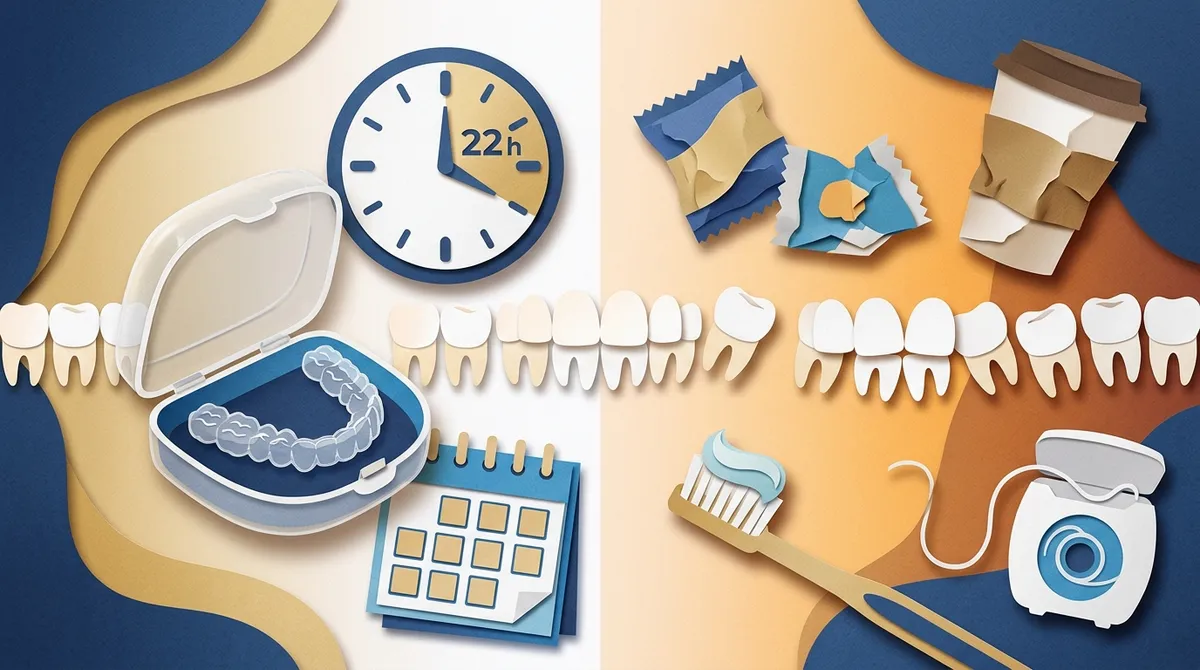
Wear aligners 20-22 hours daily; every hour they’re out allows teeth to drift, slowing progress and requiring additional aligners that increase time and cost.
-
Attend orthodontist progress check appointments every 6-8 weeks to catch problems early and ensure teeth move as planned, avoiding weeks of delayed results.
-
Remove aligners before eating or drinking anything except water; food particles trap against teeth causing cavities, and hot drinks like coffee warp the plastic.
-
Brush and floss after every meal before reinserting aligners, and clean aligners daily with mild soap (never toothpaste) to prevent cavities and bacteria buildup.
-
Wear retainers every night indefinitely after treatment ends; teeth naturally drift back to original positions without retention, undoing your investment.
-
Choose a board-certified orthodontist experienced with complex cases over cheaper providers; poor treatment planning can lead to unsatisfying results and costly corrections.
So you’ve decided to straighten your teeth with Invisalign clear aligners — that’s exciting! Clear aligners have changed the game for millions of people who want a straighter smile without the look of traditional metal braces. But here’s the thing: Invisalign only works as well as you use it. And there are some surprisingly common mistakes that can slow down your progress, cost you extra money, or even damage your results entirely.
Whether you’re a busy professional, a teen heading into a new school year, or a parent researching options for your child, this guide is for you. We’re going to walk through the 8 biggest Invisalign mistakes people make — and exactly how to avoid them. Think of this as your friendly cheat sheet for getting the smile you’ve always wanted, the right way.
What Is Invisalign and How Does It Work?
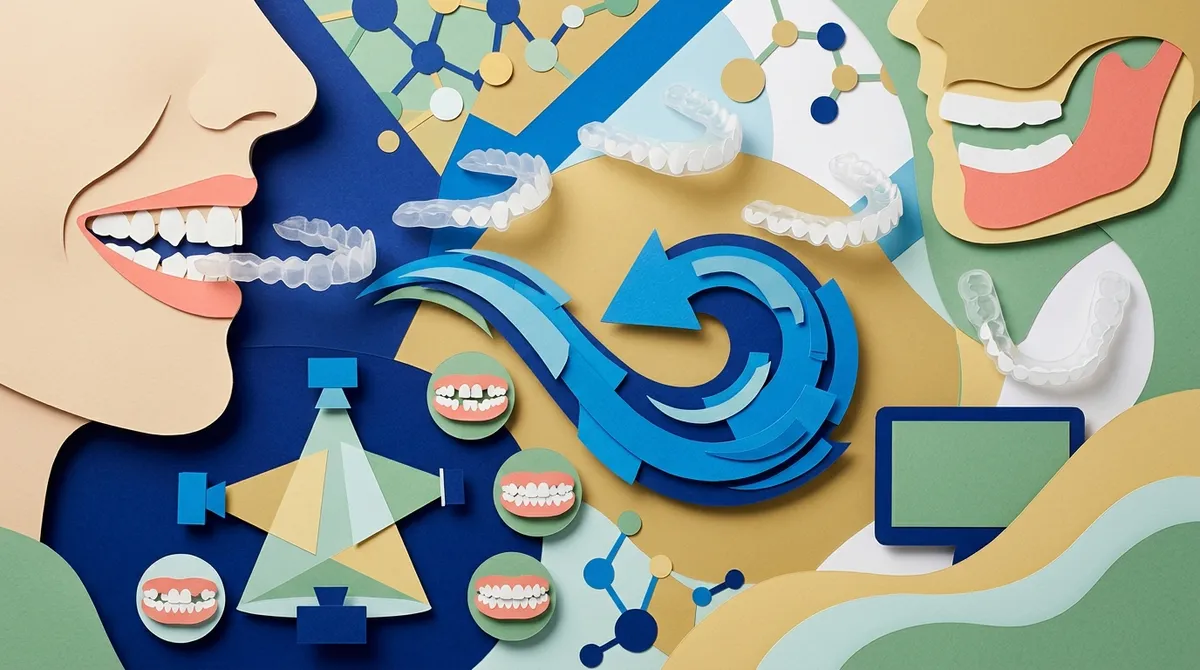
Before we dive into the mistakes, let’s do a quick refresher. Invisalign is an orthodontic treatment that uses a series of custom-made, clear plastic aligners to gradually shift your teeth into the correct position. Each set of aligners is made using 3D computer imaging technology, which maps out your entire treatment plan before you even receive your first tray. You can actually see your projected smile transformation before treatment starts — how cool is that?
The aligners are made from a smooth, patented material that fits snugly over your teeth. You switch to a new set of aligners every one to two weeks, and each new set moves your teeth just a little bit further. Most patients need between 20 and 30 sets of aligners to complete treatment. If you want to learn more about how clear aligner treatments work in general, check out our guide on what clear aligners are and how they transform smiles.
Invisalign can treat a wide range of issues, including:
- Crowded teeth
- Gaps and spacing problems
- Overbites and underbites
- Crossbites and open bites
- Narrow arches
For mild cases, treatment can wrap up in as little as 6 to 9 months. More moderate cases typically take 12 to 18 months. Complex bite corrections may take longer than 18 months. Understanding what to realistically expect is actually the first step in avoiding mistakes — so let’s get into it!

Mistake 1: Not Wearing Your Aligners Enough Hours Per Day
This is the number one Invisalign mistake, and it’s a big one. Your aligners must be worn for 20 to 22 hours per day. That means you only take them out to eat, drink anything other than water, brush your teeth, and floss. That’s it.
Some people figure that a few extra hours out won’t matter much. But every hour your aligners are out, your teeth have an opportunity to drift. This slows down your treatment and can require additional aligners — adding time and cost to your plan. Think of it this way: your aligners can’t do their job if they’re sitting in a napkin on your lunch table.
Here’s a simple breakdown of daily aligner use:
| Activity | Aligners In or Out? |
|---|---|
| Eating meals or snacks | Out |
| Drinking water | In |
| Drinking coffee, tea, juice, soda | Out |
| Brushing and flossing | Out |
| Sleeping | In |
| Talking, working, going about your day | In |
Mistake 2: Skipping Progress Check Appointments
Some people think that once they have their aligners, they’re good to go on their own. Not so fast! Regular check-in appointments with your orthodontist are essential to making sure your treatment stays on track. Most providers recommend progress checks every 6 to 8 weeks.
These visits allow your orthodontist to confirm your teeth are moving as planned, catch any issues early, and make adjustments if needed. Skipping these appointments can mean problems go unnoticed for weeks or months, which can delay your final results significantly.
At Brockway Orthodontics, Dr. Brockway personally reviews your progress at each visit to make sure everything is going smoothly. She takes the time to answer your questions and make sure you feel informed and confident throughout your treatment. You can also explore all the orthodontic services available to find the right fit for your goals.
Mistake 3: Eating or Drinking With Your Aligners In
This mistake seems minor, but it can cause real damage. Eating with your aligners in can:
- Crack or warp the plastic
- Trap food particles against your teeth (hello, cavities!)
- Stain the aligners, making them more visible
- Introduce bacteria that cause bad breath and plaque buildup
Drinking anything besides water with aligners in is also a problem. Hot drinks like coffee can warp the plastic. Sugary or acidic drinks can get trapped under the aligner and sit against your enamel. If you want to learn more about what to eat and avoid during treatment, check out our guide on clear aligner food mistakes that harm your smile.
Mistake 4: Poor Oral Hygiene During Treatment
Clear aligners cover your teeth for most of the day. That creates a warm, moist environment that bacteria love. If you’re not brushing and flossing carefully after every meal before putting your aligners back in, you’re setting yourself up for trouble.
Good oral hygiene during Invisalign treatment means:
- Brush your teeth after every meal or snack before reinserting your aligners.
- Floss at least once per day to remove food and plaque from between teeth.
- Rinse your aligners with lukewarm water every time you take them out.
- Clean your aligners daily using a gentle, clear soap or the Invisalign cleaning system — never toothpaste, which can scratch the plastic.
- See your regular dentist for cleanings during treatment, too.
The American Dental Association emphasizes that maintaining strong oral hygiene is critical during any orthodontic treatment. Don’t let your routine slip just because your braces are invisible!
Mistake 5: Changing Aligners Too Early Without Guidance
You might think that moving faster through your aligner sets means a faster result. It doesn’t work that way. Each aligner tray is designed to move your teeth a very specific amount. If you move to the next set too soon, your teeth may not have fully shifted into the right position — and the new tray won’t fit correctly.
Always follow your orthodontist’s instructions on when to switch trays. Most patients switch every one to two weeks, but your specific plan may vary. Your provider will let you know the right schedule for your unique treatment. If you’re ever unsure, reach out to your orthodontist rather than guessing. You can also get in touch with our team to ask any questions you might have about your treatment timeline.
Mistake 6: Choosing the Wrong Provider
Not all providers offering Invisalign have the same level of training and experience. Choosing a provider based on price alone — or going through a non-specialist — can lead to poor treatment planning and unsatisfying results.
Here’s what to look for when choosing your Invisalign provider:
| What to Look For | Why It Matters |
|---|---|
| Board-certified orthodontist | Specialized training in tooth movement and bite correction |
| Experienced with complex cases | Can handle bite issues, not just mild crowding |
| Uses digital imaging and 3D planning | Ensures precision and predictable outcomes |
| Transparent about costs and insurance | Helps you plan financially with no surprises |
| Positive patient reviews | Reflects consistent quality of care |
Insurance may cover up to $3,000 toward Invisalign treatment, so it’s also worth discussing financing and insurance options with your provider upfront. The Florida Association of Orthodontists is a great resource for finding qualified specialists in your area if you’re located in the Sunshine State.
Mistake 7: Forgetting About Retainers After Treatment
You’ve finished your last aligner tray — congratulations! But here’s something many patients don’t realize: your smile journey isn’t quite over yet. After treatment, your teeth have a natural tendency to drift back toward their original positions. This is called orthodontic relapse, and it’s very common.
Retainers are essential after Invisalign treatment. Most orthodontists recommend wearing your retainer every night, indefinitely. Skipping retainers — even for a few weeks — can result in noticeable shifting. Learn more about how to protect your smile long-term by reading about retainers and why they matter. And if your retainer ever breaks, don’t panic — check out what to do if your retainer breaks for quick guidance.
Mistake 8: Assuming Invisalign Is Right for Every Case
Invisalign is an amazing treatment option, but it’s not the right fit for every orthodontic situation. Very complex bite issues, severe crowding, or certain jaw alignment problems may be better addressed with traditional braces or other treatments. And for younger children, early intervention options may be more appropriate before aligner therapy begins.
The only way to know for sure which treatment is right for you is through a professional evaluation. Here’s a quick look at how Invisalign compares to other common treatments:
| Treatment Type | Best For | Typical Duration |
|---|---|---|
| Invisalign clear aligners | Mild to moderate crowding, spacing, bite issues | 6–18+ months |
| Metal braces | Complex cases, severe crowding, significant bite corrections | 12–24 months |
| Ceramic (clear) braces | Moderate to complex cases with aesthetic preference | 12–24 months |
| Spark™ Clear Aligners | Mild to moderate cases, often more affordable option | 6–18+ months |
If you’re not sure where you fall, our page on Invisalign vs. braces — which treatment wins for you is a great starting point. You might also want to explore Spark™ Clear Aligners, which Brockway Orthodontics proudly offers as a highly effective and more affordable alternative. It’s worth comparing your options before committing to a plan.
Quick Reference: Invisalign Do’s and Don’ts
Here’s a handy summary to keep you on track throughout your treatment:
Do:
- Wear your aligners 20–22 hours every single day
- Brush and floss after every meal before reinserting aligners
- Keep all scheduled check-up appointments
- Store aligners in their case when not in use
- Wear your retainer every night after treatment ends
Don’t:
- Eat or drink (except water) with aligners in
- Skip your orthodontic progress checks
- Change to a new tray ahead of schedule without guidance
- Rinse aligners with hot water (it can warp the plastic)
- Assume all providers offer the same level of care
Also, if you’re wondering whether Invisalign is right for teens specifically, take a look at our page on adolescent orthodontic treatment or our full guide on adult orthodontic treatment options. There’s a path forward for everyone!
How Much Does Invisalign Cost?
One of the most common questions we hear is about cost. The good news is that Invisalign treatment typically costs about the same as traditional metal braces. The exact price depends on the complexity of your case and the length of treatment.
Here’s a general overview:
- Mild cases (Invisalign Express): shorter treatment, lower cost — a great option for very minor crowding or spacing.
- Moderate cases: standard Invisalign treatment, most common, priced similarly to braces.
- Complex cases: longer treatment, may involve more aligner sets and more frequent monitoring.
Many dental insurance plans contribute up to $3,000 toward orthodontic treatment, which can be applied to Invisalign. Flexible payment plans can also help make treatment accessible. Visit our financing and insurance page for more details, or check out our in-depth breakdown of the cost of clear aligners in 2026. Follow us on Facebook for updates, promotions, and patient stories that can help you feel confident about your decision.
Ready to Start Your Invisalign Journey the Right Way?
Avoiding these 8 mistakes puts you miles ahead of the average Invisalign patient. With the right habits, the right provider, and a little consistency, clear aligners can deliver a truly stunning result that lasts a lifetime. The key is working with an orthodontist who genuinely cares about your outcome — not just handing you a box of trays and sending you on your way.
At Brockway Orthodontics in Clearwater, Florida, Dr. Brockway and her team are committed to guiding you through every step of your treatment with warmth, expertise, and personalized care. Whether you’re exploring Invisalign, Spark™ Clear Aligners, or traditional braces, we’ll help you find the best path to your perfect smile. You can visit us on Google — Brockway Orthodontics to read reviews from real patients in the Clearwater and Pinellas County community.
Your smile deserves expert care from someone who truly cares about you. Schedule your free consultation today and take the first step toward a healthier, more confident smile — without any of these costly mistakes holding you back!
FAQs
Q: How long does Invisalign treatment take for adults?
A: Great news — most adults complete Invisalign treatment in 12 to 18 months! If your case is mild, you might see a brand-new smile in as little as 6 to 9 months. Your orthodontist will give you a personalized timeline based on your specific needs during your initial consultation.
Q: Can I drink coffee or eat with my Invisalign aligners in?
A: We totally get it — giving up your morning coffee routine is tough! But you really should remove your aligners before eating or drinking anything besides plain water. Hot drinks like coffee can warp the plastic, and sugary drinks can get trapped under the tray and cause cavities. Just pop them out, enjoy your cup of joe, brush your teeth, and pop them back in!
Q: Do I need to wear retainers after finishing Invisalign?
A: Yes, absolutely — and this is super important! After treatment, your teeth have a natural tendency to drift back toward where they started. Most orthodontists recommend wearing a retainer every night, indefinitely, to keep your beautiful new smile in place. Think of it as a small nightly habit that protects a major investment!
Q: Is Invisalign suitable for teens?
A: Yes! Invisalign has options specifically designed for teens, and many younger patients love the freedom of being able to remove their aligners for sports, photos, and special events. That said, compliance is key — teens need to commit to wearing the aligners 20 to 22 hours per day for the best results. A consultation with a qualified orthodontist will confirm whether Invisalign is the right fit.
Q: How does Invisalign cost compare to traditional braces?
A: Here’s a pleasant surprise: Invisalign typically costs about the same as traditional metal braces! The exact price depends on how complex your case is and how long treatment takes. Many insurance plans contribute up to $3,000 toward orthodontic care, and most orthodontic practices offer flexible payment plans to make treatment affordable for everyone.
Our Service Area