Key Takeaways
-
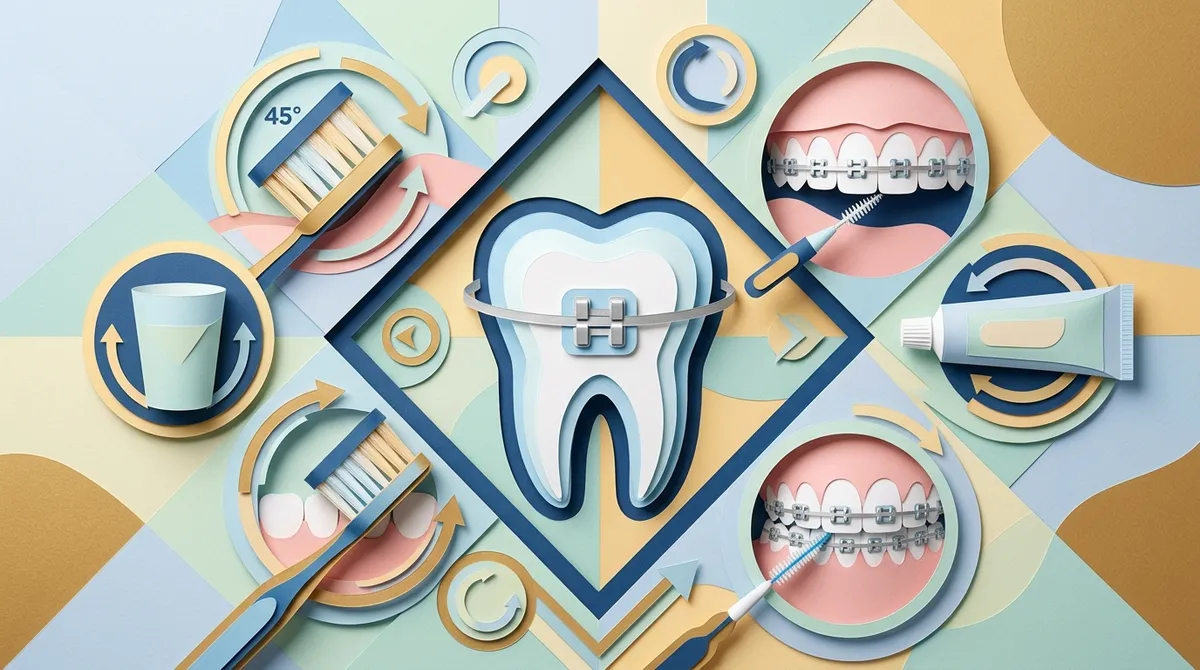
Brush at least three times daily or after every meal with braces, spending 2-3 minutes per session to reach hidden areas around brackets and wires that trap food and bacteria easily.
-
Use a proxabrush (interdental brush) under the archwire between each bracket—regular toothbrushes cannot access these critical spots where plaque buildup causes white spots and cavities.
-
Hold your toothbrush at a 45-degree angle and brush both above and below each bracket with small circular motions, then directly scrub the bracket edges to prevent plaque accumulation.
-
Never rinse with water immediately after brushing; spit out excess toothpaste to allow fluoride to continue protecting your enamel, which is extra vulnerable during orthodontic treatment.
-
Avoid brushing too hard, skipping the gum line, and rushing sessions under two minutes—these common mistakes damage bracket bonds, cause gum swelling, and leave bacteria behind.
-
Floss daily using a floss threader or water flosser to remove plaque between teeth under the wire, as brushing alone cannot clean these interdental spaces effectively.
Getting braces is an exciting step toward a beautiful smile. But braces also come with a new responsibility — keeping your teeth clean. Food gets trapped around brackets and wires easily. Plaque builds up faster than you’d expect. That means your brushing routine needs a serious upgrade the moment braces go on.
Whether you’re a parent helping your child care for their new braces, a teen navigating life with metal brackets, or an adult professional investing in your smile, this guide is for you. We’ll walk you through exactly how to brush teeth with braces so your enamel stays strong and your smile looks amazing when treatment ends. Let’s get into it!
Why Brushing With Braces Is Different
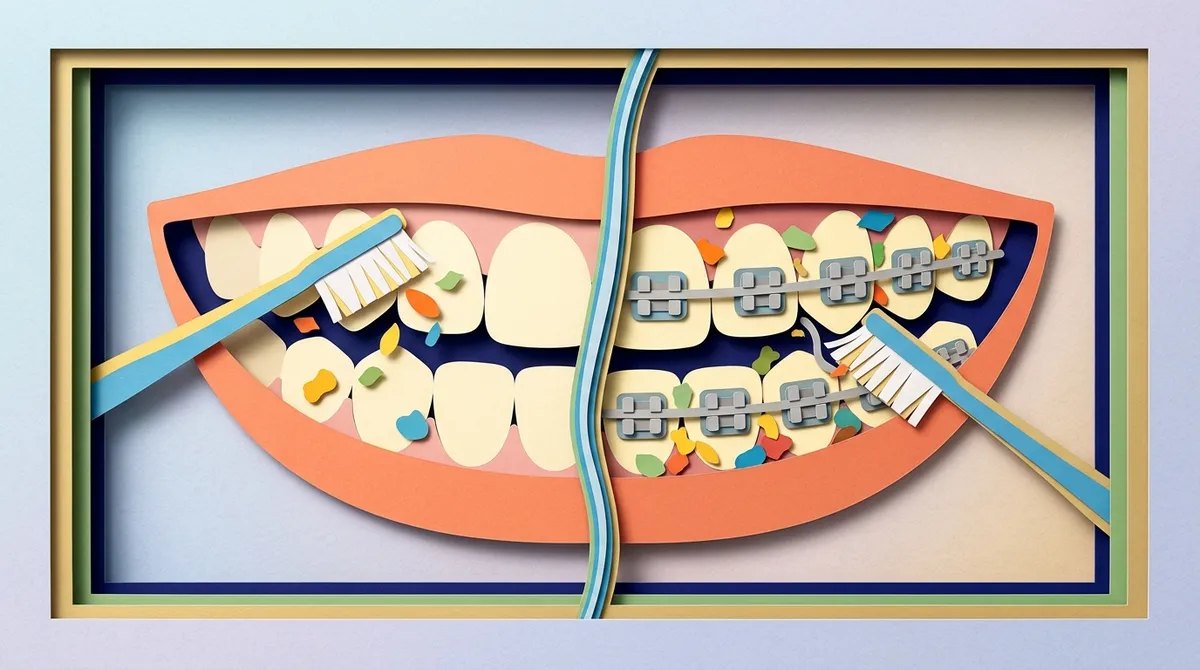
Braces create new hiding spots for food and bacteria. Brackets, wires, and bands all create tiny spaces that a regular quick brush simply can’t reach. According to the American Dental Association, brushing for at least two minutes with a soft-bristled brush is the baseline recommendation. But with braces, you need to go further than that baseline.
If you skip proper brushing, plaque builds up around your brackets. This can lead to white spots on your teeth, cavities, and even gum swelling. The good news? With the right steps and tools, you can keep your teeth healthy throughout your entire orthodontic journey. Check out our All About Braces page for a great overview of what to expect during treatment.

The Right Tools Make All the Difference
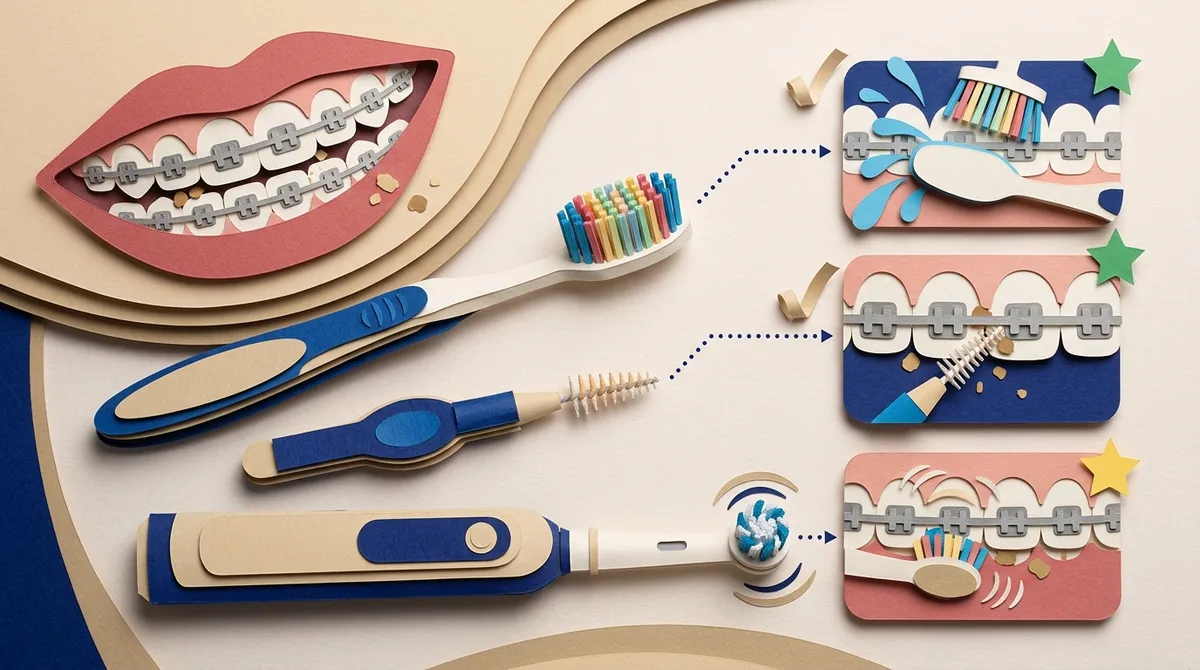
Before we get into the steps, let’s talk tools. Having the right gear makes brushing with braces so much easier. Here’s what you’ll need:
- Soft-bristled toothbrush — Manual or electric, soft bristles are gentler on brackets and gums
- Fluoride toothpaste — Strengthens enamel and helps prevent cavities during treatment
- Proxabrush (interdental brush) — A tiny brush that cleans between brackets and under wires
- Dental floss or floss threader — Essential for cleaning between teeth with wires in the way
- Water flosser (optional) — Great for flushing out debris around brackets and along the gum line
- Fluoride mouthwash — Adds extra cavity protection after brushing
Many patients find that an electric toothbrush makes it easier to cover all surfaces around brackets. Either way, the technique matters most. For a deeper dive into braces care from day one, visit our Your First Visit page to learn what to expect when you start treatment.
Brushing Tool Comparison for Braces Patients
| Tool | Best For | Ease of Use | Recommended |
|---|---|---|---|
| Soft-bristled manual toothbrush | Overall surface cleaning | Easy | Yes |
| Electric toothbrush | Efficient plaque removal | Very easy | Yes |
| Proxabrush (interdental brush) | Under wires and between brackets | Moderate | Yes |
| Floss threader | Between teeth with wire | Moderate | Yes |
| Water flosser | Flushing debris around brackets | Easy | Optional |
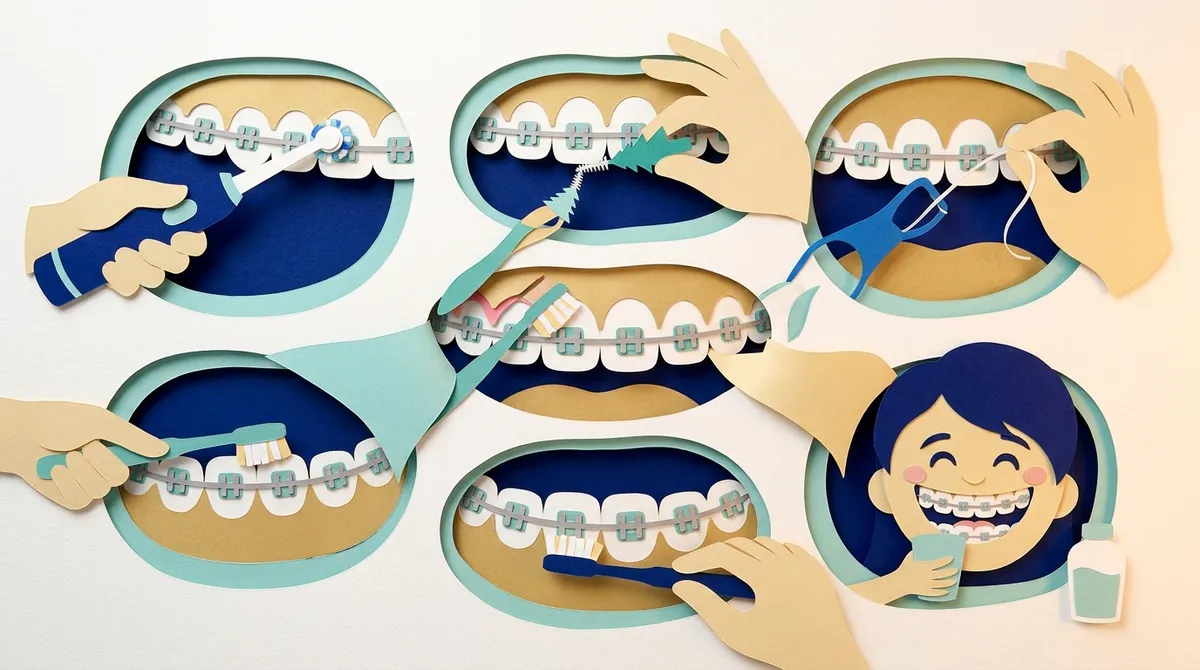
7 Smart Steps to Brush Teeth With Braces
Ready to master your brushing routine? Follow these seven steps every single time you brush. Orthodontic care guidelines recommend brushing at least three times a day — or after every meal — when wearing braces. That might sound like a lot, but once you have a system down, it becomes second nature!
Step 1: Pre-Rinse With Water
Before you even pick up your toothbrush, swish water around your mouth for about 30 seconds. This loosens food particles stuck around your brackets and wires. It makes the actual brushing step much more effective. Think of it as a warm-up for your oral hygiene routine.
Step 2: Remove Elastics or Removable Parts
If your orthodontist has given you rubber bands or any removable appliances, take those out before you brush. This gives you full access to all surfaces of your teeth and brackets. It also protects the elastics from damage during brushing. Always set them somewhere clean so you don’t lose them.
Step 3: Angle Your Brush Correctly
This is one of the most important steps when you learn how to brush teeth with braces. Hold your toothbrush at a 45-degree angle to your gum line. Angle the bristles downward from above the bracket, then angle them upward from below the bracket. This two-direction approach cleans both above and below each bracket. Take your time on each tooth — it’s worth it.
Step 4: Brush in Small, Circular Motions
Use gentle, small circular motions rather than big scrubbing strokes. Work your way around each tooth methodically. Spend about 10 seconds on each tooth. Don’t forget the inside surfaces of your teeth and the chewing surfaces — bacteria love those spots just as much as the front surfaces.
Step 5: Clean Around Each Bracket Directly
Place your brush directly on top of each bracket and gently scrub in a back-and-forth motion. Then do the same thing below each bracket. This targets the plaque that loves to cling right around the bracket edges. This step alone can prevent those frustrating white spots that sometimes appear after braces come off.
Step 6: Use a Proxabrush Under the Wire
After brushing with your regular toothbrush, grab your proxabrush. Gently slide it under the archwire and move it back and forth between each bracket. This tiny brush reaches the spots your regular toothbrush simply cannot access. It takes only a minute or two, but it makes a huge difference in keeping your mouth healthy. Parents, this is a great step to help younger kids with until they get the hang of it.
Step 7: Don’t Rinse Right After Brushing
Here’s a tip many people don’t know — avoid rinsing with water immediately after brushing. When you rinse, you wash away the fluoride that’s still working to protect your enamel. Just spit out the excess toothpaste and leave the fluoride to do its job. You can use a fluoride mouthwash after a few minutes if you’d like extra protection.
How Often Should You Brush With Braces?
| Situation | Recommended Brushing Frequency |
|---|---|
| Without braces (general guideline) | 2 times per day (minimum) |
| With braces (orthodontic guideline) | 3 times per day or after every meal |
| After eating sticky or sugary foods | Brush immediately after eating |
| Before bed | Always — never skip this session |
Common Brushing Mistakes With Braces
Even the most diligent brushers make mistakes. Here are the most common ones to avoid when figuring out how to brush teeth with braces:
- Brushing too hard — Aggressive brushing can damage bracket bonds and irritate gums
- Skipping the proxabrush — Regular toothbrushes can’t reach under the wire effectively
- Forgetting the gum line — Plaque along the gums causes swelling and bad breath
- Rushing through sessions — Less than two minutes is rarely thorough enough with braces
- Missing the inside surfaces — The tongue-side of teeth gets neglected often
- Skipping sessions after snacks — Every time you eat, food gets trapped around brackets
Avoiding these mistakes goes a long way toward protecting your smile. You can also learn about braces treatment mistakes you should never make to keep your treatment on track from start to finish.
Foods That Make Brushing Harder
Some foods create extra cleaning challenges when you have braces. Sticky, chewy, and hard foods get stuck in brackets more stubbornly. They also increase your cavity risk significantly. Knowing which foods to limit helps you make brushing easier overall.
| Food Category | Examples | Why It’s Tricky With Braces |
|---|---|---|
| Sticky foods | Caramel, gummies, taffy | Clings to brackets and wires, hard to remove |
| Sugary snacks | Candy, cookies, soda | Feeds bacteria and accelerates plaque buildup |
| Hard, crunchy foods | Popcorn, hard pretzels, ice | Can break brackets and get lodged in wires |
| Starchy foods | White bread, chips | Turns to sticky paste that coats brackets |
For a full guide on what to eat and avoid, check out our helpful resource on foods to avoid with braces. And if you’re curious about what you CAN enjoy, our page on what you can eat with braces has you covered with friendly food ideas.
Don’t Forget Flossing
Brushing alone isn’t enough with braces — flossing is equally important. Use a floss threader to guide regular floss under the archwire and between each pair of teeth. This removes plaque and food from areas your toothbrush can’t reach. A water flosser is also a fantastic option for flushing debris from around brackets. The Florida Association of Orthodontists encourages all braces patients to maintain consistent flossing habits throughout their treatment.
Flossing with braces takes a little practice. At first it might feel awkward and time-consuming. But most patients get the hang of it within a week or two. If you want step-by-step guidance, the team at Brockway Orthodontics is always happy to walk you through the proper technique during your appointments. You can also reach out through our contact page if you have questions between visits.
How Long Should You Brush With Braces?
The American Dental Association’s baseline recommendation is two minutes per brushing session. With braces, aim for two to three minutes to make sure you’re covering all the extra surfaces around your brackets and wires. Set a timer on your phone if it helps. Many electric toothbrushes have built-in two-minute timers with 30-second interval alerts — these are genuinely useful for braces patients of all ages.
For teens who want to make brushing more fun, try a playlist or podcast while you brush. Two to three minutes flies by when you’re distracted! Teens can explore more helpful tips on our teen braces page for advice tailored specifically to their lifestyle.
Brushing Tips for Each Age Group
Different patients have different needs when it comes to brushing with braces. Here’s a quick breakdown:
- Young children (early treatment) — Parents should brush alongside kids and do final checks after each session. Visit our Early Treatment page to learn more about younger patients’ needs.
- Teens — Set reminders on your phone for brushing after school lunch. Make it a habit tied to something you already do, like washing hands before meals.
- Adults and professionals — Keep a travel toothbrush and proxabrush in your work bag so you can brush after lunch. Discreet and quick, it’s easy to manage with a busy schedule. Learn more about Adult Treatment options at Brockway Orthodontics.
- Relapse patients returning to braces — You may remember the basics from before, but review the new tools available in 2026 like upgraded proxabrushes and water flossers.
- Health-conscious patients — Pair excellent brushing with regular professional cleanings to keep periodontal health in top shape during treatment.
When to Ask Your Orthodontist for Help
If you notice redness, swelling, or persistent bad breath despite brushing well, it’s time to check in with your orthodontist. These can be early signs of gum problems that need professional attention. Don’t wait — catching issues early makes them much easier to address.
At Brockway Orthodontics in Clearwater, Florida, Dr. Brockway and her team provide personalized guidance on oral hygiene throughout every stage of treatment. They’re genuinely invested in making sure your smile is healthy from the inside out. You can schedule your free consultation to get started or ask any questions you have. You can also visit Brockway Orthodontics on Google to read reviews from real patients in the Clearwater area.
Our content strategy is powered by SEO Rocket, helping us bring you helpful, accurate orthodontic information when you need it most.
A Quick Daily Brushing Checklist
Use this checklist every time you brush to make sure you’re covering all your bases:
- Pre-rinse with water for 30 seconds to loosen food particles
- Remove rubber bands or removable appliances
- Brush at 45-degree angles above and below each bracket for 2–3 minutes
- Use small circular motions on outside, inside, and chewing surfaces
- Use proxabrush under the archwire between each bracket
- Floss using a threader or water flosser between each tooth
- Spit — don’t rinse — to keep fluoride active on your enamel
Bookmark this list or print it and post it in your bathroom! Having a visual reminder makes it so much easier to stay consistent, especially in the first few weeks of wearing braces.
Conclusion
Learning how to brush teeth with braces is one of the most important skills you’ll develop during your orthodontic journey. It takes a little more time and the right tools, but the payoff is huge — a healthy, cavity-free smile that looks absolutely stunning when your braces come off. Stick to the seven steps, brush at least three times a day, and don’t skip the proxabrush or flossing.
The team at Brockway Orthodontics is here to support you every step of the way. Whether you’re just starting treatment or you’re a few months in, personalized oral hygiene guidance is part of the care we offer every patient. For even more tips on getting the most from your treatment, read our article on how to get the most out of your orthodontics care.
Ready to take the next step toward your best smile? Book your free consultation with Dr. Brockway today and discover how personalized, expert orthodontic care can transform your smile and your confidence!
FAQs
Q: What type of toothbrush is best for cleaning teeth with braces?
A: A soft-bristled toothbrush — manual or electric — is the best choice for braces patients! Soft bristles are gentle on your brackets and gums while still removing plaque effectively. An electric toothbrush with a built-in timer can make the process even easier and more thorough.
Q: How often should you brush your teeth when wearing braces?
A: When you’re wearing braces, aim to brush at least three times a day — or after every meal if possible. Food gets trapped around brackets and wires much more easily than with regular teeth, so the more consistently you brush, the better your smile will look when treatment is done!
Q: What is a proxabrush and how do you use it with braces?
A: A proxabrush is a tiny interdental brush shaped like a small Christmas tree! You slide it gently under your archwire and move it back and forth between each bracket to remove plaque and food your regular toothbrush can’t reach. It’s a game-changer for keeping braces clean.
Q: Can you get cavities while wearing braces?
A: Yes, you absolutely can get cavities during braces treatment — and the risk is actually higher because food and plaque hide around brackets so easily. The good news is that brushing at least three times a day, using fluoride toothpaste, and flossing regularly significantly reduces your cavity risk throughout treatment.
Q: How long should you brush your teeth with braces?
A: With braces, aim to brush for two to three minutes each session — a bit longer than the standard two-minute recommendation. This gives you enough time to clean above and below each bracket, along the gum line, and on all tooth surfaces. Setting a phone timer or using an electric toothbrush with a built-in timer makes this easy!