Key Takeaways
-
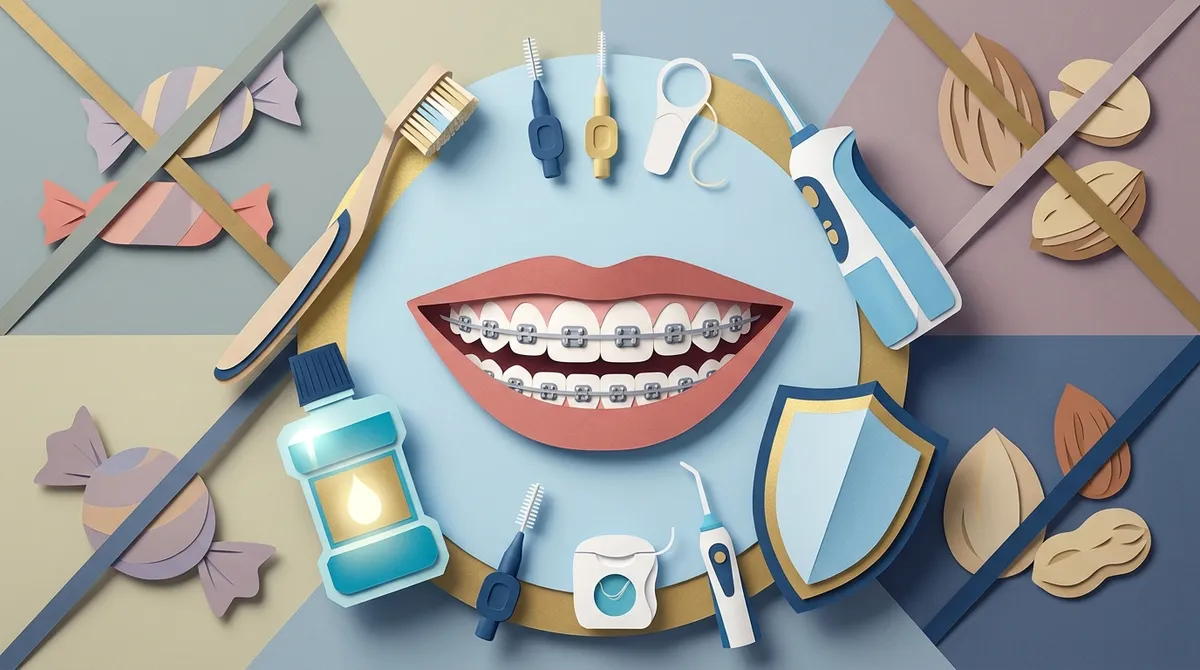
Brush after every meal and snack for at least 2-3 minutes, holding your toothbrush at a 45-degree angle to reach plaque at the gum line and around each bracket.
-
Use interdental (proxy) brushes to clean under wires and around brackets where regular toothbrushes cannot reach—they are small, portable, and one of the most effective tools for braces hygiene.
-
Floss daily using a floss threader or water flosser to remove plaque from between teeth and below the gum line, which prevents cavities and white spots during treatment.
-
Avoid sticky, hard, and sugary foods like caramel, nuts, and soda that trap debris in brackets and can damage your appliances, making daily cleaning much harder.
-
Use a fluoride or antiseptic mouthwash as the final step in your hygiene routine after brushing and flossing to strengthen enamel and reduce bacteria in your mouth.
-
Maintain regular appointments with both your orthodontist and dentist for professional cleanings every 6 months to remove tartar buildup that home care cannot eliminate.
Getting braces is one of the best decisions you can make for your smile. But here’s the thing — braces also make keeping your teeth clean a little more challenging. Those brackets and wires create extra nooks and crannies where food and plaque love to hide. The good news? With the right routine, cleaning your teeth with braces is totally manageable, and even a little fun once you get the hang of it!
Whether you’re a parent helping your child navigate their new braces routine, a teen figuring out life with brackets, or an adult professional who just got started on your smile journey, this guide is for you. We’ll walk you through 7 smart, simple ways to keep your teeth sparkling clean throughout your orthodontic treatment. Let’s dive in!
Why Cleaning Teeth With Braces Matters So Much
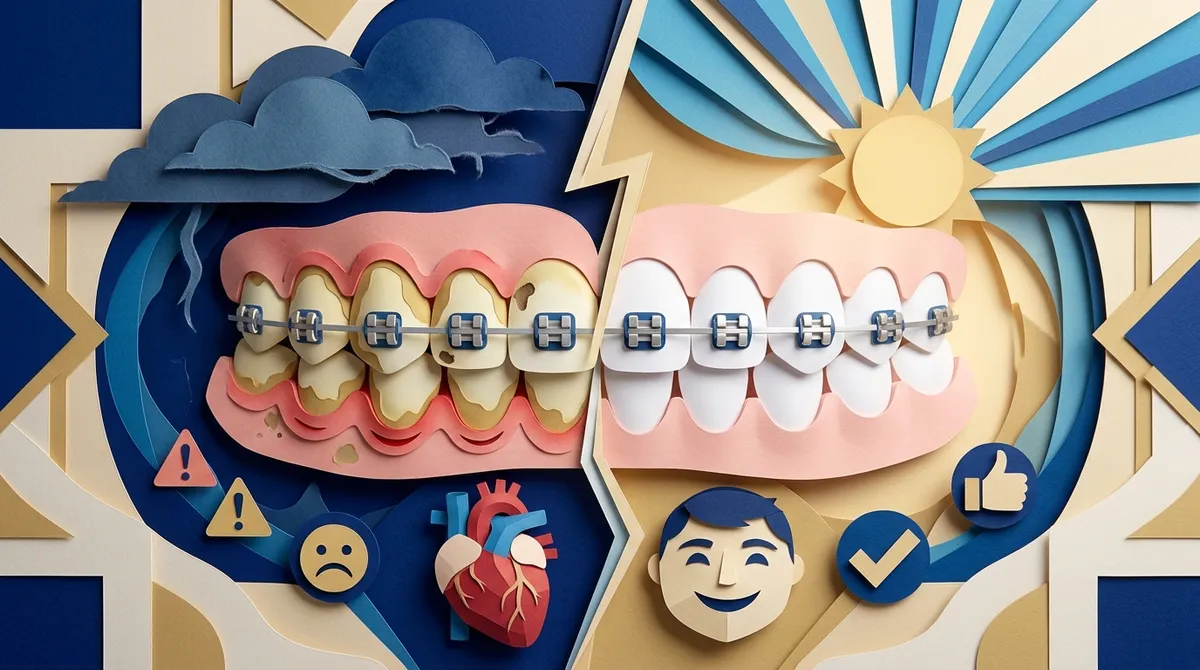
Braces work hard to move your teeth into their ideal positions. But they can also trap food particles and plaque around the brackets and along the gum line. If that plaque isn’t removed regularly, it can lead to white spots, cavities, and gum irritation. Nobody wants to finish treatment with a beautiful straight smile and then discover new dental problems underneath! For more on everything you need to know about braces, including care tips, Brockway Orthodontics has you covered.
The American Dental Association consistently emphasizes that proper oral hygiene during orthodontic treatment is essential to protecting your long-term dental health. The steps you take each day to clean your teeth can make a big difference in your final results.
| Risk of Poor Braces Hygiene | What It Means | How to Prevent It |
|---|---|---|
| White spots (decalcification) | Permanent marks on tooth enamel | Brush after every meal |
| Cavities | Tooth decay from plaque buildup | Use fluoride toothpaste daily |
| Gum disease | Inflammation and bleeding gums | Floss and use mouthwash regularly |
| Bad breath | Food trapped in brackets and wires | Rinse with water after meals |
1. Brush After Every Meal and Snack
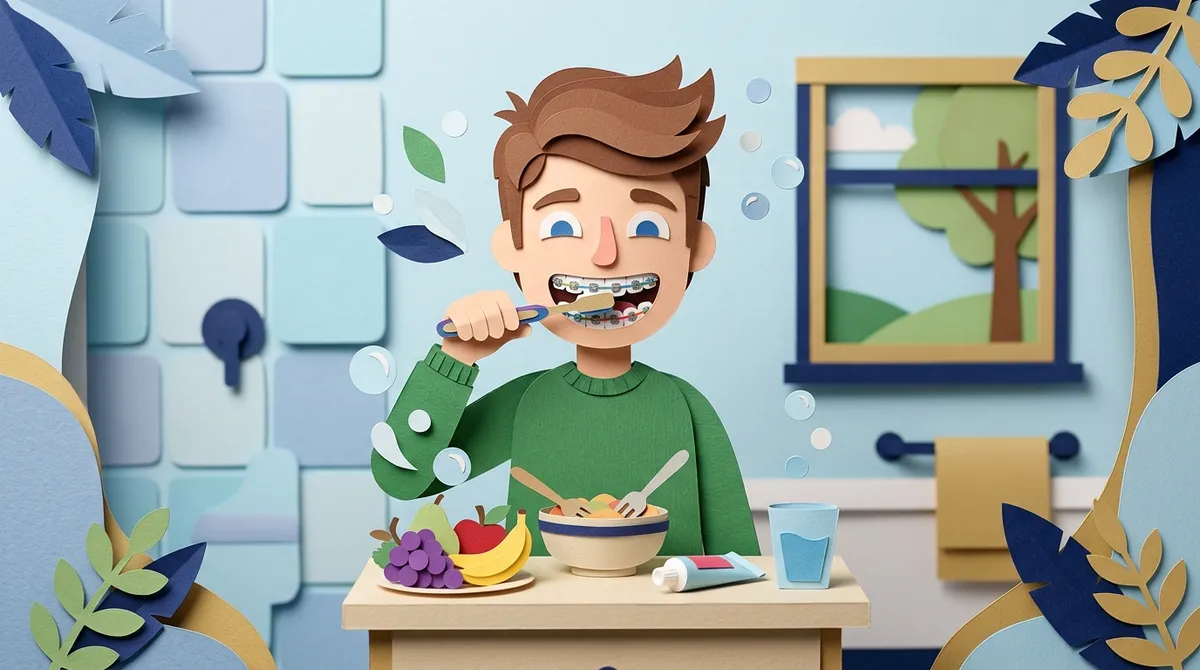
This is the golden rule of braces care. When you eat, food particles get trapped in your brackets, under the wires, and between your teeth. The longer those particles sit, the more plaque builds up. Brushing after every meal and snack is your first line of defense.
Orthodontic guidance recommends brushing for at least 2 minutes each session, and some sources suggest 2 to 3 minutes to make sure you cover every surface. Before you brush, try rinsing your mouth with water first. This helps loosen food particles and makes brushing more effective.
- Brush after breakfast, lunch, and dinner
- Don’t forget to brush after snacks too
- Rinse with water before brushing when possible
- Always brush before bed — this one is non-negotiable!
- Keep a travel toothbrush in your bag or backpack
If you’re curious about what to eat while wearing braces (to make cleaning easier!), check out this helpful guide on what you can eat with braces.
2. Use the Right Toothbrush and Technique
Not all toothbrushes are created equal when it comes to cleaning teeth with braces. A soft-bristled toothbrush is your best friend. Soft bristles are gentle on your brackets and gums, but still effective at removing plaque. An electric toothbrush is also a great option — many patients find it easier to clean around brackets and wires with one.
When you brush, use a pea-sized amount of fluoride toothpaste. Hold your toothbrush at a 45-degree angle to your gum line. This position helps clean along the gums where plaque tends to collect. Then, angle the brush downward to clean the top of each bracket, and upward to clean the bottom of each bracket.
- Start at the gum line, holding the brush at a 45-degree angle
- Brush the top portion of each bracket using small circular motions
- Reposition the brush to clean the bottom of each bracket
- Brush the front, back, and chewing surfaces of every tooth
- Spend about 30 seconds per quadrant (section) of your mouth
- Don’t forget the back teeth and the inside surfaces
| Toothbrush Type | Best For | Tips |
|---|---|---|
| Soft-bristled manual brush | All braces patients | Replace every 3 months or sooner |
| Electric toothbrush | Teens and adults who want easier cleaning | Use with orthodontic brush head if available |
| Orthodontic V-cut brush | Cleaning along the wire line | The V-shape fits around brackets perfectly |
| Interdental (proxy) brush | Getting under wires and around brackets | Use as a supplement, not a replacement |
3. Use Interdental Brushes to Clean Around Brackets
Interdental brushes — also called proxy brushes — are tiny, Christmas-tree-shaped brushes that can slide under your wires and around your brackets. They are one of the most effective tools for cleaning teeth with braces. A regular toothbrush simply can’t reach all the spaces that these small brushes can.
Gently slide the interdental brush under the wire and work it back and forth between brackets. You can use it to dislodge food particles and sweep away plaque from spots your toothbrush misses. They’re small enough to carry in a pocket or purse, making them convenient for on-the-go cleaning.
- Use after meals when a full brushing session isn’t possible
- Work gently to avoid bending or damaging your wire
- Replace them regularly — they wear out quickly
- Ask your orthodontist which size works best for your braces
To learn more about keeping your braces in great shape, take a look at braces treatment mistakes you should never make.
4. Floss Every Day — Yes, Really!
Flossing with braces can feel like a puzzle at first. But it’s absolutely worth it! Flossing removes plaque and food from between your teeth and below the gum line — areas your toothbrush can’t reach. Skipping flossing with braces is one of the most common hygiene mistakes patients make.
The trick is to use a floss threader. This simple plastic tool helps you thread floss under the wire so you can clean between each pair of teeth. Orthodontic floss threaders come in packs and are inexpensive. Another great option is a water flosser, which uses a stream of water to clean between teeth and along the gum line with ease.
- Thread the floss through the floss threader’s loop
- Guide the threader under the archwire
- Slide the floss between two teeth, gently curving it around each tooth
- Move the floss up and down along the side of each tooth
- Re-thread the floss threader for each pair of teeth
If traditional flossing with braces feels frustrating, a water flosser can be a real game-changer. Many patients find it faster, easier, and more comfortable. Check out our guide on how to brush teeth with braces and keep your smile healthy for more practical tips.
5. Add a Fluoride or Antiseptic Mouth Rinse
Mouthwash is a great addition to your braces hygiene routine. A fluoride mouthwash helps strengthen your enamel, which is especially important during orthodontic treatment when your teeth are more vulnerable to acid attacks from plaque. An antiseptic rinse can also reduce bacteria in your mouth and help prevent gum irritation.
Use mouthwash as the last step in your routine — after brushing and flossing. Swish for about 30 to 60 seconds and then spit it out. Avoid eating or drinking for at least 30 minutes after rinsing so the fluoride can do its job. You can ask your orthodontist which rinse they recommend for braces patients.
- Choose an alcohol-free rinse to avoid dry mouth
- Look for fluoride on the label for extra enamel protection
- Use mouthwash after brushing and flossing
- Kids should use child-friendly rinses with appropriate fluoride levels
The Florida Association of Orthodontists recommends consistent daily oral hygiene habits as a key part of successful orthodontic treatment for patients of all ages.
6. Avoid Foods That Make Cleaning Harder
Some foods make it much harder to keep your teeth clean with braces. Sticky, hard, and sugary foods are the biggest troublemakers. They can get wedged into your brackets and wires, and they can also damage your appliances — making treatment take longer.
Avoiding these foods isn’t just about protecting your braces hardware. It’s also about making your daily cleaning routine much easier and more effective. The less debris stuck in your brackets, the less time you spend trying to scrub it out.
| Foods to Avoid | Why They’re Problematic | Better Alternatives |
|---|---|---|
| Sticky candy (caramel, gummies) | Clings to brackets and is hard to remove | Soft chocolate or smoothies |
| Hard foods (nuts, hard pretzels) | Can break brackets or bend wires | Sliced soft fruits or cooked veggies |
| Sugary drinks (soda, juice) | Feed bacteria and cause enamel erosion | Water or milk |
| Popcorn | Kernels get stuck under wires | Puffed rice snacks |
For a full breakdown, visit our detailed guide on foods to avoid with braces for Brockway’s blueprint for braces success.
7. Visit Your Orthodontist and Dentist Regularly
No at-home routine is complete without professional support. Regular visits to your orthodontist keep your treatment on track and give the team a chance to spot any hygiene concerns early. At Brockway Orthodontics, every appointment is an opportunity to check your progress, make adjustments, and make sure your teeth and gums are healthy.
You should also continue seeing your regular dentist for cleanings every six months — or more often if your dentist recommends it. Professional cleanings remove tartar buildup that brushing and flossing alone can’t eliminate. This is especially important with braces, since tartar can form more easily around brackets.
- Keep all scheduled orthodontic appointments
- See your dentist for professional cleanings every 6 months
- Let your orthodontic team know if you notice any unusual spots or sensitivity
- Ask for a hygiene check-in at each visit — don’t be shy!
If you’re just starting your orthodontic journey, learn what to expect at your first visit to Brockway Orthodontics. And if you have questions about how to care for your braces at home, our friendly team is always happy to help — just reach out to us anytime.
Quick Daily Braces Cleaning Checklist
It’s easy to forget a step when life gets busy. Here’s a simple checklist to help you stay on track every single day. Print it out or save it on your phone — whatever works for you!
- Rinse with water after every meal or snack
- Brush for 2 to 3 minutes, covering all surfaces and around each bracket
- Use an interdental brush to clean under wires and around brackets
- Floss between every pair of teeth using a floss threader or water flosser
- Rinse with a fluoride or antiseptic mouthwash
- Check your smile in the mirror to make sure nothing is stuck
- Keep your follow-up appointments and ask your orthodontist any questions
You’ve got this! A little consistency goes a long way. And remember — every clean day is a step closer to the smile you’ve been working toward. For more guidance and inspiration, follow Brockway Orthodontics on Instagram for tips, smile transformations, and behind-the-scenes content from our Clearwater practice.
Making Braces Hygiene a Family Habit
If you’re a parent, building good braces hygiene habits in your child now will pay off for a lifetime. Make brushing and flossing a team activity. Set a timer together, use a fun toothbrush, or play a favorite song during brushing time to make it enjoyable. Kids and teens who enjoy their routine are much more likely to stick with it.
For our teenage and young adult patients, think of your braces hygiene routine as part of your daily self-care — just like skincare or working out. A clean, healthy smile is something to be proud of, and it sets you up for the best possible outcome when your braces come off. Check out our adolescent treatment page to learn more about how we make orthodontic care fun and effective for teens.
For our adult patients, we know your time is precious. Building a streamlined braces hygiene routine — one that fits into your morning and evening schedule — makes all the difference. Our adult treatment options at Brockway Orthodontics are designed to fit into your lifestyle, and so is your care routine.
Your Smile Is Worth It
Cleaning your teeth with braces takes a little more effort than brushing without them — but the payoff is absolutely worth it. When your braces come off, you’ll reveal a straight, healthy, beautiful smile that you worked hard to protect. That moment is one of our favorite parts of the whole journey here at Brockway Orthodontics!
We’re proud to serve families across Clearwater and the surrounding area, and we’re here to support you every step of the way. Whether you’re just starting out or you’re nearing the finish line, our team is cheering you on. Visit us on Google — Brockway Orthodontics to read reviews from real patients who’ve been right where you are now.
Ready to get started on your best smile? We’d love to meet you! Schedule your free consultation with Brockway Orthodontics today and take the first step toward a healthy, confident smile you’ll love for life.
FAQs
Q: How often should you brush your teeth when you have braces?
A: You should brush after every meal and snack — ideally 3 times a day or more. The goal is to remove food and plaque from around your brackets and wires before they can cause any damage. At minimum, always brush in the morning and before bed!
Q: What is the best way to floss with braces?
A: The easiest way to floss with braces is to use a floss threader, which helps you guide floss under the wire and between each pair of teeth. A water flosser is another fantastic option — it uses a gentle stream of water to clean between teeth and along the gum line without the threading hassle.
Q: Can you use an electric toothbrush with braces?
A: Absolutely — electric toothbrushes are a great choice for cleaning teeth with braces! They can make it easier to clean around brackets and along the gum line. Just make sure to use a soft brush head and let the toothbrush do the work without pressing too hard.
Q: What happens if you don’t clean your teeth well with braces?
A: Poor hygiene with braces can lead to white spots (permanent marks on your enamel), cavities, gum inflammation, and even bad breath. The good news is that these issues are completely preventable with a consistent daily routine of brushing, flossing, and rinsing.
Q: Is mouthwash necessary when you have braces?
A: Mouthwash isn’t required, but it’s a really helpful addition to your braces hygiene routine! A fluoride rinse can strengthen your enamel and help prevent cavities, while an antiseptic rinse can reduce bacteria and keep your gums healthy. Ask your orthodontist which type they recommend for you.