
Key Takeaways
-
Brush after every meal and snack, not just twice daily, because food gets trapped easily around brackets and wires. Carry a travel toothbrush to make this convenient at school or work.
-
Use a soft-bristled toothbrush or electric toothbrush with a round head, and hold it at a 45-degree angle to clean above and below brackets with circular motions for at least 2 minutes.
-
Daily flossing is essential since cavities and gum disease start between teeth where your toothbrush cannot reach. Use a floss threader, orthodontic floss picks, or water flosser to make this easier.
-
Poor oral hygiene with braces leads to permanent white spots, tooth decay, and gum problems that can’t be reversed even after treatment. Good hygiene protects your investment in straightening your teeth.
-
Rinse with fluoride mouthwash for 30-60 seconds after brushing and flossing, then avoid eating or drinking for 30 minutes to strengthen enamel and prevent cavities.
-
Avoid sticky, chewy, and hard foods like candy, popcorn, and nuts, as they get lodged in brackets and can break your hardware, delaying your treatment timeline.
Getting braces is exciting! You’re on your way to a beautiful, healthy smile. But let’s be honest — learning how to brush and floss with braces can feel a little overwhelming at first. With all those brackets, wires, and tiny spaces, cleaning your teeth takes a bit more effort than before.
The good news? Once you get the hang of it, your daily routine becomes second nature. Great oral hygiene during orthodontic treatment is super important. It protects your teeth from cavities, white spots, and gum problems. It also means you’ll end up with a smile that’s not just straight — but truly healthy and bright.
Whether you’re a parent helping your child, a teen just getting started, or an adult in treatment, these eight tips will make brushing and flossing with braces easy and effective. Let’s dive in!

Why Oral Hygiene Matters So Much With Braces
Braces create lots of tiny nooks and crannies where food and plaque can hide. If you don’t clean well, bacteria build up fast. This can lead to tooth decay, swollen gums, and even permanent white spots on your teeth when braces come off.
Think of it this way — you’re investing time and money into straightening your smile. Good hygiene protects that investment! Check out all about braces for a full overview of what to expect during treatment. The American Dental Association also emphasizes that patients in orthodontic treatment need to be extra diligent about their oral hygiene routines.
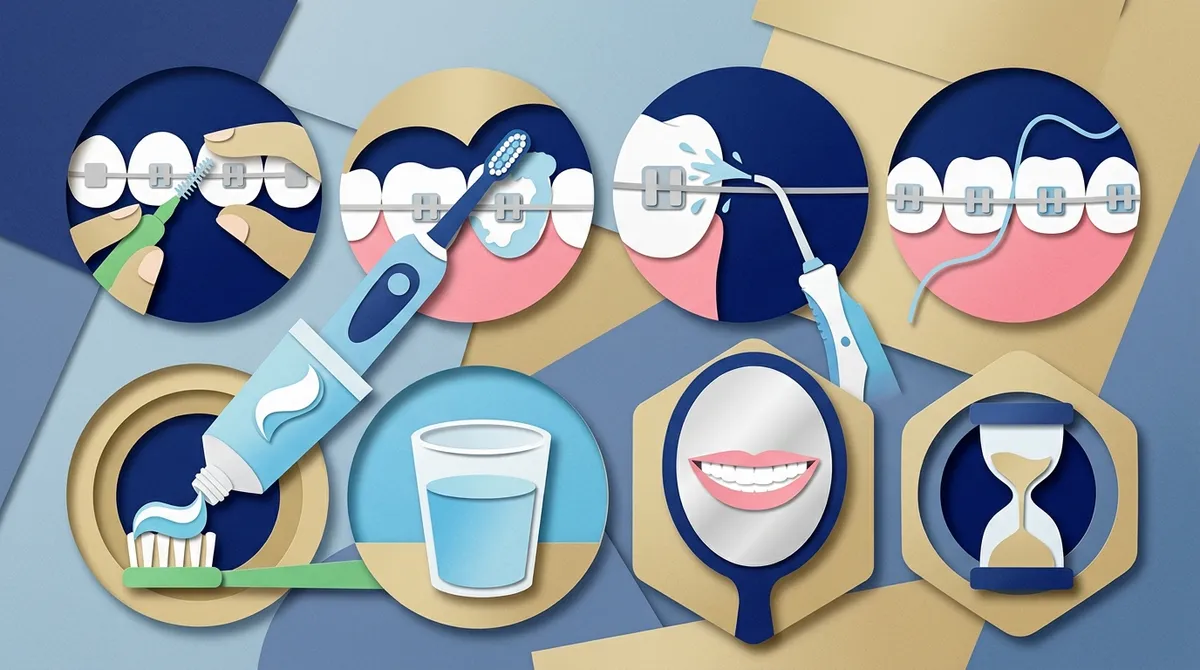
The 8 Best Tips to Brush and Floss With Braces
1. Use the Right Toothbrush
The first step is choosing the right tool. A soft-bristled toothbrush works best for braces. It cleans gently without damaging your brackets or gum tissue. Many patients love electric toothbrushes because the vibrating bristles do a great job removing plaque.
An orthodontic brush (shaped like a V) is another great option. It’s designed to fit around brackets perfectly. No matter which brush you choose, replace it every three months — or sooner if bristles look worn.
- Soft-bristled manual toothbrush
- Electric toothbrush with round head
- Orthodontic V-cut toothbrush
- Interdental brush (for between brackets)
2. Brush After Every Meal
With braces, brushing twice a day just isn’t enough. Food gets trapped easily around brackets and wires. The goal is to brush after every meal and snack. Yes, even lunch at school or work!
Carrying a small travel toothbrush makes this easy. Even rinsing well with water after eating helps remove loose food particles when brushing isn’t possible right away.
3. Follow the Perfect Brushing Technique
Brushing with braces is slightly different than brushing without them. Here’s a simple step-by-step method that works really well:
- Rinse your mouth with water first to loosen food particles.
- Apply a small amount of fluoride toothpaste to your brush.
- Hold your brush at a 45-degree angle to your gums.
- Brush the tops of your brackets using small, circular motions.
- Reposition the brush below the brackets and brush again.
- Brush each tooth surface — front, back, and chewing surfaces.
- Spend at least two full minutes brushing every time.
Go slowly and be thorough. Rushing through brushing is one of the most common mistakes patients make. For a deeper look at brushing techniques, visit our guide on how to brush teeth with braces and keep your smile healthy.
| Brushing Zone | Technique | Time Spent |
|---|---|---|
| Above brackets (near gums) | 45-degree angle, circular motion | 30 seconds |
| Below brackets (near chewing surface) | 45-degree angle, circular motion | 30 seconds |
| Front surface of teeth/brackets | Direct strokes, gentle pressure | 30 seconds |
| Back of teeth and chewing surfaces | Circular scrubbing motion | 30 seconds |
4. Don’t Skip Flossing
Flossing with braces feels tricky at first. But skipping it is not an option! Floss reaches between teeth where your toothbrush simply cannot go. Gum disease and cavities start between teeth, so daily flossing is essential.
Thread the floss carefully under the archwire between each set of teeth. Slide it gently up and down both sides of each tooth, going under the gumline. Then move to the next space and repeat. This takes patience, but it really pays off. You can also explore our oral hygiene with braces tips for even more helpful strategies.
5. Use a Floss Threader or Orthodontic Floss
Regular floss works fine, but threading it under the archwire every single time can get tedious. That’s where floss threaders and special orthodontic tools come in. They make flossing so much faster and easier.
- Floss threaders: Plastic loops that help guide floss under the wire quickly
- Orthodontic floss picks: Pre-threaded with a stiff end for easy threading
- Water flosser (oral irrigator): Uses a stream of water to flush out debris
- Interdental brushes: Tiny brushes that fit between brackets and wires
A water flosser is especially popular with braces patients. It’s gentle, fast, and does an excellent job flushing out food and bacteria from hard-to-reach spots. The Florida Association of Orthodontists recommends water flossers as a great supplemental tool alongside traditional flossing for braces patients.
| Flossing Tool | Best For | Ease of Use |
|---|---|---|
| Regular floss + threader | Deep cleaning between teeth | Moderate |
| Orthodontic floss picks | Quick daily flossing | Easy |
| Water flosser | Flushing debris, massaging gums | Very Easy |
| Interdental brush | Cleaning around brackets | Easy |
6. Add a Fluoride Mouthwash to Your Routine
After brushing and flossing, rinse with a fluoride mouthwash. This is like a bonus cleaning step that reaches spots your brush and floss might miss. Fluoride strengthens enamel, helping prevent cavities — which braces patients are at higher risk for.
Choose an alcohol-free mouthwash for the best results. Rinse for 30 to 60 seconds, then spit. Don’t eat or drink for at least 30 minutes after rinsing to let the fluoride work its magic.
7. Avoid Foods That Make Cleaning Harder
Certain foods make oral hygiene with braces much harder. Sticky, chewy, or hard foods get lodged in brackets and wires. They’re also more likely to break your hardware, which can set back your treatment timeline.
- Avoid sticky candy, caramel, and gummy bears
- Skip hard foods like popcorn, nuts, and ice
- Cut crunchy foods like apples and carrots into small pieces
- Limit sugary drinks that feed plaque-causing bacteria
Eating braces-friendly foods makes it easier to clean your teeth thoroughly each day. Check out our article on foods to avoid with braces for a full breakdown of what’s safe and what to skip.
8. Keep Up With Your Orthodontic Appointments
Your orthodontist isn’t just there to tighten wires. At every visit, the team checks for signs of plaque buildup, gum issues, and tooth decay. They can spot problems early before they become serious.
Regular appointments also give you a chance to ask questions about your hygiene routine. The team at Dr. Brockway’s practice is always happy to walk you through personalized tips to keep your smile healthy throughout treatment. Don’t hesitate to reach out and get in touch with our team if you have any concerns between visits.
Brushing and Flossing for Different Ages
Good hygiene habits look a little different depending on the patient’s age. Parents, teens, and adults all have unique needs and challenges when it comes to cleaning braces.
| Age Group | Key Challenge | Best Tip |
|---|---|---|
| Kids (7-12) | Motivation and thoroughness | Use a two-minute timer or fun brushing app |
| Teens (13-18) | Consistency at school | Keep a travel brush and floss in a backpack |
| Adults (18+) | Time constraints at work | Use a water flosser for fast, effective cleaning |
For parents of younger patients, our guide on orthodontics for kids: what every parent should know is a fantastic resource. Teens can also find great tips at our adolescent treatment page. And if you’re an adult in braces, visit our adult treatment page for more helpful guidance.
Common Brushing and Flossing Mistakes to Avoid
Even with the best intentions, patients sometimes fall into habits that hurt their oral health. Here are some of the most common mistakes to watch out for:
- Brushing too hard: Aggressive brushing can damage brackets and irritate gums. Use gentle, circular motions.
- Skipping flossing because it takes too long: Try floss threaders or a water flosser to speed things up.
- Only brushing at night: Brush after every meal to prevent plaque from building up.
- Using whitening toothpaste: It can create uneven whitening around brackets. Stick to regular fluoride toothpaste.
- Rinsing immediately after brushing: Spit but don’t rinse — let the fluoride stay on your teeth longer.
Avoiding these mistakes makes a huge difference in the health of your smile by the time your braces come off. For more common pitfalls to watch out for, see our article on braces treatment mistakes you should never make.
How Brockway Orthodontics Supports Your Hygiene Journey
At Brockway Orthodontics in Clearwater, Florida, we believe that a beautiful smile starts with a healthy one. That’s why Dr. Brockway and her team take the time to educate every patient — and their families — on the best ways to care for their teeth during treatment. From your very first visit, we make sure you feel confident and prepared.
We love seeing patients thrive throughout their orthodontic journey, and a big part of that is mastering oral hygiene. You can visit us on Google — Brockway Orthodontics to read reviews from real patients who have loved their experience with us. Our team makes hygiene guidance feel friendly and approachable, never overwhelming.
We also have helpful resources on our FAQs page and encourage you to follow us on Instagram for daily tips, patient stories, and smile inspiration. Whether you’re just starting treatment or are already partway through, we’re here every step of the way.
Quick Reference: Your Daily Braces Hygiene Checklist
Want a simple routine to follow every day? Here it is:
- Brush after breakfast, lunch, and dinner (and after snacks!)
- Floss at least once a day, ideally before bed
- Rinse with fluoride mouthwash after your evening brush
- Use an interdental brush to clean around brackets
- Check your teeth in the mirror to spot any missed areas
Following this checklist every day takes just a few extra minutes — but it makes an enormous difference in the health and beauty of your smile.
Ready to Start Your Smile Journey?
Knowing how to brush and floss with braces is one of the most important skills you’ll develop during orthodontic treatment. With the right tools, techniques, and consistency, keeping your teeth clean is totally manageable — and even becomes routine. Whether you’re supporting a child through their first set of braces or navigating treatment as an adult, these tips will help you protect your smile every step of the way.
If you’re thinking about starting orthodontic treatment or want personalized advice from a caring, expert team, we’d love to meet you. Schedule your free consultation at Brockway Orthodontics today and take the first step toward a smile you’ll love for life!
FAQs
Q: How often should I brush my teeth when I have braces?
A: Great question! With braces, you should brush after every meal and snack — that’s at least three times a day. More frequent brushing prevents food and plaque from building up around your brackets and wires, keeping your smile healthy throughout treatment.
Q: What is the easiest way to floss with braces?
A: The easiest way is to use a floss threader, orthodontic floss picks, or a water flosser! These tools make it much faster to get floss under your archwire. A water flosser in particular is a fan favorite — it flushes out debris quickly and massages your gums at the same time.
Q: Can I use an electric toothbrush with braces?
A: Absolutely — electric toothbrushes are actually a wonderful choice for braces patients! The oscillating bristles do an excellent job cleaning around brackets and along the gumline. Just make sure to use a soft brush head and gentle pressure so you don’t damage your brackets.
Q: What toothpaste should I use with braces?
A: Stick with a regular fluoride toothpaste while you have braces. Fluoride strengthens enamel and helps prevent cavities, which braces patients are more prone to. Avoid whitening toothpastes during treatment — they can create uneven whitening spots around your brackets!
Q: Will my gums bleed when I floss with braces?
A: A little bleeding when you first start flossing regularly is pretty common and usually nothing to worry about — it often means your gums were inflamed from plaque buildup. With consistent daily flossing, the bleeding should stop within a week or two. If it persists, let your orthodontic team know at your next visit!
Our Service Area