Key Takeaways
-
Without consistent retainer wear, lower front teeth can shift back in 70-90% of cases due to orthodontic relapse, making post-treatment retention critical to maintaining your new smile.
-
Fixed retainers have a 35% failure rate overall and 54% for long-term wear, requiring regular checkups to catch loosening early, while removable retainers depend entirely on your compliance.
-
Start with near-full-time retainer wear immediately after braces, gradually transition to nighttime-only use as teeth stabilize, then maintain long-term or lifelong nighttime wear to prevent natural tooth shifting.
-
No single retainer type is universally superior; choose based on your lifestyle and habits: fixed wire if you forget removable appliances, or removable trays if you prefer flexibility for eating and sports.
-
Clear vacuum-formed and Hawley removable retainers perform similarly overall, making consistent wear frequency and proper care more important than retainer style choice.
-
Watch for warning signs like sharp edges, tight fit, visible cracks, or noticeable tooth shifting, and contact your orthodontist immediately rather than forcing a problematic retainer into place.
So you just finished your braces or Spark™ clear aligners. Your smile looks amazing, and you never want it to shift back. That’s where a bite retainer comes in. But which type is right for you: a fixed wire behind your teeth, or a removable tray you pop in at night? This friendly guide breaks it all down, so you can protect your beautiful new smile for years to come.
At Brockway Orthodontics in Clearwater, Florida, we hear this question almost every single day. Patients finish treatment, feel thrilled with their results, and then ask, “Now what?” We get it. Retainers might seem like a small detail, but they’re actually the secret to keeping your smile straight for life. Let’s dig into the details together, in plain, simple language.
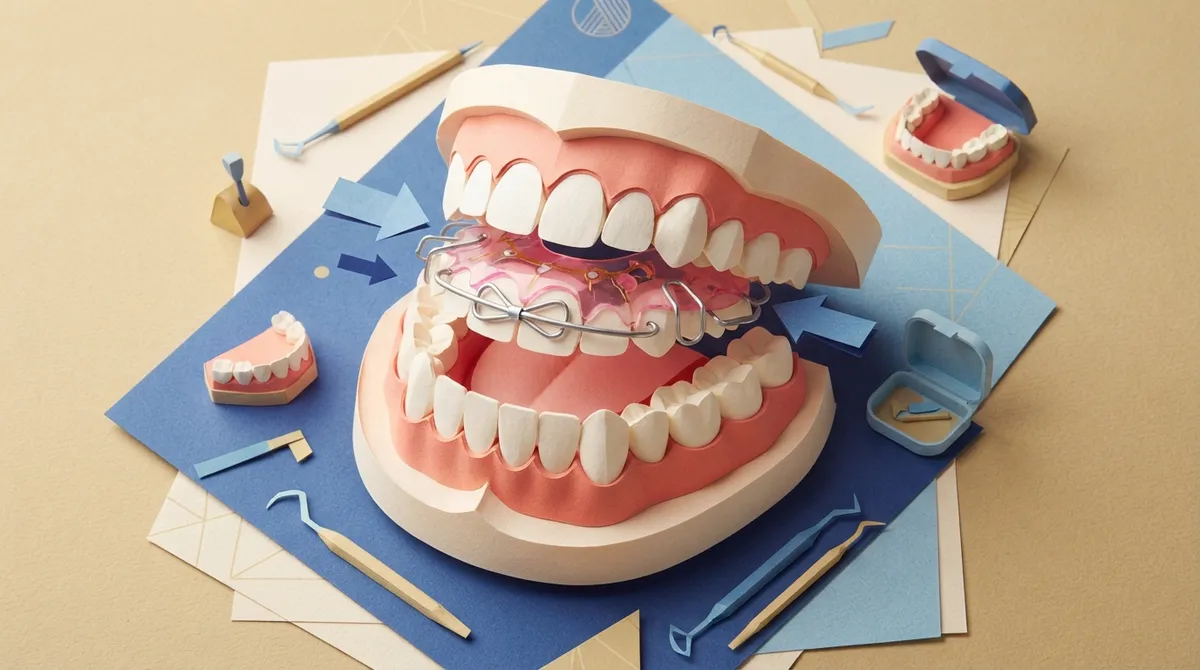
What Is a Bite Retainer, Exactly?
A bite retainer is a dental appliance you wear after braces or clear aligner treatment. Its job is to hold your teeth in their new, corrected positions. Think of it like a helper that keeps your teeth from drifting back to where they started.
This is different from a night guard, which protects your teeth from grinding or clenching. A bite retainer’s main goal is retention, not protection. It works to preserve your bite and alignment after all that hard work with braces or Spark™ Clear Aligners.
Why Do Teeth Move After Treatment?
Teeth are surrounded by soft tissue and bone that need time to settle. Right after braces come off, your teeth are still a little loose in their new spots. Without a retainer, they can slowly shift back toward their old positions.
This process is called orthodontic relapse. Studies suggest it’s actually quite common. Research shows lower front teeth can shift in roughly 70% to 90% of cases if retention isn’t followed closely, based on older literature reviews. That’s exactly why your orthodontist stresses retainer wear so much.
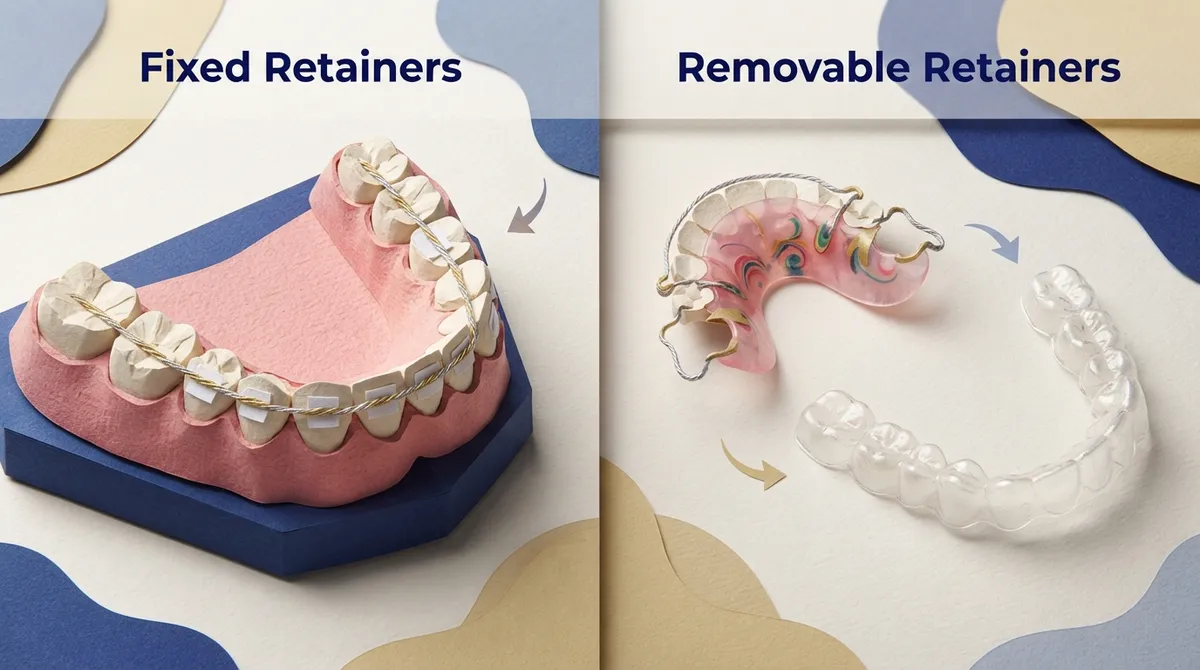
Fixed vs. Removable Bite Retainers: The Main Types
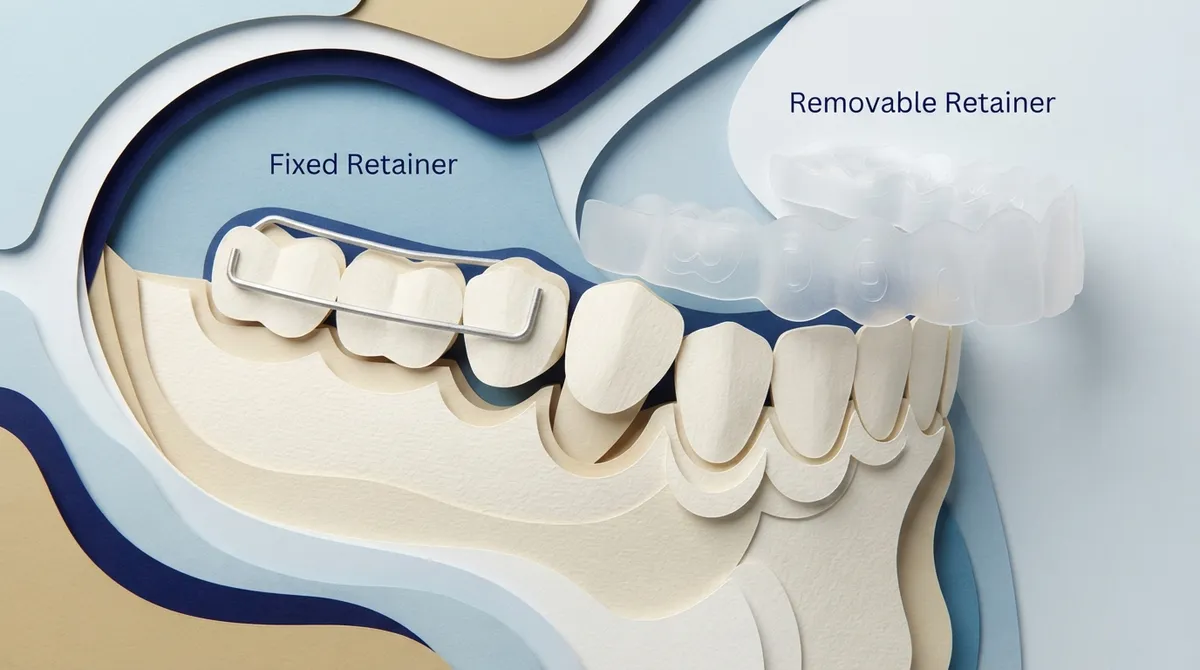
There are two big categories of retainers, and each has its own pros and cons. Let’s compare them side by side so you can see which fits your lifestyle best.
| Retainer Type | How It Works | Best For | Care Needed |
|---|---|---|---|
| Clear Vacuum-Formed Retainer | Thin, clear plastic tray molded to your teeth | Patients who want a discreet, removable option | Daily cleaning, careful storage |
| Hawley Retainer | Acrylic plate with a metal wire across the front teeth | Patients who need durability and adjustability | Brushing, avoiding heat damage |
| Fixed (Bonded) Retainer | Thin wire bonded behind front teeth | Patients who struggle with compliance | Careful flossing, regular checkups |
Each option has real trade-offs. A removable retainer depends completely on you remembering to wear it. A fixed retainer takes that worry away, but it needs extra attention when brushing and flossing.
Removable Retainers: Freedom with Responsibility
Removable retainers, like clear trays or Hawley retainers, let you take them out to eat and brush. Many people love this flexibility. However, it also means the retainer only works if you actually wear it as instructed.
Here are some quick facts about removable options:
- Clear retainers are nearly invisible, great for teens and professionals alike
- Hawley retainers are sturdy and can be adjusted by your orthodontist
- Both types need to be removed for eating and most drinking
- Losing or forgetting them is the biggest risk to success
- They’re easy to clean with a toothbrush and mild soap
Fixed Retainers: Set It and Forget It (Mostly)
A fixed retainer is a thin wire bonded to the back of your front teeth. You can’t see it, and you don’t have to remember to put it in every night. That said, fixed retainers aren’t maintenance-free.
A 2023 systematic review and meta-analysis in the European Journal of Orthodontics found an overall failure rate of about 35.22% for bonded fixed retainers. That number climbed to nearly 53.85% for long-term wear. This doesn’t mean fixed retainers are a bad choice. It simply means they need regular checkups so any loose spots get fixed quickly.
How Long Will You Need to Wear a Bite Retainer?
This is one of the most common questions we hear at our Clearwater orthodontic office. The honest answer is: longer than most people expect. Many orthodontists, including Dr. Brockway, recommend a step-down approach.
- Near-full-time wear for the first few months after braces or aligners come off
- Gradual transition to nighttime-only wear as your teeth stabilize
- Long-term or even lifelong nighttime wear to protect against natural shifting
- Regular checkups so your orthodontist can confirm your retainer still fits well
- Prompt replacement if the retainer cracks, warps, or feels uncomfortable
There’s no single evidence-based rule that fits every patient perfectly. Your treatment plan, your bite, and even your age all play a role. That’s why personalized care from your Clearwater orthodontist matters so much.
Signs Your Retainer Needs Attention
Retainers don’t last forever, and they shouldn’t be ignored if something feels off. Watch for these warning signs:
- Sharp edges or rough spots that irritate your cheeks or tongue
- A retainer that suddenly feels tight or hard to insert
- Visible cracks, warping, or discoloration
- A fixed retainer wire that feels loose or has come unbonded
- Noticeable gaps or shifting in your front teeth
If any of these happen, don’t force the retainer into place. Contact us right away so we can check things out before small problems become bigger ones.
Removable vs. Fixed: Which One Actually Wins?
Here’s the truth: there isn’t a single “best” retainer for everyone. A Cochrane review found that evidence comparing fixed and removable retention is low to very low certainty. That means research hasn’t proven one option beats the other for every patient.
That said, here’s a simple breakdown to help guide your decision:
| Factor | Removable Wins If… | Fixed Wins If… |
|---|---|---|
| Compliance | You’re confident you’ll wear it as directed | You tend to forget things or lose items easily |
| Lifestyle | You want to remove it for sports or events | You prefer a “set it and forget it” solution |
| Oral Hygiene | You brush and floss thoroughly on your own | You’re comfortable with extra flossing techniques |
| Relapse Risk | Your bite is fairly stable after treatment | You had significant crowding before treatment |
Some patients even use both. A fixed retainer on the lower front teeth paired with a removable retainer for the upper arch is a popular combination. Your orthodontist will help you decide what makes sense based on your specific bite and habits.
Caring for Your Bite Retainer: Simple Daily Habits
No matter which type you have, good care keeps your retainer working well and lasting longer. Here’s a simple routine to follow:
- Clean your removable retainer every morning and night with a soft toothbrush
- Avoid hot water, which can warp clear plastic retainers
- Store removable retainers in their case when not in use, never in a napkin or pocket
- Floss carefully around a fixed retainer wire using a floss threader
- Bring your retainer to every checkup so your orthodontist can inspect it
- Replace worn or cracked retainers promptly instead of waiting
Good hygiene habits matter for your whole mouth, not just your retainer. The American Dental Association recommends brushing twice daily and flossing once a day, which also helps protect any bonded retainer wire from plaque buildup.
What Does Research Say About Retainer Success?
Let’s look at a few more numbers, since data helps put things in perspective. A systematic review of fixed retainer studies found bond-failure rates ranging from about 3.5% to 53%, depending on the wire type and study design. That’s a wide range, which shows how much appliance choice and follow-up care matter.
Another interesting finding: a Cochrane review noted that part-time clear retainer wear might cause slightly more tooth movement than a fixed multistrand retainer in some lower-arch cases. However, the difference was small, about 0.92 mm on a common measurement scale. In everyday terms, that’s a tiny amount, but it shows why sticking to your orthodontist’s wear schedule really does matter.
Clear Retainers vs. Hawley Retainers: Any Real Difference?
A 2023 systematic review found that clear vacuum-formed retainers and Hawley retainers often perform similarly overall. The bigger factor isn’t the retainer style. It’s how consistently you wear it, how well you care for it, and how often you see your orthodontist for checkups.
Why Choose Brockway Orthodontics for Retainer Care?
At Brockway Orthodontics, we treat retainers as seriously as we treat braces and aligners. Dr. Brockway takes time to explain your options clearly, whether you’re a parent of a teenager finishing treatment or an adult who wants to protect years of hard work with braces or clear aligners.
We use modern digital tools, including digital impressions instead of messy molds, to create retainers that fit comfortably from day one. Our team also offers same-day solutions in certain cases, so you’re never stuck waiting weeks for a simple retainer adjustment. Learn more about our retainer options and how we personalize care for every patient.
Curious what other Clearwater families think? You can visit us on Google — Brockway Orthodontics to read real reviews from patients just like you. We’re proud of the relationships we’ve built across Pinellas County, and we’d love to welcome you next.
Common Retainer Mistakes to Avoid
Even well-meaning patients sometimes slip up with retainer care. Here are mistakes we see often:
- Skipping nighttime wear because teeth “look fine” after a few weeks
- Forgetting the retainer case and leaving it wrapped in a napkin (a classic way to lose it!)
- Ignoring a cracked or loose-fitting retainer instead of calling the office
- Not flossing carefully around a fixed retainer wire
- Assuming relapse can’t happen years after treatment ends
Avoiding these simple mistakes goes a long way toward protecting your smile long term. If you’re unsure whether your current habits are working, our team at Your First Visit page can walk you through what ongoing care looks like at our practice.
Retainers for Every Age and Stage
Whether you’re a parent guiding a teen through adolescent treatment or an adult revisiting orthodontics after relapse, retainers play a role in every journey. We treat patients of all ages at Brockway Orthodontics, and we tailor retainer plans for:
- Teenagers transitioning from braces to long-term retention
- Adults returning for retreatment after previous relapse
- Busy professionals who want a discreet, low-maintenance option
- Health-conscious patients managing complex bite concerns
Our adult treatment options include flexible retainer plans designed around real life, not just textbook schedules. You can also follow us on Facebook or Instagram for smile tips and patient stories from our Clearwater community.
Ready to Protect Your Smile for Good?
Your bite retainer is the final, essential step after braces or clear aligners. Choosing the right type, wearing it consistently, and keeping up with checkups will help your smile stay beautiful for years to come. Don’t let all that hard work go to waste by skipping retention.
If you’re ready to talk retainer options, or if your current retainer needs a checkup, book your appointment online with Brockway Orthodontics today. Dr. Brockway and our friendly Clearwater team are here to help your smile stay just as bright as the day your braces came off.
FAQs
Q: What is a bite retainer in orthodontics?
A: A bite retainer is a dental appliance worn after braces or clear aligner treatment. It holds your teeth in their new positions and helps preserve your corrected bite, so all that hard work truly lasts.
Q: Is a bite retainer the same as a night guard or mouth guard?
A: Nope, they’re different! A bite retainer keeps your teeth from shifting back after orthodontic treatment, while a night guard mainly protects teeth from grinding or clenching. They serve very different purposes.
Q: How long do I need to wear a retainer after braces or Invisalign?
A: Most patients start with near-full-time wear, then transition to nighttime-only use over several months. Many orthodontists recommend long-term or even lifelong nighttime wear to keep your smile stable.
Q: What should I do if my retainer no longer fits?
A: Don’t force it! If your retainer feels tight, cracked, or uncomfortable, reach out to your orthodontist right away. Waiting can allow your teeth to shift even further, making the fix more complicated.
Q: How much does an orthodontic retainer cost, and how often should it be replaced?
A: Retainer costs vary based on type and material, and replacement schedules depend on wear and tear. Your orthodontist will check your retainer at regular visits and let you know when it’s time for a new one.
Our Service Area