Key Takeaways
-
Nearly 46% of braces patients develop white spot lesions from improper cleaning, which is permanent enamel damage that persists even after braces are removed.
-
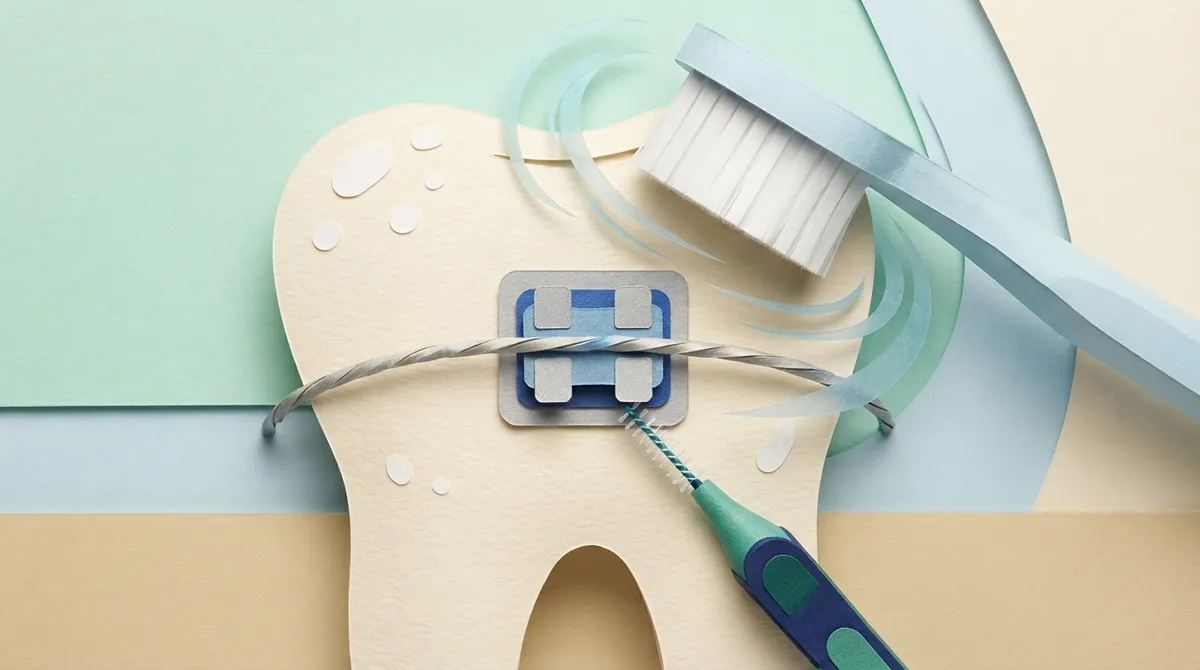
Angle your toothbrush both above and below each bracket using gentle circular motions, as plaque hides on tooth surfaces adjacent to brackets, not just on the metal itself.
-
Use an interdental brush daily under the archwire to reach areas your regular toothbrush cannot access, making it essential for preventing decay and gum inflammation.
-
Brush at least twice daily with fluoride toothpaste (1,350-1,500 ppm), and rinse with water immediately after meals when you cannot brush, to prevent trapped food from causing cavities.
-
Replace your toothbrush every few months as braces wear down bristles faster than normal brushing, and prioritize soft-bristled brushes to avoid enamel damage.
-
Floss daily using a floss threader to clean between teeth under the wire, and maintain regular dental check-ups during treatment so professionals can spot early problems.
If you have just gotten braces, you may have noticed something fast: food and plaque love to hide around those little brackets. It can feel like your toothbrush just isn’t reaching the right spots. Good news! With a few simple tricks, you can learn how to brush under braces like a pro, and your smile will thank you when the braces come off.
Here is why it matters. Braces create lots of tiny spots where plaque can stick, around brackets, bands, and under the archwire. If plaque stays put, it can lead to cavities, red and puffy gums, and white spots on your teeth. Those white spots are early enamel damage, and they can stay behind even after braces are removed. A 2023 orthodontic consensus review reported that roughly 45.8% of patients develop white spot lesions during treatment. That is a big number, but it is also something you can help prevent with great brushing habits.
Whether you are a teen getting braces for the first time, a parent helping your child, or an adult working on a smile upgrade, this guide walks you through every step. Let’s get brushing!

Why Brushing Under Braces Takes Extra Care
With regular teeth, you can brush the flat surfaces and be done. Braces change the game. Brackets stick out from your teeth, and the archwire runs across them like a tiny fence. Plaque can build up above the bracket, below it, and underneath the wire.
If you only brush the front of the brackets, you miss the tooth surface right next to them. That is exactly where trouble starts. Cleaning the tooth itself, not just the metal or ceramic, is the secret.
Here is what can happen when plaque is left behind:
- Tooth decay: Plaque makes acid that wears down enamel.
- Gum inflammation: Gums can get red, swollen, and sore.
- White spot lesions: Chalky white marks can show up around where brackets sat.
- Bad breath: Trapped food and bacteria can cause odor.
The good news is that all of this is very preventable with the right tools and technique.

The Best Tools for Brushing Under Braces
You do not need fancy gear, but the right tools make a real difference. Here is what to keep in your braces care kit.
Soft-Bristled Toothbrush
Pick a soft-bristled toothbrush, either manual or electric. Soft bristles clean well without hurting your gums or wearing down your enamel. Many people like electric brushes because they do some of the work for you, but a manual brush works great when you use good technique.
Fluoride Toothpaste
Fluoride helps strengthen enamel and protect against decay. The 2023 orthodontic consensus statements recommend over-the-counter fluoride toothpaste with 1,350 to 1,500 ppm fluoride. Most regular fluoride toothpastes fall in that range. Check the label, or ask your orthodontic team if you are not sure.
Interdental Brush
This tiny brush looks like a little pipe cleaner on a handle. It slides under the archwire and around brackets to reach spots your regular toothbrush cannot. Using one every day is a game changer.
Orthodontic Floss or Floss Threaders
Regular floss is hard to guide under the wire. A floss threader or orthodontic floss helps you pass the floss right under the archwire so you can clean between teeth.
| Tool | What It Does | How Often |
|---|---|---|
| Soft-bristled toothbrush | Cleans tooth surfaces and gumline | At least twice a day |
| Fluoride toothpaste | Strengthens enamel | Every brushing |
| Interdental brush | Cleans under the wire and around brackets | Once a day |
| Floss with threader | Cleans between teeth under the wire | Once a day |
How to Brush Under Braces: Step by Step
Ready for the main event? Here is the simple routine to follow. Take your time. Brushing with braces should take a little longer than before, and that is totally normal.
- Rinse first. Swish water around your mouth to loosen any food bits stuck in your braces.
- Add fluoride toothpaste. Use a small, pea-sized amount on a soft-bristled brush.
- Start at the gumline. Place the bristles where your teeth meet your gums. Use gentle, small circular movements. This clears plaque that can irritate your gums.
- Angle toward the brackets from above. Tilt your brush so the bristles point down toward the top of each bracket. Gently brush the tooth surface above the bracket and under the wire.
- Angle toward the brackets from below. Now tilt the brush so the bristles point up toward the bottom of each bracket. Brush the tooth surface below the bracket and under the wire.
- Brush the front of the brackets. A few gentle strokes across the brackets themselves help remove surface plaque.
- Do not forget the inside surfaces. Brush the backs of your teeth, the side that faces your tongue.
- Clean the chewing surfaces. Brush across the tops of your back teeth where food gets stuck.
- Finish with an interdental brush. Slide it gently under the wire and around each bracket to catch what the toothbrush missed.
- Rinse well. Spit out the toothpaste and rinse with a little water.
Keep the movements gentle and small. Scrubbing hard does not clean better, and it can irritate your gums. Think of it like polishing a car, not scrubbing a pan.
How to Use an Interdental Brush Around Braces
This little brush is your best friend for cleaning right under the archwire. Here is how to use it safely.
- Choose the right size. The brush should fit comfortably under the wire without forcing. Ask your orthodontic team to show you which size works best.
- Slide it in gently. Guide the brush under the wire between the bracket and the tooth surface.
- Use a soft back-and-forth motion. Clean each space one at a time.
- Never force it. Pushing too hard can bend the wire or knock a bracket loose.
If you are not sure about technique, ask for a demo at your next visit. Our team is always happy to show you, and it takes just a minute.
How to Floss With Braces
Brushing is only part of the story. You also need to clean between your teeth every day. Here is a simple way to floss with braces.
- Cut a piece of floss about 18 inches long.
- Thread it through a floss threader.
- Guide the threader under the archwire between two teeth.
- Pull the floss through, then remove the threader.
- Gently slide the floss up and down along the side of each tooth, curving it into a C shape.
- Move to the next space and repeat.
It takes practice, and the first few tries can feel clumsy. That is okay! Most people get faster within a week or two. Some patients also ask about water flossers. A water flosser can be a nice extra helper, but check with your orthodontic team first to see if it is a good fit for you.
How Often Should You Brush With Braces?
The simple rule is to brush at least twice a day with fluoride toothpaste, once in the morning and once before bed. NHS guidance also recommends brushing after meals while you are wearing braces, since food gets trapped so easily.
What if you cannot brush after every meal? That is real life, especially at school or work. Here is what you can do:
- Rinse your mouth with water right after eating.
- Brush as soon as you can get to a sink.
- Keep a travel toothbrush and small toothpaste in your bag or backpack.
Daily between-teeth cleaning matters too. Do it once a day, and many people find bedtime works best.
Common Brushing Mistakes to Avoid
Even with good intentions, it is easy to slip into habits that miss plaque. Watch out for these.
- Brushing only the brackets. The tooth surface around the brackets is where plaque hides.
- Rushing. A quick 30-second brush will not cut it. Take your time, and aim for a thorough, systematic clean.
- Brushing too hard. Heavy pressure can hurt your gums and wear down enamel.
- Skipping the interdental brush or floss. Your toothbrush cannot reach everywhere.
- Using a worn-out brush. Braces can wear bristles down faster. Swap your brush every few months, or sooner if the bristles look bent.
Want even more tips? Our guide on braces treatment mistakes you should never make covers other habits that can slow your progress.
Tips for Different Patients
Every patient is a little different, so here are a few friendly pointers based on who is brushing.
For Kids and Teens
Younger patients often need a little reminder. Parents, you can help by setting a brushing routine and checking in at bedtime. A quick look in the mirror after brushing can show whether any food is still stuck. Teens, think of this as protecting the smile you are working so hard to build. Check out our resources for adolescent treatment to learn more about caring for braces during the teen years.
For Adults
Busy schedules make it tempting to rush. Keep a small braces kit at your desk or in your bag so you can clean up after lunch. If you are exploring discreet options, take a look at our adult treatment page to see what is available.
For Anyone Who Wants Extra Protection
If you are prone to cavities or white spots, your orthodontist or dentist may suggest an extra fluoride rinse. If so, use it at a different time than brushing, unless your clinician tells you otherwise. Your care team can guide you based on your needs.
Do Not Skip Your Dental Check-Ups
Brushing at home is the foundation, but regular visits are just as important. Keep seeing your general dentist for cleanings and check-ups during orthodontic treatment. They can spot early problems and clean spots that are hard to reach at home.
You will also see your orthodontist regularly for adjustments. Those visits are a great time to ask questions or get a quick technique check. Learn more about caring for your teeth in our guide on how to clean your braces properly.
Your Braces Brushing Checklist
Here is a quick checklist you can save or print out.
- Brush at least twice a day with fluoride toothpaste.
- Brush after meals when you can, or rinse with water if you cannot.
- Angle your brush above and below each bracket.
- Clean the inside surfaces and chewing surfaces too.
- Use an interdental brush daily under the archwire.
- Floss with a threader or orthodontic floss once a day.
- Keep up with dental check-ups.
Get Personal Guidance From Brockway Orthodontics
Every smile is different, and the best brushing routine is one that fits you. At Brockway Orthodontics in Clearwater, Florida, Dr. Brockway and our team take time to show each patient exactly how to care for their braces. Whether you wear metal or ceramic braces, we will walk you through the right tools and techniques so you feel confident from day one. You can also meet Dr. Brockway to learn more about her caring approach.
Want to hear what other families think? Visit us on Google — Brockway Orthodontics to read patient reviews. For more oral health guidance, the American Dental Association offers helpful resources, and the Florida Association of Orthodontists shares information about orthodontic care in our state. You can also read the NHS guidance on braces for more background.
Final Thoughts
Learning how to brush under braces may feel like a lot at first, but it quickly becomes second nature. Remember the big ideas: use a soft brush and fluoride toothpaste, angle the bristles above and below each bracket, clean under the wire with an interdental brush, and floss every day. A few extra minutes now can help you walk away with a healthy, bright, and beautiful smile when your treatment is done.
Have questions, or want a hands-on demo of these tips? Book an appointment online and let our friendly team help you build the best braces routine for your smile.
FAQs
Q: How do you brush under the wire of braces?
A: Use a soft-bristled toothbrush and angle the bristles toward the brackets, first from above and then from below. Use gentle, small movements so the bristles reach the tooth surface around and beneath the archwire. Finish with an interdental brush to clean right under the wire.
Q: How often should I brush my teeth with braces?
A: Brush at least twice a day with fluoride toothpaste, and try to brush after meals too. If you cannot brush right away, rinse with water and brush as soon as you can. Your orthodontist can give you advice that fits your needs.
Q: Is an electric toothbrush better than a manual one for braces?
A: Either one can work well as long as it has soft bristles and you use good technique. Many people like electric brushes because they make thorough cleaning easier. The best brush is the one you will use correctly every day.
Q: Can I use a water flosser with braces?
A: A water flosser can be a helpful extra tool, but it should not fully replace brushing and flossing. Ask your orthodontic team if it is a good fit for you and how to use it safely. They can show you the best way to add it to your routine.
Q: What happens if I do not clean around my braces properly?
A: Plaque can build up and lead to cavities, swollen gums, bad breath, and white spot lesions on your teeth. These white spots are early enamel damage and can stay even after braces come off. Good daily cleaning helps protect your smile and keeps your treatment on track.
Our Service Area