Key Takeaways
-
Malocclusion means a "bad bite": the upper and lower teeth or jaws don't line up properly when the mouth closes, and it affects roughly 56% of people worldwide.
-
Having a malocclusion does not automatically require treatment; it's worth pursuing only when the bite affects chewing, speech, cleaning, oral health, or confidence in your smile.
-
Common types include crowding, spacing, overbite (vertical overlap), overjet (horizontal forward projection), underbite, crossbite, and open bite, and a person can have more than one.
-
Malocclusion is usually caused by genetics, jaw and tooth size, and childhood habits like thumb sucking or tongue thrusting, rather than anything a parent did wrong.
-
Orthodontists recommend a first check-up around age 7, when baby and adult teeth are mixed, so concerns can be spotted early and monitored or treated at the right time.
-
Treatment options range from monitoring and braces to clear aligners and, in rare severe cases, jaw surgery, with the right choice depending on bite type, severity, age, and goals.
Have you ever heard your dentist say the word “malocclusion” and nodded along, secretly wondering what it meant? You’re in good company! It sounds like a big, scary medical term. The good news is that it’s actually pretty simple.
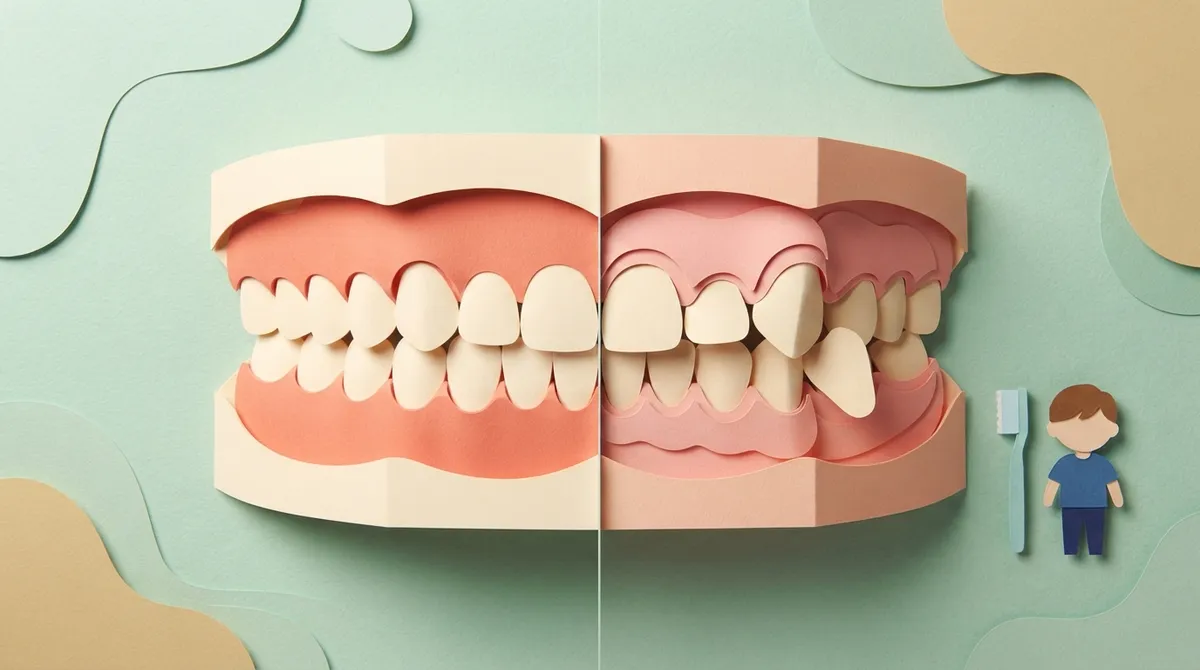
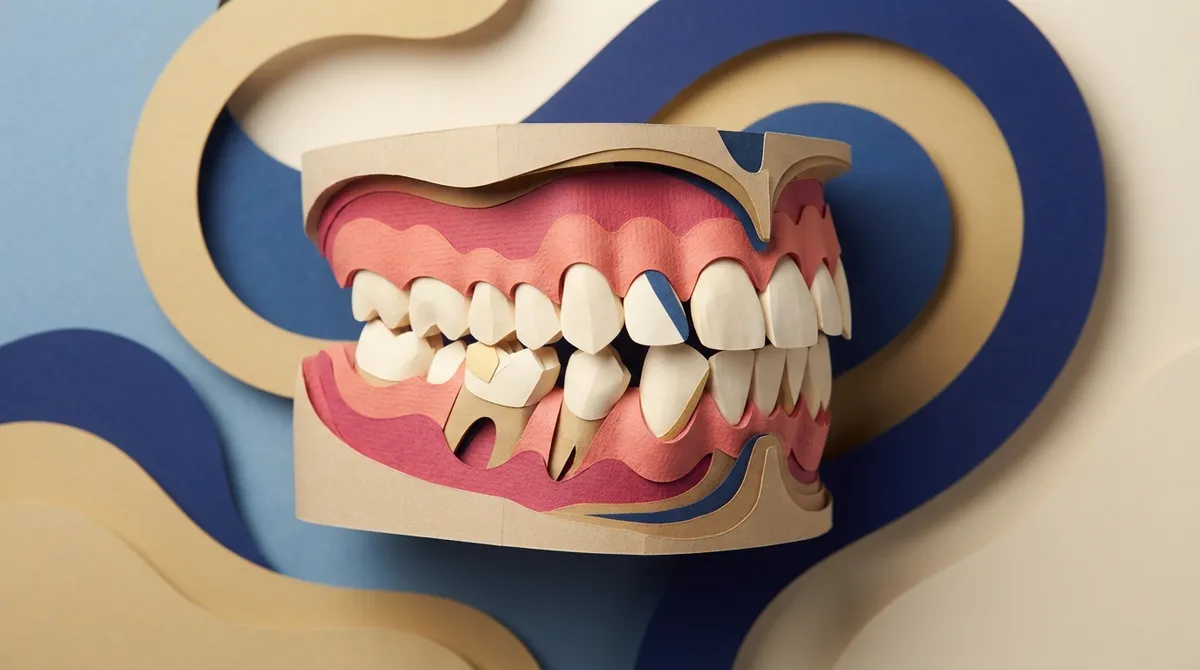
So, what does malocclusion mean? In plain English, it means “bad bite.” It describes teeth that don’t fit together the way they should when your mouth closes. Think of it like a zipper where the teeth don’t line up quite right.
Here’s something that might make you feel better: this is incredibly common. Cleveland Clinic reports that malocclusion affects around 56% of people worldwide, and up to 93% of children and teens have some degree of it. Many of those cases are mild.
In this guide, we’ll compare a healthy bite to a malocclusion, walk through the common types, and help you figure out when it’s worth seeing an orthodontist. Let’s dive in!
What Does Malocclusion Mean in Orthodontics?
The word “occlusion” simply means how your upper and lower teeth meet when you close your mouth. The prefix “mal” means bad or faulty. Put them together, and malocclusion means your teeth or jaws don’t line up properly.
It can involve your teeth, your jaws, or both. Sometimes teeth are crowded or spaced too far apart. Other times the upper and lower jaws are simply out of step with each other.
Here’s an important point: having a malocclusion does not automatically mean you need treatment. Some bite differences are small and cause no trouble at all. An orthodontist can look at your specific situation and tell you whether it affects how you chew, speak, clean your teeth, or feel about your smile.
Normal Bite vs. Malocclusion: Side-by-Side Comparison
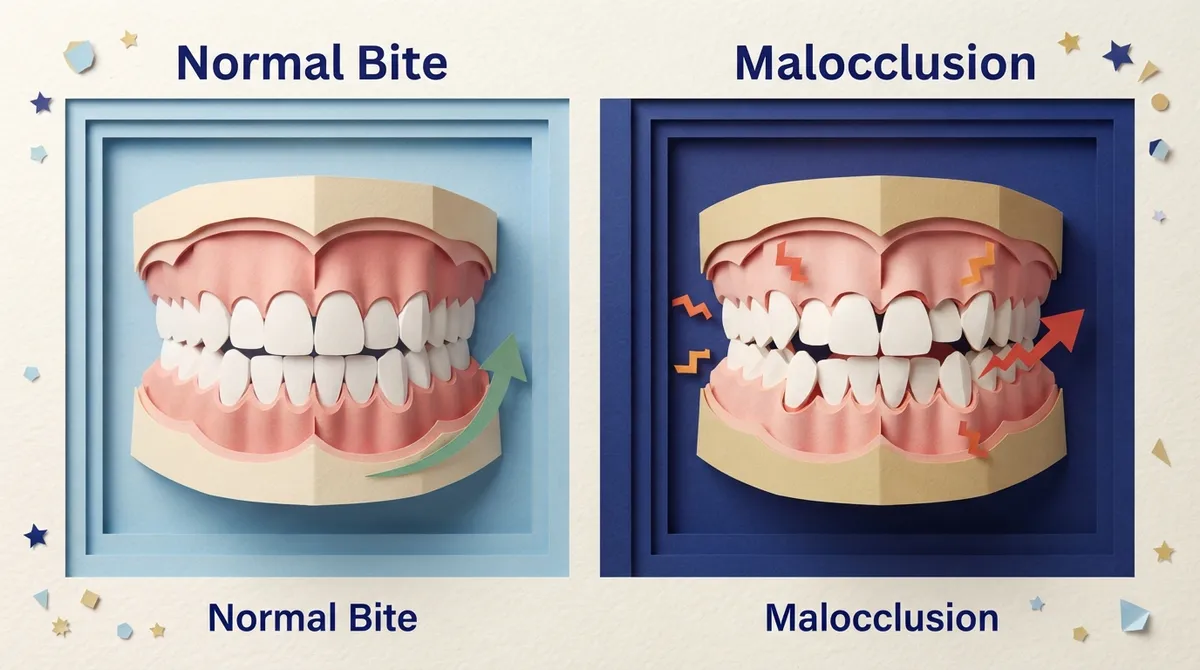
The easiest way to understand malocclusion is to compare it with a healthy bite. Here’s how they stack up.
| Feature | Normal Bite | Malocclusion |
|---|---|---|
| Upper teeth position | Sit slightly over the lower teeth | May sit too far forward, too far back, or inside the lower teeth |
| Tooth spacing | Teeth fit comfortably with even contact | May be crowded, rotated, or gapped |
| Biting and chewing | Smooth and comfortable | May feel uneven or awkward |
| Cleaning | Easy to brush and floss | Crowded areas can trap plaque |
| Appearance | Even, balanced smile | Smile may look uneven, depending on the type |
Keep in mind that a “perfect” bite is rarer than you might think. Most people have small quirks, and those are usually fine. Treatment becomes a conversation when the bite affects function, oral health, or how confident you feel.
The Main Types of Malocclusion
Malocclusion isn’t one single problem. It’s a family of bite patterns, and a person can have more than one at the same time. Here are the most common ones.
Crowding and Spacing
Crowding happens when there isn’t enough room in the jaw for all your teeth, so they overlap or twist. Spacing is the opposite. There are gaps between teeth because of small teeth, a larger jaw, or missing teeth. If you’re curious about gaps, our guide on teeth spacing causes and treatments explains the options.
Overbite
An overbite means the upper front teeth cover too much of the lower front teeth when you bite down. A little overlap is normal. A deep overbite is when the lower teeth are hidden almost completely. You can learn more in our article on how braces fix a deep overbite.
Overjet
People often mix up overbite and overjet. Overbite is about vertical overlap (up and down). Overjet is about horizontal distance. With an overjet, the upper front teeth stick out forward past the lower teeth.
Underbite
With an underbite, the lower front teeth sit ahead of the upper front teeth. It can make the chin look more prominent. Read more about options in our guide on how to fix an underbite.
Crossbite
A crossbite happens when some upper teeth sit inside the lower teeth instead of outside. It can affect the front teeth or the back teeth, and it can happen on one side or both. Our post on how crossbite correction works breaks it down.
Open Bite
An open bite means some upper and lower teeth don’t touch when your mouth is closed. Most often there’s a gap at the front, and it can make biting into certain foods tricky.
Understanding Angle Classes: Class I, II, and III
Orthodontists often describe how the teeth and jaws relate using something called Angle classes. It sounds technical, but the idea is simple.
- Class I: The molars line up in a generally normal way, but there may still be crowding, spacing, or rotated teeth.
- Class II: The lower teeth or jaw sit relatively behind the upper ones. This is often linked to an overbite or overjet.
- Class III: The lower teeth or jaw sit relatively ahead of the upper ones. This is often linked to an underbite.
The class alone doesn’t tell the whole story. Two people can both be Class II and have very different bites. That’s why a personal exam matters.
What Causes Malocclusion?
Here’s the reassuring part: malocclusion usually isn’t anyone’s fault. Most of the time, several things work together.
- Genetics: Inherited differences in jaw size, jaw shape, and tooth size are among the most common causes. If a parent had crowded teeth, a child may too.
- Childhood habits: Long-term thumb sucking, pacifier use, and tongue thrusting can influence how teeth and jaws develop.
- Tooth problems: Missing teeth, extra teeth, or teeth stuck under the gums (impacted teeth) can shift the bite.
- Tooth loss and injury: Losing a tooth early or having a facial injury can change how teeth meet.
- Dental work or appliances: Poorly fitting restorations or appliances can sometimes affect alignment.
For parents, this is good news. Most bite issues come from growth and genetics, not something you did wrong. If you’re wondering about timing, our guide on early treatment explains why a check-up around age 7 can be so helpful.
How Is Malocclusion Diagnosed?
Often a general dentist spots it first during a routine exam and suggests seeing an orthodontist. From there, the evaluation is usually quick and comfortable.
- Bite and teeth exam: The orthodontist looks at how your teeth meet, your jaw movement, and your overall oral health.
- Photos or models: Pictures or digital scans help show tooth position in detail.
- Imaging when needed: Dental X-rays can show roots, hidden teeth, and jaw relationships.
- Treatment discussion: The orthodontist explains whether the issue is mostly about tooth position, jaw position, or both, and what your choices are.
That last step matters. Telling tooth issues apart from jaw issues helps shape the right plan. Want to know what to expect? Take a peek at your first visit to see how it works.
Treatment Options: Monitoring, Braces, Aligners, and More
Treatment depends on the type and severity of the bite, your age, and your goals. Here’s a quick comparison of common paths.
| Option | Best For | Good to Know |
|---|---|---|
| Monitoring | Mild bite differences with no problems | Regular check-ups to watch growth |
| Metal braces | Many bite types, including complex ones | Reliable and effective for teens and adults |
| Ceramic (clear) braces | Patients who want a more discreet look | Tooth-colored brackets blend in |
| Clear aligners | Many mild to moderate cases | Removable and nearly invisible |
| Other appliances | Jaw growth or width concerns | Often used in younger patients |
| Tooth removal or restorative work | Severe crowding or special cases | Used selectively, only when needed |
| Orthognathic (jaw) surgery | Significant jaw discrepancies | Reserved for more serious cases |
Braces vs. Clear Aligners
This is the question we hear most. Braces use brackets and wires, and they can handle a wide range of bite problems. Clear aligners are removable trays that gradually shift teeth. At Brockway Orthodontics, we offer metal braces, ceramic braces, and Spark™ Clear Aligners, a more affordable alternative to Invisalign. Not sure which fits you? Our comparison of traditional braces vs. clear aligners can help.
The right pick depends on your bite, your lifestyle, and your goals. That’s why we start with a personal exam, not a one-size-fits-all plan.
Does Malocclusion Always Need Treatment?
Nope! This surprises many people. Some bites are slightly off but work perfectly well. They don’t cause pain, trouble chewing, or concern about appearance.
Treatment is worth considering when a bite:
- Makes chewing or speaking difficult
- Causes teeth to wear down unevenly
- Makes brushing and flossing hard because of crowding
- Affects how confident you feel about your smile
Research has even explored links between bite problems and jaw joint discomfort, though every person is different. An orthodontic assessment is the best way to find out whether treatment makes sense for you.
Malocclusion Across Different Ages
Malocclusion looks a little different at each stage of life, and so do the questions people ask.
Kids and Teens
Growing jaws give orthodontists a chance to guide development. Many families explore adolescent treatment during the teen years, when most permanent teeth have arrived. Teens often care a lot about how treatment looks, so discreet options are popular.
Adults
It’s never too late! Many adults get treatment for bite problems they’ve lived with for years, or for teeth that shifted after earlier braces. If this sounds like you, explore our adult treatment options. Retainers help keep results in place, so our retainer page is worth a look too.
Finding Care for a Bad Bite in Clearwater
If you’ve read this far and think you or your child might have a malocclusion, the next step is simple: get a professional opinion. You can also browse resources from the American Dental Association for general oral health information.
Dr. Brockway takes the time to listen to your concerns and explain things in a friendly, easy-to-understand way. Our office uses modern tools like digital impressions and 3D imaging, so there are no messy molds. In certain cases, we even offer same-day treatment to fit busy family schedules. Learn more about Dr. Brockway and see what neighbors are saying: Visit us on Google — Brockway Orthodontics.
Wrapping It Up
So, what does malocclusion mean? It means your teeth or jaws don’t fit together as they ideally should, a “bad bite.” It’s very common, it comes in many forms, and it’s often caused by genetics and growth rather than anything you did.
Not every malocclusion needs treatment, but a quick evaluation can give you clear answers and peace of mind. Whether it’s crowding, an overbite, a crossbite, or something else, there are friendly, effective options for every age.
Ready to find out where your bite stands? Book your appointment online or contact us with any questions. We’d love to help you smile with confidence!
FAQs
Q: What does malocclusion mean in dentistry?
A: Malocclusion means “bad bite.” It describes upper and lower teeth that don’t meet or line up properly when the mouth closes. It can involve the teeth, the jaws, or both, and it’s very common.
Q: What is the difference between an overbite and an overjet?
A: An overbite is about vertical overlap, meaning how far the upper front teeth cover the lower ones. An overjet is about horizontal distance, meaning how far the upper front teeth stick out forward. Someone can have one, the other, or both.
Q: Does malocclusion always need treatment?
A: Not always! Many mild bite differences cause no problems. An orthodontist can check whether your bite affects function, oral health, or appearance, and let you know if treatment makes sense.
Q: How is malocclusion treated?
A: It depends on the type and how significant it is. Options include monitoring, braces, clear aligners, other orthodontic appliances, selected tooth removal, or, in rare cases with major jaw differences, surgery. Your orthodontist will recommend a plan that fits your needs.
Q: When should a child see an orthodontist for a bite problem?
A: Many experts suggest a first check-up around age 7, when a mix of baby and adult teeth is present. This lets an orthodontist spot concerns early and decide whether to treat now or simply keep watching as your child grows.
Our Service Area