Key Takeaways
-
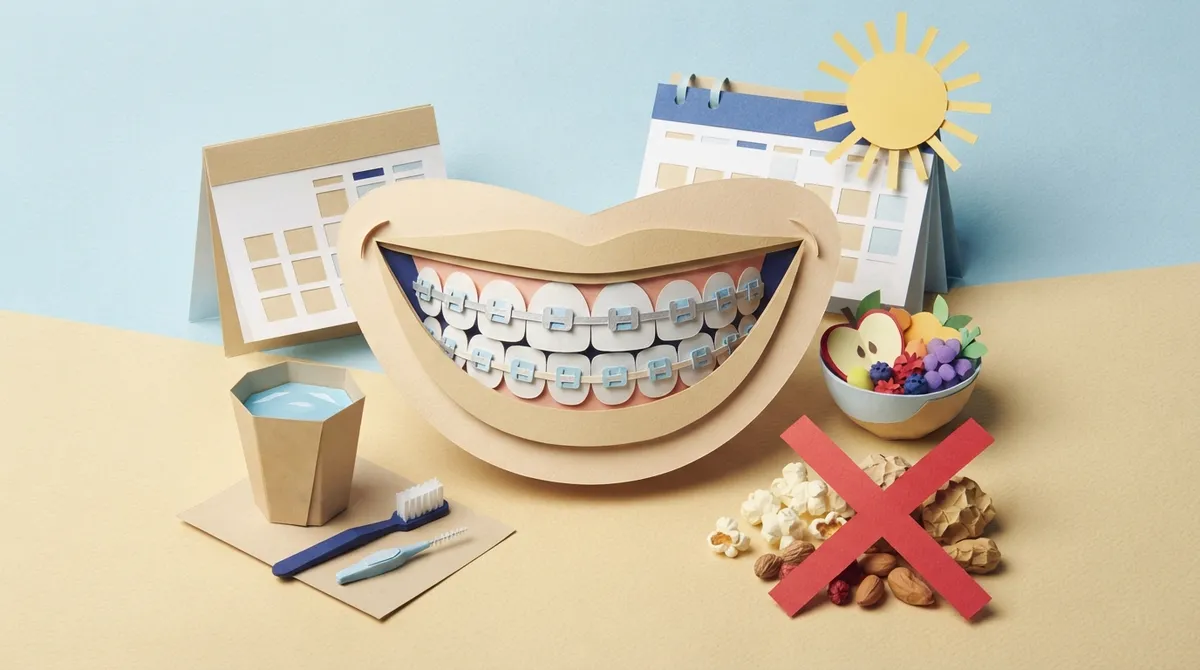
Starting orthodontic treatment during school holidays is a scheduling convenience, not a medical requirement; the right start date depends on an orthodontist's assessment of oral health, growth, and bite.
-
Good oral hygiene is essential before treatment: untreated cavities or gum problems may need to be fixed first, since plaque builds up easily around braces.
-
Use the break to practise cleaning routines, including brushing with fluoride toothpaste and cleaning under wires with an interdental brush, before school routines resume.
-
Expect soreness to peak in the first 24 to 48 hours and ease over the next few days; soft foods, cool drinks, and orthodontic wax help during this time.
-
Avoid sticky, hard, or chewy foods like popcorn, nuts, and sticky candy, which can damage fixed braces.
-
Regular follow-up visits, typically every 6 to 8 weeks for fixed braces, continue during the school term, so ask the practice about its schedule and book ahead.
Picture this: the school bell has just rung for the last time before break, and your child finally has a few lazy weeks ahead. No homework, no early alarms, no lunchbox rush. Many families in Clearwater wonder if that quiet window is the perfect moment to begin braces or aligners. It can be a great idea! But there is more to it than picking a date on the calendar.
Starting orthodontic treatment during school holidays gives your family extra time to settle into a new routine. Your child can practise brushing, try soft foods, and handle any sore teeth at home. It is a scheduling bonus, not a medical rule, and the right start date still depends on an orthodontist’s assessment.
In this friendly guide, we walk you through how to plan a holiday start, what to expect in the first week, and how to keep things smooth once school begins again. Whether you are a parent, a teen, or an adult juggling a busy job, you will find simple, practical steps here.

Why School Holidays Can Be a Smart Time to Start
Let’s be honest: new braces feel strange at first. Your mouth has to learn how to chew, speak, and clean around brand-new hardware. Doing that during a break can take a lot of pressure off.
Here are the main perks of starting orthodontic treatment during school holidays:
- More flexibility: Your child can rest if their teeth feel tender, with no tests or class presentations to worry about.
- Time to practise routines: Brushing, flossing, and cleaning around brackets take a little getting used to. Holidays let you build good habits slowly.
- Easier appointment scheduling: You are less likely to pull your child out of class for the longer first visits.
- Less social stress: Teens can get comfortable with a new look and a new way of talking before facing classmates.
- Time for adults, too: Many adult patients take time off in summer or winter and enjoy a calmer start.
That said, a holiday start is a convenience. It is not a clinical requirement. Treatment can begin at other times of the year if the orthodontist feels the patient is ready.

What Matters More Than the Calendar
Before you circle a date, remember that readiness comes first. Your orthodontist looks at oral health, your child’s growth, the bite, and the overall treatment plan. A holiday cannot replace a good assessment.
Good oral hygiene is a big part of readiness. Fixed braces make cleaning harder, and plaque can build up around brackets. That raises the risk of cavities and gum trouble. If your child has untreated cavities or gum problems, the orthodontist may ask you to sort those out first.
Timing also depends on age and development. Some children benefit from early treatment while baby teeth are still falling out. Others are ready for adolescent treatment once most adult teeth have arrived. A good exam tells you which path fits.
How to Plan Your Holiday Start, Step by Step
A little planning goes a long way. Follow these steps to make your holiday start feel easy.
- Book a consultation early. Holiday spots fill up fast, so reach out a few weeks (or even months) ahead. At Brockway Orthodontics, you can book an appointment online in a few minutes.
- Get an orthodontic assessment. The exam, photos, and scans help Dr. Brockway decide if your child is ready and which treatment fits best. Learn what to expect on the first visit page.
- Handle any dental needs first. If a checkup shows cavities or gum problems, treat them before braces go on.
- Choose your treatment type. Braces, ceramic braces, or clear aligners each have their own routines. We cover this in the next section.
- Ask about the appointment schedule. Find out how often visits will happen and whether any might fall during school hours.
- Stock your kitchen. Buy soft foods, orthodontic wax, and an interdental brush before the big day.
- Plan a quiet first week. Keep the calendar light so everyone can adjust at their own pace.
Choosing Between Braces and Clear Aligners
The holiday gives you time to practise whatever routine your treatment needs. Still, the best choice depends on the patient’s bite, lifestyle, and goals, not just the calendar.
| Feature | Metal or Ceramic Braces | Clear Aligners |
|---|---|---|
| How they work | Fixed to the teeth, adjusted at visits | Removable trays worn most of the day |
| Holiday benefit | Time to adjust to eating and cleaning around brackets | Time to practise wear time, cleaning, and tray changes |
| Cleaning | Brush and clean under wires and around brackets | Brush teeth and clean trays; remove trays to eat |
| Best for | Many bite types, including complex cases | Patients who can stay consistent with wear |
| Follow-up visits | Often every 6 to 8 weeks | Schedule set by your orthodontist |
Brockway Orthodontics offers metal braces, ceramic (clear) braces, and Spark™ Clear Aligners, a more affordable alternative to Invisalign. If you are weighing options, our guide to braces vs. clear aligners can help.
If you choose braces, you will get tips on cleaning and eating before you leave. If you choose aligners, your orthodontist should explain wear time, cleaning, eating, and tray changeover. Follow your own clinician’s instructions, since aligner protocols are not identical for every patient.
What to Expect in the First Week
Mild soreness is normal. It tells you the teeth are starting to move. The American Association of Orthodontists notes that discomfort is usually temporary, often strongest in the first 24 to 48 hours, then easing over the next few days. The NHS also says teeth may feel sore for a few days after braces are fitted or adjusted.
Here is a simple look at what the first week might feel like:
| Timeframe | What You May Notice | What Helps |
|---|---|---|
| Day 1 | Pressure and a strange new feeling | Soft foods, cool drinks, a relaxed evening |
| Days 2 to 3 | Tenderness is often at its peak | Soft meals, orthodontic wax for rubbing |
| Days 4 to 7 | Soreness fades; chewing feels easier | Keep brushing carefully; add firmer foods slowly |
Lips and cheeks may feel rubbed at first. A dab of orthodontic wax over a bracket can make a big difference. Speech can also feel a bit different at first, but most people adapt quickly with a little practice. Reading aloud during the holiday is a fun, easy way to get comfortable.
Easy Eating Tips for the Early Days
Soft foods make the adjustment much gentler. Both the NHS and the AAO suggest soft foods at the start and avoiding foods that are hard, sticky, or chewy, since they can damage fixed braces.
Try these friendly options:
- Scrambled eggs, yogurt, and smoothies
- Mashed potatoes, soup, and soft pasta
- Oatmeal, bananas, and applesauce
- Ice cream and pudding as a sweet treat
Skip the sticky candy, hard nuts, popcorn, and crunchy ice. Our guide on foods to avoid with braces has a full list. You can also see good foods for braces for tasty ideas. A holiday is a great time to try new recipes together as a family.
Build Your Cleaning Routine During the Break
This might be the best reason to start during a holiday. Cleaning around braces takes patience, and a slow week or two lets you practise without a rush to get out the door.
NHS guidance recommends brushing with fluoride toothpaste, cleaning between teeth and under braces with an interdental brush, and keeping up regular dental checkups. Here is a simple routine to try:
- Brush after meals if you can, angling the bristles toward the gumline and the brackets.
- Use fluoride toothpaste and take your time. Two minutes is a good goal.
- Clean between teeth and under the wires with an interdental brush.
- Check the mirror for leftover food around brackets.
- Finish with a quick rinse of water.
Need a deeper walkthrough? Try our step-by-step post on how to brush teeth with braces. Healthy gums and clean teeth keep your treatment on track and your smile bright when the braces come off.
Know That Follow-Up Visits Still Matter
Here is the part many families overlook. Starting over a holiday does not mean you skip regular visits. NHS guidance says fixed-brace appointments are commonly scheduled every 6 to 8 weeks, and fixed-brace treatment is often offered for 1 to 2 years. Your exact timeline depends on your case and treatment plan.
That means some visits will land during the school term. Ask the practice about its schedule up front. You can plan around sports, exams, and family trips. Many families find it helpful to book the next visit before leaving the office.
Wondering about cost and payment? Brockway Orthodontics offers flexible options. Learn more on our financing and insurance page. Planning ahead makes the whole process feel lighter.
Tips for Different Patients
Parents of Children and Teens
Let your child help choose snacks, wax, and a travel toothbrush kit. Giving them a small role builds confidence. For teens, a holiday start means they can get used to the look and feel before seeing friends. If you want more age-specific guidance, our post on orthodontics for kids is a handy read.
Adults and Busy Professionals
If you can take a few days off work, use them for the first week. A calmer schedule helps you settle into new cleaning habits and eating routines. Adults with a prior treatment who notice shifting can also ask about retreatment options and retainers to protect results.
Health-Conscious Patients
If you have gum concerns or complex dental needs, a thorough assessment matters even more. Your orthodontist can tailor a plan that supports both function and appearance, and may coordinate with your general dentist.
When to Call the Orthodontist
Most early discomfort is normal. Still, some signs mean it is time to reach out. Call the practice if:
- Pain is severe or lasts beyond a few days
- A wire, bracket, or band breaks or is causing a steady problem
- Gums look very red, swollen, or painful
- An aligner cracks or no longer fits
Holidays can make it feel tempting to wait things out, but a broken appliance can slow progress. Quick help keeps treatment moving. Our guide on emergency vs. routine orthodontics explains what counts as urgent.
A Simple Holiday Start Checklist
Before the first appointment, run through this quick list:
- Book the consultation and the follow-up schedule
- Clear up any dental needs that came up at the exam
- Buy orthodontic wax, an interdental brush, and fluoride toothpaste
- Stock soft foods for the first few days
- Pack a small cleaning kit for school and sports
- Plan a quiet first week with light activities
Ready to Start Your Smile Journey?
Starting orthodontic treatment during school holidays can make the first days easier. You gain time, flexibility, and a calmer space to learn new habits. Just remember that the best start date depends on a proper assessment, not the school calendar.
At Brockway Orthodontics, Dr. Brockway takes time to listen to your goals and explain every step in simple, friendly terms. With modern tools like digital impressions and 3D imaging, and same-day treatment in certain cases, getting started is simple. Curious about our family? Read more about Dr. Brockway and see what neighbors say when you visit us on Google — Brockway Orthodontics. For general dental health tips, the American Dental Association is a trusted resource, and you can find more orthodontic guidance from the Florida Association of Orthodontists. The NHS also shares clear, parent-friendly advice on braces and what to expect.
Ready to plan your holiday start? Book your appointment online or contact our friendly team to find a time that fits your family. We can’t wait to help you smile with confidence!
FAQs
Q: Is it better to get braces during the school holidays?
A: It can be a handy choice! Holidays give you extra time to get used to eating, speaking, and cleaning with braces. But it is a scheduling perk, not a medical must. The best start time depends on your orthodontist’s assessment and your oral health.
Q: How long does soreness last after braces are fitted?
A: Mild soreness is common and is often strongest in the first 24 to 48 hours. It usually fades over the next few days. If pain is severe or lasts longer than a few days, give your orthodontist a call.
Q: Will my child need to miss school for orthodontic appointments?
A: Possibly, yes. Fixed-brace visits are commonly scheduled every 6 to 8 weeks, and some may land on school days. Ask your practice about its schedule so you can plan ahead and book times that work best for your family.
Q: Can you start clear aligners during school holidays?
A: Absolutely, if your orthodontist says you are a good candidate. The break gives you time to practise wearing, cleaning, and changing your aligners. Always follow your own clinician’s instructions, since aligner routines are not the same for everyone.
Q: When should I call the orthodontist about pain or a broken brace?
A: Call if pain is severe or lingers beyond a few days, if a wire or bracket breaks, or if your gums look very red, swollen, or painful. Quick help keeps your treatment on track, even over the holidays.
Our Service Area