Key Takeaways
-
Phase One is early, targeted treatment during the mixed-dentition years, while Phase Two is full braces or aligners once most permanent teeth are in.
-
Not every child needs two phases; a personal exam determines whether one round, early help only, or monitoring is the right path.
-
A Cochrane review found new front tooth injuries in about 19% of early-treated children versus about 30% of those treated later, for prominent upper front teeth.
-
Early treatment doesn't guarantee a shorter or simpler overall journey, since two-phase care often takes longer in total, so set realistic expectations.
If your child just got a note about “Phase One” treatment, you might be wondering what all the fuss is about. Phase one versus phase two orthodontics is one of the most common questions parents bring to our office, and it’s a great question to ask. The short answer? Phase One is early, focused treatment while your child still has baby teeth. Phase Two is the full alignment and bite correction that happens once most permanent teeth are in.
Here’s the good news: not every child needs both phases. Some kids need only one round of braces or aligners, and some need just a little early help. The key is a plan that fits your child’s mouth, growth, and goals.
In this friendly guide, we’ll walk through 14 facts that explain the difference, when each phase makes sense, what the research says, and what to expect along the way. Whether you’re a parent, a teen curious about your own treatment, or an adult who wonders how this all works, you’ll find clear answers here.
The Basics: What Are Phase One and Phase Two?
1. Phase One Is Early, Targeted Treatment
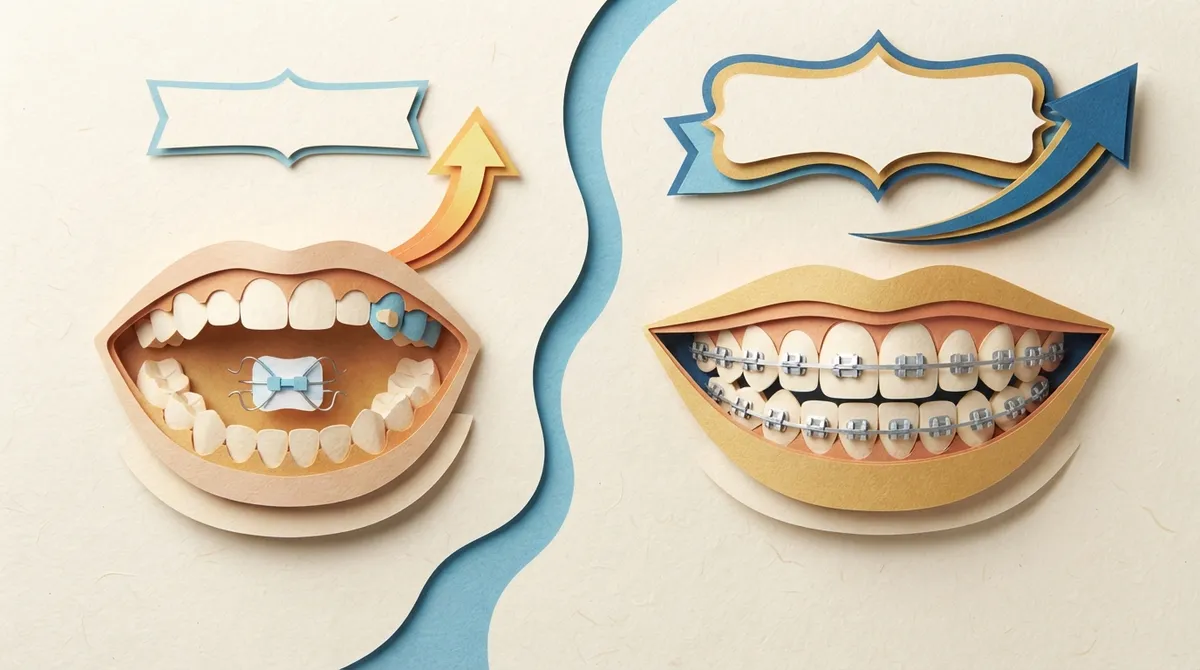
Phase One (also called interceptive or early treatment) happens while a child has a mix of baby and permanent teeth. This is usually somewhere in the elementary school years. The goal is not to give a perfect smile right away. Instead, it focuses on one or two specific problems that may be easier to fix early.
You can learn more about how we approach this on our Early Treatment page.
2. Phase Two Is Comprehensive Alignment
Phase Two begins after most or all permanent teeth have come in. It usually uses full braces or clear aligners to line up the teeth and fine-tune the bite. Think of it as the “finishing” stage. For many teens, this is the treatment they picture when they think of orthodontics. See our Adolescent Treatment options for more.
3. Not Every Child Needs Two Phases
This is the most important fact on the list. Two-phase care is for selected problems, not for every child. Many kids do just fine with a single round of treatment in their early teens. A careful exam tells us which path makes sense.
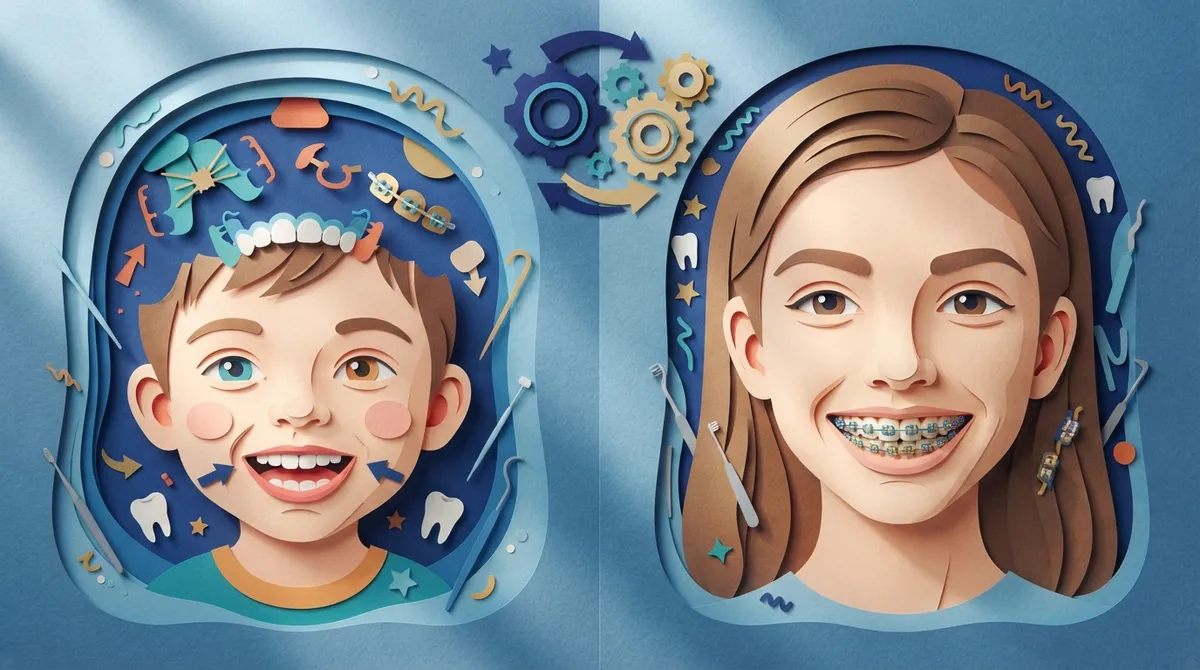
Phase One vs Phase Two at a Glance
| Feature | Phase One | Phase Two |
|---|---|---|
| Typical timing | Mixed baby and permanent teeth | Most or all permanent teeth in |
| Main goal | Fix a specific developing problem | Align teeth and refine the bite |
| Common tools | Palatal expander, limited braces, habit appliance | Full braces or clear aligners |
| Who needs it | Only selected children | Most patients who need full treatment |
| What follows | Resting and monitoring period | Retainers to hold results |
When Does Phase One Make Sense?
4. Certain Jaw Problems Can Benefit From Early Help
When the upper and lower jaws are growing out of balance, early treatment may guide growth in a better direction. This is a growth-based decision, so timing matters. Your orthodontist will weigh the benefits against the risks of waiting.
5. Crossbites May Need Early Attention
A crossbite happens when some upper teeth bite inside the lower teeth. Left alone, it can affect how the jaw grows. A palatal expander can widen the upper arch and make room for teeth to come in properly. If you want to dig deeper, read our guide on how crossbite correction works.
6. Severe Crowding Can Be a Reason
When there’s very little room for permanent teeth, early treatment can sometimes create space. Not every crowded smile needs this, though. Mild crowding often waits just fine.
7. Harmful Habits Can Shape Teeth and Jaws
Long-term thumb sucking, tongue thrusting, or pacifier use can push teeth out of place. A habit-correction appliance can help a child break the cycle. It’s a gentle way to protect developing teeth.
8. Protruding Front Teeth May Be at Risk of Injury
Children with prominent upper front teeth can chip or injure them during play. Research backs up early care here, and we’ll look at the numbers below.
What the Research Really Says
9. Early Treatment Can Reduce Front Tooth Injuries
A Cochrane review looked at children with prominent upper front teeth. It found that new injuries to those teeth happened in about 19% of children treated early, compared with about 30% of those treated later in adolescence. That’s a meaningful difference for active kids.
10. Final Bite Results Were Similar in That Review
Here’s the part that surprises many parents. In that same review, the final overjet (how far the upper teeth stick out) was about the same whether treatment started early or later. The difference was only about 0.2 mm, and the evidence quality was low. So early treatment is not a magic shortcut to a better final bite.
It’s also important not to stretch these findings too far. They apply to prominent upper front teeth, not to every orthodontic problem. That’s why a personal exam matters so much.
What to Expect Along the Way
11. A Resting Period Follows Phase One
After Phase One, there’s usually a break. During this time, your child grows and the rest of the permanent teeth come in. We keep an eye on things with regular check-ins. Then we decide together whether Phase Two is needed and when to start.
Here is the typical flow of a two-phase plan:
- Early exam: We look at teeth, jaws, and growth.
- Phase One: A short, focused treatment for one clear problem.
- Resting period: We monitor growth while teeth come in.
- Phase Two evaluation: We check if full treatment is needed.
- Phase Two: Braces or aligners finish the job.
- Retention: Retainers keep the smile steady.
12. Phase Two May Still Be Needed After Phase One
Early treatment does not promise that later treatment will be shorter, easier, or unnecessary. Some kids finish Phase One and still need full braces. Others do great and need only monitoring. It’s best to go in with realistic expectations.
13. Two Phases Often Mean a Longer Total Timeline
According to guidance from the American Academy of Pediatric Dentistry, two-phase care generally takes longer in total. The time spent in full braces during Phase Two may be shorter, but the overall journey can stretch out. Ask your orthodontist what the plan looks like for your child, since every case is different. Our financing and insurance team can also help you plan for costs across both phases.
14. An Evaluation by Age 7 Is the Smart Move
The American Association of Orthodontists recommends a first check-up by age 7. This is a screening visit, not a signal that treatment must begin. Most of the time, we simply say, “Everything looks great, see you in a year!” When a problem is caught early, you have more choices. Our guide on when a child should first see an orthodontist explains this in more detail.
Helping Every Age Group Understand the Journey
If you’re a parent, the big takeaway is that early visits give you information, not obligations. If you’re a teen, know that Phase Two options like braces and Spark™ Clear Aligners can fit your lifestyle. And if you’re an adult who never had treatment as a kid, our Adult Treatment options are designed for you too.
For adults who had braces years ago and feel their smile shifting, it may be time to talk about retreatment. Wearing your retainers as directed is the best way to protect your results after any phase.
How Brockway Orthodontics Can Help
At Brockway Orthodontics, we love helping Clearwater families make confident decisions. Dr. Brockway takes time to listen, explain, and build a plan that fits your child. You can get to know her on our Meet Dr. Brockway page. We use modern tools like digital impressions and 3D imaging, so visits stay comfortable and plans stay precise. If you’re curious what that first appointment feels like, see Your First Visit.
Want to hear from other families? Read what our patients say by visiting us on Google — Brockway Orthodontics. For general guidance on oral health, the American Dental Association is a trusted resource, and the Florida Association of Orthodontists offers helpful state-level information.
Conclusion
Phase one versus phase two orthodontics really comes down to timing and purpose. Phase One tackles specific early problems. Phase Two aligns the permanent teeth and perfects the bite. And remember, plenty of kids only need one of them, or neither for a while.
The best next step is simple: get a personal exam. That way you’ll know what your child truly needs, not what a general rule says. Ready to find out? Book your appointment online or contact us with any questions. We can’t wait to meet your family!
FAQs
Q: What is the difference between Phase 1 and Phase 2 orthodontic treatment?
A: Phase One is early, focused treatment that starts while your child still has baby teeth. It targets a specific problem, like a crossbite or jaw growth issue. Phase Two comes later, after most permanent teeth are in, and uses braces or aligners to fully align the teeth and perfect the bite.
Q: Does every child need two-phase orthodontic treatment?
A: Nope! Two-phase care is only for certain developing problems, not for every child. Lots of kids need just one round of treatment, and some need only monitoring. An exam with an orthodontist will show which path fits your child best.
Q: At what age should a child have an orthodontic evaluation?
A: The American Association of Orthodontists recommends a first check-up by age 7. This visit is about gathering information, not starting treatment right away. Most children simply get a thumbs-up and a plan to keep watching their growth.
Q: Will my child still need braces after Phase One?
A: Maybe, and that’s okay. Some children need Phase Two after early treatment, while others do beautifully with just monitoring. Phase One doesn’t guarantee that later treatment will be shorter or unnecessary, so it helps to go in with realistic expectations.
Q: What happens during the resting period after Phase One?
A: The resting period gives your child time to grow while the rest of their permanent teeth come in. We schedule regular check-ins to watch how things develop. Then we decide together if and when Phase Two should begin.
Our Service Area