Key Takeaways
-
Aligners are not protective gear: they move teeth but cannot absorb impact, so remove them and wear a properly fitted mouthguard for contact sports and any activity where one is required.
-
Always store aligners in their case, never in a napkin or loose in a bag, since lost or crushed trays are among the most common problems and can slow treatment progress.
-
Sports drinks and juice should be consumed only when aligners are out; while trays are in, drink plain water and brush before reinserting them.
-
Tell your orthodontist about your sports schedule at the start of treatment and put aligners back in right after practice or games to stay on your wear-time target.
-
Custom or orthodontic-compatible mouthguards fit better during treatment because teeth shift with each new set of aligners, so a guard that fit in month one may need adjusting later.
-
If an aligner cracks or gets lost, stop wearing it and contact your orthodontist right away rather than attempting to repair it yourself.
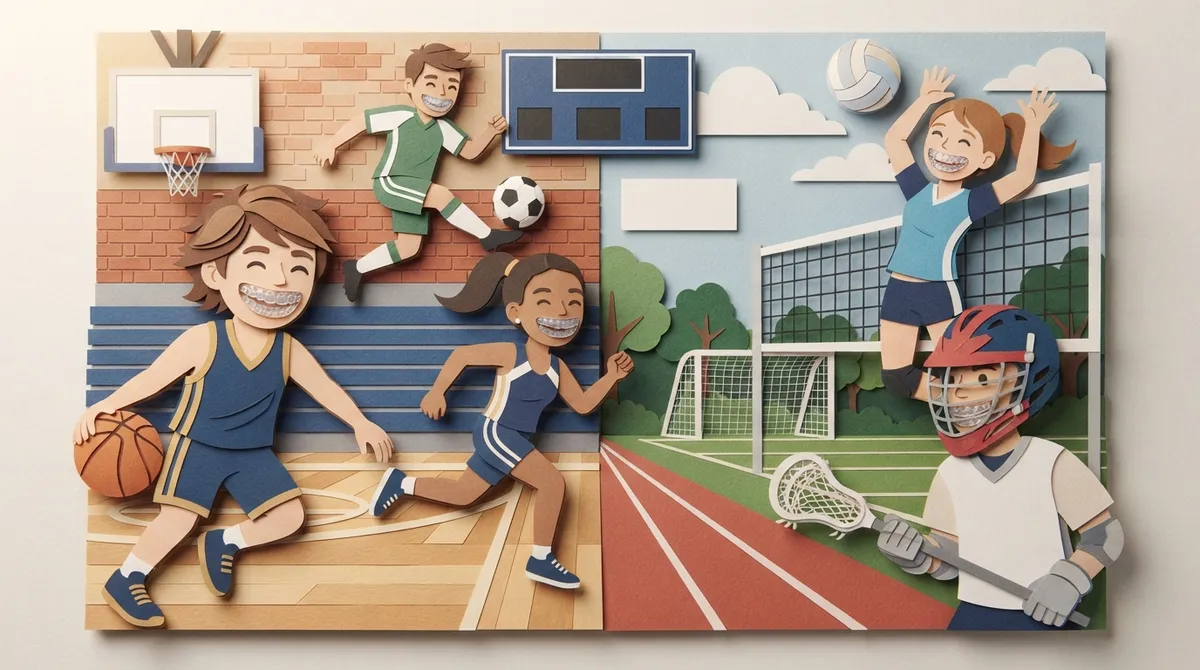
It’s the night before tryouts, and your teen looks up from the couch with a worried face. “Wait, can I still play if I’m wearing my aligners?” If that sounds familiar, you are definitely not alone. Sports and orthodontic treatment are two big parts of many students’ lives, and the good news is that they can absolutely work together.
Here is the short version: most students can keep playing school sports during clear aligner treatment. But aligners are not protective gear. They move teeth; they do not shield them. A few simple habits make all the difference when it comes to mouthguards, storing your trays, and staying on track with treatment.
In this guide, we answer the most common clear aligners and school sports questions we hear from parents, teens, and young adults. We’ll cover mouthguards, game-day routines, wear time, and what to do if something goes wrong. Let’s get your athlete ready to play and smile!
Can Students Really Play Sports With Clear Aligners?
Yes, in most cases they can. Millions of young people stay active during orthodontic care. According to U.S. National Health Interview Survey data cited in a 2025 review, about 52.5% of children ages 6 to 11 and 55.6% of teens ages 12 to 17 played sports in the prior year. Many of those athletes were also in braces or aligners.
The key is understanding what aligners are and what they are not. Clear aligners are thin, custom-made trays that apply gentle, controlled pressure to move teeth. They are not sports mouthguards. They are not designed to absorb a hit from an elbow, a ball, or a stick.
So the real question is not “can I play?” It is “how do I play safely and keep my treatment on track?” That is where a little planning goes a long way.
Why Aligners Are Not Protective Gear
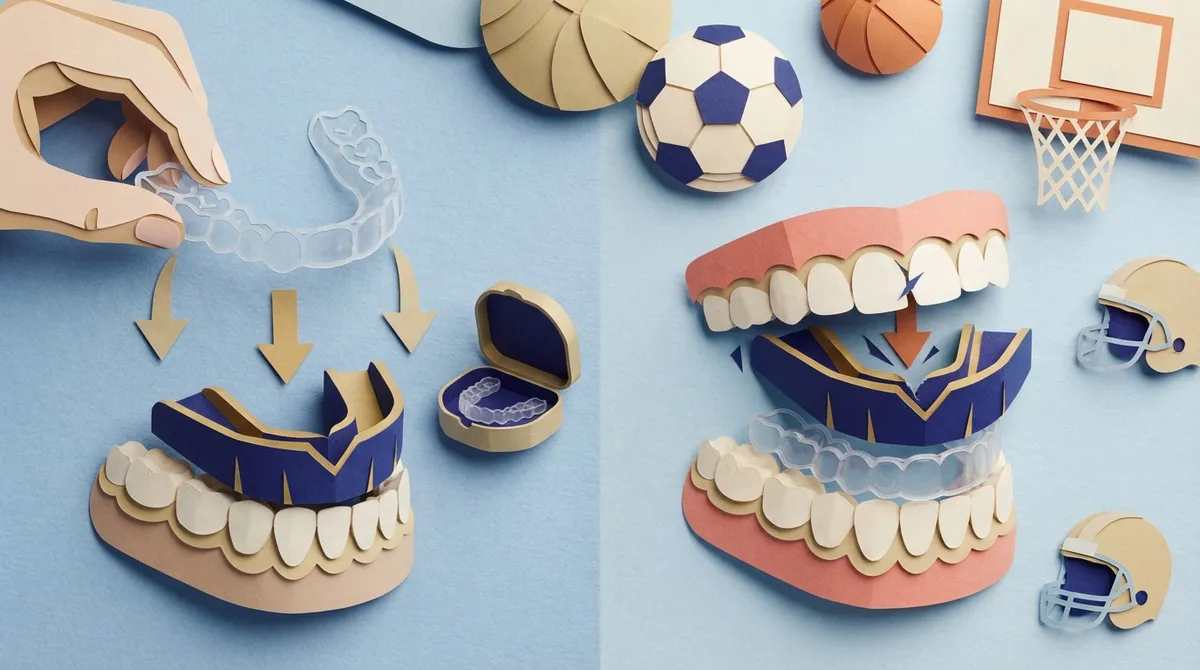
Think of aligners like a retainer for your treatment goals, not a helmet. If you take a blow to the mouth while wearing thin plastic trays, the plastic can crack or distort. Cracked plastic can then rub against your lips and cheeks.
That is why the practical rule is simple. For contact play, take out your aligners and wear a proper mouthguard instead. We’ll walk through exactly how to do that below.
Should You Remove Aligners Before Wearing a Mouthguard?
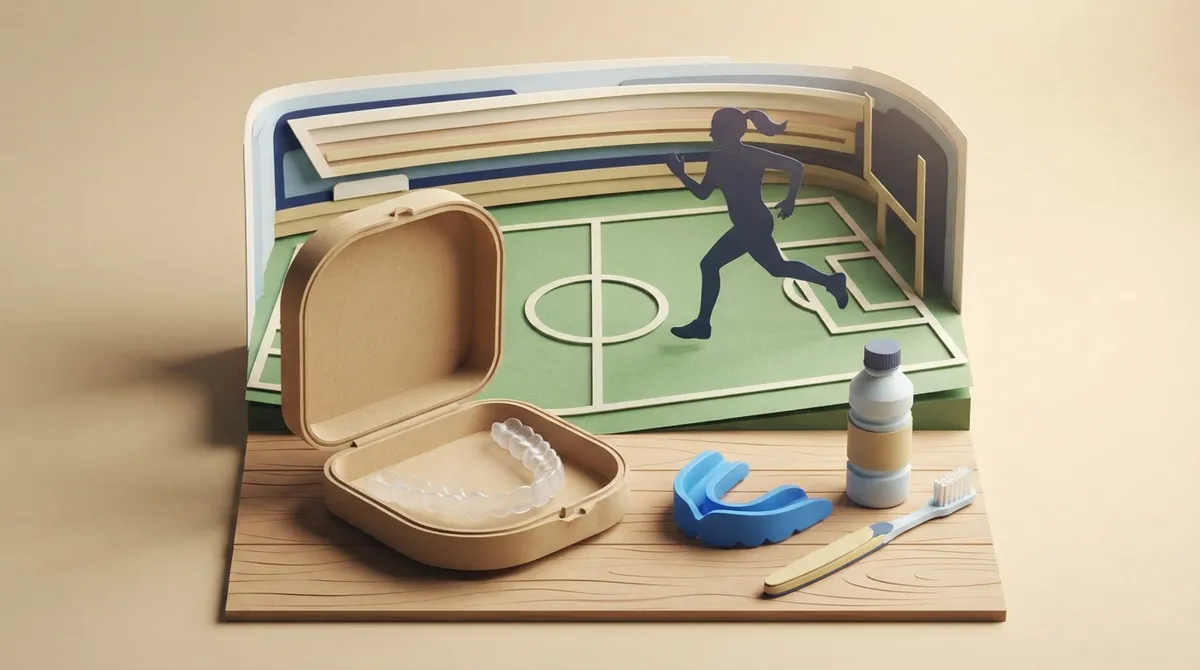
For contact sports and any activity where a mouthguard is required, the answer is generally yes. Remove your aligners, tuck them into their case, and wear a properly fitted mouthguard for the game or practice.
Here is a simple game-day routine that works well:
- Take out your aligners in a clean spot before warm-ups.
- Rinse them gently with cool water if needed.
- Place them in their case and zip the case into your gear bag.
- Put in your mouthguard and check that it feels secure.
- After the game, brush your teeth and clean your aligners as directed.
- Put your aligners back in as soon as you can.
It sounds like a lot, but after a week or two it becomes second nature. Many of our teen patients tell us it feels just like their pre-game routine.
Why a Case Matters More Than You Think
Please never wrap aligners in a napkin or toss them loose into a bag. Napkins get thrown away, and loose trays get crushed or lost. Lost aligners are one of the most common problems we see, and they can slow down progress.
Keep the case in the same pocket of your bag every time. That one habit saves a lot of stress and expense.
Which School Sports Require Mouthguards?
Rules vary by sport, league, age group, and location. In U.S. high-school play, mouthguards are required in several sports, including football, ice hockey, lacrosse, and field hockey. But you should not assume one rule applies everywhere.
Always check the current rules from your school, league, or state athletic association. Coaches and athletic directors can usually point you in the right direction quickly.
| Sport Type | Mouthguard Guidance | Aligner Plan |
|---|---|---|
| Football, ice hockey, lacrosse, field hockey | Often required in U.S. high-school rules | Remove aligners, wear mouthguard |
| Basketball, soccer, wrestling | Strongly recommended, even if not required | Remove aligners, wear mouthguard |
| Volleyball, softball, baseball | Rules vary; ask your coach | Ask your orthodontist for a plan |
| Swimming, cross-country, track | Usually not required | Ask your orthodontist about wear time |
When in doubt, ask. A quick question to your orthodontist and your coach can save a lot of guesswork.
What Kind of Mouthguard Works Best During Treatment?
A good mouthguard should fit securely and comfortably. It should not make breathing or talking hard. Since your teeth are slowly moving during treatment, fit matters even more than usual.
You will generally see three types:
- Stock mouthguards: Ready-made and inexpensive, but often bulky and loose.
- Boil-and-bite guards: Softened in hot water and shaped to your teeth at home.
- Custom-fitted guards: Made for your mouth, usually the most comfortable and secure option.
Because your teeth shift a little with each new set of aligners, a guard that fit perfectly in month one may feel snug or loose later. Ask your orthodontist or dentist whether a custom or orthodontic-compatible guard makes sense, and whether it needs adjusting as treatment moves along. If you are curious about how different treatments compare for active teens, our guide on braces vs. clear aligners for kids is a helpful read.
How Common Are Sports Dental Injuries?
It helps to keep things in perspective. A 2023 analysis of U.S. high-school injury reports from 2005 to 2020 found a dental-injury rate of 0.9 per 100,000 athletic exposures. Dental injuries made up just 0.4% of reported injuries. Game injuries happened at about 3.6 times the rate of practice injuries.
That sounds reassuring, and it is. But other research shows estimates vary a lot. A 2025 review noted prevalence ranges from about 10% to 61% in some studies and 7.1% to 71.5% in others, depending on the sport, the group studied, and how injuries were counted. An older CDC-hosted publication also estimated that as many as one-third of dental injuries were sports-related, though that is historical data and not a current national estimate.
The takeaway? Injuries are not the norm, but they do happen, and a good mouthguard is cheap insurance for your smile.
Will Taking Aligners Out for Sports Slow Down Treatment?
This is one of the most common worries we hear. Aligners work best when worn consistently each day, and your orthodontist will give you a specific wear target. Time spent out of your mouth for practices and games adds to your total time out.
The good news is that most sports sessions are short. If you plan ahead, you can usually stay on track. Here are a few smart habits:
- Put your aligners back in right after practice or a game.
- Skip snacking breaks that keep them out longer than needed.
- Tell your orthodontist about your sports schedule at the start of treatment.
- Ask for advice before tournaments, camps, or two-a-day practices.
Please do not try to “make up” lost time by switching to your next tray early or wearing trays longer than directed. That can cause problems. Always check with your orthodontist first.
What About Drinks and Snacks?
Sports mean sports drinks, and that is where a little caution helps. Sugary or acidic drinks can sit against your teeth if you wear aligners over them. The simple rule is to drink plain water while aligners are in. Save the sports drink or juice for when your aligners are out, then brush before putting them back. Our post on clear aligner food mistakes has more tips on protecting your teeth.
What About Non-Contact Sports and Everyday Workouts?
Not every activity needs a mouthguard. For swimming, track, cross-country, and gym workouts, many students keep their aligners in. Always follow your orthodontist’s guidance for your situation.
A few extra tips for active days:
- Stay hydrated with water, since aligners can make your mouth feel dry.
- Breathe through your nose when you can, if that feels comfortable.
- Clean your trays after sweaty workouts so they stay fresh.
- If a sport involves a high risk of a hit to the face, switch to the mouthguard plan.
Adult professionals and young adults who play rec leagues can use the same approach. Weekend soccer or pickup basketball counts as contact play, so the same mouthguard rule applies.
What If an Aligner Breaks or a Tooth Gets Hurt?
Accidents happen, even to careful athletes. Here is a quick guide to what to do.
If an Aligner Cracks, Warps, or Gets Lost
Stop wearing a cracked or distorted tray. Contact your orthodontist right away for instructions. Do not try to glue, bend, or fix it yourself. Your orthodontist can tell you whether to move to your next tray or wait for a replacement.
If You Take a Hit to the Mouth
After any blow to the mouth, check for loose, chipped, displaced, or knocked-out teeth. Seek prompt dental assessment if anything feels off. For serious injuries, such as heavy bleeding, a possible broken jaw, or signs of a concussion, go to urgent medical care first. If your aligners no longer fit after an impact, let us know too. Our guide on emergency vs. routine orthodontics can help you decide how fast to act.
Are Braces or Aligners Better for Athletes?
There is no one-size-fits-all answer. Both can work well for active students. Aligners can be removed for games, which some athletes love. Braces stay on all the time, so you do not have to remember to take them out, but you still need a mouthguard made for braces.
The best choice depends on your bite, your goals, and how reliably you can follow wear instructions. Students who might forget trays in a locker may do better with braces. Students who want flexibility and a discreet look often prefer aligners. You can learn more about our Spark┢ Clear Aligners or read our breakdown of clear aligners vs. braces to see which fits your lifestyle.
How Brockway Orthodontics Helps Student Athletes
At Brockway Orthodontics, we love working with active families here in Clearwater. Dr. Brockway takes time to listen to your schedule, your sport, and your goals. Then we build a plan that fits real life, not just a textbook.
We can talk through mouthguard fit, game-day routines, and wear-time targets at your visit. We also use modern tools like digital impressions and 3D imaging to plan your treatment with precision. Want to see what other families say? You can visit us on Google and read Brockway Orthodontics reviews from our Clearwater patients.
For more details on our general approach to care, take a look at our adolescent treatment page. You can also check guidance from the American Dental Association on protecting teeth during sports.
Quick Game-Day Checklist for Aligner Athletes
Print this out or snap a photo for your gear bag:
- Aligner case (always the same pocket)
- Properly fitted mouthguard
- Water bottle (plain water only with aligners in)
- Travel toothbrush and small toothpaste
- Your orthodontist’s phone number saved in your phone
- Spare mouthguard case or clean bag
A little prep means more time focused on the game and less time worrying about your teeth.
Ready to Play and Smile With Confidence?
Clear aligners and school sports can absolutely go together. Remember the big rules: aligners are not protective gear, remove them for contact play, wear a well-fitted mouthguard, store your trays in their case, and keep up with daily wear. When something unexpected happens, call your orthodontist early.
If you have questions about your own sport or schedule, we would love to help. Book your appointment online and let’s build a plan that keeps you in the game and your smile on track. Prefer to talk first? You can always contact us with any questions. Go team!
Our Service Area