Key Takeaways
-
Yes, braces can treat spacing and crowding in the same mouth: they move some teeth to create room while closing gaps elsewhere, all within one planned treatment.
-
Crowding and spacing often coexist, such as crowding on the bottom with gaps on the top, so orthodontists balance space creation and closure rather than moving every tooth one way.
-
Orthodontists may combine tooth movement, arch expansion, interproximal reduction (tiny enamel smoothing), or extraction, with each option chosen based on individual assessment.
-
Braces suit complex cases involving bite problems, significant rotations, or extractions, while clear aligners work best for mild to moderate issues and require consistent daily wear.
-
Fixed braces typically take about 1 to 2 years per NHS guidance, with adjustments every 6 to 8 weeks, though cases with both gaps and crowding may take longer.
-
Retainers are essential after treatment because teeth can shift and gaps can reopen or crowding can return if retainers are not worn as directed.
Here is a puzzle many people bring to us. One tooth is twisted and squeezed in with its neighbors. Right next to it, there is a gap you could slide a business card through. It feels like your smile is both too full and too empty at once. So you might wonder: can braces address spacing and crowding together?
The short answer is yes. Braces are built to move teeth into a planned arrangement, so one part of the mouth can gain room while another part closes up. Clear aligners can handle many of these cases, too. The better choice depends on how complex your bite and tooth movements are.
In this friendly guide, we compare braces and clear aligners head to head. We will look at how each one handles gaps and crowding together, how long treatment may take, and which type of patient each option suits best. Whether you are a parent planning for a teen, a young adult with a big event coming up, or an adult thinking about a second round of treatment, you will leave with a clearer picture.
Can Braces Address Spacing and Crowding Together?
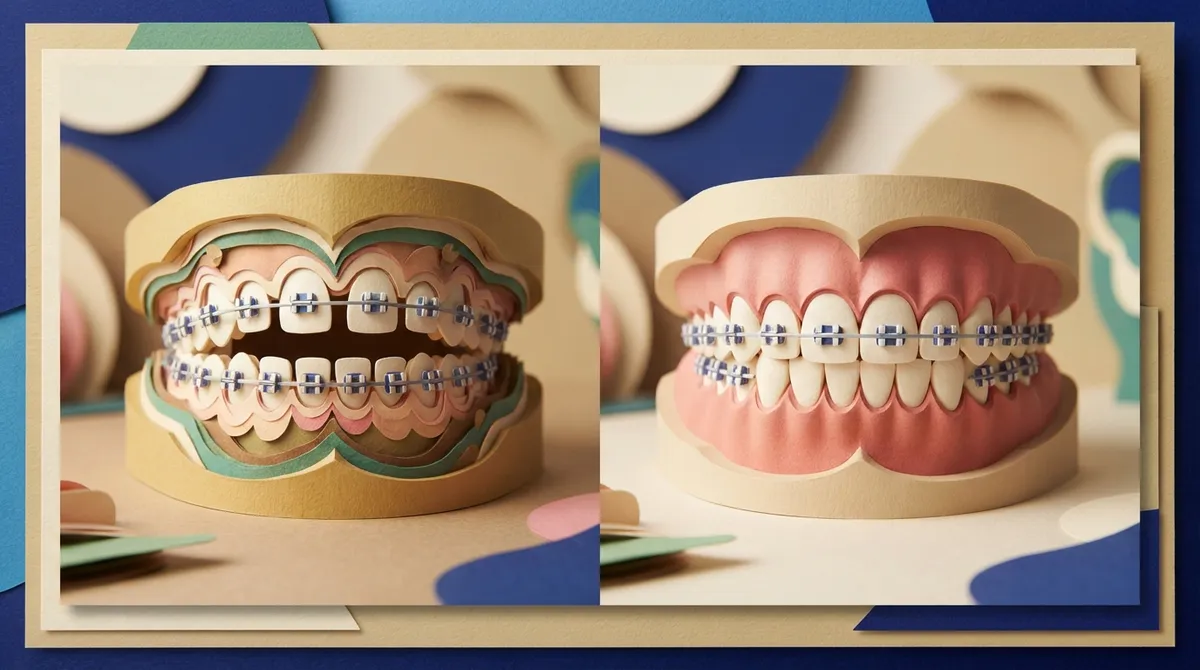
Yes. Braces can address spacing and crowding in the same treatment plan. Orthodontic appliances move teeth into better positions and improve the overall bite. That means some areas can be aligned while gaps elsewhere are closed.
It helps to understand the two problems first:
- Crowding means there is not enough room for teeth to line up. Teeth may overlap, twist, or sit out of the arch.
- Spacing means there are gaps between teeth. This can happen from smaller teeth, missing teeth, or habits that push teeth apart.
Both can show up in one mouth. You might have crowding on the bottom and gaps on the top. Or you could have both in the same arch. Because of this, the plan has to balance space creation and space closure. An orthodontist does not simply push every tooth in one direction.
If you want to learn more about gaps, our guide on teeth spacing causes, treatments, and what to expect is a great next read.
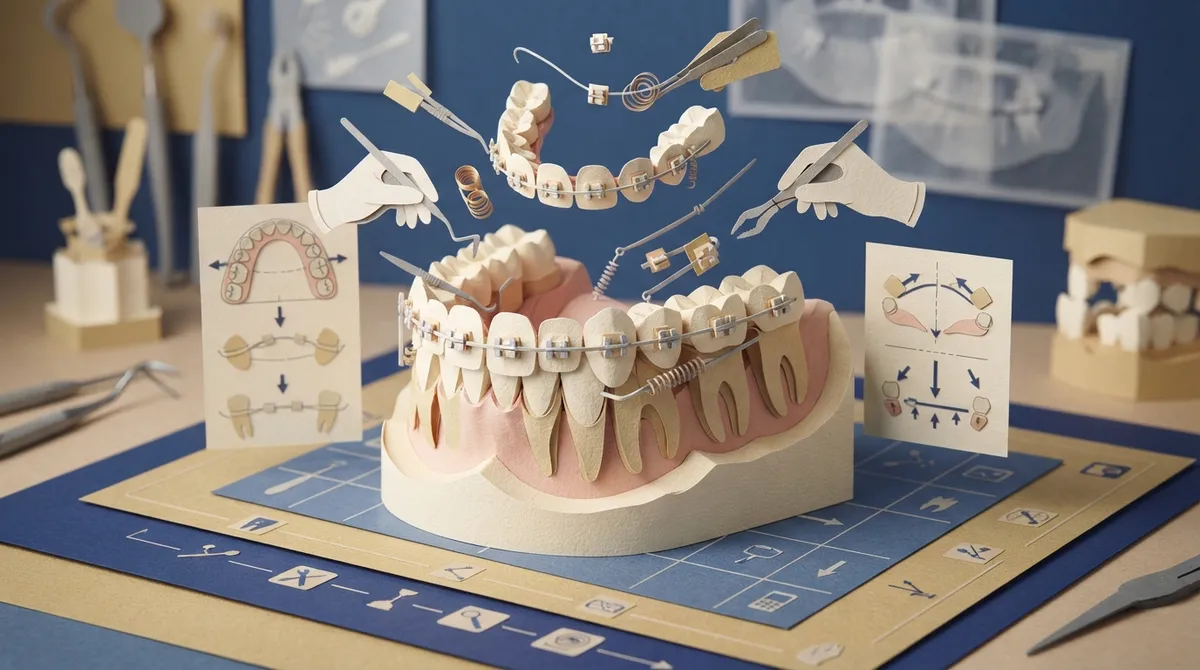
How Orthodontists Plan for Both Problems at Once
Treating gaps and crowding together is like rearranging furniture in a small room. You have to decide where everything goes before you move a single chair. Your orthodontist does that planning first.
Before recommending treatment, an orthodontist looks at several things:
- The cause and amount of crowding and spacing
- The position of your teeth and jaws
- How your upper and lower teeth meet
- Your overall oral health, including gums
This evaluation is why a thorough exam matters. At your first visit, the team can review these factors and explain what is realistic for your smile. You can also read what to expect during your orthodontic exam to feel prepared.
Ways to Manage Space
Depending on your case, an orthodontist may use one or more of these methods:
- Tooth movement. Teeth are shifted along the arch to share space more evenly.
- Arch expansion. The arch is widened within safe limits to make room.
- Interproximal reduction. A tiny amount of enamel is carefully smoothed between selected teeth to create a little space.
- Extraction. In some cases, removing a tooth gives enough room to fix severe crowding.
These options are not right for everyone. Each one needs an individual assessment. Think of them as tools in a toolbox. Your orthodontist picks the right tool for your teeth, not the same one for every patient.
Braces vs. Clear Aligners: A Side-by-Side Look
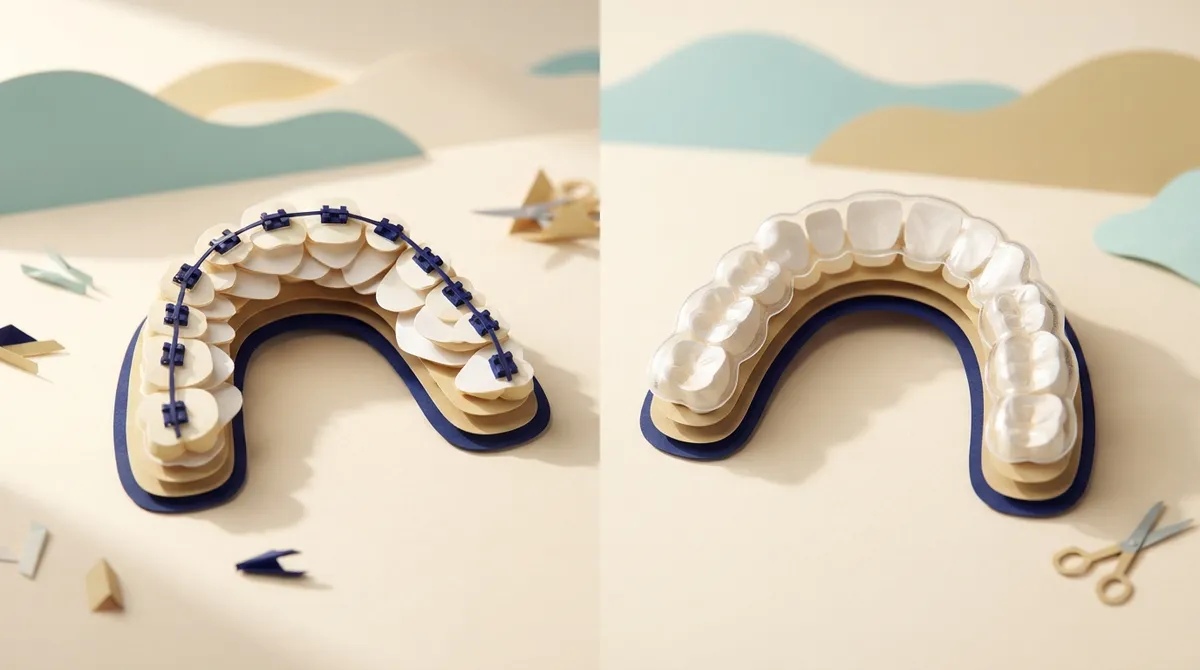
Both options can move teeth to close gaps and ease crowding. The difference is in how they do it and how much control each gives your orthodontist. Here is a quick comparison.
| Feature | Braces | Clear Aligners |
|---|---|---|
| How they work | Brackets and wires apply steady, controlled pressure | A series of custom trays gently shift teeth step by step |
| Best for | Mixed spacing and crowding, bite problems, complex movements | Mild to moderate gaps and crowding with a simple bite |
| Visibility | Metal or ceramic (tooth-colored) options | Nearly invisible |
| Removable? | No, they stay on the whole time | Yes, but must be worn as directed |
| Patient effort | Low, since they work around the clock | High, since results depend on wear time |
| Eating | Some food limits | Remove to eat, then clean teeth and trays |
Neither option is better for everyone. The right fit depends on your goals, your bite, and your lifestyle.
When Braces Are the Stronger Choice
Braces are often recommended when spacing happens alongside crowding, bite problems, or more complex alignment concerns. Because brackets are bonded to the teeth, they give your orthodontist a lot of control over tooth position. That control matters when different teeth need to travel in different directions.
Here are some situations where braces often shine:
- Gaps and crowding in the same mouth, plus an overbite, underbite, or crossbite
- Teeth that need to rotate or tip significantly
- Cases that may need extractions or careful space management
- Younger patients who may not wear removable trays consistently
If your bite is part of the story, you may enjoy reading how braces fix a deep overbite. For a full overview of the appliance itself, visit our page on all about braces.
Metal or Ceramic?
Braces come in more than one style. Metal braces are durable and time-tested. Ceramic braces are tooth-colored, so they blend in more. Many teens and adults like the lower profile of ceramic, especially for school, work, or big photos. Our comparison of metal vs. clear braces for adults can help you weigh the two.
When Clear Aligners Can Do the Job
Clear aligners can also treat some spacing and crowding cases. Whether they suit you depends on the specific movements needed and how complex your case is. For many people with mild to moderate issues, aligners work very well.
Aligners tend to appeal to teens, young adults, and busy professionals who want a more discreet look. You can take them out to eat and brush, which many people find convenient. The tradeoff is responsibility. Aligners only work when you wear them as directed, so consistency is key.
At Brockway Orthodontics, we offer Spark™ Clear Aligners, a more affordable alternative to Invisalign. Curious how they compare? Read our guide to clear aligners vs. braces, or see which plan wins for different smiles.
How Long Does Treatment Take?
Everyone wants to know the timeline. Here is what the research and public health guidance say. NHS guidance states that fixed braces are usually worn for about 1 to 2 years. Adjustment appointments are typically every 6 to 8 weeks. One NHS community dental service leaflet reports a typical treatment length of 18 to 24 months, with visits every 6 to 8 weeks.
These numbers are estimates, not promises. Your own timeline depends on how much movement is needed, how your teeth respond, and how well you follow your care plan. A case with both gaps and crowding may take a bit longer than one with a single issue, because the plan has more moving parts. For a deeper look, see how long braces take.
Here is a simple look at what the journey often includes:
- An exam and records, such as digital scans and images
- A custom treatment plan that balances space
- Regular visits for adjustments and progress checks
- Removal of braces or finishing of aligners
- A retainer to protect your new smile
Which Option Fits Which Patient?
Every smile is different, but some patterns come up often. Here is how the choice can look for different readers.
Parents of Children and Teens
If you are weighing options for your child, braces are often a dependable choice. They work around the clock, so you do not have to worry about lost trays. Early checkups also help. Spotting crowding or gaps while a child is growing can open up simpler options. Learn more about early treatment and our adolescent treatment options.
Teens and Young Adults
Maybe you have graduation, prom, or a big trip on the calendar. Clear aligners or ceramic braces can give you a low-profile way to fix both gaps and crowding. Your orthodontist can tell you which one fits your goals and your schedule.
Adult Professionals
Busy careers call for efficient, discreet care. Aligners are popular here, and so are tooth-colored braces. If your bite is complex, braces may still be the better tool. Visit our adult treatment page to see what is possible. You are also never too late, as our article on getting braces at 40 shows.
Orthodontic Relapse Patients
If you had braces years ago and your teeth have shifted, you are not alone. Gaps can reopen and crowding can creep back, often because retainers were not worn as directed. Retreatment is common and very doable. A fresh evaluation will show whether a short round of aligners or braces makes sense.
Health-Conscious Patients
If you have gum concerns or other dental needs, your orthodontist will plan around them. Healthy gums and teeth come first. Straighter teeth can also be easier to clean, which supports long-term oral health.
Will Gaps Reopen or Crowding Return?
This is a big question, and it deserves an honest answer. Teeth can shift after active treatment. That is why retainers are so important. Your orthodontist prescribes them to help hold your results in place, and wearing them as directed is the best way to keep your smile steady for the long run.
Think of a retainer as the seatbelt for your new smile. It is not the exciting part, but it protects everything you worked for. Learn about the options on our retainers page, and see how to wear a retainer after braces. If yours ever cracks, here is what to do if your retainer breaks.
For general guidance on oral health, the American Dental Association is a trusted resource. You can also find professional information through the Florida Association of Orthodontists.
What About Cost and Payment?
Cost matters, and it varies by case. Treating both gaps and crowding can involve a longer or more detailed plan, which may affect the price. The good news is that there are ways to make care more manageable. Explore financing and insurance options, and read our friendly breakdown of how much braces cost in 2026.
Why Choose Brockway Orthodontics in Clearwater?
Brockway Orthodontics is a go-to orthodontist in Clearwater, Florida. Dr. Brockway takes time to listen to your concerns and hopes for your smile. You will feel informed and comfortable from the first visit to the last.
We offer metal braces, ceramic (clear) braces, and Spark™ Clear Aligners for teens, adults, and everyone in between. Our office uses modern technology, including digital impressions instead of messy molds and 3D imaging for precise planning. In certain cases, same-day treatment is possible, which helps busy families.
Want to see what patients think? Visit us on Google — Brockway Orthodontics to read reviews and see our Clearwater location.
The Bottom Line
So, can braces address spacing and crowding together? Yes. A well-made plan can open room where teeth are tight and close gaps where teeth are loose, all in one treatment. Clear aligners can help with many of these cases too. The best choice depends on your bite, your goals, and your lifestyle.
The best next step is a real conversation with a specialist. Dr. Brockway can examine your smile, explain your options in plain language, and help you pick the path that fits. Book your appointment online today, or contact us with any questions. Your smile story is waiting, and we would love to help you write it.
FAQs
Q: Can braces fix gaps and crowded teeth at the same time?
A: Yes, they can! Braces move teeth into a planned arrangement, so room can be made where teeth are tight while gaps are closed elsewhere. Your orthodontist will design the plan after checking your teeth, jaws, and bite.
Q: Will I need teeth removed to treat crowding and spacing?
A: Not always. Some cases are managed by moving teeth, gently widening the arch, or smoothing tiny amounts of enamel between teeth. Extraction is only one option, and your orthodontist will tell you if it makes sense for you.
Q: Can clear aligners correct both gaps and crowding?
A: Often, yes. Clear aligners can treat many mild to moderate spacing and crowding cases. Whether they are a good fit depends on the movements needed and how complex your bite is, so a personal exam is the best way to know.
Q: How long does treatment take with both spacing and crowding?
A: Fixed braces are often worn for about 1 to 2 years, with visits every 6 to 8 weeks, according to NHS guidance. Your own timeline can be shorter or longer depending on your case and how closely you follow your plan.
Q: Will gaps reopen or crowding come back after braces?
A: Teeth can shift after treatment, which is why retainers matter so much. Wearing yours as directed helps keep your smile steady for years to come.
Our Service Area